Slovakia Ornamental Fish Market Size, Share & Growth Rate
The Slovakia Ornamental Fish Market was estimated at USD 430 Million in 2025 and is projected to reach USD 583 Million by 2032, growing at a CAGR of 4.4% from 2026 to 2032. This upward trend is fueled by a rising fascination with aquaristics, as more individuals seek the relaxation and aesthetic benefits of home aquariums. Additionally, as disposable incomes rise, consumers are increasingly investing in exotic and vibrant fish species, further stimulating market growth.
Slovakia Ornamental Fish Market Year-wise Growth Rate and Key Drivers
This graph highlights how the Slovakia Ornamental Fish Market has steadily grown over the years, supported by major growth factors.
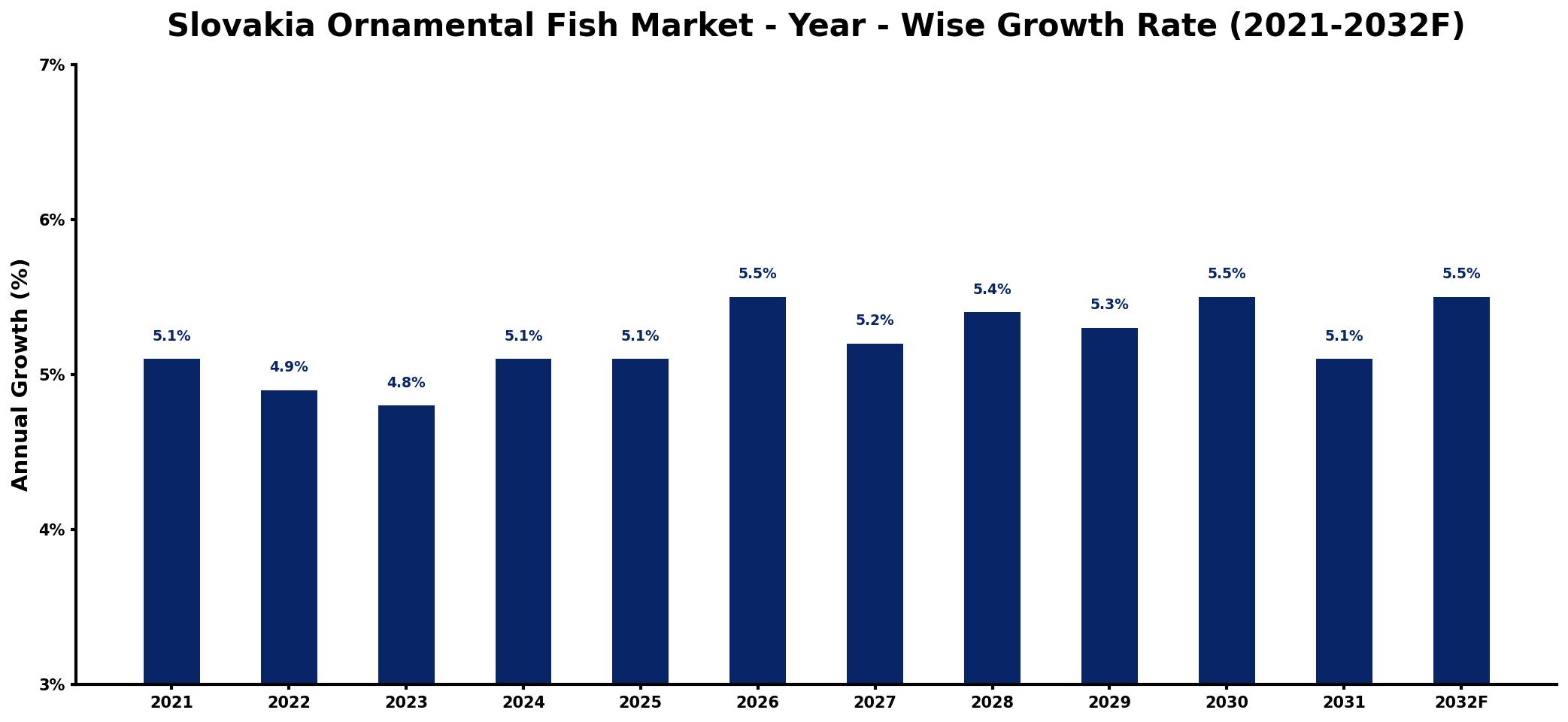
The table below presents the year‑wise growth rates along with the key drivers influencing the market
| Year | Growth Rate | Major Drivers |
| 2021 | 5.1% | Increased consumer interest in aquariums |
| 2022 | 4.9% | Rising disposable income among households |
| 2023 | 4.8% | Growth in online pet retail |
| 2024 | 5.1% | Expansion of aquarium hobbyist communities |
| 2025 | 5.1% | Investment in sustainable breeding practices |
| 2026 | 5.5% | Emergence of innovative aquarium technology |
| 2027 | 5.2% | Surge in eco-friendly product offerings |
| 2028 | 5.4% | Growing popularity of aquascaping trends |
| 2029 | 5.3% | Enhanced distribution networks for supplies |
| 2030 | 5.5% | Strengthened educational programs for enthusiasts |
| 2031 | 5.1% | Increase in urban living spaces |
| 2032 | 5.5% | Development of community aquarium projects |
Note: Market size estimations and growth projections presented in this report are based on 6Wresearch's proprietary forecasting methodology, utilizing the latest available industry data, government publications, and primary research inputs.
Slovakia Ornamental Fish Market Synopsis
The Slovakia ornamental fish market is currently riding a wave of enthusiasm, with hobbyists increasingly embracing the beauty and tranquility that aquariums bring to their homes. This momentum is expected to continue as more consumers recognize the benefits of maintaining aquatic pets, leading to a thriving marketplace.
However, the future is equally bright, with opportunities for innovation in breeding practices and a shift toward sustainable sourcing of fish. As the market evolves, it is crucial for industry stakeholders to adapt to changing consumer preferences and ensure responsible practices that align with environmental considerations.
Slovakia Ornamental Fish Market Key Takeaways
- Steady growth driven by rising disposable income and a growing interest in exotic fish species.
- Increased consumer focus on sustainability and the ethical sourcing of ornamental fish.
- Emerging trend in aquascaping, enhancing aesthetic appeal and driving demand.
- Government regulations aimed at promoting conservation and responsible aquaculture.
- Investment opportunities in breeding and online sales platforms are on the rise.
Evaluation of Restraints in Slovakia Ornamental Fish Market
Despite its promising trajectory, the Slovakia ornamental fish market faces significant challenges. Stringent regulations surrounding the importation and exportation of fish species often limit the availability and variety that retailers can offer. Moreover, competition from alternative pet options that require less maintenance, such as cats and dogs, can divert consumer interest away from aquariums. Seasonal fluctuations in demand can further complicate operations for businesses, while the need for specialized knowledge in fish care may deter potential hobbyists from engaging with the market. Furthermore, concerns regarding animal welfare and ethical sourcing must be continuously addressed to maintain consumer trust and loyalty.
Slovakia Ornamental Fish Market Trends
The prevailing trend toward sustainability is reshaping the Slovakia ornamental fish market, with consumers increasingly favoring captive-bred fish over wild-caught varieties. This shift reflects a broader commitment to conservation, as well as an appreciation for the unique characteristics of selectively bred species. Alongside this trend, aquascaping has gained traction, encouraging hobbyists to create visually stunning underwater environments. This combination of aesthetic appeal and ethical consumerism is poised to redefine the market landscape as enthusiasts seek out innovative products and solutions.
Slovakia Ornamental Fish Market Opportunities
The Slovakia ornamental fish market is rich with investment opportunities, particularly in breeding unique and exotic fish species. Setting up dedicated breeding facilities can cater to the burgeoning interest in sustainable aquaculture while also addressing consumer demand for rare species. Additionally, establishing efficient distribution networks can help reach a wider customer base, and offering complementary services such as aquarium maintenance can further enhance market appeal. The rise of e-commerce also presents untapped potential for reaching customers beyond Slovakia's borders, driving revenue growth and market expansion.
Government Initiatives in the Slovakia Ornamental Fish Market
The Slovak government has enacted various policies to promote the sustainable development of the ornamental fish market. These regulations focus on conservation, aiming to prevent overexploitation of wild fish populations. Guidelines for the import and export of ornamental species help protect against the introduction of invasive species and diseases. Additionally, initiatives to encourage responsible aquaculture practices are in place, fostering a balance between economic development and biodiversity preservation.
Future Insights of the Slovakia Ornamental Fish Market
Looking ahead to 2026-2032, the Slovakia ornamental fish market appears set for continued growth, driven by a greater appreciation for the aquarium hobby and improved standards of living. The anticipated demand for a diverse range of ornamental fish will likely push market players to enhance quality and availability. Technological advancements in aquarium equipment and breeding techniques are expected to play a pivotal role in improving the overall market dynamics, allowing for better sustainability practices and fostering trust among consumers.
Slovakia Ornamental Fish Market Latest Developments (2025 - 2026)
In recent months, the Slovakia ornamental fish market has observed a surge in interest toward aquascaping as more consumers share their creations online, driving community engagement and interest in the hobby. Furthermore, suppliers are increasingly emphasizing sustainable practices in their offerings, aligning with consumer preferences for ethically sourced fish. Online platforms are also expanding, allowing enthusiasts to access a wider variety of species and related products than ever before.
Slovakia Ornamental Fish Market - Key Attractiveness of the Report
- 10 Years of Market Numbers
- Historical Data Starting from 2022 to 2025
- Base Year: 2025
- Forecast Data until 2032
- Key Performance Indicators Impacting the Market
- Major Upcoming Developments and Projects
Key Highlights of the Report:
- Slovakia Ornamental Fish Market Outlook
- Market Size of Slovakia Ornamental Fish Market, 2025
- Forecast of Slovakia Ornamental Fish Market, 2032
- Historical Data and Forecast of Slovakia Ornamental Fish Revenues & Volume for the Period 2022-2032F
- Slovakia Ornamental Fish Market Trend Evolution
- Slovakia Ornamental Fish Market Drivers and Challenges
- Slovakia Ornamental Fish Price Trends
- Slovakia Ornamental Fish Porter's Five Forces
- Slovakia Ornamental Fish Industry Life Cycle
- Historical Data and Forecast of Slovakia Ornamental Fish Market Revenues & Volume By Product for the Period 2022-2032F
- Historical Data and Forecast of Slovakia Ornamental Fish Market Revenues & Volume By Tropical Freshwater for the Period 2022-2032F
- Historical Data and Forecast of Slovakia Ornamental Fish Market Revenues & Volume By Temperate for the Period 2022-2032F
- Historical Data and Forecast of Slovakia Ornamental Fish Market Revenues & Volume By Marine for the Period 2022-2032F
- Historical Data and Forecast of Slovakia Ornamental Fish Market Revenues & Volume By Application for the Period 2022-2032F
- Historical Data and Forecast of Slovakia Ornamental Fish Market Revenues & Volume By Commercial for the Period 2022-2032F
- Historical Data and Forecast of Slovakia Ornamental Fish Market Revenues & Volume By Household for the Period 2022-2032F
- Slovakia Ornamental Fish Import Export Trade Statistics
- Market Opportunity Assessment By Product
- Market Opportunity Assessment By Application
- Slovakia Ornamental Fish Top Companies Market Share
- Slovakia Ornamental Fish Competitive Benchmarking By Technical and Operational Parameters
- Slovakia Ornamental Fish Company Profiles
- Slovakia Ornamental Fish Key Strategic Recommendations






































