Slovakia Recreational Vehicle Market Top 5 Importing Countries and Market Competition (HHI) Analysis
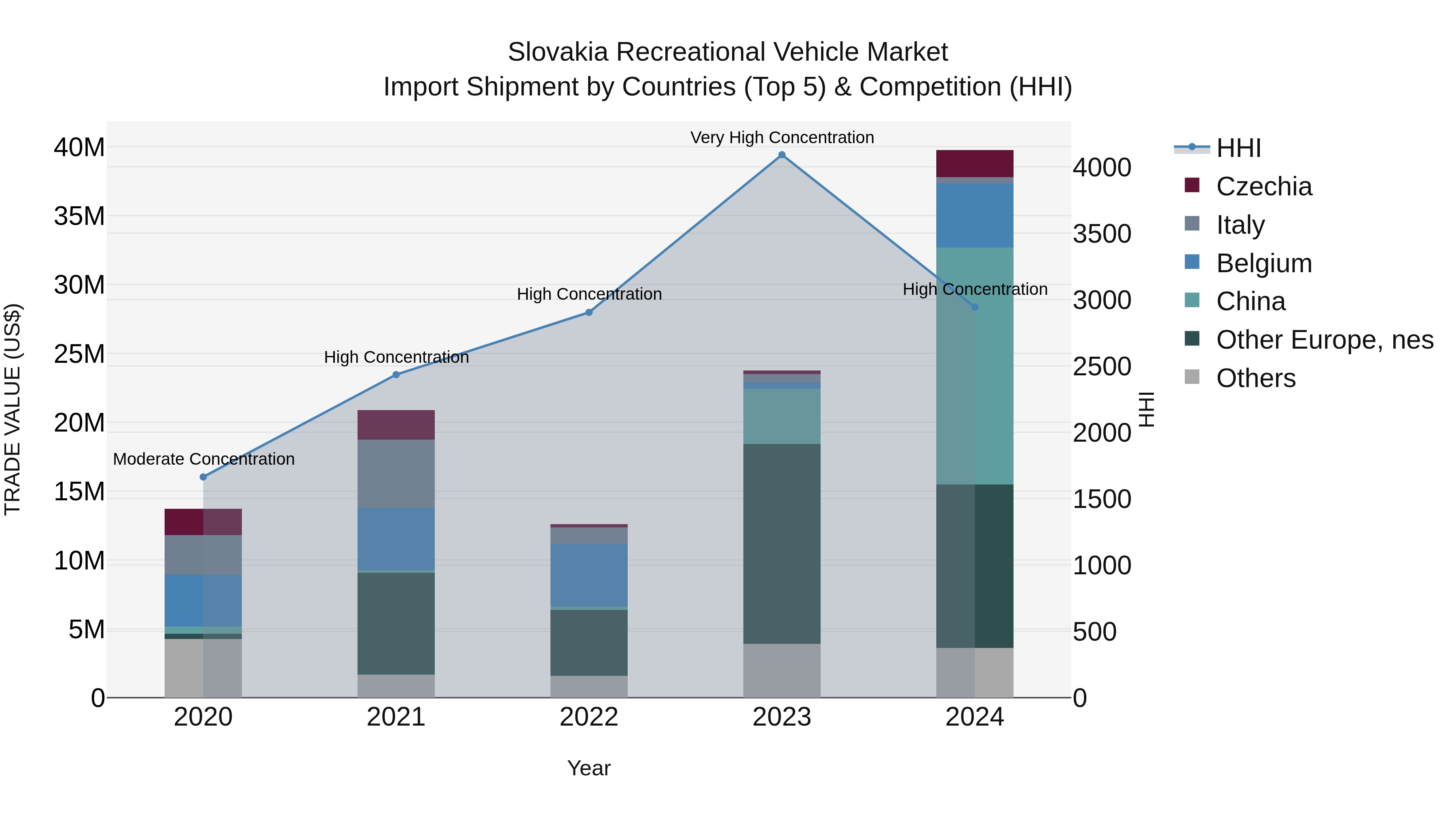
Slovakia`s recreational vehicle import shipments in 2024 continued to see significant growth, with a high concentration of imports from top countries including China, Other European nations, Belgium, Czechia, and Germany. The Market Top 5 Importing Countries and Market Competition (HHI) Analysis concentration, as measured by the HHI, remained high in 2024, indicating a competitive landscape. The impressive compound annual growth rate (CAGR) of 30.46% from 2020 to 2024 highlights the increasing demand for recreational vehicles in Slovakia. Moreover, the remarkable growth rate of 67.31% from 2023 to 2024 suggests a surge in import shipments, reflecting a buoyant Market Top 5 Importing Countries and Market Competition (HHI) Analysis for recreational vehicles in the country.
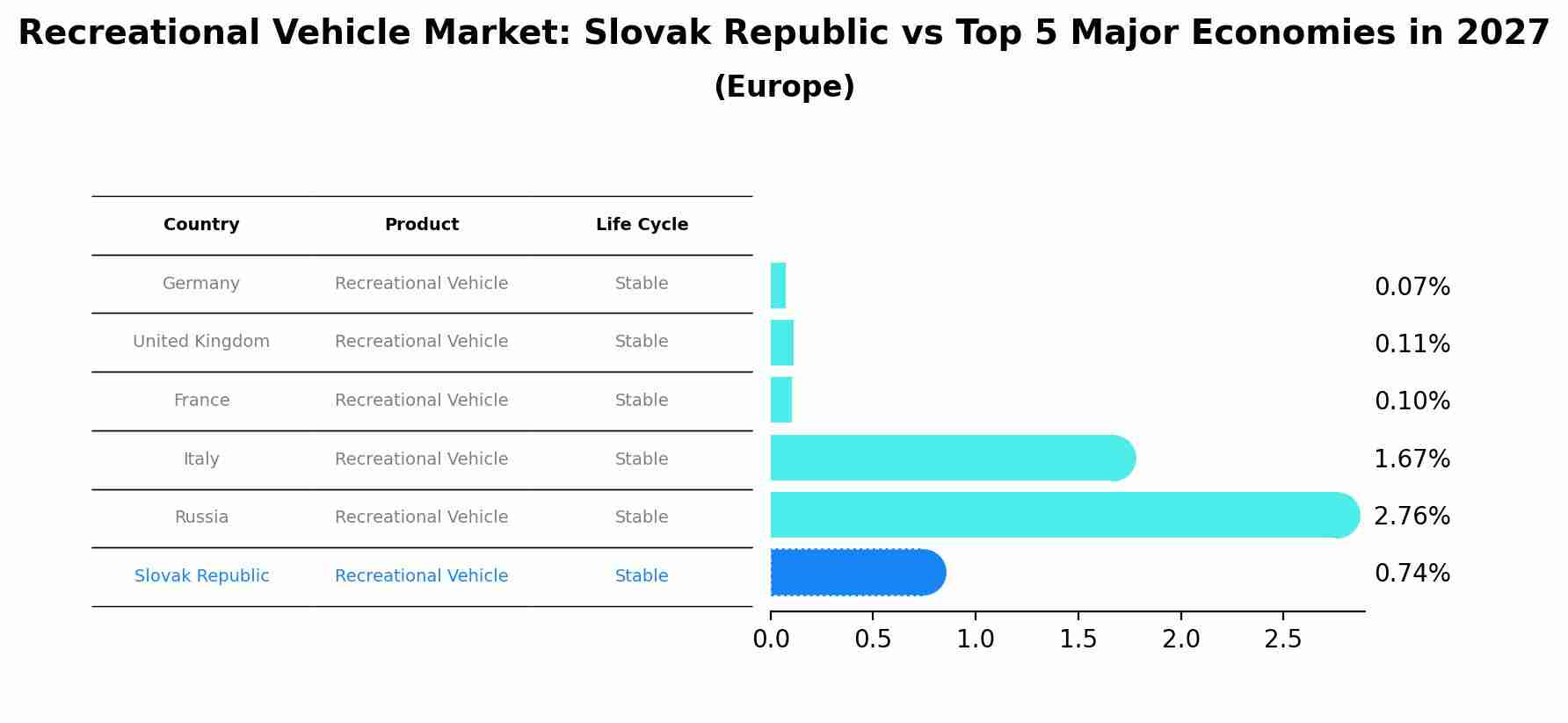
Recreational Vehicle Market: Slovak Republic vs Top 5 Major Economies in 2027 (Europe)
In the Europe region, the Recreational Vehicle market in Slovak Republic is projected to expand at a stable growth rate of 0.74% by 2027. The largest economy is Germany, followed by United Kingdom, France, Italy and Russia.
Key Highlights of the Report:
- Slovakia Recreational Vehicle Market Outlook
- Market Size of Slovakia Recreational Vehicle Market, 2025
- Forecast of Slovakia Recreational Vehicle Market, 2032
- Historical Data and Forecast of Slovakia Recreational Vehicle Revenues & Volume for the Period 2022 - 2032F
- Slovakia Recreational Vehicle Market Trend Evolution
- Slovakia Recreational Vehicle Market Drivers and Challenges
- Slovakia Recreational Vehicle Price Trends
- Slovakia Recreational Vehicle Porter's Five Forces
- Slovakia Recreational Vehicle Industry Life Cycle
- Historical Data and Forecast of Slovakia Recreational Vehicle Market Revenues & Volume By Product Type for the Period 2022 - 2032F
- Historical Data and Forecast of Slovakia Recreational Vehicle Market Revenues & Volume By Fifth Wheel Campers for the Period 2022 - 2032F
- Historical Data and Forecast of Slovakia Recreational Vehicle Market Revenues & Volume By Folding Camper for the Period 2022 - 2032F
- Historical Data and Forecast of Slovakia Recreational Vehicle Market Revenues & Volume By Truck Campers for the Period 2022 - 2032F
- Historical Data and Forecast of Slovakia Recreational Vehicle Market Revenues & Volume By Travel Trailers for the Period 2022 - 2032F
- Historical Data and Forecast of Slovakia Recreational Vehicle Market Revenues & Volume By Class A Motorhomes for the Period 2022 - 2032F
- Historical Data and Forecast of Slovakia Recreational Vehicle Market Revenues & Volume By Class B Motorhomes for the Period 2022 - 2032F
- Historical Data and Forecast of Slovakia Recreational Vehicle Market Revenues & Volume By Class C Motorhomes for the Period 2022 - 2032F
- Historical Data and Forecast of Slovakia Recreational Vehicle Market Revenues & Volume By Applications for the Period 2022 - 2032F
- Historical Data and Forecast of Slovakia Recreational Vehicle Market Revenues & Volume By Leisure for the Period 2022 - 2032F
- Historical Data and Forecast of Slovakia Recreational Vehicle Market Revenues & Volume By Business for the Period 2022 - 2032F
- Slovakia Recreational Vehicle Import Export Trade Statistics
- Market Opportunity Assessment By Product Type
- Market Opportunity Assessment By Applications
- Slovakia Recreational Vehicle Top Companies Market Share
- Slovakia Recreational Vehicle Competitive Benchmarking By Technical and Operational Parameters
- Slovakia Recreational Vehicle Company Profiles
- Slovakia Recreational Vehicle Key Strategic Recommendations






































