Slovakia Risk Analytics Market Size & Growth Rate (2026-2032)
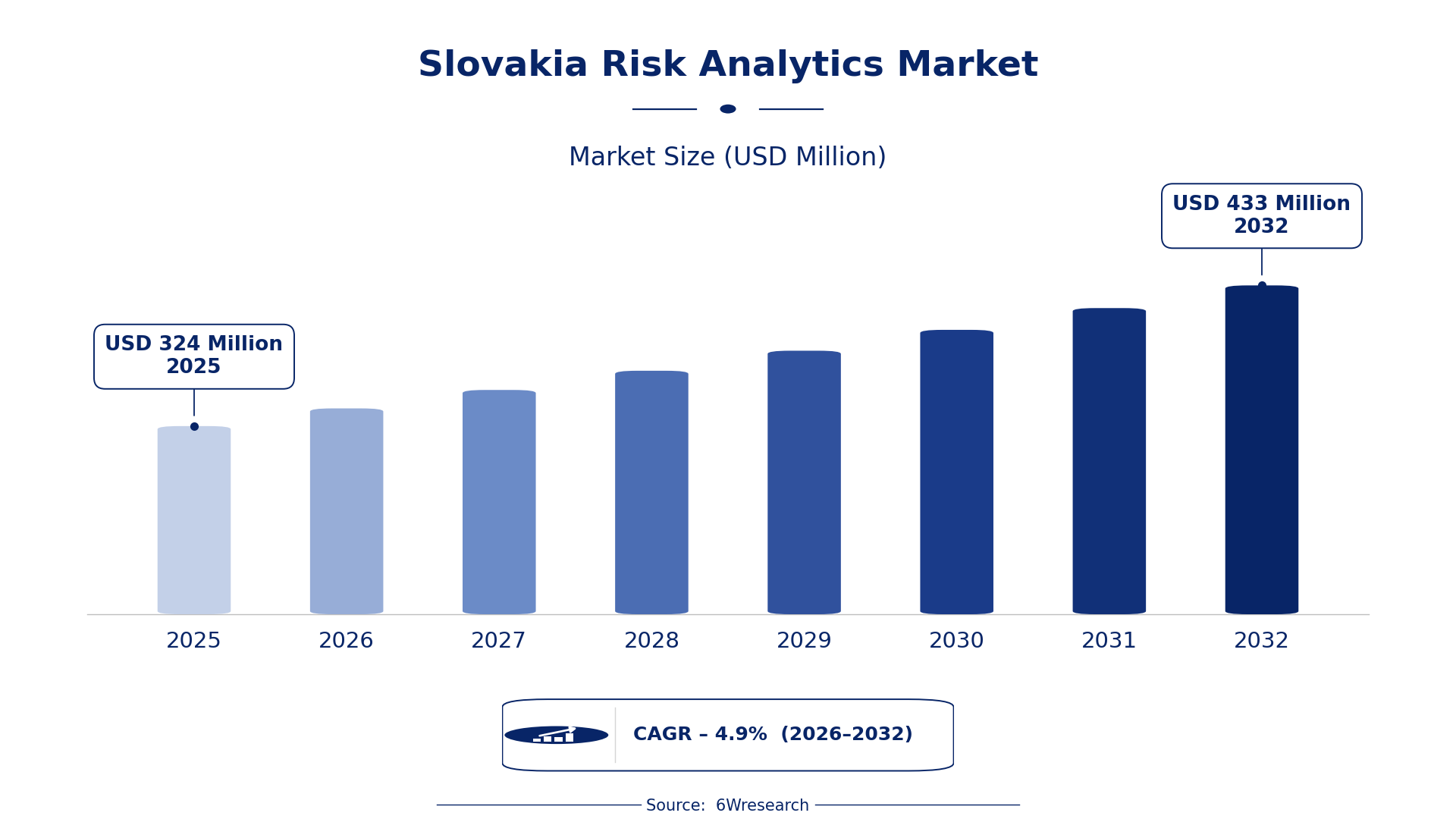
The Slovakia Risk Analytics Market was estimated at USD 324 Million in 2025 and is projected to reach USD 433 Million by 2032, growing at a CAGR of 4.9% from 2026 to 2032.
Slovakia Risk Analytics Market Synopsis
The increasing prevalence of cyber threats is the primary force shaping the Slovakia Risk Analytics Market today. Organizations are keenly aware that effective risk management is no longer optional; it is a necessity for survival in a complex business environment.
In response to rising regulatory requirements and economic uncertainties, companies across sectors are adopting sophisticated risk analytics tools. These solutions not only provide real-time insights but also empower organizations to make proactive decisions that mitigate risks and enhance operational efficiency.
Slovakia Risk Analytics Market Year-wise Growth Rate and Key Drivers
This graph illustrates the annual growth rates of the Slovakia Risk Analytics Market from 2021 to 2032, highlighting a steady upward trajectory and projected expansion over the forecast period.
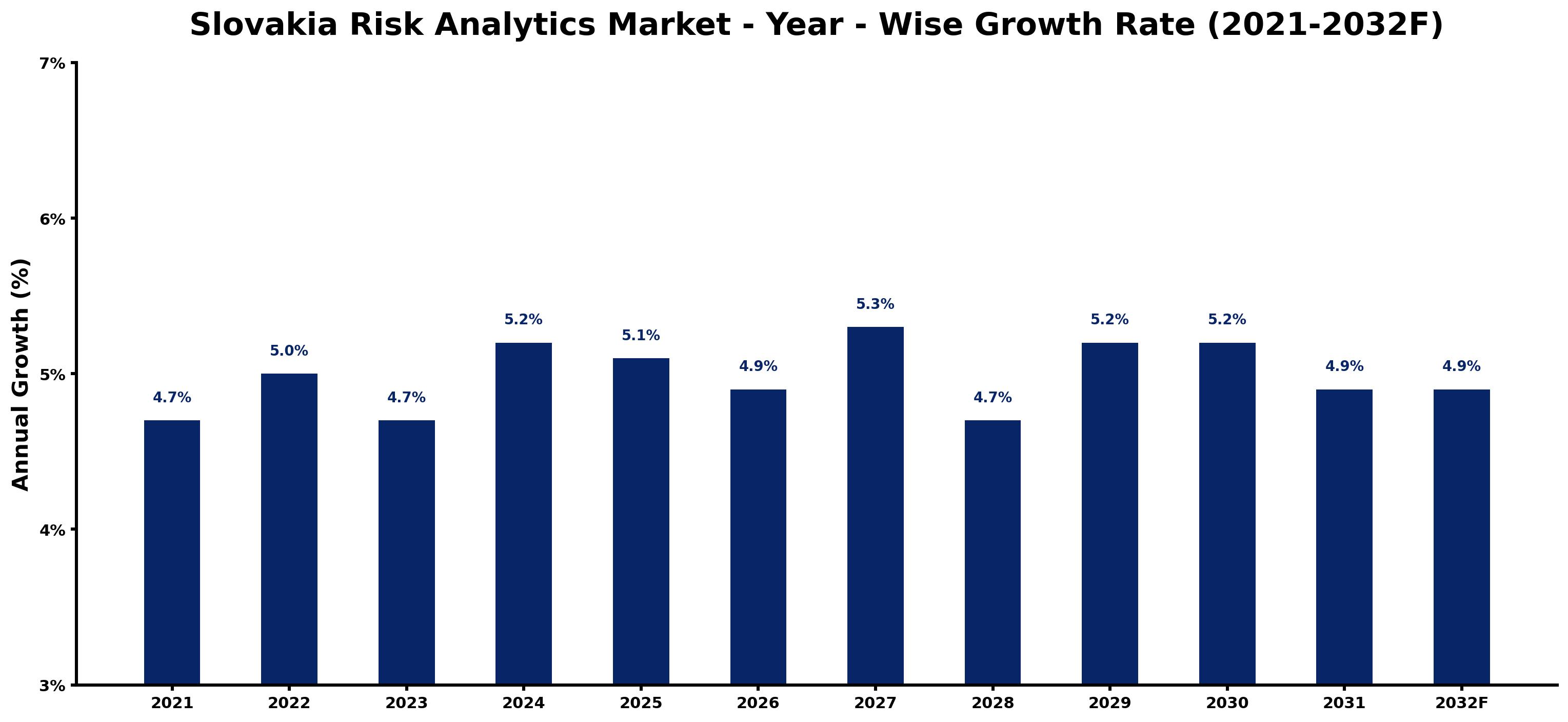
The table below presents the year‑wise growth rates along with the key drivers influencing the market
| Year | Growth Rate | Major Drivers |
| 2021 | 4.7% | Increased focus on regulatory compliance post-COVID-19. |
| 2022 | 5.0% | Government initiatives enhancing risk management frameworks. |
| 2023 | 4.7% | Growth in local startups driving risk assessment solutions. |
| 2024 | 5.2% | Businesses investing in hazard identification protocols after floods. |
| 2025 | 5.1% | Rise in data breaches pushing demand for analytics tools. |
| 2026 | 4.9% | Boost in digital transformation projects requiring risk assessments. |
| 2027 | 5.3% | Slovakia's EU Recovery Plan funding resilience strategies. |
| 2028 | 4.7% | Emerging fintech partnerships enhancing risk evaluation services. |
| 2029 | 5.2% | Regulatory pressures for enhanced KYC in banking industry. |
| 2030 | 5.2% | Adoption of AI in risk prediction for local businesses. |
| 2031 | 4.9% | Increased corporate governance mandates boosting analytics adoption. |
| 2032 | 4.9% | Focus on climate risk analysis in major corporations. |
Note: Market size estimations and growth projections presented in this report are based on 6Wresearch's proprietary forecasting methodology, utilizing the latest available industry data, government publications, and primary research inputs.
Slovakia Risk Analytics Market Key Takeaways
Below are some of the specific key takeaways from the market, including:
- Growing investment in AI and machine learning technologies is reshaping risk assessment processes.
- Cloud-based solutions are increasingly favored for their scalability and adaptability to evolving risks.
- Regulatory compliance remains a significant driver, pushing organizations to adopt advanced analytics.
- Cybersecurity threats are prompting a surge in demand for real-time risk monitoring tools.
- Healthcare and financial services sectors are emerging as key areas for risk analytics investment.
Evaluation of Restraints in Slovakia Risk Analytics Market
Despite the promising outlook, the Slovakia Risk Analytics Market faces notable challenges that hinder its full potential. Data quality issues plague many organizations, often resulting in inaccurate risk assessments that can lead to poor decision-making. Additionally, the regulatory environment is increasingly complex, making compliance a daunting task for many companies.
on top of that, there is a critical shortage of skilled professionals capable of effectively implementing and utilizing advanced analytics solutions. This skill gap can stymie the adoption of innovative technologies, keeping some organizations from fully realizing the benefits of risk analytics. Addressing these challenges is essential for market players aiming to thrive in this competitive space.
Slovakia Risk Analytics Market Trends
A clear trend in the Slovakia Risk Analytics Market is the integration of AI and machine learning into analytics platforms. These technologies enhance predictive modeling and risk assessment accuracy, enabling businesses to respond more effectively to threats. Another noteworthy trend is the increasing emphasis on multi-source data integration, allowing organizations to gain a comprehensive view of their risk profiles.
on top of that, as businesses aim for agility, the demand for cloud-based risk analytics solutions continues to grow. These tools offer flexibility that traditional on-premises solutions often lack, making it easier for organizations to adapt to shifting regulatory and operational landscapes.
Slovakia Risk Analytics Market Opportunities
Investment opportunities in the Slovakia Risk Analytics Market are abundant, particularly in sectors like cybersecurity, healthcare, and financial services. With a heightened focus on data protection regulations, businesses are eager to adopt analytics solutions that ensure compliance and safeguard against cyber threats.
In the financial sector, there's a clear demand for tools that enhance decision-making and manage financial risks. The healthcare industry is also increasingly recognizing the value of risk analytics in improving patient outcomes and streamlining operations. These areas present fertile ground for vendors looking to innovate and provide tailored solutions that meet the unique needs of Slovakian businesses.
Government Initiatives in the Slovakia Risk Analytics Market
Government policy plays a crucial role in shaping the Slovakia Risk Analytics Market. The Slovak government has focused on enhancing data protection regulations and implementing cybersecurity measures. This regulatory environment encourages businesses to adopt advanced risk analytics solutions to comply with the stringent requirements and effectively manage potential risks.
- A recently completed initiative established a national framework for data protection, ensuring that organizations comply with GDPR standards.
- Currently underway is a government-led cybersecurity enhancement program aimed at bolstering defenses against increasing cyber threats.
- A planned public-private partnership seeks to develop advanced risk analytics tools, set to launch in 2026, to aid various sectors in improving risk management.
- The National Cyber Security Authority has been actively promoting awareness and training programs for organizations to strengthen their risk analytics capabilities.
- Ongoing assessments of financial institutions by the National Bank of Slovakia to ensure compliance with updated risk management practices.
Future Insights of the Slovakia Risk Analytics Market
Looking ahead to 2026-2032, the Slovakia Risk Analytics Market is likely to experience substantial growth. The integration of advanced analytics technologies will become increasingly critical as businesses recognize the need for proactive risk management strategies. As regulatory pressures intensify and the landscape of threats evolves, organizations will seek more sophisticated solutions that provide real-time insights and predictive capabilities.
The adoption of AI and machine learning will not only enhance the accuracy of risk assessments but will also drive innovation in the types of analytics services offered. Companies that stay ahead of these trends will be well-positioned to capitalize on the evolving market demands and secure their competitive edge.
Slovakia Risk Analytics Market Latest Developments
In the last 12 months, the Slovakia Risk Analytics Market has seen a flurry of activity as companies strive to enhance their risk management capabilities. The focus on cybersecurity and compliance has propelled firms to upgrade their analytics tools and adopt newer technologies.
- A major technology vendor announced the rollout of an advanced analytics platform in Q1 2025, designed to enhance predictive risk assessment capabilities.
- An initiative that began in late 2025 focuses on integrating machine learning algorithms into existing risk analytics solutions to improve data processing speeds.
- A leading regional operator is currently developing a new cloud-based risk analytics service, expected to launch by mid-2026, catering specifically to small and medium enterprises.
- In early 2025, a collaboration between several stakeholders aimed at creating a national risk analytics framework was initiated, emphasizing standardization across industries.
- A strategic partnership formed in Q3 2025 between a data analytics firm and a cybersecurity company aims to offer comprehensive risk management solutions.
Slovakia Risk Analytics Market - Key Attractiveness of the Report
- 10 Years of Market Numbers
- Historical Data Starting from 2022 to 2025
- Base Year: 2025
- Forecast Data until 2032
- Key Performance Indicators Impacting the Market
- Major Upcoming Developments and Projects
Key Highlights of the Report:
- Slovakia Risk Analytics Market Outlook
- Market Size of Slovakia Risk Analytics Market, 2025
- Forecast of Slovakia Risk Analytics Market, 2032
- Historical Data and Forecast of Slovakia Risk Analytics Revenues & Volume for the Period 2022-2032F
- Slovakia Risk Analytics Market Trend Evolution
- Slovakia Risk Analytics Market Drivers and Challenges
- Slovakia Risk Analytics Price Trends
- Slovakia Risk Analytics Porter's Five Forces
- Slovakia Risk Analytics Industry Life Cycle
- Historical Data and Forecast of Slovakia Risk Analytics Market Revenues & Volume By Component for the Period 2022-2032F
- Historical Data and Forecast of Slovakia Risk Analytics Market Revenues & Volume By Software (ETL Tools, Risk Calculation Engines, GRC Software) for the Period 2022-2032F
- Historical Data and Forecast of Slovakia Risk Analytics Market Revenues & Volume By Services for the Period 2022-2032F
- Historical Data and Forecast of Slovakia Risk Analytics Market Revenues & Volume By Risk Type for the Period 2022-2032F
- Historical Data and Forecast of Slovakia Risk Analytics Market Revenues & Volume By Strategic Risk for the Period 2022-2032F
- Historical Data and Forecast of Slovakia Risk Analytics Market Revenues & Volume By Operational Risk for the Period 2022-2032F
- Historical Data and Forecast of Slovakia Risk Analytics Market Revenues & Volume By Financial Risk for the Period 2022-2032F
- Historical Data and Forecast of Slovakia Risk Analytics Market Revenues & Volume By Deployment Mode for the Period 2022-2032F
- Historical Data and Forecast of Slovakia Risk Analytics Market Revenues & Volume By Cloud for the Period 2022-2032F
- Historical Data and Forecast of Slovakia Risk Analytics Market Revenues & Volume By On-premises for the Period 2022-2032F
- Historical Data and Forecast of Slovakia Risk Analytics Market Revenues & Volume By Organization Size for the Period 2022-2032F
- Historical Data and Forecast of Slovakia Risk Analytics Market Revenues & Volume By Large enterprises for the Period 2022-2032F
- Historical Data and Forecast of Slovakia Risk Analytics Market Revenues & Volume By Small and medium-sized enterprises (SMEs) for the Period 2022-2032F
- Historical Data and Forecast of Slovakia Risk Analytics Market Revenues & Volume By Vertical for the Period 2022-2032F
- Historical Data and Forecast of Slovakia Risk Analytics Market Revenues & Volume By Banking and Financial Services for the Period 2022-2032F
- Historical Data and Forecast of Slovakia Risk Analytics Market Revenues & Volume By Insurance for the Period 2022-2032F
- Historical Data and Forecast of Slovakia Risk Analytics Market Revenues & Volume By Manufacturing for the Period 2022-2032F
- Historical Data and Forecast of Slovakia Risk Analytics Market Revenues & Volume By Transportation and Logistics for the Period 2022-2032F
- Historical Data and Forecast of Slovakia Risk Analytics Market Revenues & Volume By Retail and Consumer Goods for the Period 2022-2032F
- Historical Data and Forecast of Slovakia Risk Analytics Market Revenues & Volume By IT and Telecom for the Period 2022-2032F
- Historical Data and Forecast of Slovakia Risk Analytics Market Revenues & Volume By Government and Defense for the Period 2022-2032F
- Historical Data and Forecast of Slovakia Risk Analytics Market Revenues & Volume By Healthcare and Life Sciences for the Period 2022-2032F
- Slovakia Risk Analytics Import Export Trade Statistics
- Market Opportunity Assessment By Component
- Market Opportunity Assessment By Risk Type
- Market Opportunity Assessment By Deployment Mode
- Market Opportunity Assessment By Organization Size
- Market Opportunity Assessment By Vertical
- Slovakia Risk Analytics Top Companies Market Share
- Slovakia Risk Analytics Competitive Benchmarking By Technical and Operational Parameters
- Slovakia Risk Analytics Company Profiles
- Slovakia Risk Analytics Key Strategic Recommendations






































