Slovakia Sunglasses Market Size (2020-2030)
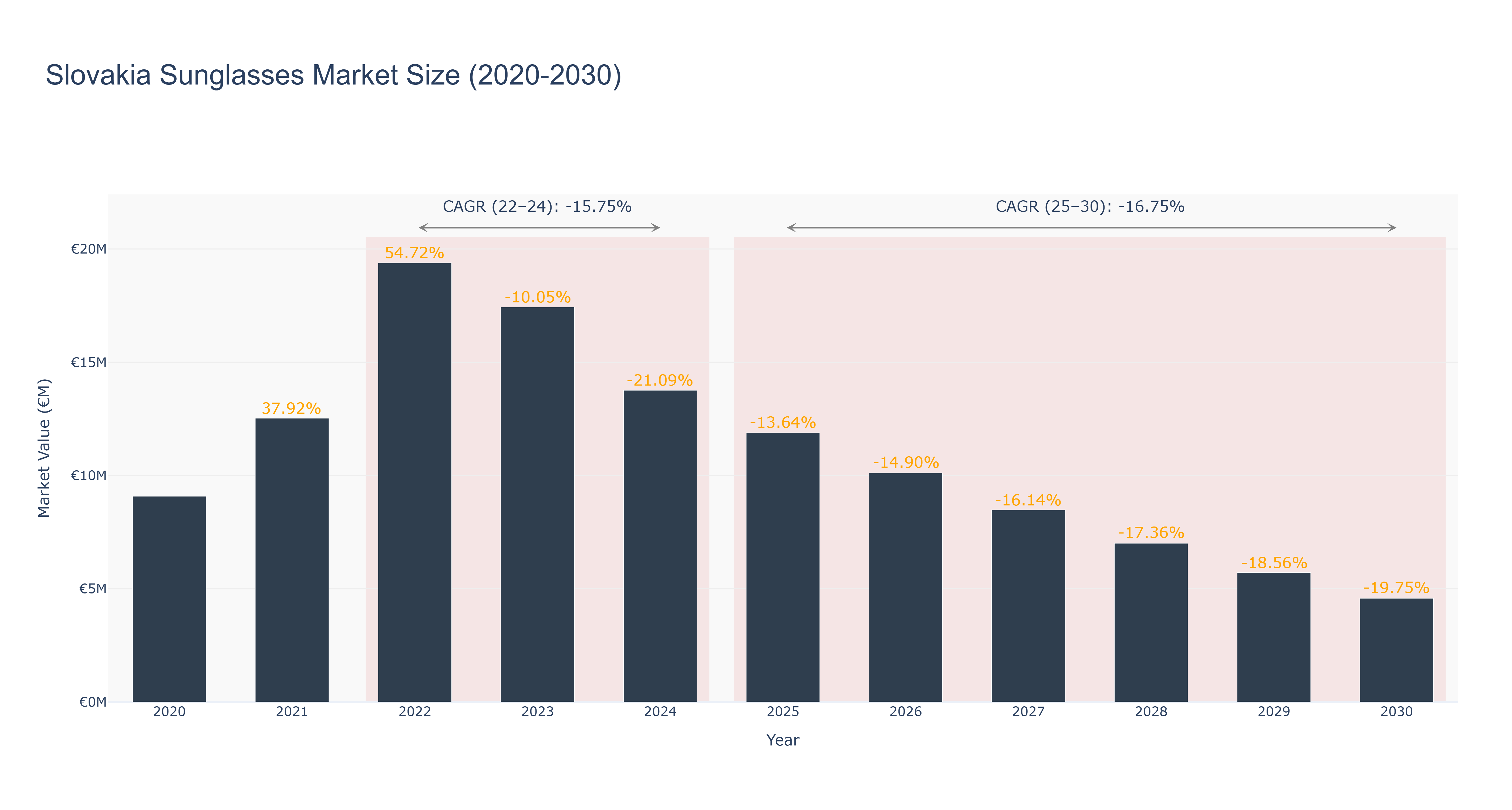
The Slovakia Sunglasses Market witnessed a peak market size of €19.39 million in 2022, followed by a decline to €13.76 million in 2024. The market is forecasted to continue shrinking with an expected size of €4.58 million in 2030. The CAGR for the period 2022-24 stands at -15.75%, while for 2025-30, it is projected at -16.75%. The market's downturn can be attributed to changing consumer preferences, economic uncertainties, and increased competition. Looking ahead, the industry drivers include technological advancements in eyewear, growing awareness about UV protection, and evolving fashion trends. In the near future, Slovakia is set to witness an influx of sustainable eyewear brands and collaborations with renowned fashion designers, aiming to revitalize the sunglasses market and cater to environmentally conscious consumers.
Slovakia Sunglasses Market: Production & Trade Performance (2019-2025)
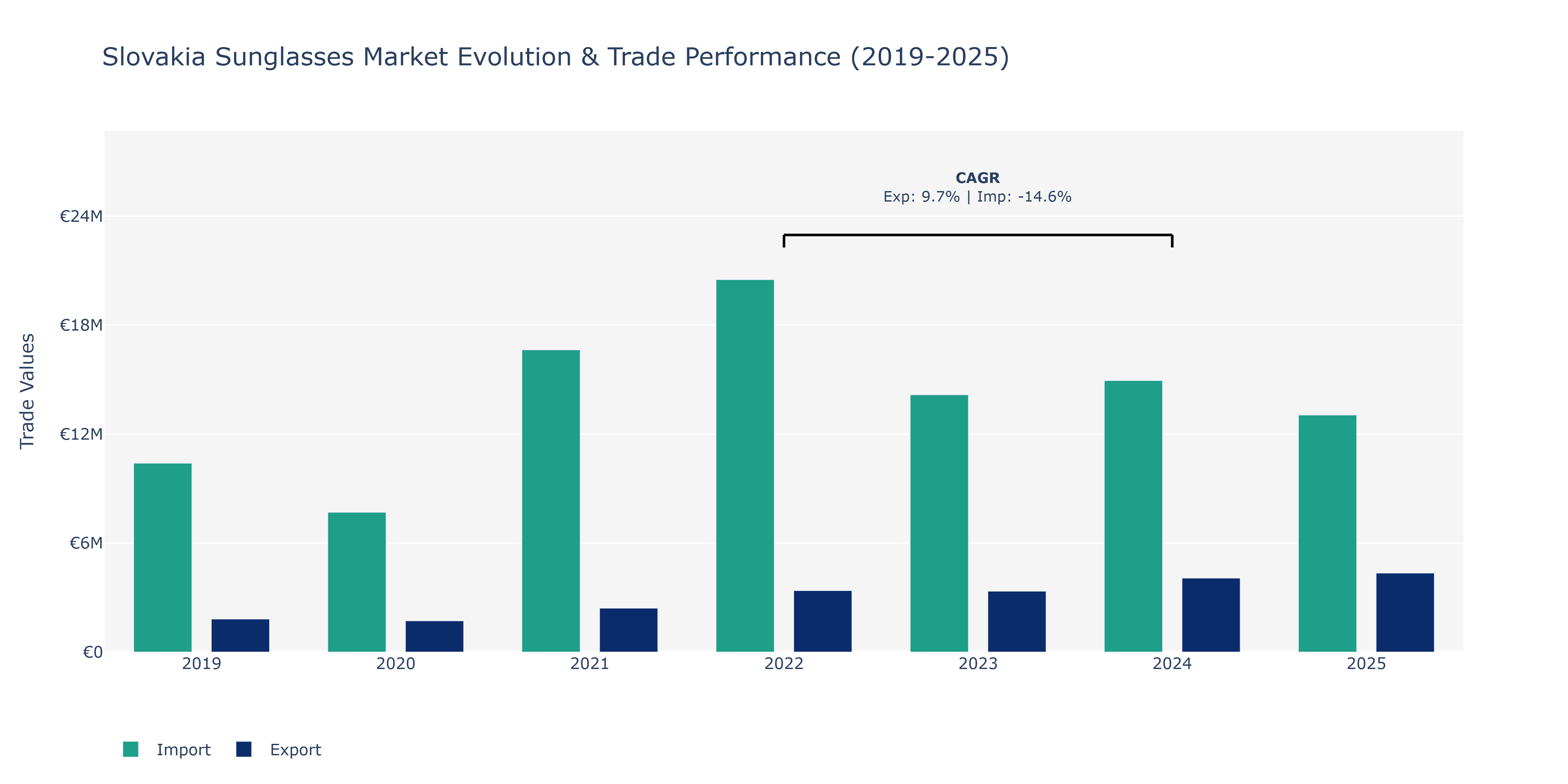
Between 2019 and 2025, the Slovakia Sunglasses Market witnessed fluctuations in both exports and imports. Exports started at €1.82 million in 2019, dropped to €1.72 million in 2020, then showed a steady increase, reaching a peak of €4.35 million in 2025. Conversely, imports began at €10.4 million in 2019, decreased to €7.69 million in 2020, and saw ups and downs before stabilizing around €13.05 million in 2025. The market experienced a significant growth in exports, driven by increasing demand for Slovakian sunglasses products in international markets, likely due to improved product quality and marketing strategies. On the other hand, the decline in imports from 2019 to 2020 could be attributed to global economic uncertainties impacting consumer purchasing power. The subsequent recovery and stabilization of imports suggest a rebound in the domestic market, potentially fueled by a growing consumer base and improved trade agreements benefiting the sunglasses industry.
Key Highlights of the Report:
- Slovakia Sunglasses Market Outlook
- Market Size of Slovakia Sunglasses Market, 2025
- Forecast of Slovakia Sunglasses Market, 2032
- Historical Data and Forecast of Slovakia Sunglasses Revenues & Volume for the Period 2022 - 2032F
- Slovakia Sunglasses Market Trend Evolution
- Slovakia Sunglasses Market Drivers and Challenges
- Slovakia Sunglasses Price Trends
- Slovakia Sunglasses Porter's Five Forces
- Slovakia Sunglasses Industry Life Cycle
- Historical Data and Forecast of Slovakia Sunglasses Market Revenues & Volume By Product Type for the Period 2022 - 2032F
- Historical Data and Forecast of Slovakia Sunglasses Market Revenues & Volume By Polarized for the Period 2022 - 2032F
- Historical Data and Forecast of Slovakia Sunglasses Market Revenues & Volume By Non-polarized for the Period 2022 - 2032F
- Historical Data and Forecast of Slovakia Sunglasses Market Revenues & Volume By End-Users for the Period 2022 - 2032F
- Historical Data and Forecast of Slovakia Sunglasses Market Revenues & Volume By Women for the Period 2022 - 2032F
- Historical Data and Forecast of Slovakia Sunglasses Market Revenues & Volume By Men for the Period 2022 - 2032F
- Historical Data and Forecast of Slovakia Sunglasses Market Revenues & Volume By Unisex for the Period 2022 - 2032F
- Historical Data and Forecast of Slovakia Sunglasses Market Revenues & Volume By Distribution Channel for the Period 2022 - 2032F
- Historical Data and Forecast of Slovakia Sunglasses Market Revenues & Volume By Online for the Period 2022 - 2032F
- Historical Data and Forecast of Slovakia Sunglasses Market Revenues & Volume By Offline for the Period 2022 - 2032F
- Slovakia Sunglasses Import Export Trade Statistics
- Market Opportunity Assessment By Product Type
- Market Opportunity Assessment By End-Users
- Market Opportunity Assessment By Distribution Channel
- Slovakia Sunglasses Top Companies Market Share
- Slovakia Sunglasses Competitive Benchmarking By Technical and Operational Parameters
- Slovakia Sunglasses Company Profiles
- Slovakia Sunglasses Key Strategic Recommendations






































