Slovakia Textile Auxiliaries Market Size (2020-2030)
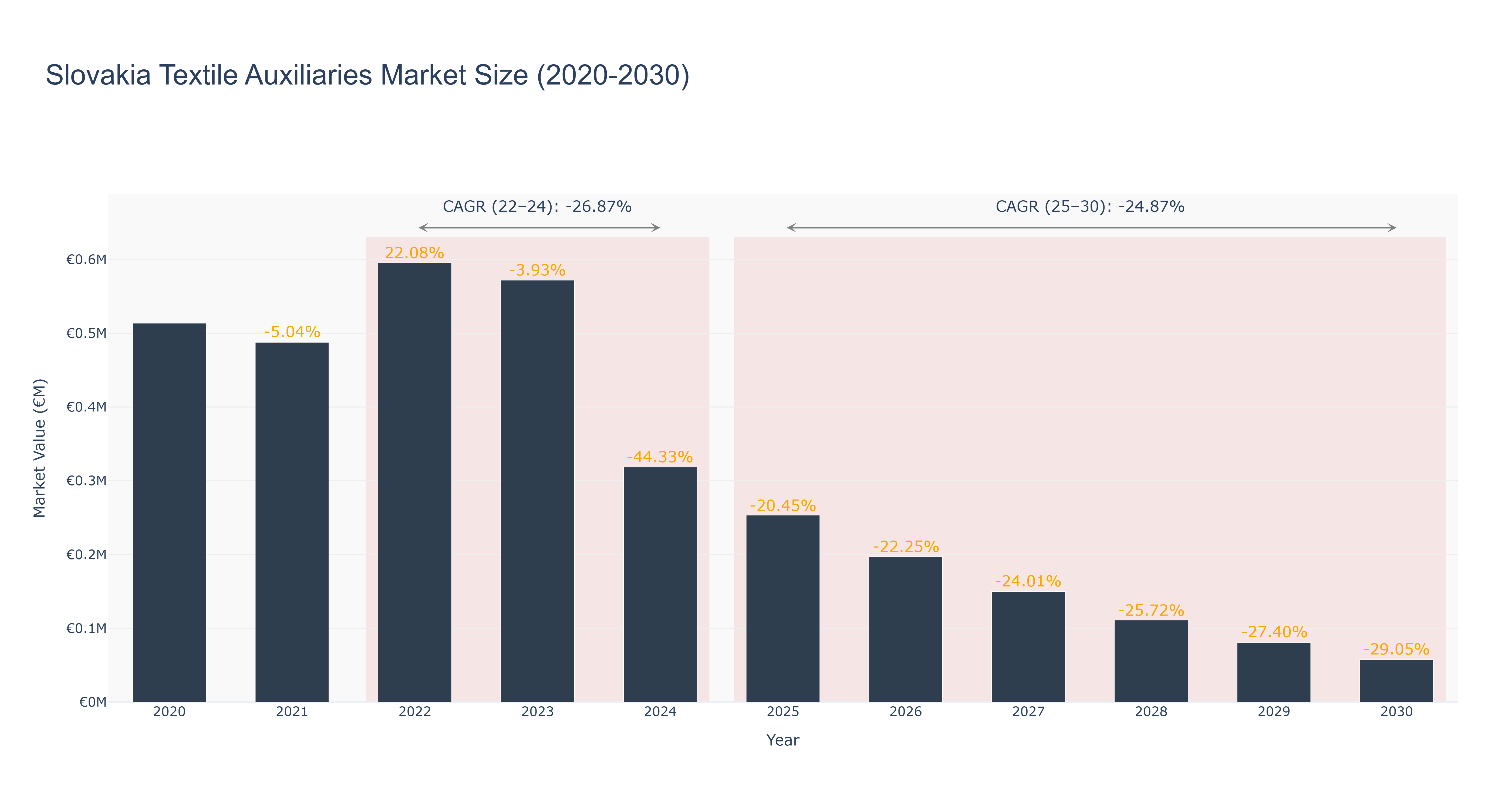
Slovakia Textile Auxiliaries Market has experienced a notable decline in market size over the past few years. The peak market size of €0.60 million was observed in 2022, followed by a sharp decrease to €0.32 million in 2024. The market is forecasted to continue this downward trend, with a projected size of €0.06 million by 2030. The CAGR for the period 2022-24 was -26.87%, while for 2025-30, it is estimated at -24.87%. The decline can be attributed to various factors such as economic slowdown, changing consumer preferences, and increased competition. Looking ahead, the market is expected to face challenges in recovering due to ongoing market saturation. However, efforts to innovate product offerings and expand into new markets could potentially drive growth in the future.
Slovakia Textile Auxiliaries Market: Production & Trade Performance (2019-2025)
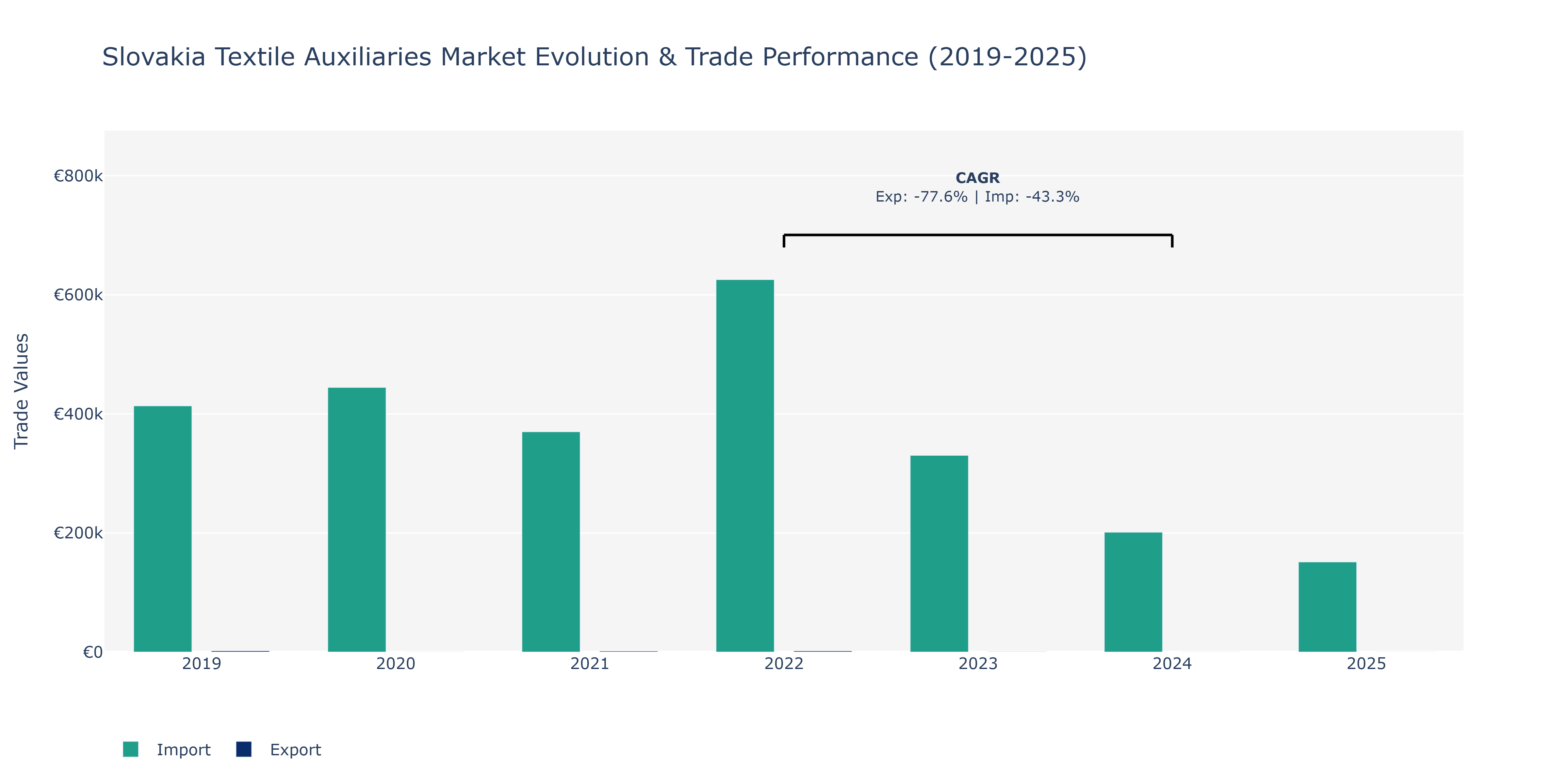
The Slovakia Textile Auxiliaries Market witnessed a notable fluctuation in both Exports and Imports over the years provided. In 2022, Exports rose to €1.93 thousand, marking a substantial increase from the previous year. Conversely, Imports experienced a peak in the same year, reaching €625.47 thousand, indicating a strong demand for textile auxiliaries in the country. However, a significant drop in Exports was observed in 2024, falling to €97 thousand, while Imports declined to €201.27 thousand, showcasing a reversal in the market dynamics. The sharp decrease in Exports could be attributed to changes in global demand patterns or shifts in competitive landscapes, impacting Slovakia's export capabilities. On the other hand, the decline in Imports might signal shifts in sourcing strategies or changes in domestic consumption patterns within the textile industry. These fluctuations underscore the market's sensitivity to external factors and emphasize the need for industry players to stay agile in response to changing market conditions.
Slovakia Textile Auxiliaries Market Overview
The Slovakia Textile Auxiliaries Market is experiencing steady growth driven by increasing demand from the textile industry. Textile auxiliaries are specialty chemicals used in various stages of textile processing to impart specific properties to the fabric. Key factors contributing to market growth include the rising demand for high-quality textiles, technological advancements in textile production, and the growing focus on sustainable and eco-friendly solutions. The market is characterized by the presence of both domestic and international companies offering a wide range of products such as surfactants, softeners, and dyes. Additionally, stringent regulations regarding environmental protection and worker safety are influencing market dynamics, leading to a shift towards greener and safer textile auxiliaries. Overall, the Slovakia Textile Auxiliaries Market is poised for continued growth as the textile industry continues to evolve and innovate.
Slovakia Textile Auxiliaries Market Trends
In the Slovakia Textile Auxiliaries Market, there is a growing trend towards sustainable and eco-friendly products. Consumers are increasingly seeking textiles that have been produced using environmentally friendly processes and materials. This has led to a rise in demand for eco-friendly textile auxiliaries that help reduce the environmental impact of the textile industry. Additionally, there is a focus on innovation and technology advancements in textile auxiliaries to enhance performance and functionality of textiles. Companies in the market are investing in research and development to offer innovative solutions that cater to the evolving needs of the textile industry. Overall, the Slovakia Textile Auxiliaries Market is witnessing a shift towards sustainability and innovation to meet the demands of conscious consumers and drive growth in the industry.
Slovakia Textile Auxiliaries Market Challenges
In the Slovakia Textile Auxiliaries Market, challenges include increasing competition from international players, fluctuating raw material prices, and stringent environmental regulations. The market is relatively small compared to other European countries, which limits the growth potential for local companies. Additionally, the need for continuous innovation and product development to meet changing customer demands poses a challenge for manufacturers. Labour costs and availability of skilled workers are also key concerns for companies operating in the textile auxiliaries sector in Slovakia. Overall, navigating these challenges requires companies to adopt efficient production processes, invest in research and development, and establish strong relationships with suppliers and customers to stay competitive in the market.
Slovakia Textile Auxiliaries Market Investment Opportunities
The Slovakia Textile Auxiliaries Market presents various investment opportunities for companies looking to capitalize on the growing textile industry in the region. With the increasing demand for textile products and the focus on sustainable and eco-friendly practices, there is a rising need for innovative and high-quality textile auxiliaries. Investing in research and development of new, environmentally friendly auxiliaries, such as biodegradable dyes and chemicals, can be a lucrative opportunity in this market. Additionally, partnerships with local textile manufacturers to provide customized solutions and services can help investors establish a strong presence in the Slovakia textile industry. Overall, the Slovakia Textile Auxiliaries Market offers promising prospects for investors to tap into the evolving needs of the textile sector and drive growth through innovation and strategic collaborations.
Slovakia Textile Auxiliaries Market Government Policy
The government policies related to the Slovakia Textile Auxiliaries Market primarily focus on environmental sustainability and compliance with regulations. Slovakia has implemented strict laws and regulations regarding the use of chemicals in the textile industry to minimize environmental impact and ensure worker safety. Additionally, the government has encouraged the adoption of eco-friendly and sustainable practices in textile production. Incentives and subsidies are provided to companies that invest in green technologies and processes. The government also emphasizes the importance of fair labor practices and compliance with international standards to maintain a positive reputation in the global market. Overall, the government policies in Slovakia aim to promote responsible and sustainable growth in the Textile Auxiliaries Market while ensuring adherence to ethical and environmental standards.
Slovakia Textile Auxiliaries Market Future Outlook
The future outlook for the Slovakia Textile Auxiliaries Market appears positive as the industry is expected to witness steady growth in the coming years. Factors such as increasing demand for textile products, technological advancements in textile manufacturing processes, and the growing focus on sustainability are likely to drive the market`s expansion. Additionally, the rising disposable income and changing consumer preferences for high-quality and innovative textiles are expected to further boost the demand for textile auxiliaries in Slovakia. Companies operating in this market are likely to invest in research and development activities to introduce eco-friendly and efficient auxiliaries to meet the evolving needs of the textile industry. Overall, the Slovakia Textile Auxiliaries Market is poised for growth and opportunities in the foreseeable future.
Key Highlights of the Report:
- Slovakia Textile Auxiliaries Market Outlook
- Market Size of Slovakia Textile Auxiliaries Market, 2021
- Forecast of Slovakia Textile Auxiliaries Market, 2027
- Historical Data and Forecast of Slovakia Textile Auxiliaries Revenues & Volume for the Period 2018 - 2027
- Slovakia Textile Auxiliaries Market Trend Evolution
- Slovakia Textile Auxiliaries Market Drivers and Challenges
- Slovakia Textile Auxiliaries Price Trends
- Slovakia Textile Auxiliaries Porter's Five Forces
- Slovakia Textile Auxiliaries Industry Life Cycle
- Historical Data and Forecast of Slovakia Textile Auxiliaries Market Revenues & Volume By Product for the Period 2018 - 2027
- Historical Data and Forecast of Slovakia Textile Auxiliaries Market Revenues & Volume By Finishing Agents for the Period 2018 - 2027
- Historical Data and Forecast of Slovakia Textile Auxiliaries Market Revenues & Volume By Dyeing and Printing Agents for the Period 2018 - 2027
- Historical Data and Forecast of Slovakia Textile Auxiliaries Market Revenues & Volume By Spin Finish for the Period 2018 - 2027
- Historical Data and Forecast of Slovakia Textile Auxiliaries Market Revenues & Volume By Knitting and Weaving for the Period 2018 - 2027
- Historical Data and Forecast of Slovakia Textile Auxiliaries Market Revenues & Volume By Other Auxiliaries for the Period 2018 - 2027
- Historical Data and Forecast of Slovakia Textile Auxiliaries Market Revenues & Volume By Applications for the Period 2018 - 2027
- Historical Data and Forecast of Slovakia Textile Auxiliaries Market Revenues & Volume By Automotive Textiles for the Period 2018 - 2027
- Historical Data and Forecast of Slovakia Textile Auxiliaries Market Revenues & Volume By Home Furnishing for the Period 2018 - 2027
- Historical Data and Forecast of Slovakia Textile Auxiliaries Market Revenues & Volume By Apparel for the Period 2018 - 2027
- Historical Data and Forecast of Slovakia Textile Auxiliaries Market Revenues & Volume By Digital Printing for the Period 2018 - 2027
- Historical Data and Forecast of Slovakia Textile Auxiliaries Market Revenues & Volume By Others for the Period 2018 - 2027
- Slovakia Textile Auxiliaries Import Export Trade Statistics
- Market Opportunity Assessment By Product
- Market Opportunity Assessment By Applications
- Slovakia Textile Auxiliaries Top Companies Market Share
- Slovakia Textile Auxiliaries Competitive Benchmarking By Technical and Operational Parameters
- Slovakia Textile Auxiliaries Company Profiles
- Slovakia Textile Auxiliaries Key Strategic Recommendations






































