Slovakia Virtual Private Server Market Size & Growth Rate (2026-2032)
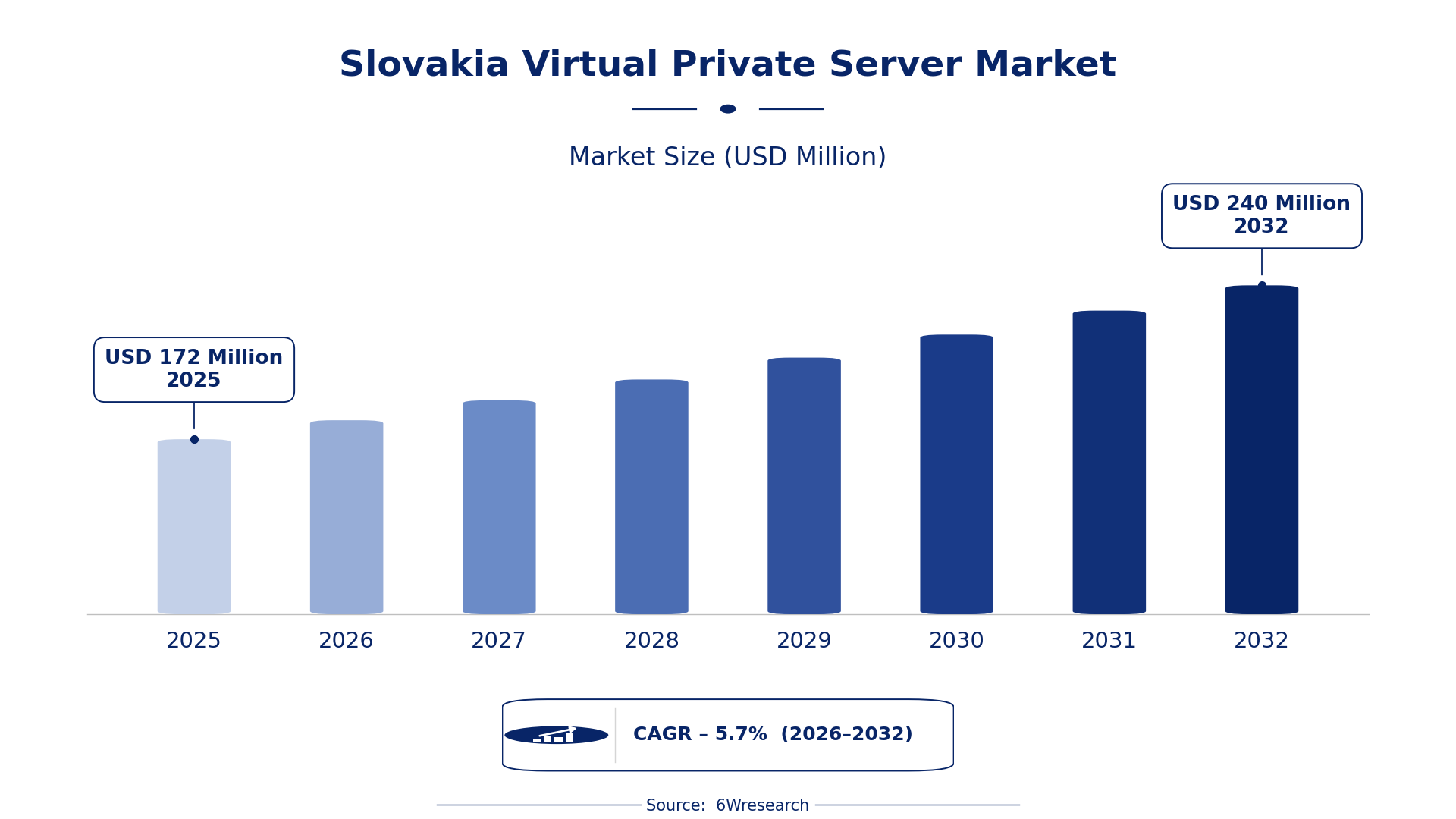
The Slovakia Virtual Private Server Market was estimated at USD 172 Million in 2025 and is projected to reach USD 240 Million by 2032, growing at a CAGR of 5.7% from 2026 to 2032.
Slovakia Virtual Private Server Market Synopsis
The Slovakia Virtual Private Server market is currently experiencing notable momentum, driven by a surge in demand for adaptable and secure hosting solutions. As businesses increasingly seek to enhance their online presence, the VPS market is evolving to meet their diverse needs, indicating a positive trajectory for the foreseeable future.
This growth is not just a passing trend; it reflects a broader shift towards digital transformation across various sectors in Slovakia. Organizations are prioritizing flexibility, scalability, and robust security features, setting the stage for sustained expansion in the VPS market.
Slovakia Virtual Private Server Market Year-wise Growth Rate and Key Drivers
This graph illustrates the annual growth rates of the Slovakia Virtual Private Server Market from 2021 to 2032, highlighting a steady upward trajectory and projected expansion over the forecast period.
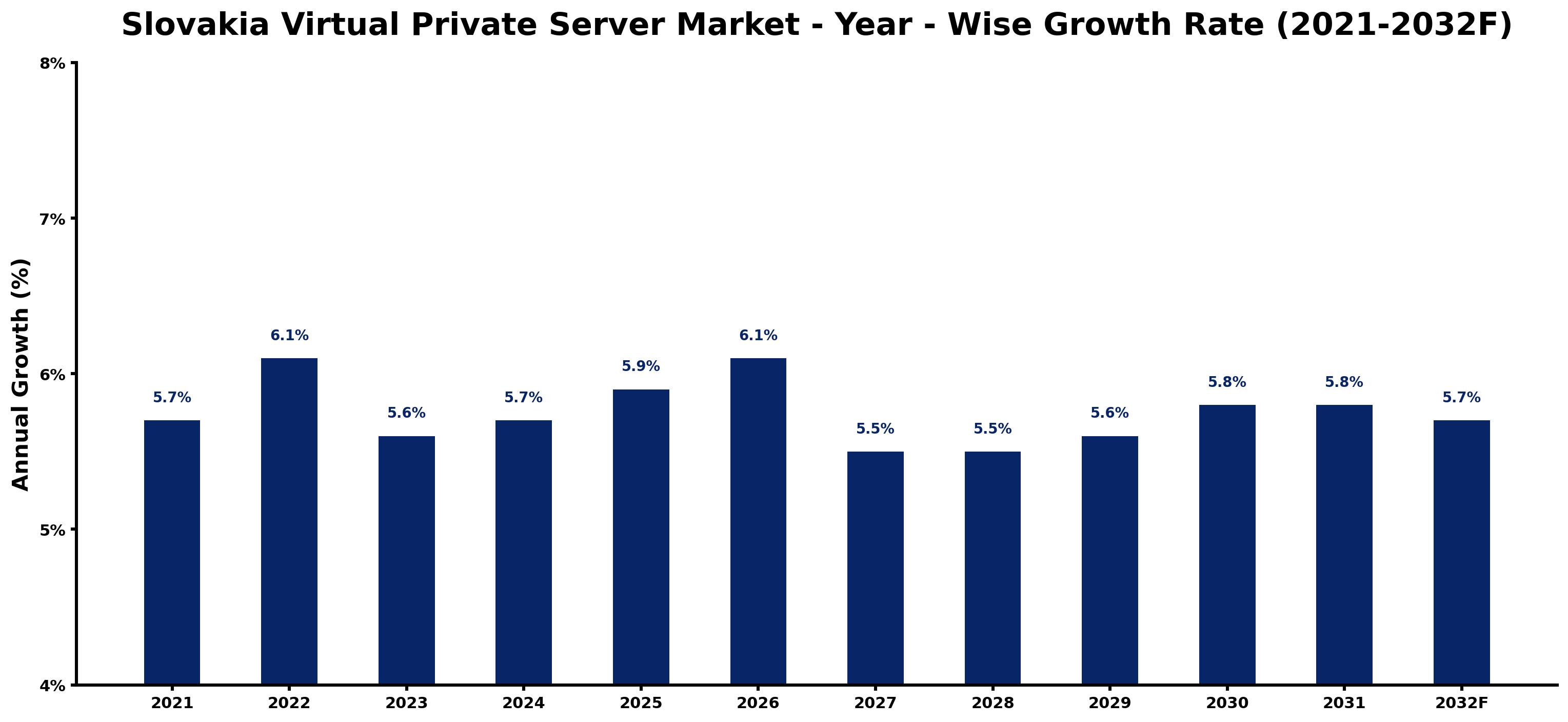
The table below presents the year‑wise growth rates along with the key drivers influencing the market
| Year | Growth Rate | Major Drivers |
| 2021 | 5.7% | Rise in remote work boosting demand for VPS services. |
| 2022 | 6.1% | Increased cybersecurity regulations driving virtual server adoption. |
| 2023 | 5.6% | Growing e-commerce sector necessitating scalable IT infrastructures. |
| 2024 | 5.7% | Cloud computing awareness increasing among SMEs in Slovakia. |
| 2025 | 5.9% | Slovak startups prioritizing flexible hosting solutions for growth. |
| 2026 | 6.1% | Government incentives for tech innovation supporting VPS market. |
| 2027 | 5.5% | Surge in online education propelling server demand. |
| 2028 | 5.5% | Rise of fintech companies requiring robust VPS solutions. |
| 2029 | 5.6% | Increased data privacy concerns driving demand for secure VPS. |
| 2030 | 5.8% | Digital marketing trends increasing reliance on VPS hosting. |
| 2031 | 5.8% | Growth in gaming industry stimulating high-performance server needs. |
| 2032 | 5.7% | Emergence of IoT applications requiring reliable server infrastructure. |
Note: Market size estimations and growth projections presented in this report are based on 6Wresearch's proprietary forecasting methodology, utilizing the latest available industry data, government publications, and primary research inputs.
Slovakia Virtual Private Server Market Key Takeaways
Below are some of the specific key takeaways from the market, including:
- The increasing adoption of cloud services is a primary driver of VPS demand in Slovakia.
- Businesses are prioritizing cost-effective and customizable hosting solutions to enhance operational efficiency.
- Hybrid cloud environments are becoming a focal point for organizations looking for flexible infrastructure.
- Ongoing governmental initiatives aim to bolster digital infrastructure and ensure compliance with EU regulations.
- There is a growing emphasis on specialized VPS solutions tailored for specific industries like e-commerce and healthcare.
Evaluation of Restraints in Slovakia Virtual Private Server Market
The Slovakia Virtual Private Server market faces several constraints that could impede its potential growth. Intense competition among providers leads to pricing pressures, which can affect profit margins and service quality. Additionally, ensuring data security and compliance with strict regulations remains a top priority, necessitating continuous investment in technology and infrastructure. Companies also struggle with delivering consistent uptime and performance, vital to customer satisfaction. These factors create a challenging environment that requires VPS providers to remain agile and innovative.
Slovakia Virtual Private Server Market Trends
Key trends shaping the Slovakia VPS market include a marked shift towards hybrid cloud solutions, where businesses seek to combine on-premise and cloud resources for optimal performance. The growing importance of data security is compelling organizations to adopt VPS for its enhanced security features. on top of that, the rise of e-commerce and digital marketing initiatives is propelling demand for VPS solutions that can support high traffic and ensure uninterrupted service.
Slovakia Virtual Private Server Market Opportunities
There are substantial opportunities within the Slovakia VPS market, particularly for providers that can deliver managed services tailored to small and medium-sized enterprises. These businesses are increasingly seeking cost-effective hosting solutions that do not compromise on performance. on top of that, as industries like finance and healthcare require specialized VPS solutions to meet compliance and security standards, providers can carve out niche markets. Strategic partnerships with local data centers and investments in cutting-edge technologies will further enhance market positioning.
Government Initiatives in the Slovakia Virtual Private Server Market
Government policies in Slovakia are increasingly focused on fostering a secure and competitive environment for the VPS market. These initiatives are pivotal for promoting digital transformation and ensuring compliance with European Union regulations. The regulatory framework aims to support fair competition while safeguarding consumer rights, which ultimately benefits the VPS ecosystem.
- A recently completed initiative involved the enhancement of broadband infrastructure to improve connectivity for VPS providers across the country.
- A currently ongoing project focuses on developing a regulatory framework that mandates greater transparency in pricing for VPS services.
- Planned initiatives include a public-private partnership aimed at expanding IT education and training programs to bolster the local workforce in the tech sector.
- The government is also exploring policies to promote energy-efficient data centers to align with sustainability goals.
Future Insights of the Slovakia Virtual Private Server Market
Looking ahead to 2026-2032, the Slovakia Virtual Private Server market is expected to maintain a steady growth trajectory. As digital transformation becomes imperative for businesses across all sectors, the demand for VPS solutions will likely expand. Enhanced virtualization technologies and investments in advanced data center infrastructure are set to provide the necessary foundation for this growth. Providers that prioritize innovation and customer-centric services will be well-positioned to capture emerging opportunities.
Slovakia Virtual Private Server Market Latest Developments
In the last 12-14 months, the Slovakia Virtual Private Server market has seen several dynamic developments that reflect the sector's growth and innovation. Providers are increasingly focusing on enhancing their service offerings and expanding their market presence to meet the evolving demands of businesses.
- A leading regional operator launched a new line of high-performance VPS solutions in early 2025, designed to cater to the needs of e-commerce platforms.
- Currently ongoing is an initiative by a major technology vendor to upgrade existing VPS infrastructure, improving service delivery and customer satisfaction.
- Several providers are collaborating with local universities to develop training programs, which began in Q3 2025, aimed at creating a skilled workforce for the tech industry.
- A planned rollout of enhanced security features is expected to begin in the second half of 2026, addressing growing concerns around data protection.
Slovakia Virtual Private Server Market - Key Attractiveness of the Report
- 10 Years of Market Numbers
- Historical Data Starting from 2022 to 2025
- Base Year: 2025
- Forecast Data until 2032
- Key Performance Indicators Impacting the Market
- Major Upcoming Developments and Projects
Key Highlights of the Report:
- Slovakia Virtual Private Server Market Outlook
- Market Size of Slovakia Virtual Private Server Market, 2025
- Forecast of Slovakia Virtual Private Server Market, 2032
- Historical Data and Forecast of Slovakia Virtual Private Server Revenues & Volume for the Period 2022-2032F
- Slovakia Virtual Private Server Market Trend Evolution
- Slovakia Virtual Private Server Market Drivers and Challenges
- Slovakia Virtual Private Server Price Trends
- Slovakia Virtual Private Server Porter's Five Forces
- Slovakia Virtual Private Server Industry Life Cycle
- Historical Data and Forecast of Slovakia Virtual Private Server Market Revenues & Volume By Operating System for the Period 2022-2032F
- Historical Data and Forecast of Slovakia Virtual Private Server Market Revenues & Volume By Windows for the Period 2022-2032F
- Historical Data and Forecast of Slovakia Virtual Private Server Market Revenues & Volume By Linux for the Period 2022-2032F
- Historical Data and Forecast of Slovakia Virtual Private Server Market Revenues & Volume By Vertical for the Period 2022-2032F
- Historical Data and Forecast of Slovakia Virtual Private Server Market Revenues & Volume By BFSI for the Period 2022-2032F
- Historical Data and Forecast of Slovakia Virtual Private Server Market Revenues & Volume By Government for the Period 2022-2032F
- Historical Data and Forecast of Slovakia Virtual Private Server Market Revenues & Volume By Defense for the Period 2022-2032F
- Historical Data and Forecast of Slovakia Virtual Private Server Market Revenues & Volume By IT for the Period 2022-2032F
- Historical Data and Forecast of Slovakia Virtual Private Server Market Revenues & Volume By Telecommunication for the Period 2022-2032F
- Historical Data and Forecast of Slovakia Virtual Private Server Market Revenues & Volume By Retail for the Period 2022-2032F
- Historical Data and Forecast of Slovakia Virtual Private Server Market Revenues & Volume By Healthcare for the Period 2022-2032F
- Historical Data and Forecast of Slovakia Virtual Private Server Market Revenues & Volume By Organization Size for the Period 2022-2032F
- Historical Data and Forecast of Slovakia Virtual Private Server Market Revenues & Volume By SMEs for the Period 2022-2032F
- Historical Data and Forecast of Slovakia Virtual Private Server Market Revenues & Volume By Large Enterprises for the Period 2022-2032F
- Slovakia Virtual Private Server Import Export Trade Statistics
- Market Opportunity Assessment By Operating System
- Market Opportunity Assessment By Vertical
- Market Opportunity Assessment By Organization Size
- Slovakia Virtual Private Server Top Companies Market Share
- Slovakia Virtual Private Server Competitive Benchmarking By Technical and Operational Parameters
- Slovakia Virtual Private Server Company Profiles
- Slovakia Virtual Private Server Key Strategic Recommendations






































