Slovakia Wood Charcoal Market Size (2020-2030)
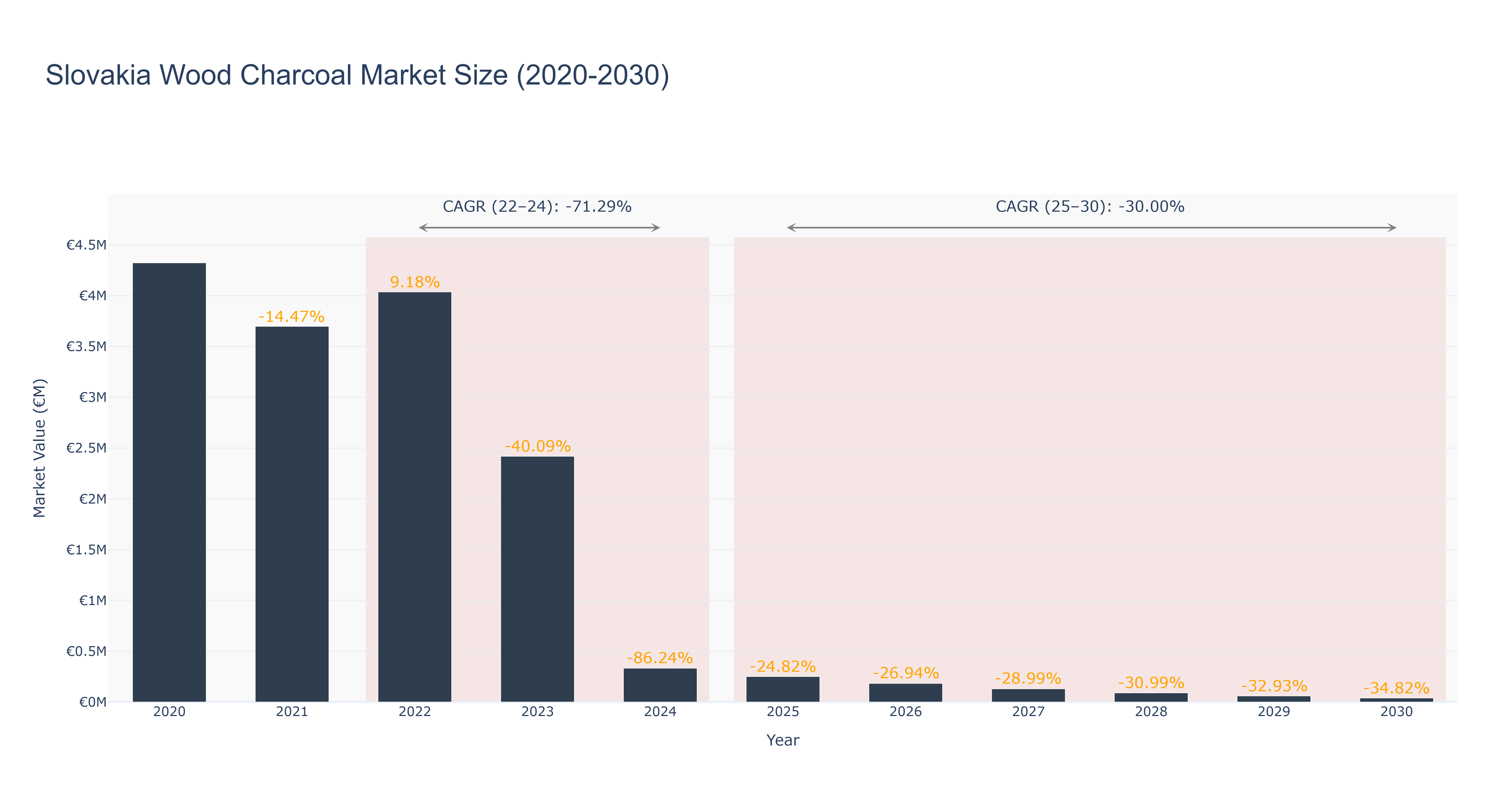
The Slovakia Wood Charcoal Market experienced its peak in 2020, with a market size of €4.32 million. However, subsequent years revealed significant volatility, with actual market sizes of €3.70 million in 2021, €4.04 million in 2022, and a steep decline to €332.94 thousand by 2024, resulting in a compound annual growth rate (CAGR) of -71.29% for the period. The downturn can be attributed to factors such as changing consumer preferences, increased environmental regulations, and competition from alternative fuel sources. Looking ahead, the forecasted market sizes from 2025 to 2030 are projected to continue declining, with a CAGR of -30.00%. This trend reflects ongoing challenges, including reduced demand and potential supply chain disruptions. Without significant innovation or regulatory support, the market is likely to struggle, emphasizing the need for strategic pivots to capture evolving consumer trends and preferences in the energy sector.
Slovakia Wood Charcoal Market: Production & Trade Performance (2019-2025)
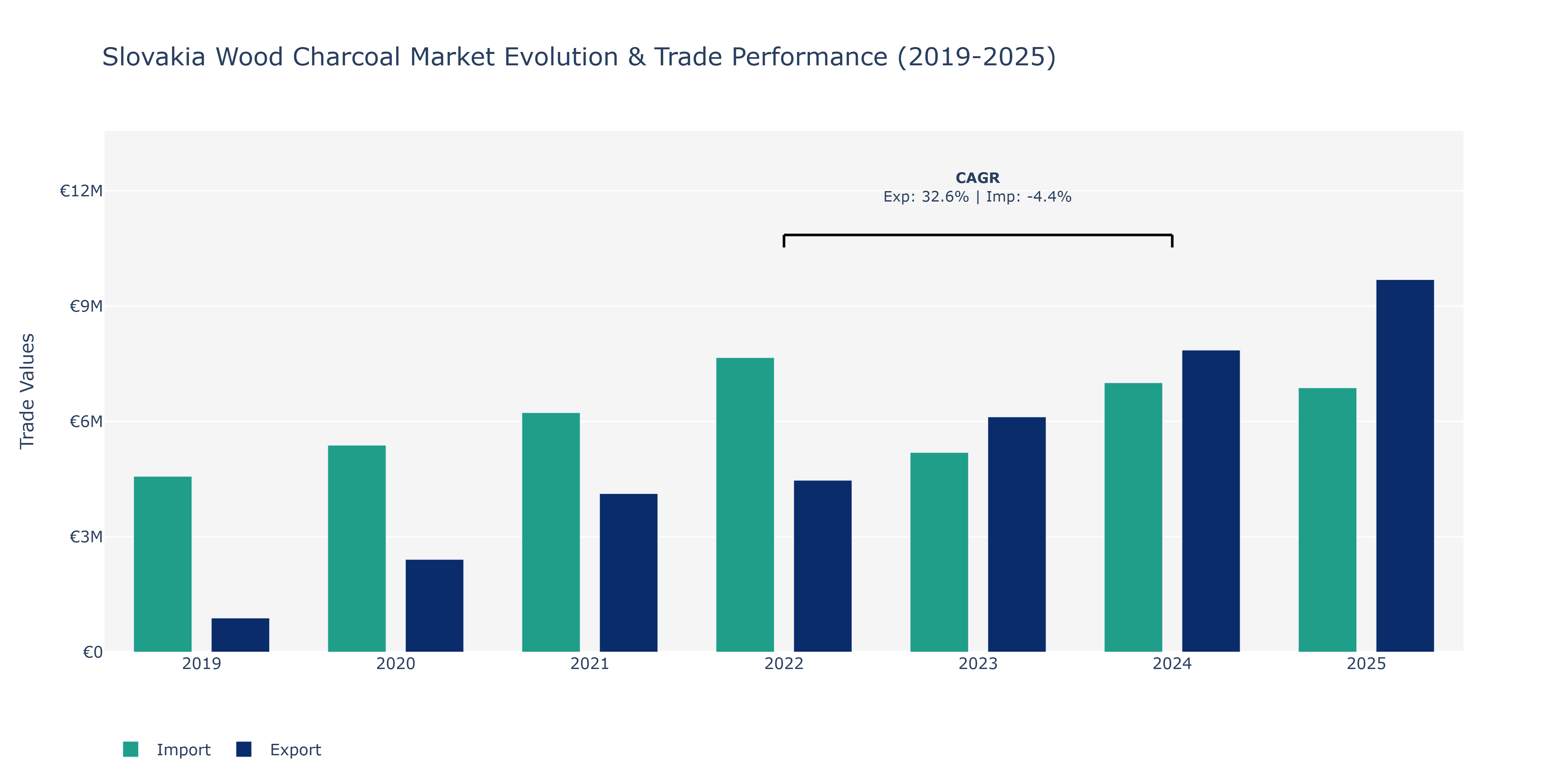
The Slovakia Wood Charcoal Market witnessed notable fluctuations in both Exports and Imports over the analyzed period. Between 2019 and 2020, Exports surged from €883.65 thousand to €2.41 million, reflecting a substantial increase driven by potential factors such as expanding overseas markets and enhanced production efficiencies. Conversely, Imports also rose during this period, albeit to a lesser extent, reaching €5.38 million in 2020. The following years demonstrated further growth in both metrics as Exports continued to climb to €9.69 million in 2025. In contrast, Imports experienced a decline in 2023 before recovering. The dynamics of the market could be attributed to changing consumer preferences towards eco-friendly alternatives, increased global demand for sustainable products, and technological advancements in production processes. The market's ability to adapt to evolving environmental regulations and innovation in sustainable sourcing practices likely played a significant role in shaping these trends.
Slovakia Wood Charcoal Market Synopsis
The Slovakia Wood Charcoal Market is experiencing steady growth due to increasing demand for eco-friendly and sustainable cooking fuel options. Wood charcoal is widely used for grilling and barbecuing purposes in households and restaurants across the country. The market is driven by factors such as the rising popularity of outdoor cooking activities, growing disposable income levels, and a shift towards organic and natural products. Manufacturers in Slovakia are focusing on producing high-quality wood charcoal products to meet consumer preferences for clean and efficient cooking fuel. Additionally, the market is witnessing a trend towards the use of premium hardwood charcoal for enhanced flavor profiles in food preparation. Overall, the Slovakia Wood Charcoal Market is poised for further expansion with opportunities for innovation and product diversification.
Slovakia Wood Charcoal Market Trends
The Slovakia Wood Charcoal Market is experiencing a growing demand for sustainable and environmentally-friendly charcoal products. Consumers are increasingly seeking natural, chemical-free alternatives to traditional charcoal products, driving the popularity of wood charcoal sourced from sustainable forests. There is also a rising interest in premium quality charcoal for grilling and barbecuing, with a focus on longer burning times and higher heat output. Additionally, the market is seeing a trend towards innovative packaging designs and convenient charcoal products such as instant-lighting charcoal briquettes. As more consumers prioritize eco-conscious choices and premium grilling experiences, the Slovakia Wood Charcoal Market is expected to continue evolving to meet these demands.
Slovakia Wood Charcoal Market Challenges
In the Slovakia Wood Charcoal Market, some challenges include increasing competition from alternative fuel sources like gas and electricity, as well as the rising environmental concerns associated with charcoal production. Additionally, fluctuating raw material prices, such as wood, can impact the profitability of charcoal producers. There is also a need for greater awareness and education among consumers regarding sustainable charcoal production practices and the importance of choosing charcoal from responsibly managed sources. Adapting to changing consumer preferences and regulatory requirements, such as emissions standards and deforestation concerns, presents another obstacle for players in the Slovakia Wood Charcoal Market. Overall, navigating these challenges requires charcoal producers to innovate, invest in sustainable practices, and differentiate their products in a competitive market landscape.
Slovakia Wood Charcoal Market Investment Opportunities
The Slovakia Wood Charcoal Market presents attractive investment opportunities due to the growing demand for charcoal products driven by the rising popularity of barbecuing and grilling among consumers. Investors can consider opportunities in manufacturing and distribution of high-quality wood charcoal products for both domestic and export markets. Additionally, there is potential for investment in innovative technologies for sustainable charcoal production, such as utilizing biomass waste or implementing carbon-neutral production processes, to align with environmental regulations and consumer preferences. Collaborating with local suppliers and retailers to establish a strong distribution network can also be a strategic investment approach in capturing a larger market share and increasing profitability in the Slovakia Wood Charcoal Market.
Jordan Agar Market Government Policies
The government of Slovakia has implemented various policies related to the wood charcoal market to promote sustainability and environmental protection. These policies focus on sustainable forestry practices, including regulations on the harvesting of wood for charcoal production to prevent deforestation and promote reforestation efforts. Additionally, there are strict emissions standards in place to reduce air pollution from charcoal production processes. The government also supports the development of alternative charcoal production methods that are more environmentally friendly, such as using waste wood or biomass sources. Overall, the policies aim to balance the economic benefits of the wood charcoal market with environmental conservation efforts to ensure a sustainable future for the industry in Slovakia.
Slovakia Wood Charcoal Market Future Outlook
The Slovakia Wood Charcoal Market is expected to experience steady growth in the coming years, driven by factors such as increasing consumer preference for natural and sustainable fuel sources, the rising popularity of outdoor cooking activities, and the growing demand for eco-friendly products. Additionally, the market is likely to benefit from the expanding food and beverage industry, where wood charcoal is commonly used for grilling and smoking purposes. Manufacturers are expected to focus on product innovation, differentiation, and sustainable sourcing practices to stay competitive in the market. Overall, the Slovakia Wood Charcoal Market is poised for positive growth prospects, with opportunities for market expansion and increased adoption of wood charcoal products in various applications.
Key Highlights of the Report:
- Slovakia Wood Charcoal Market Outlook
- Market Size of Slovakia Wood Charcoal Market, 2021
- Forecast of Slovakia Wood Charcoal Market, 2031
- Historical Data and Forecast of Slovakia Wood Charcoal Revenues & Volume for the Period 2018 - 2031
- Slovakia Wood Charcoal Market Trend Evolution
- Slovakia Wood Charcoal Market Drivers and Challenges
- Slovakia Wood Charcoal Price Trends
- Slovakia Wood Charcoal Porter's Five Forces
- Slovakia Wood Charcoal Industry Life Cycle
- Historical Data and Forecast of Slovakia Wood Charcoal Market Revenues & Volume By Product for the Period 2018 - 2031
- Historical Data and Forecast of Slovakia Wood Charcoal Market Revenues & Volume By Charcoal Lumps for the Period 2018 - 2031
- Historical Data and Forecast of Slovakia Wood Charcoal Market Revenues & Volume By Charcoal Briquettes for the Period 2018 - 2031
- Historical Data and Forecast of Slovakia Wood Charcoal Market Revenues & Volume By Charcoal Powder for the Period 2018 - 2031
- Historical Data and Forecast of Slovakia Wood Charcoal Market Revenues & Volume By Wood for the Period 2018 - 2031
- Historical Data and Forecast of Slovakia Wood Charcoal Market Revenues & Volume By Softwood for the Period 2018 - 2031
- Historical Data and Forecast of Slovakia Wood Charcoal Market Revenues & Volume By Hardwood for the Period 2018 - 2031
- Historical Data and Forecast of Slovakia Wood Charcoal Market Revenues & Volume By Application for the Period 2018 - 2031
- Historical Data and Forecast of Slovakia Wood Charcoal Market Revenues & Volume By Fuel Feedstock for the Period 2018 - 2031
- Historical Data and Forecast of Slovakia Wood Charcoal Market Revenues & Volume By Reducing Agent for the Period 2018 - 2031
- Historical Data and Forecast of Slovakia Wood Charcoal Market Revenues & Volume By Filtration Agent & Gas Masking for the Period 2018 - 2031
- Historical Data and Forecast of Slovakia Wood Charcoal Market Revenues & Volume By Decolorizing Agent for the Period 2018 - 2031
- Historical Data and Forecast of Slovakia Wood Charcoal Market Revenues & Volume By Gastric Medicine for the Period 2018 - 2031
- Historical Data and Forecast of Slovakia Wood Charcoal Market Revenues & Volume By Sketches & Paints for the Period 2018 - 2031
- Historical Data and Forecast of Slovakia Wood Charcoal Market Revenues & Volume By Soil Conditioning for the Period 2018 - 2031
- Historical Data and Forecast of Slovakia Wood Charcoal Market Revenues & Volume By Others for the Period 2018 - 2031
- Historical Data and Forecast of Slovakia Wood Charcoal Market Revenues & Volume By End Use for the Period 2018 - 2031
- Historical Data and Forecast of Slovakia Wood Charcoal Market Revenues & Volume By Residential for the Period 2018 - 2031
- Historical Data and Forecast of Slovakia Wood Charcoal Market Revenues & Volume By Cooking Fuel for the Period 2018 - 2031
- Historical Data and Forecast of Slovakia Wood Charcoal Market Revenues & Volume By Gardening for the Period 2018 - 2031
- Historical Data and Forecast of Slovakia Wood Charcoal Market Revenues & Volume By Commercial Paints & Sketches for the Period 2018 - 2031
- Historical Data and Forecast of Slovakia Wood Charcoal Market Revenues & Volume By Water Treatment for the Period 2018 - 2031
- Historical Data and Forecast of Slovakia Wood Charcoal Market Revenues & Volume By Industrial for the Period 2018 - 2031
- Slovakia Wood Charcoal Import Export Trade Statistics
- Market Opportunity Assessment By Product
- Market Opportunity Assessment By Wood
- Market Opportunity Assessment By Application
- Market Opportunity Assessment By End Use
- Slovakia Wood Charcoal Top Companies Market Share
- Slovakia Wood Charcoal Competitive Benchmarking By Technical and Operational Parameters
- Slovakia Wood Charcoal Company Profiles
- Slovakia Wood Charcoal Key Strategic Recommendations






































