Slovenia Breakfast Food Market: Import Trend Analysis
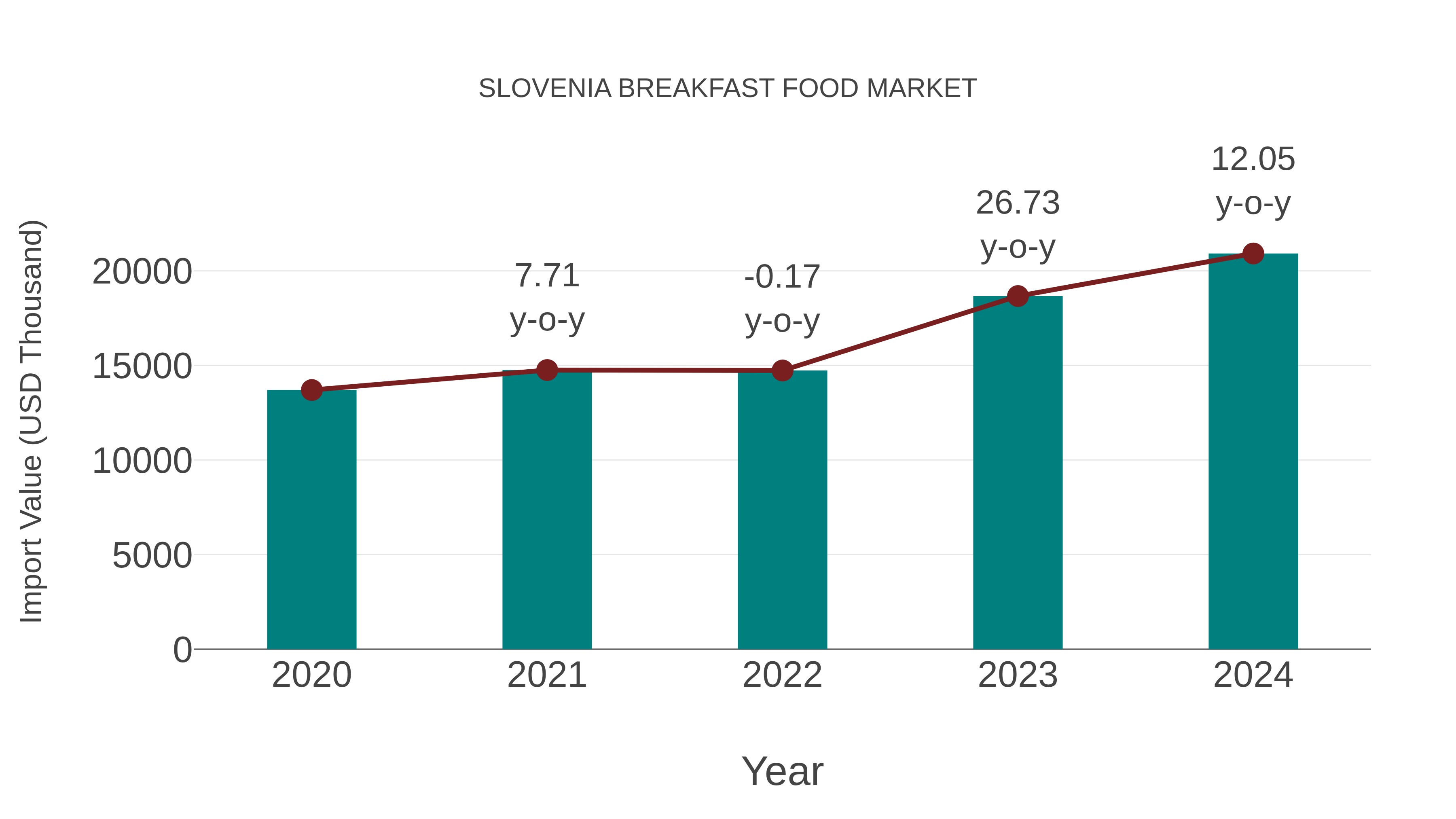
Slovenia import trend in the breakfast food market showed a notable growth rate of 12.05% from 2023 to 2024, with a compound annual growth rate (CAGR) of 11.16% for the period 2020-2024. This upward trajectory can be attributed to evolving consumer preferences towards healthier breakfast options, driving increased demand for imported breakfast products in Slovenia.
Breakfast Food Market: Slovenia vs Top 5 Major Economies in 2027 (Europe)
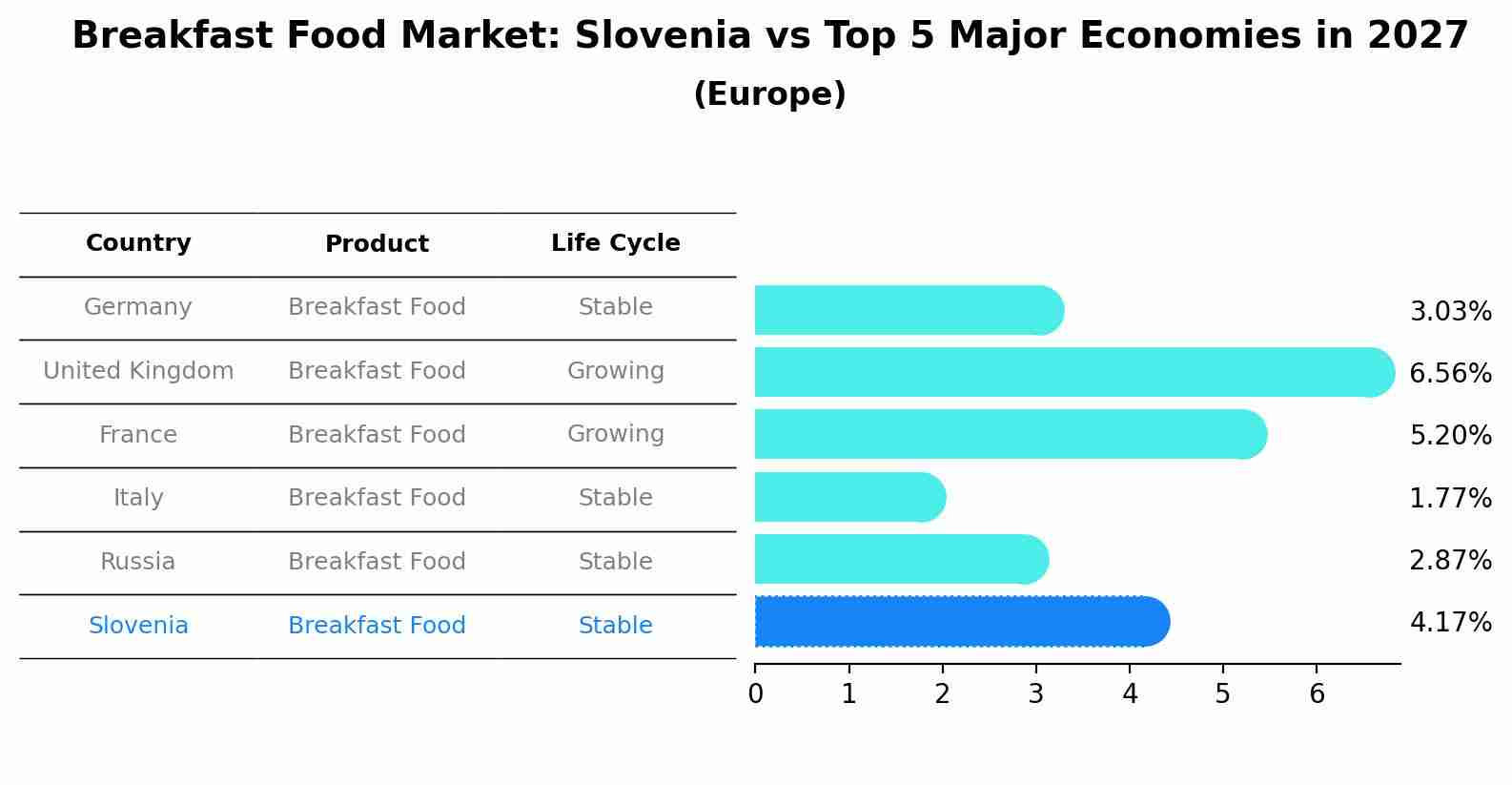
In the Europe region, the Breakfast Food market in Slovenia is projected to expand at a stable growth rate of 4.17% by 2027. The largest economy is Germany, followed by United Kingdom, France, Italy and Russia.
Key Highlights of the Report:
- Slovenia Breakfast Food Market Outlook
- Market Size of Slovenia Breakfast Food Market, 2025
- Forecast of Slovenia Breakfast Food Market, 2032
- Historical Data and Forecast of Slovenia Breakfast Food Revenues & Volume for the Period 2022-2032F
- Slovenia Breakfast Food Market Trend Evolution
- Slovenia Breakfast Food Market Drivers and Challenges
- Slovenia Breakfast Food Price Trends
- Slovenia Breakfast Food Porter`s Five Forces
- Slovenia Breakfast Food Industry Life Cycle
- Historical Data and Forecast of Slovenia Breakfast Food Market Revenues & Volume By Product Type for the Period 2022-2032F
- Historical Data and Forecast of Slovenia Breakfast Food Market Revenues & Volume By Cereals for the Period 2022-2032F
- Historical Data and Forecast of Slovenia Breakfast Food Market Revenues & Volume By Beverages for the Period 2022-2032F
- Historical Data and Forecast of Slovenia Breakfast Food Market Revenues & Volume By Snack Bars for the Period 2022-2032F
- Historical Data and Forecast of Slovenia Breakfast Food Market Revenues & Volume By Ready meals for the Period 2022-2032F
- Historical Data and Forecast of Slovenia Breakfast Food Market Revenues & Volume By Others for the Period 2022-2032F
- Historical Data and Forecast of Slovenia Breakfast Food Market Revenues & Volume By Distribution Channel for the Period 2022-2032F
- Historical Data and Forecast of Slovenia Breakfast Food Market Revenues & Volume By Hypermarkets and Supermarkets for the Period 2022-2032F
- Historical Data and Forecast of Slovenia Breakfast Food Market Revenues & Volume By Independent Retailers for the Period 2022-2032F
- Historical Data and Forecast of Slovenia Breakfast Food Market Revenues & Volume By Specialist Retailers for the Period 2022-2032F
- Historical Data and Forecast of Slovenia Breakfast Food Market Revenues & Volume By Convenience Stores for the Period 2022-2032F
- Historical Data and Forecast of Slovenia Breakfast Food Market Revenues & Volume By Others for the Period 2022-2032F
- Slovenia Breakfast Food Import Export Trade Statistics
- Market Opportunity Assessment By Product Type
- Market Opportunity Assessment By Distribution Channel
- Slovenia Breakfast Food Top Companies Market Share
- Slovenia Breakfast Food Competitive Benchmarking By Technical and Operational Parameters
- Slovenia Breakfast Food Company Profiles
- Slovenia Breakfast Food Key Strategic Recommendations






































