Slovenia Instant Pot Market: Import Trend Analysis
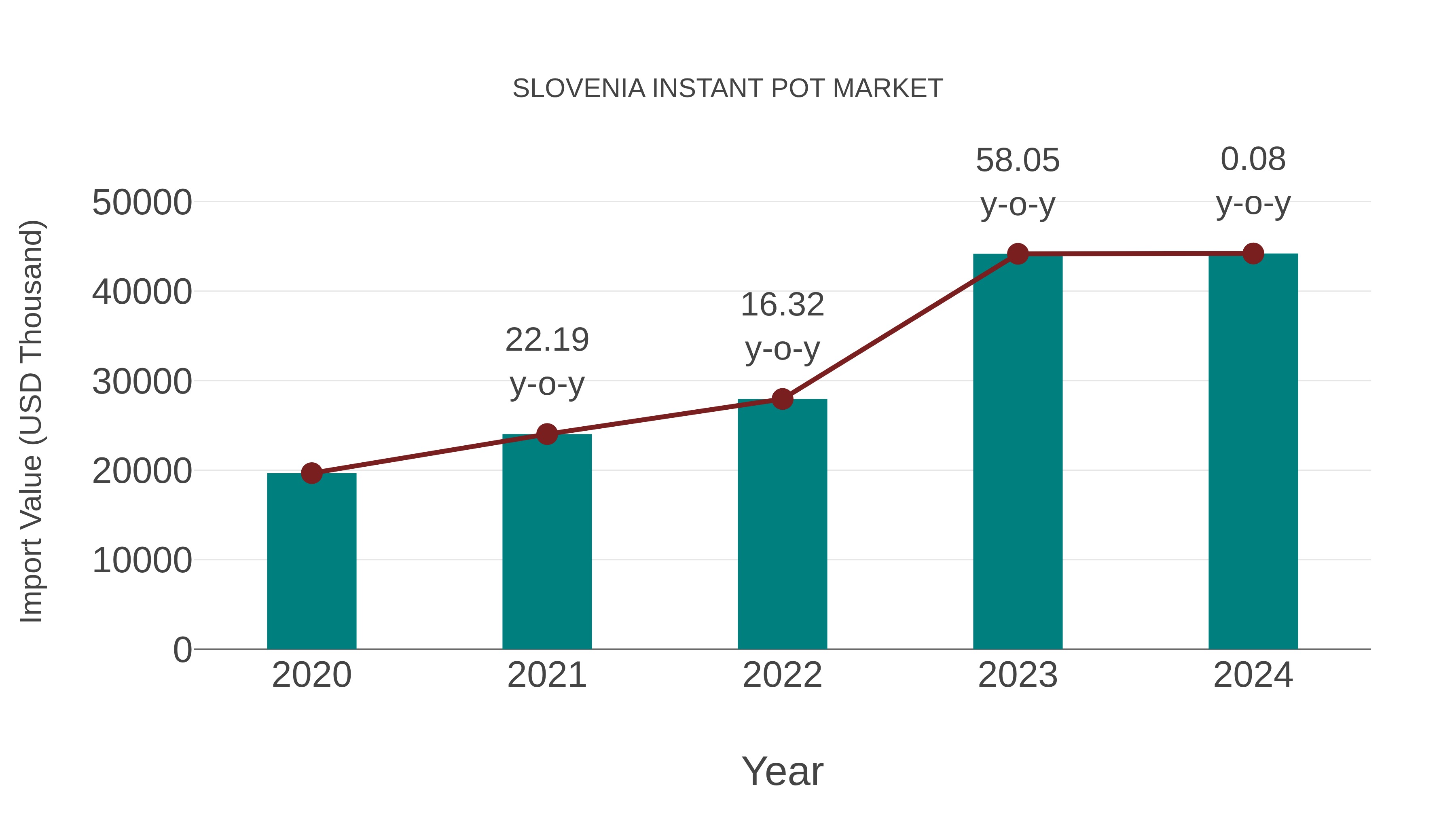
Slovenia import trend for the instant pot market showed a modest growth rate of 0.08% from 2023 to 2024, with a notable compound annual growth rate (CAGR) of 22.45% from 2020 to 2024. This significant CAGR indicates a robust import momentum driven by increasing consumer demand for convenience cooking solutions in the country.
Slovenia Instant Pot Market Overview
The Slovenia Instant Pot market is experiencing steady growth due to the increasing popularity of cooking at home and the convenience offered by multi-functional kitchen appliances. Consumers in Slovenia are showing a preference for Instant Pots due to their ability to pressure cook, slow cook, steam, sauté, and more in a single device. The market is primarily driven by factors such as busy lifestyles, rising awareness of healthy eating habits, and the desire for efficient cooking solutions. Prominent retailers in Slovenia are offering a wide range of Instant Pot models to cater to the diverse needs of consumers, from students and young professionals to families and cooking enthusiasts. As the market continues to evolve, there is a growing trend towards incorporating smart technology and advanced features in Instant Pot products to enhance user experience and convenience.
Slovenia Instant Pot Market Trends and Opportunities
The Slovenia Instant Pot market is currently experiencing a growing trend towards convenience cooking and healthy eating, driving the demand for multi-functional kitchen appliances like Instant Pots. Consumers are increasingly seeking time-saving solutions for meal preparation without compromising on taste or nutrition. Opportunities in the market include expanding product offerings to cater to diverse dietary preferences, such as vegan, keto, and gluten-free options. Additionally, there is a rising interest in smart kitchen appliances, presenting a chance for manufacturers to incorporate technology features into Instant Pots for enhanced usability and connectivity. Collaborations with popular chefs or influencers to create exclusive recipes and promotions could also help brands capitalize on the growing interest in home cooking and culinary creativity among Slovenian consumers.
Slovenia Instant Pot Market Challenges
In the Slovenia Instant Pot market, some of the main challenges faced include limited awareness and understanding of the product among consumers, competition from traditional cooking methods and other kitchen appliances, and the relatively higher price point of Instant Pots compared to conventional cooking tools. Additionally, cultural preferences for traditional cooking methods and skepticism towards new kitchen gadgets pose obstacles to widespread adoption. Moreover, the lack of localized marketing efforts and customer support tailored to the Slovenian market further hinders the growth of Instant Pot sales in the region. Overcoming these challenges would require targeted marketing campaigns, education on the benefits and usage of Instant Pots, competitive pricing strategies, and building trust among consumers through effective customer service initiatives.
Slovenia Instant Pot Market Drivers
The Slovenia Instant Pot market is primarily driven by increasing consumer demand for convenient and time-saving cooking solutions. The busy lifestyles of modern consumers have led to a growing preference for kitchen appliances that can streamline the cooking process without compromising on taste or nutrition. The versatility of Instant Pots, which offer functions such as pressure cooking, slow cooking, steaming, and sautéing in one device, appeals to a wide range of consumers looking to simplify meal preparation. Additionally, the rising trend of home cooking and the desire for healthier eating habits have further fueled the demand for Instant Pots in Slovenia. Manufacturers` continuous innovation in product features and designs, coupled with aggressive marketing strategies, are also contributing factors driving the growth of the Instant Pot market in Slovenia.
Slovenia Instant Pot Market Government Policies
The government of Slovenia has various policies in place that impact the Instant Pot market. These policies primarily focus on food safety standards, import regulations, and consumer protection. The Slovenian government ensures that Instant Pot products meet strict quality and safety requirements before being imported and sold in the market. Additionally, there are regulations in place to protect consumers from false advertising, pricing manipulation, and other deceptive practices. In terms of import regulations, the government may impose tariffs or restrictions on Instant Pot products coming into the country to protect local manufacturers and maintain a level playing field in the market. Overall, these policies aim to safeguard consumer interests, promote fair competition, and uphold quality standards within the Slovenia Instant Pot market.
Slovenia Instant Pot Market Future Outlook
The future outlook for the Instant Pot market in Slovenia appears promising, with a growing trend towards convenient and time-saving cooking solutions. As more consumers seek efficient ways to prepare meals at home, the demand for multi-functional cooking appliances like Instant Pots is expected to increase. Factors such as busy lifestyles, a focus on healthy eating, and the popularity of home cooking due to the COVID-19 pandemic are driving this trend. Manufacturers are likely to introduce new models with advanced features to cater to the evolving needs of Slovenian consumers. Additionally, marketing strategies emphasizing the benefits of Instant Pots, such as energy efficiency and versatility in meal preparation, are anticipated to further boost market growth in Slovenia.
Key Highlights of the Report:
- Slovenia Instant Pot Market Outlook
- Market Size of Slovenia Instant Pot Market, 2025
- Forecast of Slovenia Instant Pot Market, 2032
- Historical Data and Forecast of Slovenia Instant Pot Revenues & Volume for the Period 2022 - 2032F
- Slovenia Instant Pot Market Trend Evolution
- Slovenia Instant Pot Market Drivers and Challenges
- Slovenia Instant Pot Price Trends
- Slovenia Instant Pot Porter's Five Forces
- Slovenia Instant Pot Industry Life Cycle
- Historical Data and Forecast of Slovenia Instant Pot Market Revenues & Volume By Type for the Period 2022 - 2032F
- Historical Data and Forecast of Slovenia Instant Pot Market Revenues & Volume By Smart for the Period 2022 - 2032F
- Historical Data and Forecast of Slovenia Instant Pot Market Revenues & Volume By Conventional for the Period 2022 - 2032F
- Historical Data and Forecast of Slovenia Instant Pot Market Revenues & Volume By Cooking Mode for the Period 2022 - 2032F
- Historical Data and Forecast of Slovenia Instant Pot Market Revenues & Volume By Low Pressure for the Period 2022 - 2032F
- Historical Data and Forecast of Slovenia Instant Pot Market Revenues & Volume By High Pressure for the Period 2022 - 2032F
- Historical Data and Forecast of Slovenia Instant Pot Market Revenues & Volume By Capacity for the Period 2022 - 2032F
- Historical Data and Forecast of Slovenia Instant Pot Market Revenues & Volume By 3 Quarts for the Period 2022 - 2032F
- Historical Data and Forecast of Slovenia Instant Pot Market Revenues & Volume By 6 Quarts for the Period 2022 - 2032F
- Historical Data and Forecast of Slovenia Instant Pot Market Revenues & Volume By 8 Quarts for the Period 2022 - 2032F
- Historical Data and Forecast of Slovenia Instant Pot Market Revenues & Volume By 10 Quarts for the Period 2022 - 2032F
- Historical Data and Forecast of Slovenia Instant Pot Market Revenues & Volume By End-user for the Period 2022 - 2032F
- Historical Data and Forecast of Slovenia Instant Pot Market Revenues & Volume By Residential for the Period 2022 - 2032F
- Historical Data and Forecast of Slovenia Instant Pot Market Revenues & Volume By Commercial for the Period 2022 - 2032F
- Historical Data and Forecast of Slovenia Instant Pot Market Revenues & Volume By Distribution Channel for the Period 2022 - 2032F
- Historical Data and Forecast of Slovenia Instant Pot Market Revenues & Volume By Online for the Period 2022 - 2032F
- Historical Data and Forecast of Slovenia Instant Pot Market Revenues & Volume By Offline for the Period 2022 - 2032F
- Slovenia Instant Pot Import Export Trade Statistics
- Market Opportunity Assessment By Type
- Market Opportunity Assessment By Cooking Mode
- Market Opportunity Assessment By Capacity
- Market Opportunity Assessment By End-user
- Market Opportunity Assessment By Distribution Channel
- Slovenia Instant Pot Top Companies Market Share
- Slovenia Instant Pot Competitive Benchmarking By Technical and Operational Parameters
- Slovenia Instant Pot Company Profiles
- Slovenia Instant Pot Key Strategic Recommendations






































