Slovenia Marine Hvac Market: Import Trend Analysis
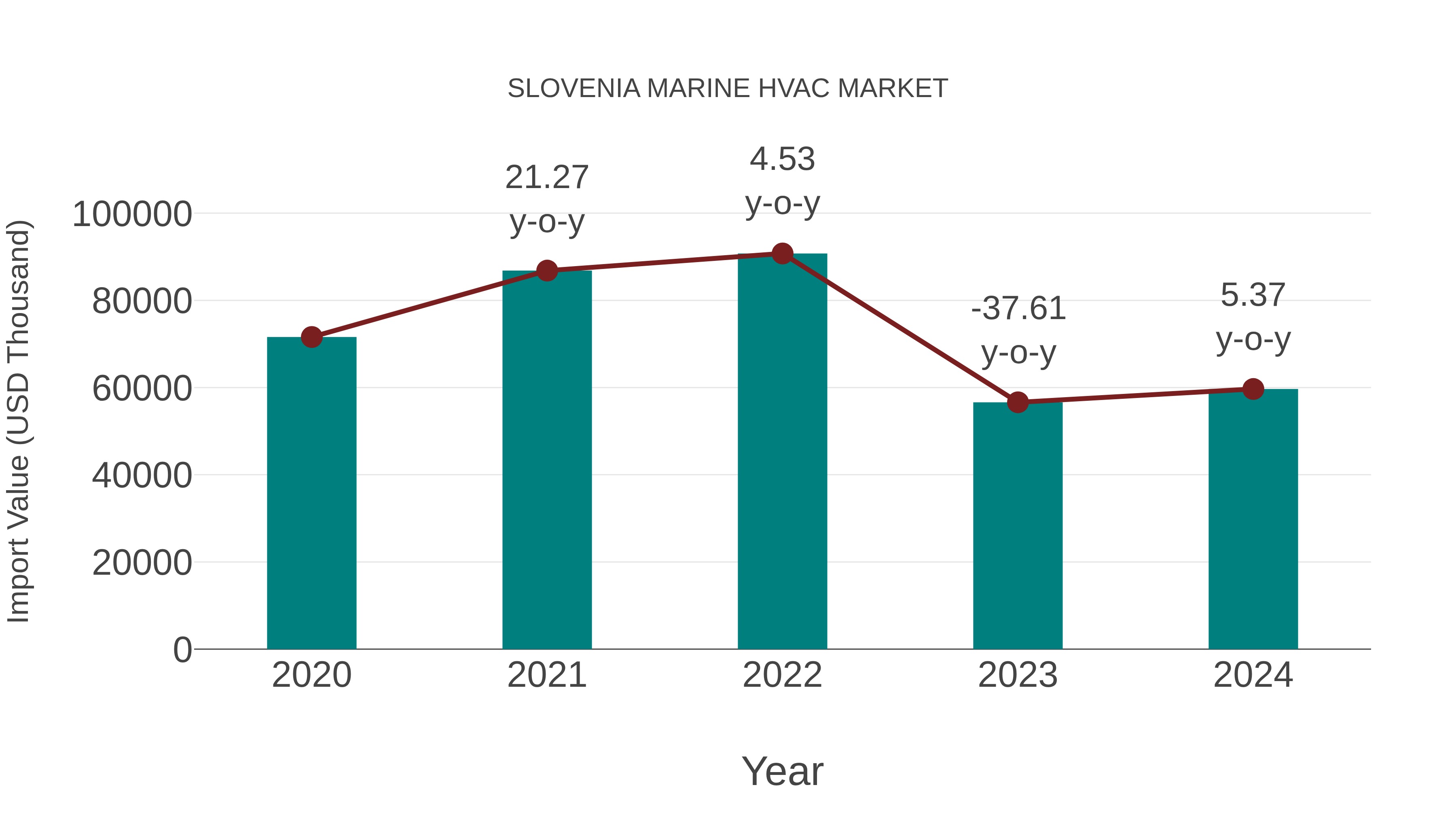
Slovenia import trend for the marine HVAC market experienced a growth rate of 5.37% from 2023 to 2024, contrasting with a compound annual growth rate (CAGR) of -4.45% from 2020 to 2024. This shift could be attributed to changing demand patterns or evolving trade policies impacting market stability.
Slovenia Marine HVAC Market Overview
The Slovenia Marine HVAC Market is witnessing steady growth due to the increasing demand for efficient heating, ventilation, and air conditioning systems in marine vessels. Factors such as the growing maritime tourism industry, rising investments in the construction of new ships, and the need for advanced HVAC technologies to ensure crew and passenger comfort are driving market growth. Key players in the Slovenia Marine HVAC Market are focusing on developing energy-efficient systems that comply with environmental regulations and provide enhanced performance. Additionally, innovations in smart HVAC solutions tailored for marine applications are expected to create lucrative opportunities for market players. Overall, the Slovenia Marine HVAC Market is poised for expansion as the maritime industry continues to emphasize the importance of quality HVAC systems in ensuring operational efficiency and occupant well-being.
Slovenia Marine HVAC Market Trends
The Slovenia Marine HVAC market is currently witnessing a trend towards energy-efficient and environmentally friendly HVAC systems. Ship owners and operators are increasingly demanding HVAC solutions that reduce energy consumption, lower operating costs, and comply with stringent environmental regulations. There is a growing focus on the integration of advanced technologies such as variable refrigerant flow (VRF) systems, heat recovery systems, and smart controls to optimize energy efficiency and overall performance. Additionally, there is a rising interest in the use of sustainable refrigerants and eco-friendly materials in marine HVAC systems to minimize the environmental impact. Overall, the trend in the Slovenia Marine HVAC market is towards innovation, sustainability, and efficiency to meet the evolving needs of the maritime industry.
Slovenia Marine HVAC Market Challenges
In the Slovenia Marine HVAC market, challenges include the high initial cost of installing marine HVAC systems, especially for smaller vessels or companies with limited budgets. Additionally, the specialized nature of marine HVAC systems requires skilled technicians for installation, maintenance, and repairs, which can be costly and not always readily available. The harsh marine environment also poses challenges in terms of corrosion, saltwater damage, and other maintenance issues that can reduce the lifespan of HVAC equipment. Furthermore, the need for energy-efficient solutions to comply with environmental regulations adds another layer of complexity for companies operating in the Slovenia Marine HVAC market. Overall, overcoming these challenges requires strategic planning, investment in training and technology, and a focus on long-term cost savings and sustainability.
Slovenia Marine HVAC Market Investment Opportunities
In the Slovenia Marine HVAC Market, there are promising investment opportunities in the development and installation of energy-efficient HVAC systems for marine vessels. With a growing focus on sustainability and environmental regulations within the maritime industry, there is a rising demand for HVAC solutions that reduce energy consumption and emissions. Investing in the research and development of innovative HVAC technologies tailored specifically for marine applications can provide a competitive edge in this market. Additionally, offering maintenance and servicing contracts for existing HVAC systems on ships can be a lucrative opportunity, as vessel operators prioritize the efficiency and reliability of their onboard heating, ventilation, and air conditioning systems. Partnering with shipyards and maritime companies to provide comprehensive HVAC solutions can also open up avenues for growth and expansion in the Slovenia Marine HVAC Market.
Slovenia Marine HVAC Market Government Policy
In Slovenia, government policies related to the Marine HVAC market focus on promoting energy efficiency and reducing environmental impact. The government has implemented regulations that require marine vessels to comply with strict emissions standards and energy efficiency requirements. Additionally, incentives such as subsidies and tax breaks are provided to encourage the adoption of eco-friendly HVAC systems in the maritime industry. The government also supports research and development efforts aimed at improving the efficiency and sustainability of marine HVAC technologies. Overall, the policies in Slovenia aim to drive the transition towards greener and more sustainable practices within the Marine HVAC market.
Slovenia Marine HVAC Market Future Outlook
The Slovenia Marine HVAC market is expected to experience steady growth in the coming years, driven by increasing demand for advanced HVAC systems in the maritime industry. Factors such as the rising focus on energy efficiency, stringent environmental regulations, and the growing trend of eco-friendly vessel designs will contribute to market expansion. Additionally, the increasing number of cruise ships, yachts, and commercial vessels being built or renovated with modern HVAC systems will further boost market growth. Technological advancements in HVAC systems, such as digital controls, energy management solutions, and air purification technologies, will also play a key role in shaping the future of the Slovenia Marine HVAC market. Overall, the market is poised for growth opportunities, offering potential for manufacturers and suppliers to capitalize on the evolving needs of the maritime sector.
Key Highlights of the Report:
- Slovenia Marine HVAC Market Outlook
- Market Size of Slovenia Marine HVAC Market, 2025
- Forecast of Slovenia Marine HVAC Market, 2032
- Historical Data and Forecast of Slovenia Marine HVAC Revenues & Volume for the Period 2022 - 2032F
- Slovenia Marine HVAC Market Trend Evolution
- Slovenia Marine HVAC Market Drivers and Challenges
- Slovenia Marine HVAC Price Trends
- Slovenia Marine HVAC Porter's Five Forces
- Slovenia Marine HVAC Industry Life Cycle
- Historical Data and Forecast of Slovenia Marine HVAC Market Revenues & Volume By Vessel Type for the Period 2022 - 2032F
- Historical Data and Forecast of Slovenia Marine HVAC Market Revenues & Volume By Passenger Vessels for the Period 2022 - 2032F
- Historical Data and Forecast of Slovenia Marine HVAC Market Revenues & Volume By Cargo Carriers for the Period 2022 - 2032F
- Historical Data and Forecast of Slovenia Marine HVAC Market Revenues & Volume By Fishing Vessels for the Period 2022 - 2032F
- Historical Data and Forecast of Slovenia Marine HVAC Market Revenues & Volume By Technology Type for the Period 2022 - 2032F
- Historical Data and Forecast of Slovenia Marine HVAC Market Revenues & Volume By Marine Ventilation Systems for the Period 2022 - 2032F
- Historical Data and Forecast of Slovenia Marine HVAC Market Revenues & Volume By Marine Air Conditioning for the Period 2022 - 2032F
- Historical Data and Forecast of Slovenia Marine HVAC Market Revenues & Volume By Marine Heating Systems for the Period 2022 - 2032F
- Historical Data and Forecast of Slovenia Marine HVAC Market Revenues & Volume By Marine Refrigeration Systems for the Period 2022 - 2032F
- Historical Data and Forecast of Slovenia Marine HVAC Market Revenues & Volume By Capacity for the Period 2022 - 2032F
- Historical Data and Forecast of Slovenia Marine HVAC Market Revenues & Volume By Less than 20 RT for the Period 2022 - 2032F
- Historical Data and Forecast of Slovenia Marine HVAC Market Revenues & Volume By 20 - 90 RT for the Period 2022 - 2032F
- Historical Data and Forecast of Slovenia Marine HVAC Market Revenues & Volume By Above 90 RT for the Period 2022 - 2032F
- Historical Data and Forecast of Slovenia Marine HVAC Market Revenues & Volume By Application for the Period 2022 - 2032F
- Historical Data and Forecast of Slovenia Marine HVAC Market Revenues & Volume By Engine Room for the Period 2022 - 2032F
- Historical Data and Forecast of Slovenia Marine HVAC Market Revenues & Volume By Cargo Hold for the Period 2022 - 2032F
- Historical Data and Forecast of Slovenia Marine HVAC Market Revenues & Volume By Deck for the Period 2022 - 2032F
- Historical Data and Forecast of Slovenia Marine HVAC Market Revenues & Volume By Tender Garage for the Period 2022 - 2032F
- Slovenia Marine HVAC Import Export Trade Statistics
- Market Opportunity Assessment By Vessel Type
- Market Opportunity Assessment By Technology Type
- Market Opportunity Assessment By Capacity
- Market Opportunity Assessment By Application
- Slovenia Marine HVAC Top Companies Market Share
- Slovenia Marine HVAC Competitive Benchmarking By Technical and Operational Parameters
- Slovenia Marine HVAC Company Profiles
- Slovenia Marine HVAC Key Strategic Recommendations






































