Slovenia Retinol Market: Import Trend Analysis
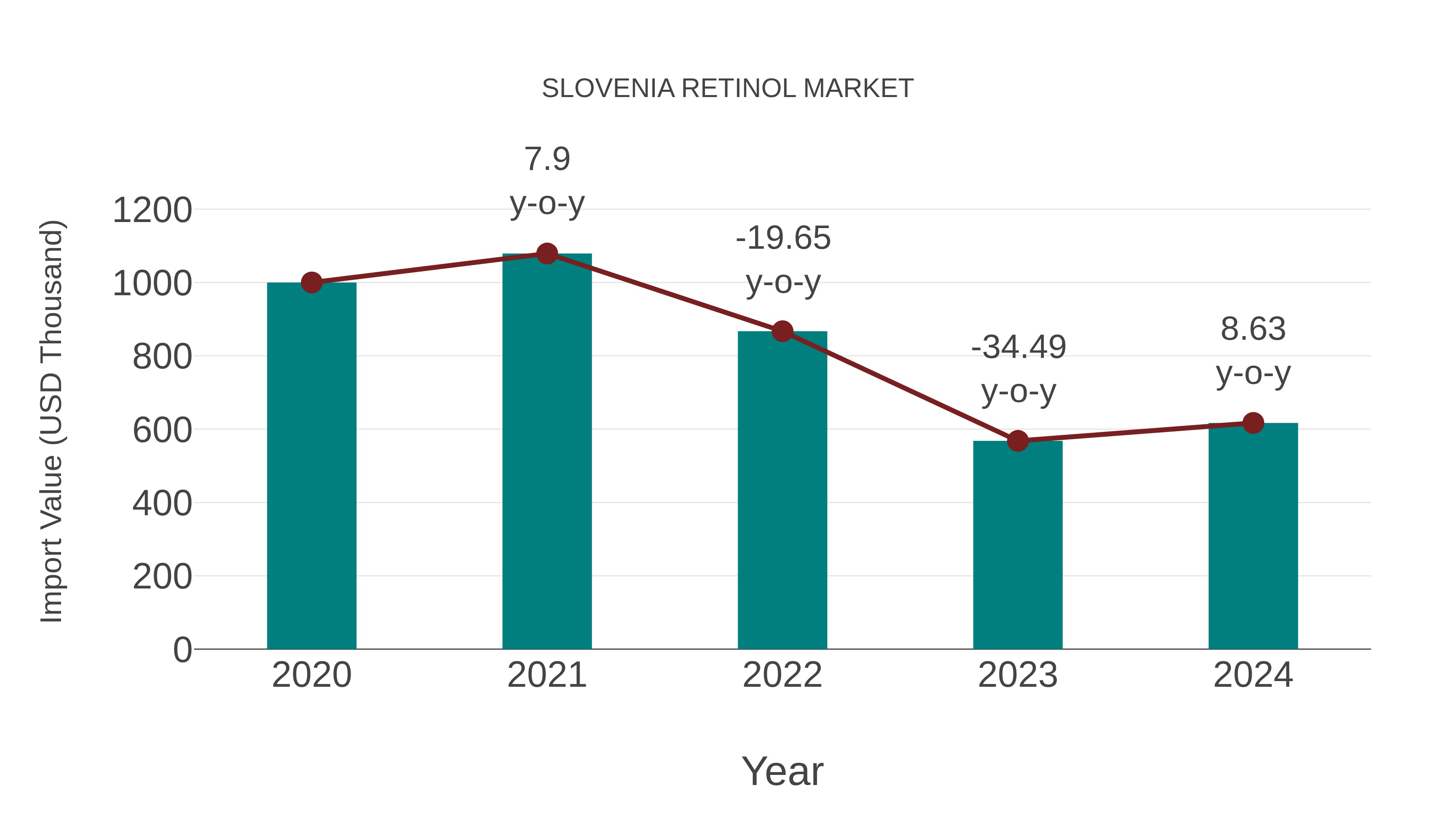
Slovenia import trend for the retinol market showed a growth rate of 8.63% from 2023 to 2024. However, the compound annual growth rate (CAGR) for the period 2020-2024 was -11.37%. This decline can be attributed to shifting consumer preferences towards alternative skincare ingredients, impacting the demand for retinol products in the market.
Slovenia Retinol Market Synopsis
The Slovenia Retinol Market is experiencing steady growth driven by increasing consumer awareness about skincare benefits and a growing demand for anti-aging products. Retinol, a form of vitamin A, is widely used in various skincare products for its proven ability to reduce wrinkles, improve skin texture, and promote collagen production. The market is characterized by a range of products including retinol creams, serums, and oils offered by both domestic and international brands. Key market players are focusing on product innovation, such as incorporating retinol in combination with other active ingredients for enhanced efficacy. With a rising trend towards natural and organic skincare products, there is also a growing demand for clean beauty brands offering retinol formulations. Overall, the Slovenia Retinol Market shows promising growth prospects in the coming years.
Slovenia Retinol Market Trends
The Slovenia Retinol market is witnessing a growing trend towards natural and organic skincare products, leading to an increased demand for retinol derived from plant-based sources. Consumers are becoming more conscious of the ingredients in their skincare products and are seeking out formulations that are sustainable and eco-friendly. This presents an opportunity for companies to develop innovative retinol products that cater to this demand for natural alternatives. Additionally, with the rising awareness about the anti-aging benefits of retinol, there is a growing market for targeted skincare solutions that address concerns such as wrinkles, fine lines, and uneven skin tone. Companies can capitalize on this trend by introducing specialized retinol-based products that offer effective anti-aging benefits to consumers in Slovenia.
Slovenia Retinol Market Challenges
In the Slovenia Retinol market, some challenges faced include consumer education on the benefits and proper usage of retinol products, as well as the availability of high-quality and effective formulations. There may also be issues with product pricing, competition from alternative skincare ingredients, and regulatory constraints. Additionally, ensuring consistent supply chains and maintaining product efficacy and safety standards are ongoing challenges in the retinol market. Market players need to navigate these obstacles by investing in research and development, marketing strategies that emphasize product benefits, and fostering partnerships with suppliers to enhance the quality and availability of retinol products in Slovenia.
Slovenia Retinol Market Investment Opportunities
The Slovenia Retinol market is primarily driven by the increasing consumer awareness regarding the benefits of retinol in skincare products for anti-aging and overall skin health. The growing demand for effective and advanced skincare solutions, coupled with the rising disposable income levels among the population, is fueling the market growth. Additionally, the expanding beauty and personal care industry in Slovenia, along with the availability of a wide range of retinol-based products through various distribution channels, is contributing to the market expansion. Furthermore, the trend of personalized skincare routines and the influence of social media and beauty influencers are driving consumers to seek out retinol products for improving skin texture, reducing wrinkles, and addressing various skin concerns, further boosting the market demand for retinol in Slovenia.
Slovenia Retinol Market Government Policie
Government policies related to the Slovenia Retinol Market focus on regulating the production, distribution, and sale of retinol products to ensure consumer safety and product quality. The government imposes strict guidelines on labeling requirements, product testing, and advertising standards to protect consumers from false or misleading claims. Additionally, there are regulations in place to monitor the import and export of retinol products to maintain market competitiveness and prevent unfair trade practices. The government also works to promote research and development in the retinol industry to drive innovation and growth within the market while also addressing any environmental or health concerns associated with the production and use of retinol products.
Slovenia Retinol Market Future Outlook
The Slovenia Retinol Market is expected to witness steady growth in the coming years due to the increasing awareness about skincare and the rising demand for anti-aging products. The market is likely to be driven by the growing aging population, as well as the trend of consumers seeking effective solutions for maintaining youthful skin. Additionally, the rising disposable income levels and changing lifestyles are anticipated to contribute to the market growth. Manufacturers are focusing on product innovation and expanding their distribution channels to reach a wider consumer base. With the skincare industry evolving and consumers becoming more conscious about their appearance, the Slovenia Retinol Market is poised for expansion in the foreseeable future.
Key Highlights of the Report:
- Slovenia Retinol Market Outlook
- Market Size of Slovenia Retinol Market, 2025
- Forecast of Slovenia Retinol Market, 2032
- Historical Data and Forecast of Slovenia Retinol Revenues & Volume for the Period 2022 - 2032F
- Slovenia Retinol Market Trend Evolution
- Slovenia Retinol Market Drivers and Challenges
- Slovenia Retinol Price Trends
- Slovenia Retinol Porter's Five Forces
- Slovenia Retinol Industry Life Cycle
- Historical Data and Forecast of Slovenia Retinol Market Revenues & Volume By Type for the Period 2022 - 2032F
- Historical Data and Forecast of Slovenia Retinol Market Revenues & Volume By Natural for the Period 2022 - 2032F
- Historical Data and Forecast of Slovenia Retinol Market Revenues & Volume By Synthetic for the Period 2022 - 2032F
- Historical Data and Forecast of Slovenia Retinol Market Revenues & Volume By Application for the Period 2022 - 2032F
- Historical Data and Forecast of Slovenia Retinol Market Revenues & Volume By Personal Care & Cosmetics for the Period 2022 - 2032F
- Historical Data and Forecast of Slovenia Retinol Market Revenues & Volume By Dietary Supplements for the Period 2022 - 2032F
- Historical Data and Forecast of Slovenia Retinol Market Revenues & Volume By Food & Beverage for the Period 2022 - 2032F
- Historical Data and Forecast of Slovenia Retinol Market Revenues & Volume By Animal Feed for the Period 2022 - 2032F
- Historical Data and Forecast of Slovenia Retinol Market Revenues & Volume By Others for the Period 2022 - 2032F
- Slovenia Retinol Import Export Trade Statistics
- Market Opportunity Assessment By Type
- Market Opportunity Assessment By Application
- Slovenia Retinol Top Companies Market Share
- Slovenia Retinol Competitive Benchmarking By Technical and Operational Parameters
- Slovenia Retinol Company Profiles
- Slovenia Retinol Key Strategic Recommendations






































