Slovenia Table Olives Market: Import Trend Analysis
Slovenia table olives market witnessed a notable import trend, with a growth rate of 9.43% from 2023 to 2024 and a compound annual growth rate (CAGR) of 10.98% from 2020 to 2024. This import momentum can be attributed to evolving consumer preferences towards healthier food choices, driving increased demand for table olives in the region.
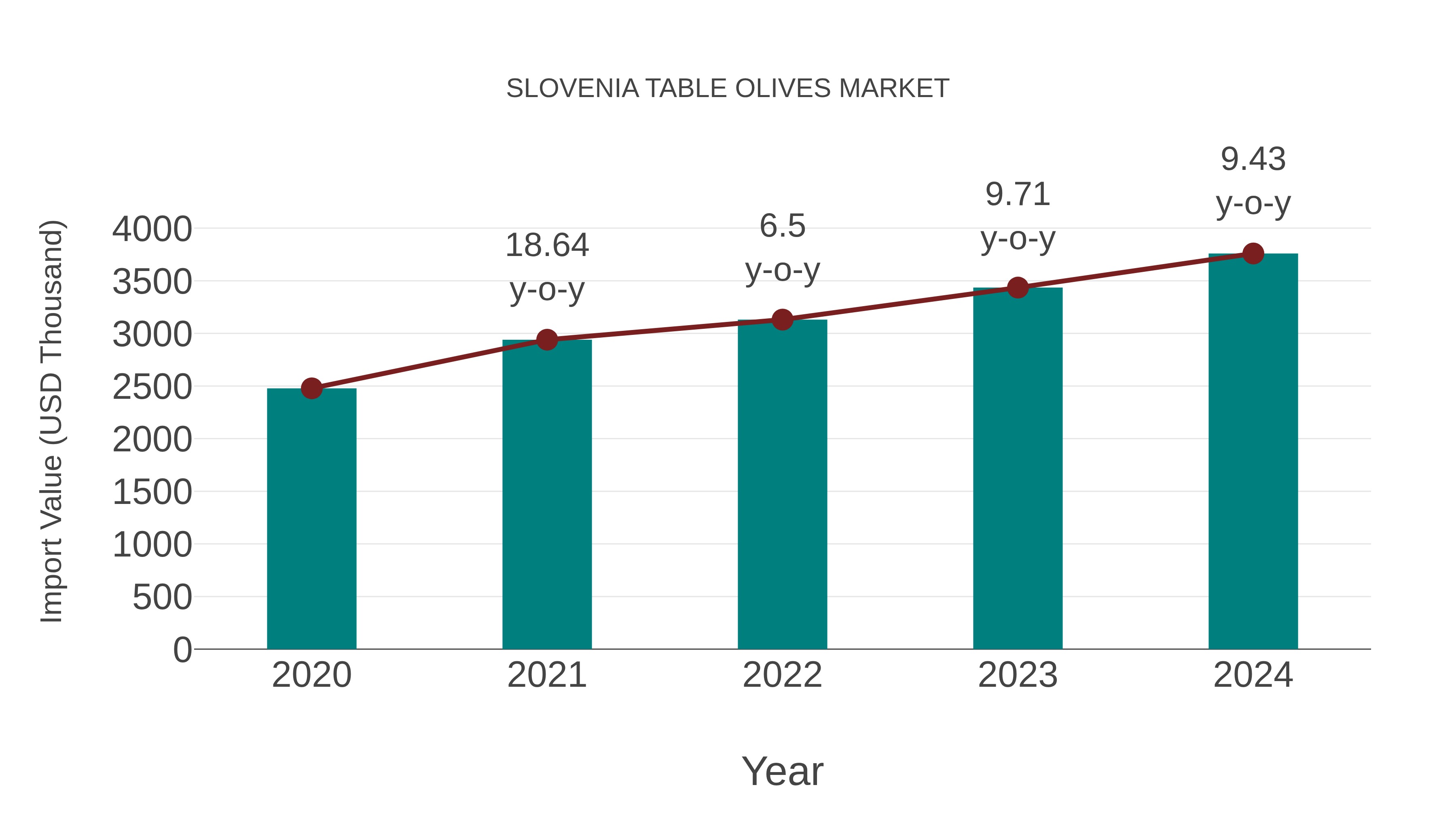
Slovenia Table Olives Market Synopsis
The Slovenia table olives market is characterized by a growing demand for high-quality, natural products among consumers. The market is primarily driven by a rising awareness of the health benefits associated with table olives, such as their high antioxidant content and potential to reduce the risk of cardiovascular diseases. Domestic production of table olives in Slovenia is limited, leading to a significant reliance on imports from countries like Spain, Greece, and Italy. However, there is a trend towards supporting local producers and promoting Slovenian-grown olives. The market offers opportunities for innovative product offerings, such as flavored or organic olives, to cater to changing consumer preferences. Overall, the Slovenia table olives market is poised for steady growth driven by a combination of health consciousness, culinary trends, and a focus on sustainability.
Slovenia Table Olives Market Trends
The Slovenia Table Olives Market is currently experiencing a growing trend towards organic and locally sourced products, driven by increasing consumer awareness of health and sustainability. There is a rising demand for premium and specialty table olive varieties, such as Kalamata and Castelvetrano, among the younger population. Additionally, there is a growing interest in flavored and marinated table olives, offering opportunities for innovation and product differentiation. The market is also witnessing a shift towards online retail channels, providing convenience and accessibility to a wider consumer base. Producers and retailers in the Slovenia Table Olives Market can capitalize on these trends by focusing on quality, sustainability, and variety to meet the evolving preferences of consumers and expand their market share domestically and internationally.
Slovenia Table Olives Market Challenges
In the Slovenia Table Olives Market, some key challenges include competition from imported table olives, fluctuating raw material costs, and limited consumer awareness and demand. Imported table olives, especially from Mediterranean countries, pose a significant challenge as they often have established reputations and lower prices. This competition can make it difficult for local producers to compete on price and quality. Fluctuating raw material costs, such as olives and packaging materials, can also impact profit margins and overall business stability. Additionally, there is a need to increase consumer awareness and demand for table olives in Slovenia to drive market growth and create opportunities for local producers. Overcoming these challenges will require strategic marketing efforts, product differentiation, and possibly partnerships with retailers to promote domestic table olive products.
Slovenia Table Olives Market Investment Opportunities
The Slovenia Table Olives Market is primarily driven by factors such as increasing consumer awareness about the health benefits of olives, growing demand for natural and organic food products, and the rising popularity of Mediterranean cuisine in the region. Additionally, the expanding foodservice industry and the trend of snacking on healthy foods are boosting the demand for table olives in Slovenia. The convenience of ready-to-eat olives and their versatility in various dishes also contribute to the market growth. Furthermore, the government`s initiatives to promote olive cultivation and production in the country are expected to drive the market further by ensuring a stable and quality supply of table olives to meet the growing demand.
Slovenia Table Olives Market Government Polices
Government policies related to the Slovenia Table Olives Market focus on ensuring food safety, quality standards, and promoting sustainability. The Slovenian government has implemented regulations to monitor and control the production, processing, and labeling of table olives to meet EU standards. Additionally, there are subsidies and incentives provided to encourage olive farmers to adopt sustainable farming practices and invest in modern technology for improved production efficiency. The government also supports initiatives to promote domestic consumption of table olives and exports by participating in trade agreements and international fairs. Overall, the government plays a crucial role in regulating the market to ensure consumer protection, environmental sustainability, and the competitiveness of Slovenian table olive producers in the global market.
Slovenia Table Olives Market Future Outlook
The future outlook for the Slovenia Table Olives Market appears promising due to increasing consumer awareness of the health benefits associated with olives, such as their high antioxidant content and potential cardiovascular benefits. As consumers become more health-conscious and seek out natural and nutritious food options, the demand for table olives is expected to rise. Additionally, the growing trend of Mediterranean cuisine and the increasing popularity of olive-based products in the food industry are projected to drive market growth. To capitalize on these opportunities, market players may focus on product innovation, sustainable production practices, and effective marketing strategies to attract and retain customers in the competitive landscape of the Slovenia Table Olives Market.
Key Highlights of the Report:
- Slovenia Table Olives Market Outlook
- Market Size of Slovenia Table Olives Market, 2025
- Forecast of Slovenia Table Olives Market, 2032
- Historical Data and Forecast of Slovenia Table Olives Revenues & Volume for the Period 2022 - 2032F
- Slovenia Table Olives Market Trend Evolution
- Slovenia Table Olives Market Drivers and Challenges
- Slovenia Table Olives Price Trends
- Slovenia Table Olives Porter's Five Forces
- Slovenia Table Olives Industry Life Cycle
- Historical Data and Forecast of Slovenia Table Olives Market Revenues & Volume By Type for the Period 2022 - 2032F
- Historical Data and Forecast of Slovenia Table Olives Market Revenues & Volume By Black Olive for the Period 2022 - 2032F
- Historical Data and Forecast of Slovenia Table Olives Market Revenues & Volume By Green Olive for the Period 2022 - 2032F
- Historical Data and Forecast of Slovenia Table Olives Market Revenues & Volume By Application for the Period 2022 - 2032F
- Historical Data and Forecast of Slovenia Table Olives Market Revenues & Volume By Online Store for the Period 2022 - 2032F
- Historical Data and Forecast of Slovenia Table Olives Market Revenues & Volume By Supermarket for the Period 2022 - 2032F
- Historical Data and Forecast of Slovenia Table Olives Market Revenues & Volume By Convenience Store for the Period 2022 - 2032F
- Historical Data and Forecast of Slovenia Table Olives Market Revenues & Volume By Other for the Period 2022 - 2032F
- Slovenia Table Olives Import Export Trade Statistics
- Market Opportunity Assessment By Type
- Market Opportunity Assessment By Application
- Slovenia Table Olives Top Companies Market Share
- Slovenia Table Olives Competitive Benchmarking By Technical and Operational Parameters
- Slovenia Table Olives Company Profiles
- Slovenia Table Olives Key Strategic Recommendations






































