South Africa Botanical Supplements Market: Import Trend Analysis
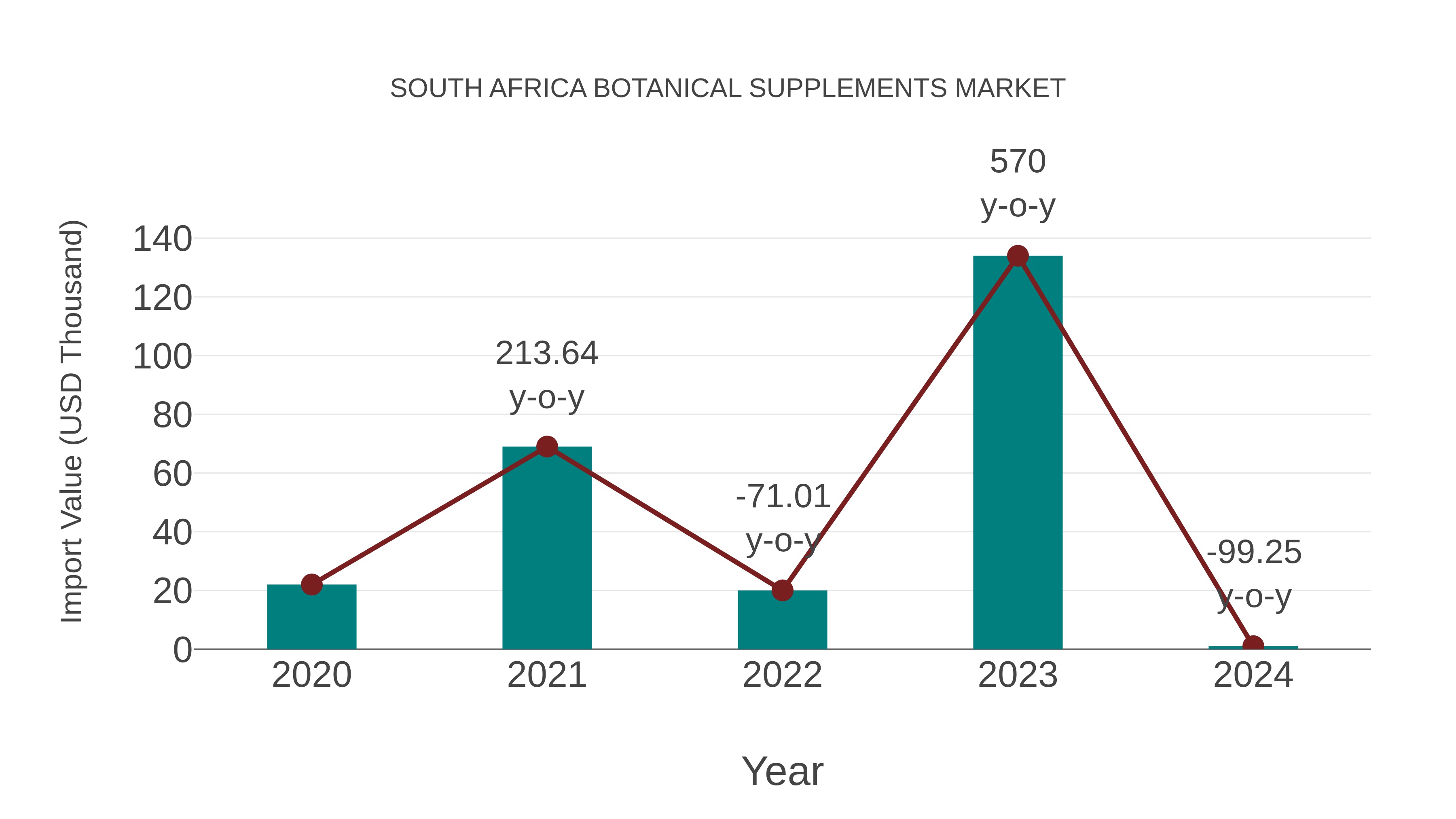
In the South Africa botanical supplements market, the import trend experienced a significant decline from 2023 to 2024, with a growth rate of -99.25%. The compound annual growth rate (CAGR) from 2020 to 2024 was -53.83%. This decline can be attributed to shifting consumer preferences or regulatory changes impacting import volumes.
South Africa Botanical Supplements Market Synopsis
The South Africa botanical supplements market is experiencing steady growth driven by increasing consumer awareness about the health benefits of natural ingredients. The market is characterized by a wide variety of products derived from indigenous plants like Rooibos, Buchu, and Hoodia, which are known for their medicinal and therapeutic properties. The rising demand for organic and ethically sourced supplements, coupled with a growing trend towards holistic wellness, is fueling the market expansion. Key players in the industry are focusing on product innovation, sustainability, and strategic partnerships with local farmers to ensure a consistent supply of high-quality botanical ingredients. Regulatory bodies are also playing a crucial role in ensuring product safety and quality standards in this rapidly evolving market landscape.
South Africa Botanical Supplements Market Trends
In South Africa, the botanical supplements market is experiencing a surge in demand driven by a growing awareness of health and wellness, as well as a preference for natural and organic products. Consumers are increasingly seeking plant-based supplements for their perceived health benefits and minimal side effects compared to synthetic alternatives. Key trends in the market include a rising interest in traditional African botanicals such as Rooibos, Buchu, and Sceletium, which are known for their medicinal properties. Additionally, there is a growing emphasis on sustainability and ethical sourcing practices among both consumers and manufacturers, leading to a rise in products with organic and fair-trade certifications. Overall, the South Africa botanical supplements market is poised for continued growth as consumers prioritize holistic health and well-being.
South Africa Botanical Supplements Market Challenges
In the South Africa Botanical Supplements Market, some challenges faced include regulatory hurdles surrounding the registration and approval of botanical supplements, as well as the need for more stringent quality control measures to ensure product safety and efficacy. Additionally, competition from traditional medicine practices and skepticism among consumers about the effectiveness of botanical supplements can also pose challenges for market growth. Limited awareness and education about the benefits of botanical supplements compared to synthetic alternatives further hinder market penetration. Addressing these challenges will require industry stakeholders to collaborate with regulatory bodies, invest in research and development to demonstrate the efficacy of botanical supplements, and engage in targeted marketing efforts to build consumer trust and confidence in these products.
South Africa Botanical Supplements Market Investment Opportunities
The South Africa botanical supplements market offers promising investment opportunities due to the growing consumer preference for natural and plant-based products. With the increasing awareness of the health benefits associated with botanical supplements, there is a rising demand for products such as herbal extracts, vitamins, and minerals derived from plants. Investors can explore opportunities in developing unique and high-quality botanical supplement formulations to cater to specific health needs or demographic segments. Additionally, partnerships with local botanical ingredient suppliers can provide a competitive advantage in sourcing premium raw materials. As the market continues to expand, investing in marketing strategies to educate consumers about the benefits of botanical supplements and building brand loyalty can help companies capitalize on this growing trend and establish a strong presence in the South Africa market.
Jordan Agar Market Government Policies
The South African government regulates botanical supplements market through the Medicines and Related Substances Act, which requires all products to be registered with the South African Health Products Regulatory Authority (SAHPRA) before being sold. The act ensures that botanical supplements meet safety, efficacy, and quality standards to protect public health. Additionally, the Advertising Standards Authority of South Africa (ASA) monitors the marketing and advertising of botanical supplements to prevent false or misleading claims. These regulations aim to promote transparency, consumer safety, and fair competition within the South Africa botanical supplements market.
South Africa Botanical Supplements Market Future Outlook
The South Africa Botanical Supplements Market is poised for significant growth in the coming years, driven by increasing consumer awareness and demand for natural and plant-based products. Factors such as the rising prevalence of lifestyle-related diseases, growing interest in traditional medicine, and a focus on health and wellness are expected to fuel market expansion. Additionally, the shift towards sustainable and ethically sourced ingredients is likely to drive innovation and product development in the botanical supplements sector. With a rich biodiversity and a long history of traditional herbal medicine use, South Africa is well positioned to capitalize on the growing global trend towards natural health solutions. Overall, the market is anticipated to experience steady growth and attract investments in research and development to meet evolving consumer preferences and regulatory standards.
Key Highlights of the Report:
- South Africa Botanical Supplements Market Outlook
- Market Size of South Africa Botanical Supplements Market, 2021
- Forecast of South Africa Botanical Supplements Market, 2031
- Historical Data and Forecast of South Africa Botanical Supplements Revenues & Volume for the Period 2018 - 2031
- South Africa Botanical Supplements Market Trend Evolution
- South Africa Botanical Supplements Market Drivers and Challenges
- South Africa Botanical Supplements Price Trends
- South Africa Botanical Supplements Porter's Five Forces
- South Africa Botanical Supplements Industry Life Cycle
- Historical Data and Forecast of South Africa Botanical Supplements Market Revenues & Volume By Source for the Period 2018 - 2031
- Historical Data and Forecast of South Africa Botanical Supplements Market Revenues & Volume By Herbs for the Period 2018 - 2031
- Historical Data and Forecast of South Africa Botanical Supplements Market Revenues & Volume By Leaves for the Period 2018 - 2031
- Historical Data and Forecast of South Africa Botanical Supplements Market Revenues & Volume By Spices for the Period 2018 - 2031
- Historical Data and Forecast of South Africa Botanical Supplements Market Revenues & Volume By Flowers for the Period 2018 - 2031
- Historical Data and Forecast of South Africa Botanical Supplements Market Revenues & Volume By Others for the Period 2018 - 2031
- Historical Data and Forecast of South Africa Botanical Supplements Market Revenues & Volume By Form for the Period 2018 - 2031
- Historical Data and Forecast of South Africa Botanical Supplements Market Revenues & Volume By Powder for the Period 2018 - 2031
- Historical Data and Forecast of South Africa Botanical Supplements Market Revenues & Volume By Liquid for the Period 2018 - 2031
- Historical Data and Forecast of South Africa Botanical Supplements Market Revenues & Volume By Tablets for the Period 2018 - 2031
- Historical Data and Forecast of South Africa Botanical Supplements Market Revenues & Volume By Capsules for the Period 2018 - 2031
- Historical Data and Forecast of South Africa Botanical Supplements Market Revenues & Volume By Gummies for the Period 2018 - 2031
- Historical Data and Forecast of South Africa Botanical Supplements Market Revenues & Volume By Others for the Period 2018 - 2031
- Historical Data and Forecast of South Africa Botanical Supplements Market Revenues & Volume By Application for the Period 2018 - 2031
- Historical Data and Forecast of South Africa Botanical Supplements Market Revenues & Volume By Energy & Weight Management for the Period 2018 - 2031
- Historical Data and Forecast of South Africa Botanical Supplements Market Revenues & Volume By General Health for the Period 2018 - 2031
- Historical Data and Forecast of South Africa Botanical Supplements Market Revenues & Volume By Bone & Joint Health for the Period 2018 - 2031
- Historical Data and Forecast of South Africa Botanical Supplements Market Revenues & Volume By Gastrointestinal Health for the Period 2018 - 2031
- Historical Data and Forecast of South Africa Botanical Supplements Market Revenues & Volume By Immunity for the Period 2018 - 2031
- Historical Data and Forecast of South Africa Botanical Supplements Market Revenues & Volume By Cardiac Health for the Period 2018 - 2031
- Historical Data and Forecast of South Africa Botanical Supplements Market Revenues & Volume By Diabetes for the Period 2018 - 2031
- Historical Data and Forecast of South Africa Botanical Supplements Market Revenues & Volume By Anti-cancer for the Period 2018 - 2031
- Historical Data and Forecast of South Africa Botanical Supplements Market Revenues & Volume By Distribution Channel for the Period 2018 - 2031
- Historical Data and Forecast of South Africa Botanical Supplements Market Revenues & Volume By Offline for the Period 2018 - 2031
- Historical Data and Forecast of South Africa Botanical Supplements Market Revenues & Volume By Online for the Period 2018 - 2031
- South Africa Botanical Supplements Import Export Trade Statistics
- Market Opportunity Assessment By Source
- Market Opportunity Assessment By Form
- Market Opportunity Assessment By Application
- Market Opportunity Assessment By Distribution Channel
- South Africa Botanical Supplements Top Companies Market Share
- South Africa Botanical Supplements Competitive Benchmarking By Technical and Operational Parameters
- South Africa Botanical Supplements Company Profiles
- South Africa Botanical Supplements Key Strategic Recommendations






































