South Africa Bromine Market Size Growth Rate
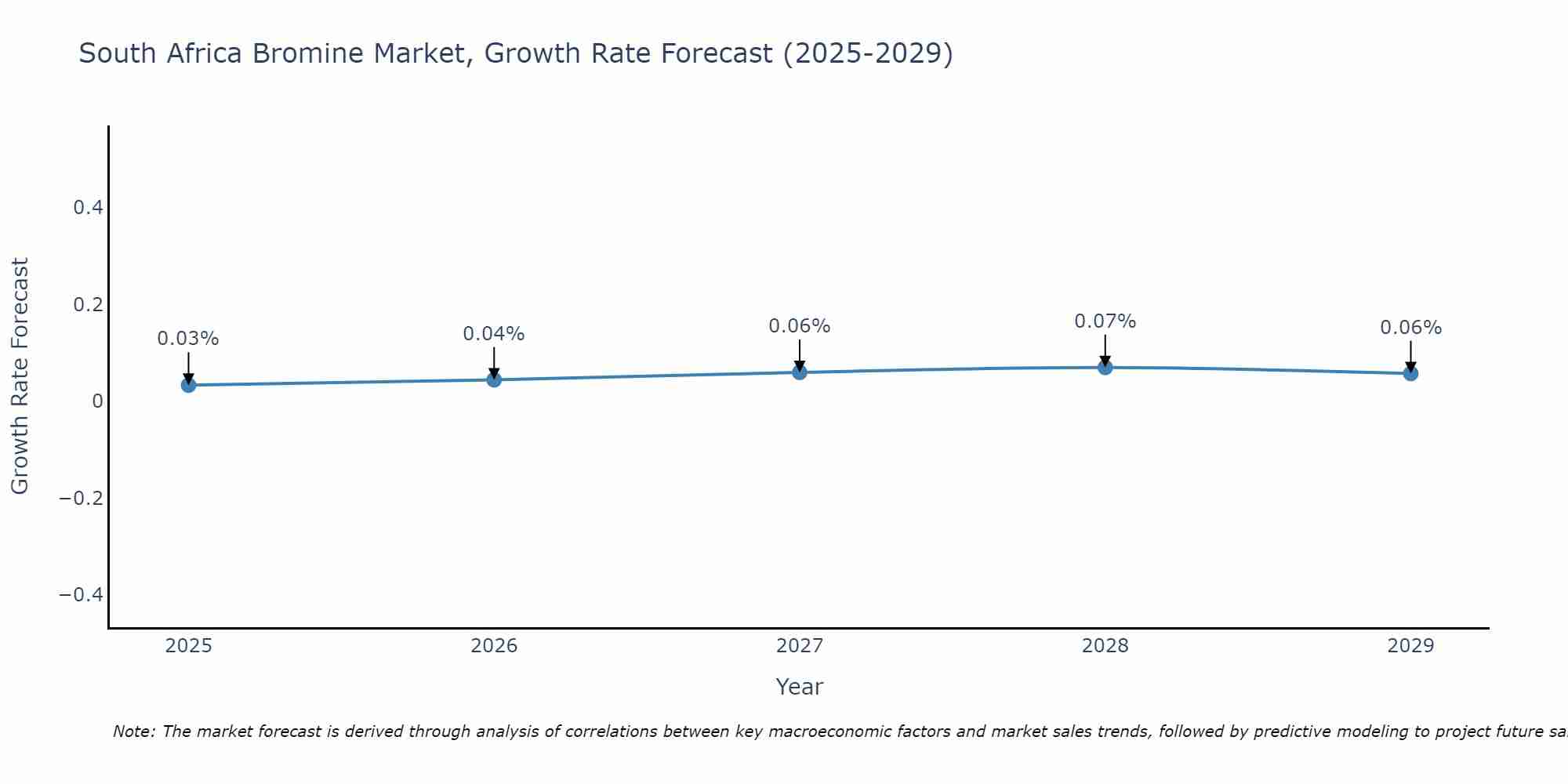
The South Africa Bromine Market is projected to witness mixed growth rate patterns during 2025 to 2029. The growth rate begins at 0.03% in 2025, climbs to a high of 0.07% in 2028, and moderates to 0.06% by 2029.
South Africa Bromine Market Overview
The South Africa Bromine Market is witnessing steady growth driven by its diverse applications across industries such as pharmaceuticals, oil and gas, agriculture, and flame retardants. The increasing demand for flame retardants in construction materials and electronics, coupled with the rising adoption of bromine compounds in water treatment processes, is fueling market expansion. Additionally, the growing emphasis on sustainable agriculture practices utilizing bromine-based pesticides and fumigants is contributing to market growth. Key players in the South Africa Bromine Market include ICL, Israel Chemicals Ltd., and Albemarle Corporation, among others. Regulatory support for the use of bromine derivatives in various industries, along with ongoing research and development activities to enhance bromine-based products, are expected to further boost market growth in the region.
South Africa Bromine Market Trends
The South Africa Bromine Market is experiencing steady growth driven by increasing demand from various industries such as pharmaceuticals, agriculture, and flame retardants. One of the key trends in the market is the rising adoption of bromine compounds in water treatment applications due to their effectiveness in disinfection and purification processes. Additionally, the growing emphasis on fire safety regulations and the construction industry`s expansion are fueling the demand for bromine-based flame retardants. Suppliers are focusing on sustainable production methods and developing innovative bromine derivatives to cater to evolving customer needs. The market is also witnessing collaborations between manufacturers and research institutions to enhance product development and explore new applications, indicating a positive outlook for the South Africa Bromine Market in the coming years.
South Africa Bromine Market Challenges
The South Africa Bromine Market faces several challenges, including fluctuating raw material prices, environmental regulations, and competition from alternative chemicals. The volatility in raw material prices, such as salt and natural gas, can impact the production costs of bromine, affecting profitability. Additionally, stringent environmental regulations aimed at reducing bromine emissions and waste disposal pose compliance challenges for market players. Moreover, the market faces increasing competition from substitutes like chlorine and hydrogen peroxide, which offer similar functionalities at potentially lower costs. Adapting to these challenges requires innovation in production processes, adherence to regulatory requirements, and strategic marketing to differentiate bromine products in the market.
South Africa Bromine Market Investment Opportunities
Investment opportunities in the South Africa Bromine Market include potential growth in industries such as pharmaceuticals, oil and gas, and agriculture. Bromine is used in the production of pharmaceuticals for its antibacterial properties, in oil and gas drilling fluids for well completion processes, and in agriculture for controlling pests and diseases. With increasing demand for these industries in South Africa, there is a growing need for bromine as a key component in their production processes. Investing in bromine production facilities or companies that supply bromine to these sectors could offer promising returns. Additionally, exploring partnerships with local manufacturers or distributors to tap into the growing market for bromine-based products could be a lucrative investment strategy in the South Africa Bromine Market.
South Africa Bromine Market Government Policy
The South African government does not have specific policies directly targeting the Bromine Market. However, the country has environmental regulations in place that impact the use and production of bromine. The National Environmental Management Act (NEMA) and the National Water Act are key legislations that regulate the discharge of industrial effluents containing bromine into water bodies. Additionally, the Department of Environmental Affairs monitors and enforces compliance with these regulations. Companies operating in the Bromine Market in South Africa are required to adhere to these environmental laws to ensure sustainable and responsible production practices. Overall, while there are no specific policies targeting the Bromine Market, the government`s environmental regulations play a crucial role in shaping the industry`s operations in the country.
South Africa Bromine Market Future Outlook
The South Africa Bromine Market is expected to witness steady growth in the coming years driven by increasing demand from various industries such as pharmaceuticals, chemicals, and oil & gas. The growing adoption of bromine compounds in flame retardants, water treatment chemicals, and drilling fluids is contributing to market expansion. Additionally, the rising focus on renewable energy sources like geothermal power generation, where bromine is used in heat transfer fluids, is expected to further boost market growth. However, factors such as regulatory challenges and fluctuating raw material prices may pose some barriers to market development. Overall, the South Africa Bromine Market is projected to show promising growth opportunities in the foreseeable future.
Key Highlights of the Report:
- South Africa Bromine Market Outlook
- Market Size of South Africa Bromine Market, 2021
- Forecast of South Africa Bromine Market, 2027
- Historical Data and Forecast of South Africa Bromine Revenues & Volume for the Period 2018 - 2027
- South Africa Bromine Market Trend Evolution
- South Africa Bromine Market Drivers and Challenges
- South Africa Bromine Price Trends
- South Africa Bromine Porter's Five Forces
- South Africa Bromine Industry Life Cycle
- Historical Data and Forecast of South Africa Bromine Market Revenues & Volume By Derivative for the Period 2018 - 2027
- Historical Data and Forecast of South Africa Bromine Market Revenues & Volume By Organobromine for the Period 2018 - 2027
- Historical Data and Forecast of South Africa Bromine Market Revenues & Volume By Clear Brine Fluids for the Period 2018 - 2027
- Historical Data and Forecast of South Africa Bromine Market Revenues & Volume By Hydrogen Bromide for the Period 2018 - 2027
- Historical Data and Forecast of South Africa Bromine Market Revenues & Volume By Application for the Period 2018 - 2027
- Historical Data and Forecast of South Africa Bromine Market Revenues & Volume By Flame Retardants for the Period 2018 - 2027
- Historical Data and Forecast of South Africa Bromine Market Revenues & Volume By Oil & Gas Drilling for the Period 2018 - 2027
- Historical Data and Forecast of South Africa Bromine Market Revenues & Volume By PTA Synthesis for the Period 2018 - 2027
- Historical Data and Forecast of South Africa Bromine Market Revenues & Volume By Water Treatment & Biocides for the Period 2018 - 2027
- Historical Data and Forecast of South Africa Bromine Market Revenues & Volume By Pesticides for the Period 2018 - 2027
- Historical Data and Forecast of South Africa Bromine Market Revenues & Volume By HBr Flow Batteries for the Period 2018 - 2027
- Historical Data and Forecast of South Africa Bromine Market Revenues & Volume By Pharmaceuticals for the Period 2018 - 2027
- Historical Data and Forecast of South Africa Bromine Market Revenues & Volume By Others for the Period 2018 - 2027
- South Africa Bromine Import Export Trade Statistics
- Market Opportunity Assessment By Derivative
- Market Opportunity Assessment By Application
- South Africa Bromine Top Companies Market Share
- South Africa Bromine Competitive Benchmarking By Technical and Operational Parameters
- South Africa Bromine Company Profiles
- South Africa Bromine Key Strategic Recommendations






































