South Africa Household Cleaning Products Market Size Growth Rate
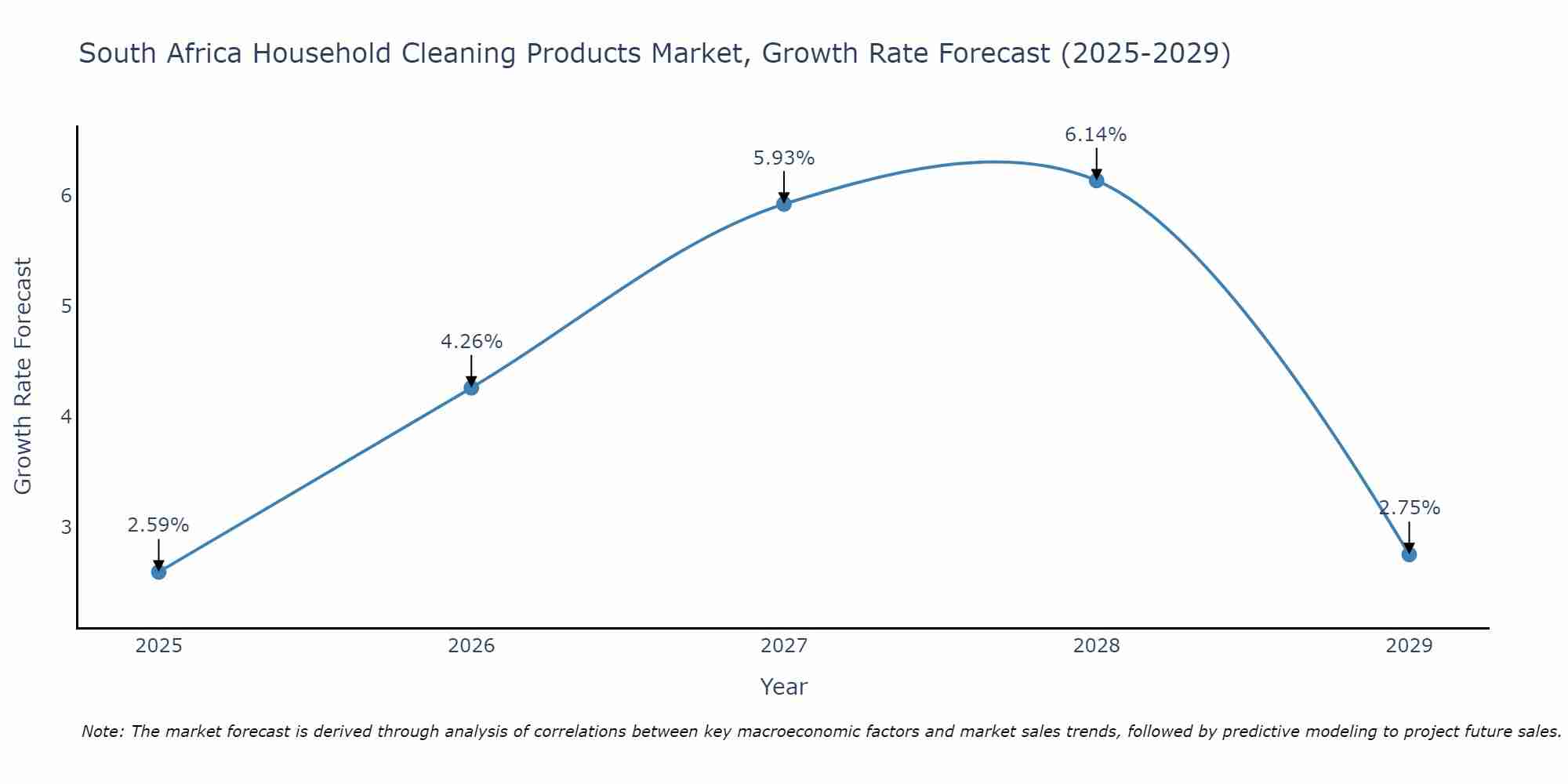
The South Africa Household Cleaning Products Market is projected to witness mixed growth rate patterns during 2025 to 2029. The growth rate begins at 2.59% in 2025, climbs to a high of 6.14% in 2028, and moderates to 2.75% by 2029.
South Africa Household Cleaning Products Market Overview
The household cleaning products market in South Africa is expanding due to rising awareness of hygiene and cleanliness. Consumers are increasingly purchasing a variety of cleaning products, including surface cleaners, disinfectants, and specialized cleaning agents, driven by health concerns and the desire for a clean living environment.
Drivers of the market
The household cleaning products market in South Africa is expanding due to the growing awareness of hygiene and cleanliness. Consumers are increasingly seeking effective and convenient cleaning solutions for their homes. The market is driven by rising disposable incomes, changing lifestyle trends, and the increasing availability of a wide range of cleaning products. Additionally, innovations in cleaning formulations, eco-friendly products, and packaging further support market growth.
Challenges of the market
The household cleaning products market in South Africa faces challenges such as consumer preferences for eco-friendly products, regulatory compliance with chemical safety standards, and competition from international brands. Developing biodegradable formulations, enhancing product efficacy, and ensuring affordability are ongoing challenges for cleaning product manufacturers and distributors.
Government Policy of the market
Government regulations in the household cleaning products market focus on chemical safety, product labeling requirements, and promoting eco-friendly cleaning formulations. Policies include cleaning product ingredient transparency, biodegradability standards, and supporting research in green cleaning technologies.
Key Highlights of the Report:
- South Africa Household Cleaning Products Market Outlook
- Market Size of South Africa Household Cleaning Products Market, 2024
- Forecast of South Africa Household Cleaning Products Market, 2031
- Historical Data and Forecast of South Africa Household Cleaning Products Revenues & Volume for the Period 2018 - 2031
- South Africa Household Cleaning Products Market Trend Evolution
- South Africa Household Cleaning Products Market Drivers and Challenges
- South Africa Household Cleaning Products Price Trends
- South Africa Household Cleaning Products Porter's Five Forces
- South Africa Household Cleaning Products Industry Life Cycle
- Historical Data and Forecast of South Africa Household Cleaning Products Market Revenues & Volume By Product Type for the Period 2018 - 2031
- Historical Data and Forecast of South Africa Household Cleaning Products Market Revenues & Volume By Laundry Detergents for the Period 2018 - 2031
- Historical Data and Forecast of South Africa Household Cleaning Products Market Revenues & Volume By Surface Cleaners for the Period 2018 - 2031
- Historical Data and Forecast of South Africa Household Cleaning Products Market Revenues & Volume By Dishwashing Products for the Period 2018 - 2031
- Historical Data and Forecast of South Africa Household Cleaning Products Market Revenues & Volume By Toilet Cleaners for the Period 2018 - 2031
- Historical Data and Forecast of South Africa Household Cleaning Products Market Revenues & Volume By Others for the Period 2018 - 2031
- South Africa Household Cleaning Products Import Export Trade Statistics
- Market Opportunity Assessment By Product Type
- South Africa Household Cleaning Products Top Companies Market Share
- South Africa Household Cleaning Products Competitive Benchmarking By Technical and Operational Parameters
- South Africa Household Cleaning Products Company Profiles
- South Africa Household Cleaning Products Key Strategic Recommendations






































