South Africa Nylon Market Size Growth Rate
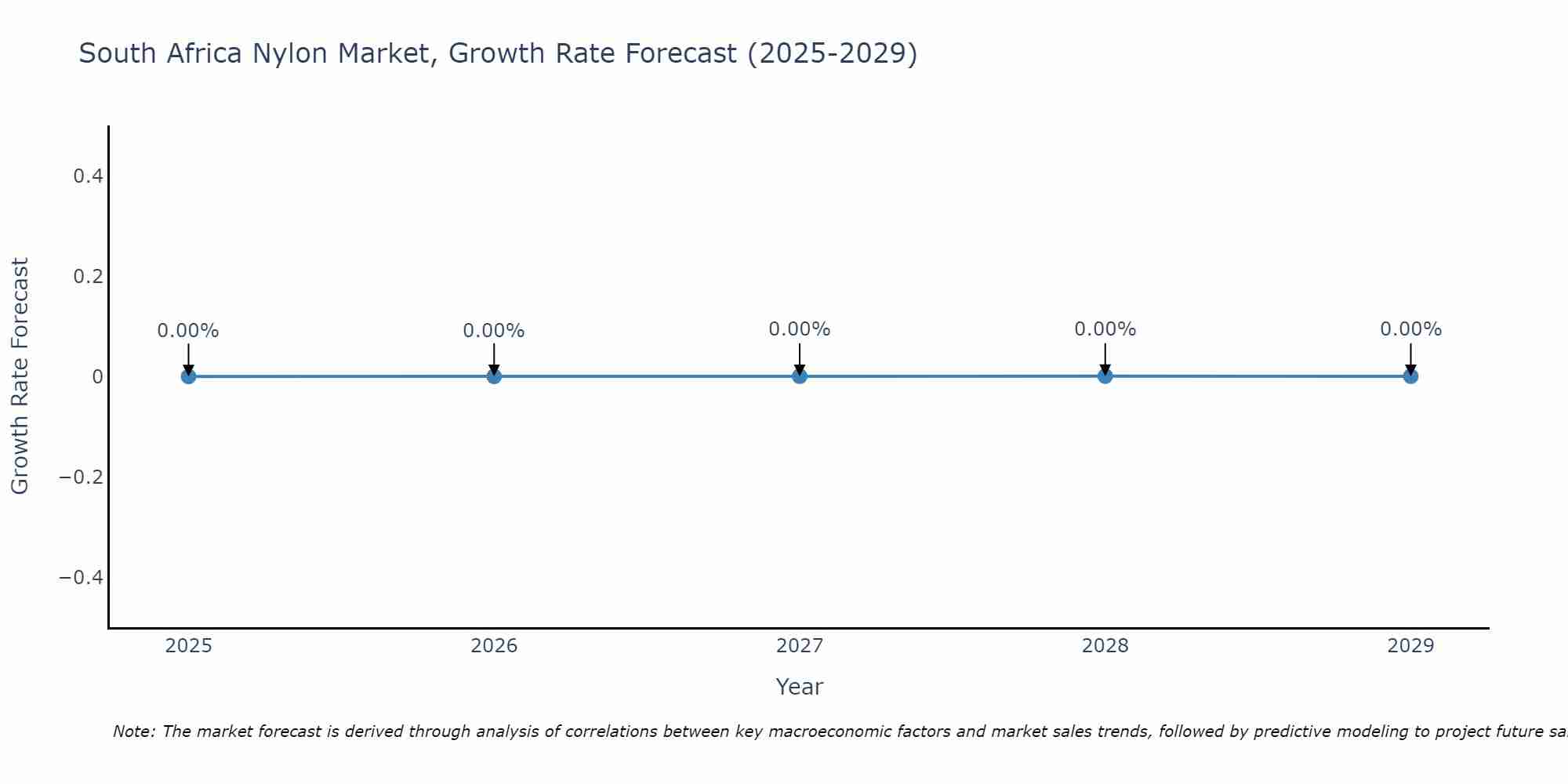
The South Africa Nylon Market is projected to witness mixed growth rate patterns during 2025 to 2029. Growth accelerates to 0.00% in 2028, following an initial rate of 0.00%, before easing to 0.00% at the end of the period.
South Africa Nylon Market Overview
The South Africa nylon market is witnessing steady growth driven by increasing demand from various end-use industries such as automotive, textiles, packaging, and consumer goods. The market is characterized by the presence of both domestic manufacturers and international players offering a wide range of nylon products including nylon 6, nylon 66, and specialty nylons. The automotive sector is a key consumer of nylon materials for applications such as automotive components, engine parts, and interior trims. The textile industry also contributes significantly to the market with the use of nylon in the production of textiles and apparel. The growing awareness about the benefits of nylon such as durability, flexibility, and resistance to chemicals is expected to further drive the market growth in South Africa.
South Africa Nylon Market Trends
The South Africa Nylon Market is experiencing growth driven by increasing demand from various industries such as automotive, textiles, packaging, and consumer goods. The market is witnessing a shift towards sustainable and bio-based nylon materials as companies and consumers become more environmentally conscious. Additionally, advancements in technology have led to the development of high-performance nylon products with enhanced properties such as durability, strength, and heat resistance. The growing emphasis on lightweight and fuel-efficient vehicles is also boosting the demand for nylon in the automotive sector. Overall, the South Africa Nylon Market is expected to continue its upward trajectory with a focus on innovation, sustainability, and diversification of applications across different industries.
South Africa Nylon Market Challenges
In the South Africa Nylon Market, some challenges that are commonly faced include increasing competition from alternative materials such as polyester and polypropylene, fluctuating raw material prices, and a relatively slow pace of technological advancements in the industry. Additionally, the market is also affected by economic uncertainties, currency fluctuations, and regulatory changes that can impact manufacturing costs and pricing strategies. Furthermore, the presence of counterfeit products in the market poses a threat to the reputation and sales of genuine nylon manufacturers. Overall, navigating these challenges requires companies in the South Africa Nylon Market to stay agile, innovate their product offerings, establish strong supply chain relationships, and continuously monitor market trends to stay competitive.
South Africa Nylon Market Investment Opportunities
The South Africa Nylon Market presents several investment opportunities due to its growing demand in various industries such as automotive, packaging, textiles, and consumer goods. With the country`s expanding manufacturing sector and increasing focus on technological advancements, there is a rising need for high-quality nylon materials. Investing in the production and distribution of nylon raw materials or finished products like fibers, resins, and plastics can be lucrative. Additionally, exploring opportunities in recycling and sustainable practices within the nylon industry aligns with the growing trend towards environmental consciousness. Collaborating with local manufacturers and suppliers to cater to the domestic market demand while also considering export opportunities can further enhance the investment potential in the South Africa Nylon Market.
South Africa Nylon Market Government Policy
In South Africa, the nylon market is influenced by government policies aimed at promoting local manufacturing and economic growth. The government has implemented measures such as import tariffs and trade regulations to protect domestic nylon producers and encourage investments in the industry. Additionally, initiatives to support small and medium-sized enterprises (SMEs) in the nylon sector have been introduced to boost competitiveness and innovation. Environmental sustainability is also a key focus, with regulations in place to promote eco-friendly production practices and reduce the industry`s carbon footprint. Overall, government policies in South Africa aim to foster a thriving nylon market that contributes to the country`s economic development while ensuring sustainable growth in the long term.
South Africa Nylon Market Future Outlook
The future outlook for the South Africa Nylon Market appears positive, driven by various factors such as the growing demand for nylon in industries like automotive, textiles, packaging, and consumer goods. The market is expected to benefit from increasing investments in infrastructure and industrial development in the region. Additionally, advancements in nylon production technologies and the focus on sustainable practices are likely to fuel market growth. However, challenges such as fluctuating raw material prices and competition from alternative materials may pose a threat to the market`s expansion. Overall, the South Africa Nylon Market is projected to experience steady growth in the coming years, with opportunities for innovation and market expansion.
Key Highlights of the Report:
- South Africa Nylon Market Outlook
- Market Size of South Africa Nylon Market, 2021
- Forecast of South Africa Nylon Market, 2031
- Historical Data and Forecast of South Africa Nylon Revenues & Volume for the Period 2018 - 2031
- South Africa Nylon Market Trend Evolution
- South Africa Nylon Market Drivers and Challenges
- South Africa Nylon Price Trends
- South Africa Nylon Porter's Five Forces
- South Africa Nylon Industry Life Cycle
- Historical Data and Forecast of South Africa Nylon Market Revenues & Volume By Product for the Period 2018 - 2031
- Historical Data and Forecast of South Africa Nylon Market Revenues & Volume By Nylon 6 for the Period 2018 - 2031
- Historical Data and Forecast of South Africa Nylon Market Revenues & Volume By Nylon 66 for the Period 2018 - 2031
- Historical Data and Forecast of South Africa Nylon Market Revenues & Volume By Application for the Period 2018 - 2031
- Historical Data and Forecast of South Africa Nylon Market Revenues & Volume By Automobile for the Period 2018 - 2031
- Historical Data and Forecast of South Africa Nylon Market Revenues & Volume By Electrical & Electronics for the Period 2018 - 2031
- Historical Data and Forecast of South Africa Nylon Market Revenues & Volume By Engineering Plastics for the Period 2018 - 2031
- Historical Data and Forecast of South Africa Nylon Market Revenues & Volume By Textiles for the Period 2018 - 2031
- Historical Data and Forecast of South Africa Nylon Market Revenues & Volume By Others for the Period 2018 - 2031
- South Africa Nylon Import Export Trade Statistics
- Market Opportunity Assessment By Product
- Market Opportunity Assessment By Application
- South Africa Nylon Top Companies Market Share
- South Africa Nylon Competitive Benchmarking By Technical and Operational Parameters
- South Africa Nylon Company Profiles
- South Africa Nylon Key Strategic Recommendations






































