South Africa Toilet seat Market Size Growth Rate
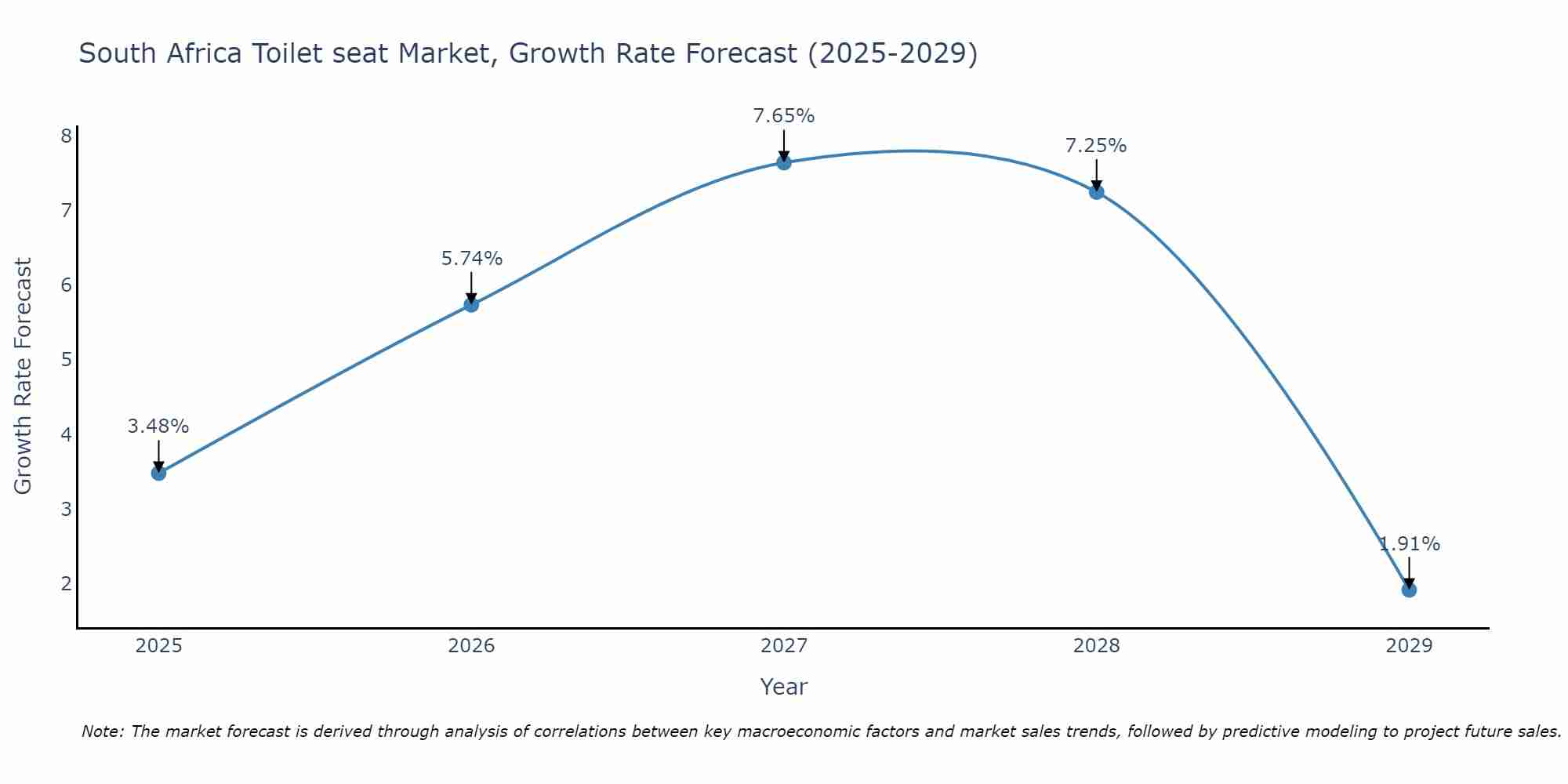
The South Africa Toilet seat Market is projected to witness mixed growth rate patterns during 2025 to 2029. The growth rate begins at 3.48% in 2025, climbs to a high of 7.65% in 2027, and moderates to 1.91% by 2029.
South Africa Toilet seat Market Overview
The South Africa toilet seat market is experiencing steady growth due to factors such as increasing urbanization, rising disposable income, and a growing awareness of hygiene and sanitation. The market is characterized by a wide range of products offered by both local and international manufacturers, catering to various consumer preferences and budgets. Key trends in the market include the growing demand for smart toilet seats with features like bidet functionalities, heated seats, and self-cleaning mechanisms. Additionally, eco-friendly and water-saving toilet seat options are gaining popularity among environmentally conscious consumers. The market is competitive, with players focusing on product innovation, branding, and distribution strategies to gain a competitive edge. Overall, the South Africa toilet seat market is poised for continued growth driven by changing consumer preferences and lifestyle trends.
South Africa Toilet seat Market Trends
The South Africa toilet seat market is experiencing a shift towards smart and technologically advanced products, with features such as bidet functions, heated seats, and self-cleaning capabilities gaining popularity among consumers. Sustainable and eco-friendly options, including water-saving designs and materials made from recycled materials, are also gaining traction in the market. Additionally, there is a growing demand for customizable and aesthetically pleasing toilet seats that can enhance the overall bathroom decor. With an increasing focus on hygiene and cleanliness, antimicrobial coatings and touchless features are becoming more prevalent in toilet seat designs. Overall, the South Africa toilet seat market is witnessing a trend towards innovative and convenient solutions that cater to both practical and aesthetic preferences of consumers.
South Africa Toilet seat Market Challenges
In the South Africa toilet seat market, several challenges are faced by manufacturers and retailers. One major challenge is the presence of a wide range of lower-quality, cheaper imported products flooding the market, which can undercut local manufacturers who may struggle to compete on price. Another challenge is the lack of consistent quality standards and regulations, leading to consumer confusion and potential safety concerns. Additionally, the economic conditions and fluctuations in currency exchange rates can impact pricing and profitability for both domestic and international players in the market. Lastly, the limited access to proper sanitation infrastructure in some areas of the country poses a challenge in terms of market penetration and distribution channels. Overall, navigating these challenges requires strategic planning and differentiation strategies to succeed in the competitive South Africa toilet seat market.
South Africa Toilet seat Market Investment Opportunities
Investment opportunities in the South Africa toilet seat market include the growing demand for innovative and sustainable products. With increasing awareness about hygiene and sanitation, there is a trend towards premium and technologically advanced toilet seats such as heated seats, self-cleaning features, and water-saving options. Investors can capitalize on this by introducing eco-friendly and smart toilet seat solutions to cater to the evolving consumer preferences. Additionally, there is potential for expansion in the commercial sector, including hotels, restaurants, and office buildings, where high-quality and durable toilet seats are in demand. Collaborating with major retailers and focusing on marketing strategies targeting both residential and commercial customers can further drive growth in this market segment.
South Africa Toilet seat Market Government Policy
The South African government has implemented various policies to address sanitation issues and promote access to proper toilet facilities in the country. The National Sanitation Policy aims to provide safe and hygienic sanitation services to all citizens, including the provision of toilet facilities in schools, households, and public spaces. The government has also introduced initiatives such as the Sanitation Appropriate for Education (SAFE) program, which focuses on improving sanitation facilities in schools to ensure a conducive learning environment. Additionally, the Department of Water and Sanitation oversees regulations related to the installation and maintenance of toilet facilities, promoting sustainable sanitation practices and water conservation. These policies create opportunities for the Toilet seat Market in South Africa by emphasizing the importance of quality sanitation infrastructure and driving demand for innovative and sustainable toilet seat solutions.
South Africa Toilet seat Market Future Outlook
The South Africa toilet seat market is expected to witness steady growth in the coming years, driven by factors such as increasing urbanization, rising disposable income levels, and growing awareness about hygiene and sanitation. The market is likely to see a shift towards more advanced and innovative toilet seat products that offer features like antibacterial coatings, smart technology integration, and water-saving mechanisms. With a growing focus on sustainability and eco-friendly solutions, there may also be a rise in demand for environmentally conscious materials in toilet seat manufacturing. Overall, the South Africa toilet seat market is projected to expand as consumers seek more comfortable, hygienic, and technologically advanced options for their bathrooms.
Key Highlights of the Report:
- South Africa Toilet seat Market Outlook
- Market Size of South Africa Toilet seat Market, 2021
- Forecast of South Africa Toilet seat Market, 2027
- Historical Data and Forecast of South Africa Toilet seat Revenues & Volume for the Period 2018 - 2027
- South Africa Toilet seat Market Trend Evolution
- South Africa Toilet seat Market Drivers and Challenges
- South Africa Toilet seat Price Trends
- South Africa Toilet seat Porter's Five Forces
- South Africa Toilet seat Industry Life Cycle
- Historical Data and Forecast of South Africa Toilet seat Market Revenues & Volume By Bowl Shape for the Period 2018 - 2027
- Historical Data and Forecast of South Africa Toilet seat Market Revenues & Volume By Elongated for the Period 2018 - 2027
- Historical Data and Forecast of South Africa Toilet seat Market Revenues & Volume By Round for the Period 2018 - 2027
- Historical Data and Forecast of South Africa Toilet seat Market Revenues & Volume By Square for the Period 2018 - 2027
- Historical Data and Forecast of South Africa Toilet seat Market Revenues & Volume By Raw Material for the Period 2018 - 2027
- Historical Data and Forecast of South Africa Toilet seat Market Revenues & Volume By Plastic for the Period 2018 - 2027
- Historical Data and Forecast of South Africa Toilet seat Market Revenues & Volume By Wood for the Period 2018 - 2027
- Historical Data and Forecast of South Africa Toilet seat Market Revenues & Volume By Ceramic for the Period 2018 - 2027
- Historical Data and Forecast of South Africa Toilet seat Market Revenues & Volume By Urea Molding Compound for the Period 2018 - 2027
- Historical Data and Forecast of South Africa Toilet seat Market Revenues & Volume By Others for the Period 2018 - 2027
- Historical Data and Forecast of South Africa Toilet seat Market Revenues & Volume By Category for the Period 2018 - 2027
- Historical Data and Forecast of South Africa Toilet seat Market Revenues & Volume By Smart for the Period 2018 - 2027
- Historical Data and Forecast of South Africa Toilet seat Market Revenues & Volume By Ordinary for the Period 2018 - 2027
- Historical Data and Forecast of South Africa Toilet seat Market Revenues & Volume By Application for the Period 2018 - 2027
- Historical Data and Forecast of South Africa Toilet seat Market Revenues & Volume By Residential for the Period 2018 - 2027
- Historical Data and Forecast of South Africa Toilet seat Market Revenues & Volume By Commercial for the Period 2018 - 2027
- Historical Data and Forecast of South Africa Toilet seat Market Revenues & Volume By Distribution Channel for the Period 2018 - 2027
- Historical Data and Forecast of South Africa Toilet seat Market Revenues & Volume By Online for the Period 2018 - 2027
- Historical Data and Forecast of South Africa Toilet seat Market Revenues & Volume By Offline for the Period 2018 - 2027
- South Africa Toilet seat Import Export Trade Statistics
- Market Opportunity Assessment By Bowl Shape
- Market Opportunity Assessment By Raw Material
- Market Opportunity Assessment By Category
- Market Opportunity Assessment By Application
- Market Opportunity Assessment By Distribution Channel
- South Africa Toilet seat Top Companies Market Share
- South Africa Toilet seat Competitive Benchmarking By Technical and Operational Parameters
- South Africa Toilet seat Company Profiles
- South Africa Toilet seat Key Strategic Recommendations






































