South Korea Bathroom Furniture Market Summary
The south korea bathroom furniture market was estimated at USD 1452 Million in 2025 and is projected to reach USD 2094 Million by 2032, growing at a CAGR of 6.1% from 2026 to 2032.
South Korea Bathroom Furniture Market Year-wise Growth Rate and Key Drivers
This graph highlights how the South Korea Bathroom Furniture Market has steadily grown over the past five years, supported by major growth factors.
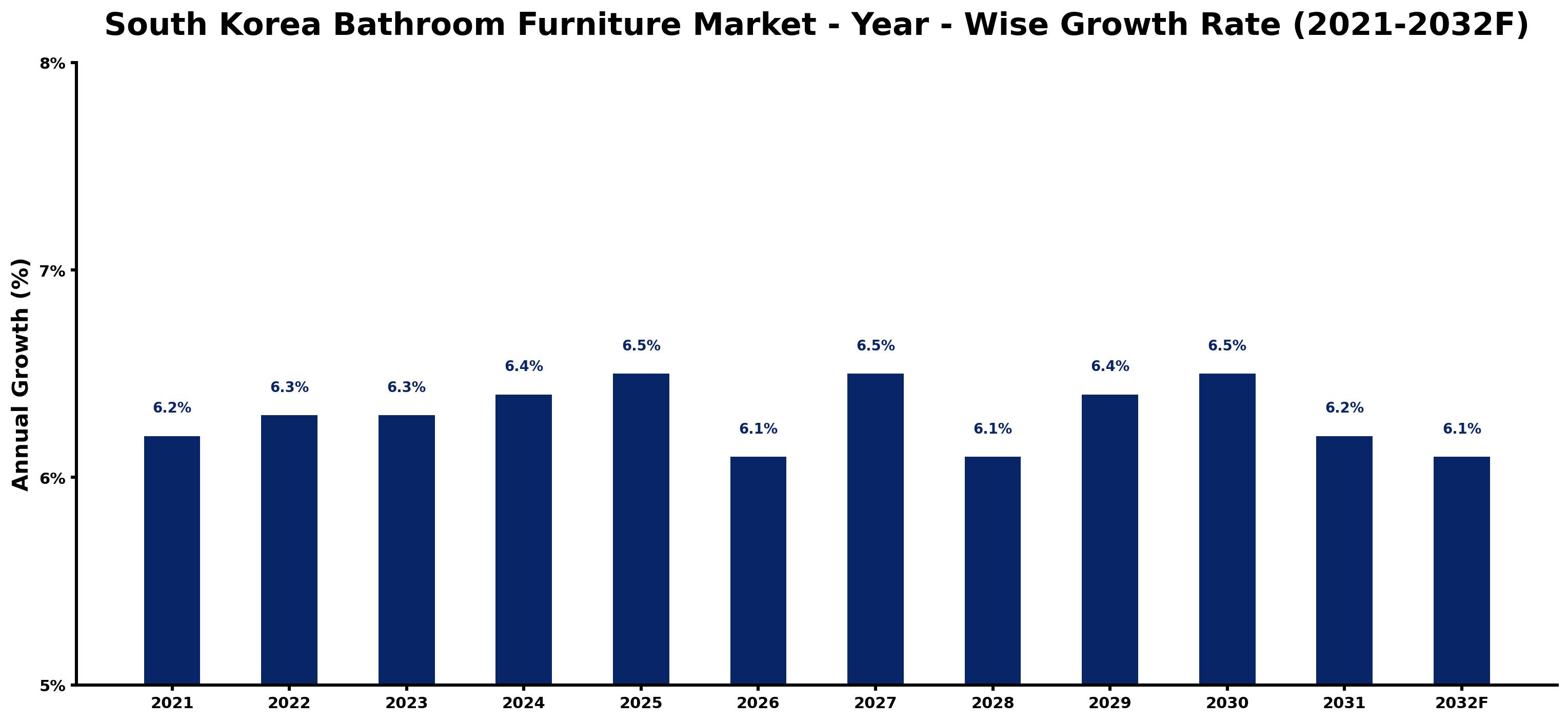
The table below presents the year wise growth rates along with the key drivers influencing the market
| Year | Growth Rate | Major Drivers |
| 2021 | 6.2% | Post-lockdown retail projects accelerated renovations in residential bathroom spaces nationwide. |
| 2022 | 6.3% | Urbanization trends propelled the demand for modern, space-efficient bathroom solutions. |
| 2023 | 6.3% | Sustainability became a key focus, influencing eco-friendly material selections for bathroom furniture. |
| 2024 | 6.4% | Consumer preferences shifted towards multifunctional furniture that optimizes limited bathroom spaces. |
| 2025 | 6.5% | Technological innovations introduced smart bathroom features, enhancing user convenience and experience. |
| 2026 | 6.1% | E-commerce platforms expanded, providing consumers with diverse bathroom furniture shopping options. |
| 2027 | 6.5% | Customization options gained traction, catering to unique aesthetic preferences in bathroom designs. |
| 2028 | 6.1% | Influencer marketing played a significant role in shaping trends for bathroom remodels. |
| 2029 | 6.4% | Luxury segments saw a rise as affluent consumers indulged in high-quality bathroom aesthetics. |
| 2030 | 6.5% | DIY culture flourished, prompting consumers to undertake personal bathroom renovation projects. |
| 2031 | 6.2% | Increased travel and hospitality investments led to an uptick in commercial bathroom furnishings. |
| 2032 | 6.1% | Circular economy principles gained momentum, promoting sustainable practices in bathroom furniture production. |
Note - Market size estimations and growth projections presented in this report are based on 6Wresearch's advanced forecasting approach, validated with industry datasets as of June 2026.
South Korea Bathroom Furniture Market Synopsis
The South Korea Bathroom Furniture Market is projected to reach 6.1% and witness significant growth during the forecast period (2026-2032). This growth is largely attributed to urbanization trends, rising disposable incomes, and an increasing consumer focus on home renovation and interior design. The market landscape is evolving, driven by changing consumer preferences for modern, aesthetically pleasing solutions that also provide functionality. As these dynamics unfold, the demand for a diverse range of bathroom furniture including vanities, cabinets, mirrors, and storage units is set to expand.
South Korea Bathroom Furniture Market Growth Drivers
Several factors are fueling the growth of the South Korea Bathroom Furniture Market. Firstly, the rapid urbanization in South Korea is leading to smaller living spaces, prompting consumers to seek out multifunctional and space-saving furniture solutions. Secondly, a noticeable increase in disposable incomes is enabling more households to invest in quality bathroom fixtures that enhance their home aesthetics. Furthermore, a growing trend towards home improvement and interior design is pushing consumers to prioritize the renovation of their bathrooms as integral components of their living spaces. In addition, the rise of e-commerce platforms has made it easier for consumers to access a broader selection of bathroom furniture options, contributing to market growth.
South Korea Bathroom Furniture Market Trends and Opportunities
The South Korea Bathroom Furniture Market is observing a significant shift towards modern and minimalistic designs that cater to contemporary consumer lifestyles. As urban dwellers increasingly inhabit smaller homes, there is a rising demand for efficient furniture solutions that do not compromise on style. Trends towards eco-friendliness are also becoming pronounced, with consumers inclined to choose products made from sustainable materials. Integration of smart technology in bathroom furniture, like LED lighting and touchless features, is gaining traction, particularly among younger, tech-savvy consumers. These trends present numerous opportunities for businesses aiming to innovate and meet the evolving preferences of the South Korean market.
South Korea Bathroom Furniture Market Challenges and Restraints
Despite the positive outlook, the South Korea Bathroom Furniture Market faces several challenges that can impact its growth trajectory. The intense competition among both domestic and international brands results in aggressive pricing strategies and can pressure profit margins. Additionally, cultural preferences unique to the region require continuous innovation and adaptation to meet local tastes. The growing emphasis on sustainability imposes a necessity for companies to invest in eco-friendly materials and practices, which may increase production costs. Moreover, fluctuations in raw material prices and general economic uncertainties can further complicate pricing and production strategies for businesses operating in this sector.
South Korea Bathroom Furniture Market Investment Opportunities
The South Korea Bathroom Furniture Market offers substantial investment opportunities due to rising consumer demand for stylish and functional bathroom solutions. Investors looking to enter this market can focus on manufacturing and supplying innovative products that align with current interior design trends, such as modern vanities and multifunctional storage solutions. The increasing interest in sustainable products also presents avenues for investment in environmentally friendly bathroom furniture. Collaborative ventures with local designers and the implementation of targeted digital marketing strategies will help in reaching the market's discerning consumers effectively, enhancing the viability of new ventures.
South Korea Bathroom Furniture Market Government Investment and Initiatives
The South Korea Bathroom Furniture Market is shaped by various government policies that promote sustainability and consumer safety. The government has enacted regulations aimed at encouraging the use of eco-friendly materials in bathroom furniture production, thereby reducing environmental impact. Quality assurance is also prioritized, with standards established for product safety, labeling, and certification. Furthermore, initiatives are in place that support energy-efficient manufacturing processes, including financial incentives for companies that prioritize innovative design and sustainability. Collectively, these government efforts create a framework that encourages market participants to enhance quality while focusing on sustainable practices.
South Korea Bathroom Furniture Market Latest Developments (May 2025 - June 2026)
In the period from May 2025 to June 2026, the South Korea Bathroom Furniture Market has seen notable developments that signal the direction of the industry. A further rise in consumer interest in smart bathroom solutions is evident, with many manufacturers showcasing integrated technologies in their designs. Alongside this, environmentally sustainable practices continue to be a focal point, with many brands reinforcing their commitment to using recyclable and eco-friendly materials. Moreover, the expansion of e-commerce platforms has provided consumers with easier access to a wider range of products, enhancing the shopping experience. These trends indicate an adaptive market responding to the evolving needs and preferences of South Korean consumers, while also aligning with broader global trends in home furnishings.
South Korea Bathroom Furniture Market - Key Attractiveness of the Report
- 10 Years of Market Numbers
- Historical Data Starting from 2022 to 2025
- Base Year: 2025
- Forecast Data until 2032
- Key Performance Indicators Impacting the Market
- Major Upcoming Developments and Projects
Key Highlights of the Report:
- South Korea Bathroom Furniture Market Outlook
- Market Size of South Korea Bathroom Furniture Market, 2025
- Forecast of South Korea Bathroom Furniture Market, 2032F
- Historical Data and Forecast of South Korea Bathroom Furniture Revenues & Volume for the Period 2022-2032F
- South Korea Bathroom Furniture Market Trend Evolution
- South Korea Bathroom Furniture Market Drivers and Challenges
- South Korea Bathroom Furniture Price Trends
- South Korea Bathroom Furniture Porter's Five Forces
- South Korea Bathroom Furniture Industry Life Cycle
- Historical Data and Forecast of South Korea Bathroom Furniture Market Revenues & Volume By Type for the Period 2022-2032F
- Historical Data and Forecast of South Korea Bathroom Furniture Market Revenues & Volume By Bath Vanities for the Period 2022-2032F
- Historical Data and Forecast of South Korea Bathroom Furniture Market Revenues & Volume By Console Vanity for the Period 2022-2032F
- Historical Data and Forecast of South Korea Bathroom Furniture Market Revenues & Volume By Vanity Tops for the Period 2022-2032F
- Historical Data and Forecast of South Korea Bathroom Furniture Market Revenues & Volume By Bathroom Mirrors for the Period 2022-2032F
- Historical Data and Forecast of South Korea Bathroom Furniture Market Revenues & Volume By Other for the Period 2022-2032F
- Historical Data and Forecast of South Korea Bathroom Furniture Market Revenues & Volume By Application for the Period 2022-2032F
- Historical Data and Forecast of South Korea Bathroom Furniture Market Revenues & Volume By Household for the Period 2022-2032F
- Historical Data and Forecast of South Korea Bathroom Furniture Market Revenues & Volume By Commercial for the Period 2022-2032F
- Historical Data and Forecast of South Korea Bathroom Furniture Market Revenues & Volume By Other for the Period 2022-2032F
- South Korea Bathroom Furniture Import Export Trade Statistics
- Market Opportunity Assessment By Type
- Market Opportunity Assessment By Application
- South Korea Bathroom Furniture Top Companies Market Share
- South Korea Bathroom Furniture Competitive Benchmarking By Technical and Operational Parameters
- South Korea Bathroom Furniture Company Profiles
- South Korea Bathroom Furniture Key Strategic Recommendations






































