South Korea Bread and Bakery Products Market Summary
The south korea bread and bakery products market was estimated at USD 334 Million in 2025 and is projected to reach USD 437 Million by 2032, growing at a CAGR of 4.5% from 2026 to 2032.
South Korea Bread and Bakery Products Market Year-wise Growth Rate and Key Drivers
This graph highlights how the South Korea Bread and Bakery Products Market has steadily grown over the past five years, supported by major growth factors.
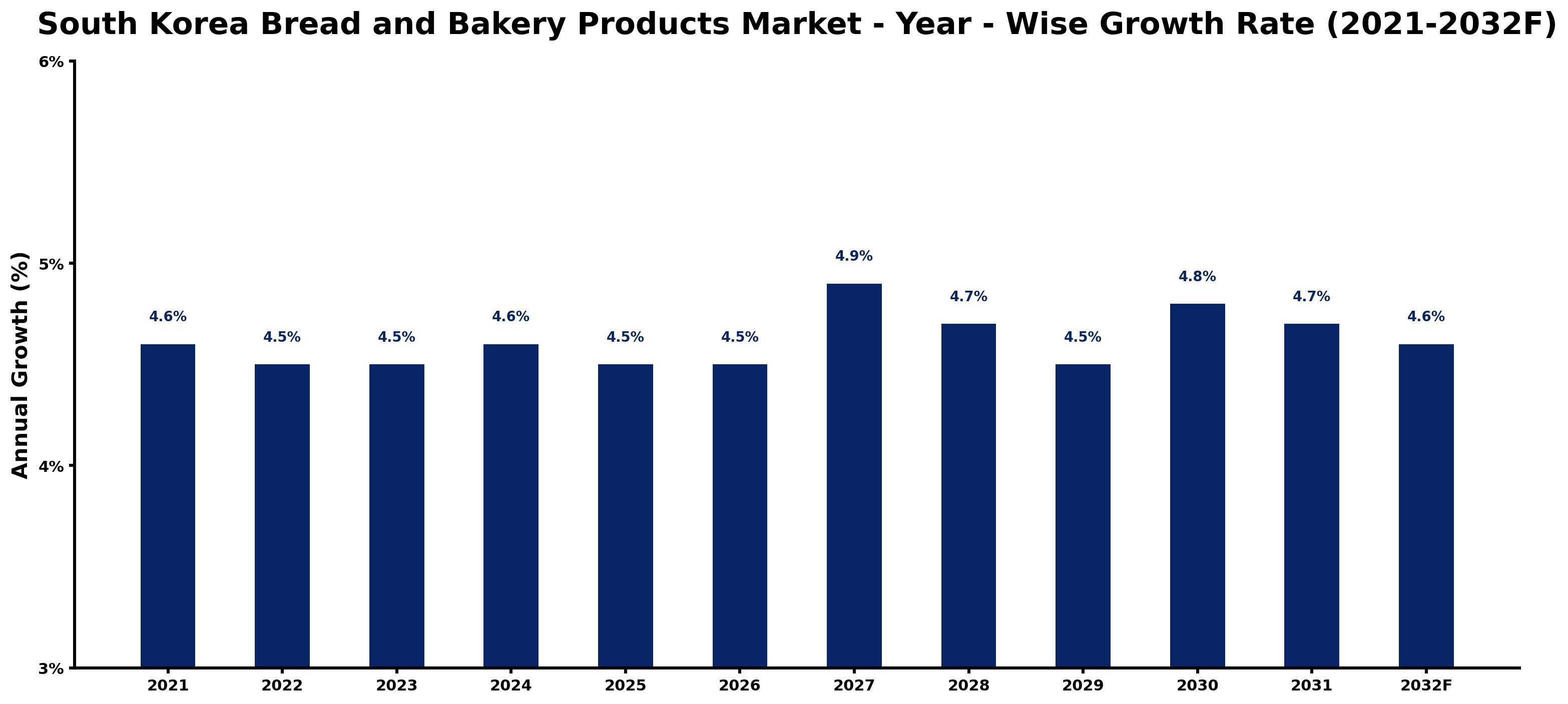
The table below presents the year wise growth rates along with the key drivers influencing the market
| Year | Growth Rate | Major Drivers |
| 2021 | 4.6% | Post-lockdown retail projects sparked interest in artisanal and premium bakery products. |
| 2022 | 4.5% | Consumer preferences shifted towards healthier bread options, enhancing market dynamics significantly. |
| 2023 | 4.5% | Innovative packaging solutions emerged, attracting eco-conscious customers and boosting sales trends. |
| 2024 | 4.6% | Local ingredients gained popularity, fostering a wave of regionally inspired bread varieties. |
| 2025 | 4.5% | Digital transformation in bakeries improved operational efficiency and online sales channels. |
| 2026 | 4.5% | Increased urbanization led to higher demand for convenient, ready-to-eat bakery items. |
| 2027 | 4.9% | Culinary trends emphasized fusion flavors, creating unique opportunities within the bakery sector. |
| 2028 | 4.7% | Sustainable practices became a selling point, as consumers sought eco-friendly products. |
| 2029 | 4.5% | E-commerce growth accelerated, providing bakeries access to wider markets and customer bases. |
| 2030 | 4.8% | Health-conscious diets prompted innovations in gluten-free and low-carb bakery offerings. |
| 2031 | 4.7% | The influence of social media drove brand engagement and advertising for bakeries. |
| 2032 | 4.6% | Emerging technologies in baking processes enhanced product quality and reduced waste. |
Note - Market size estimations and growth projections presented in this report are based on 6Wresearch's advanced forecasting approach, validated with industry datasets as of June 2026.
South Korea Bread and Bakery Products Market Synopsis
The South Korea Bread and Bakery Products Market is projected to reach 4.5% and witness significant growth during the forecast period (2026-2032). This growth is largely attributed to the increasing consumer demand for convenient snack options, heightened health awareness, rising disposable incomes, and evolving lifestyle patterns. As one of the significant players in Asia, South Korea exhibits one of the highest per capita consumptions of processed foods, which includes pre-packaged convenience foods and ready-to-eat snacks. This consumer trend presents numerous opportunities for manufacturers in the bread and bakery segment. The demand for healthier alternatives, such as low-sugar or gluten-free baked goods, aligns with the increasing preference for nutritious products over traditional snacks, which enhances market attractiveness.
South Korea Bread and Bakery Products Market Growth Drivers
The primary drivers influencing the South Korea Bread and Bakery Products Market encompass several interrelated factors:
- The escalating demand for convenient snacks is a major contributor, as busy lifestyles prompt consumers to seek quick and easy food solutions that fit into their daily routines.
- Health consciousness among South Korean consumers is on the rise, leading to increased purchases of healthier baked goods that cater to dietary preferences such as gluten-free or low-calorie options.
- With rising disposable incomes, consumers are more willing to invest in premium bakery products, thereby fueling demand for artisanal breads and gourmet pastries.
- Changes in lifestyle patterns, including the growing trend of snacking over traditional meal times, have bolstered the consumption of baked goods as food-on-the-go options.
- The shift towards e-commerce has also revolutionized the purchase landscape, making a broader range of bakery products accessible to consumers.
South Korea Bread and Bakery Products Market Trends and Opportunities
Current trends within the South Korea Bread and Bakery Products Market indicate a robust shift towards innovation and health. Manufacturers are increasingly focusing on:
- Incorporating unique flavor profiles and ingredients to attract a diverse consumer base seeking new taste experiences in baked goods.
- Extending product shelf life through natural preservatives, thus enhancing convenience for both retailers and consumers.
- Adopting eco-friendly packaging solutions to cater to environmentally conscious consumers, aligning with global sustainability trends.
- Engaging in digital marketing strategies to better connect with younger demographics, who are more inclined towards online shopping for convenience.
- Expanding product lines to include health-oriented options such as high-fiber breads or added superfoods, capitalizing on health trends.
South Korea Bread and Bakery Products Market Challenges and Restraints
Despite the promising growth trajectory, the South Korea Bread and Bakery Products Market faces several challenges:
- Intense competition among domestic and international players can lead to pricing pressures that may impact profit margins.
- Fluctuations in raw material prices, particularly wheat and other key ingredients, pose a significant risk to stable production costs.
- Consumers' shifting preferences towards fresh products may limit the demand for packaged bakery items, affecting sales trends.
- The regulatory framework surrounding food safety and labeling can be stringent, posing compliance challenges for manufacturers aiming to innovate.
- The economic impact of global crises, such as pandemics or trade tensions, could influence supply chains, affecting availability and market dynamics.
South Korea Bread and Bakery Products Market Government Investment and Initiatives
The South Korean government plays an integral role in shaping the Bread and Bakery Products Market through various initiatives and policy frameworks:
- Government investment in food safety and quality assurance systems has bolstered consumer confidence in locally produced bakery items.
- Incentives for local producers aimed at enhancing production capabilities have led to increased competition among domestic players.
- Taxation policies on imported goods, including wheat flour, encourage the use of locally sourced materials, thus benefiting domestic manufacturers.
- Public awareness campaigns focus on promoting healthy eating habits, influencing consumer purchasing decisions towards more nutritious bakery options.
- Subsidies for research and development in food technology have paved the way for innovative product offerings within the bakery sector.
South Korea Bread and Bakery Products Market Latest Developments (May 2025 - June 2026)
In the period from May 2025 to June 2026, the South Korea Bread and Bakery Products Market has experienced notable advancements. Key developments include:
- A surge in online grocery shopping has accelerated the development of e-commerce strategies among bakery producers, catering to the demand for convenience.
- Innovations in product formulations have led to the introduction of plant-based alternatives, tapping into the growing vegan market segment.
- Collaborations between local bakers and health food brands have resulted in unique co-branded products, enhancing visibility and consumer interest.
- Increased consumer engagement through social media platforms has allowed brands to directly connect with their audiences, driving brand loyalty.
- The rise of artisanal bakeries has fostered a trend towards high-quality, handcrafted products, appealing to niche market segments focused on authenticity.
South Korea Bread and Bakery Products Market - Key Attractiveness of the Report
- 10 Years of Market Numbers
- Historical Data Starting from 2022 to 2025
- Base Year: 2025
- Forecast Data until 2032
- Key Performance Indicators Impacting the Market
- Major Upcoming Developments and Projects
- What factors are driving the growth of the South Korea Bread and Bakery Products Market?
- Are there any government initiatives supporting the bakery industry in South Korea?
- What trends are currently shaping the South Korea Bread and Bakery Products Market?
- What challenges does the South Korea Bread and Bakery Products Market face?
Key Highlights of the Report:
- South Korea Bread and Bakery Products Market Outlook
- Market Size of South Korea Bread and Bakery Products Market, 2025
- Forecast of South Korea Bread and Bakery Products Market, 2032F
- Historical Data and Forecast of South Korea Bread and Bakery Products Revenues & Volume for the Period 2022-2032F
- South Korea Bread and Bakery Products Market Trend Evolution
- South Korea Bread and Bakery Products Market Drivers and Challenges
- South Korea Bread and Bakery Products Price Trends
- South Korea Bread and Bakery Products Porter's Five Forces
- South Korea Bread and Bakery Products Industry Life Cycle
- Historical Data and Forecast of South Korea Bread and Bakery Products Market Revenues & Volume By Type for the Period 2022-2032F
- Historical Data and Forecast of South Korea Bread and Bakery Products Market Revenues & Volume By Cake for the Period 2022-2032F
- Historical Data and Forecast of South Korea Bread and Bakery Products Market Revenues & Volume By Pastries for the Period 2022-2032F
- Historical Data and Forecast of South Korea Bread and Bakery Products Market Revenues & Volume By Breads for the Period 2022-2032F
- Historical Data and Forecast of South Korea Bread and Bakery Products Market Revenues & Volume By Pastries for the Period 2022-2032F
- Historical Data and Forecast of South Korea Bread and Bakery Products Market Revenues & Volume By Others for the Period 2022-2032F
- Historical Data and Forecast of South Korea Bread and Bakery Products Market Revenues & Volume By Claim for the Period 2022-2032F
- Historical Data and Forecast of South Korea Bread and Bakery Products Market Revenues & Volume By Gluten-Free for the Period 2022-2032F
- Historical Data and Forecast of South Korea Bread and Bakery Products Market Revenues & Volume By Organic for the Period 2022-2032F
- Historical Data and Forecast of South Korea Bread and Bakery Products Market Revenues & Volume By Form for the Period 2022-2032F
- Historical Data and Forecast of South Korea Bread and Bakery Products Market Revenues & Volume By Fresh for the Period 2022-2032F
- Historical Data and Forecast of South Korea Bread and Bakery Products Market Revenues & Volume By Frozen for the Period 2022-2032F
- Historical Data and Forecast of South Korea Bread and Bakery Products Market Revenues & Volume By Others for the Period 2022-2032F
- South Korea Bread and Bakery Products Import Export Trade Statistics
- Market Opportunity Assessment By Type
- Market Opportunity Assessment By Claim
- Market Opportunity Assessment By Form
- South Korea Bread and Bakery Products Top Companies Market Share
- South Korea Bread and Bakery Products Competitive Benchmarking By Technical and Operational Parameters
- South Korea Bread and Bakery Products Company Profiles
- South Korea Bread and Bakery Products Key Strategic Recommendations






































