South Korea Cat Food Market Size, Share & Growth Rate
The South Korea Cat Food Market was estimated at USD 374 Million in 2025 and is projected to reach USD 528 Million by 2032, growing at a CAGR of 5.0% from 2026 to 2032. This growth trajectory is primarily influenced by rising pet ownership, with more households embracing cats as companions. Additionally, a growing emphasis on premium and specialized cat food products reflects increased consumer awareness about feline health and nutrition.
South Korea Cat Food Market Year-wise Growth Rate and Key Drivers
This graph highlights how the South Korea Cat Food Market has steadily grown over the years, supported by major growth factors.
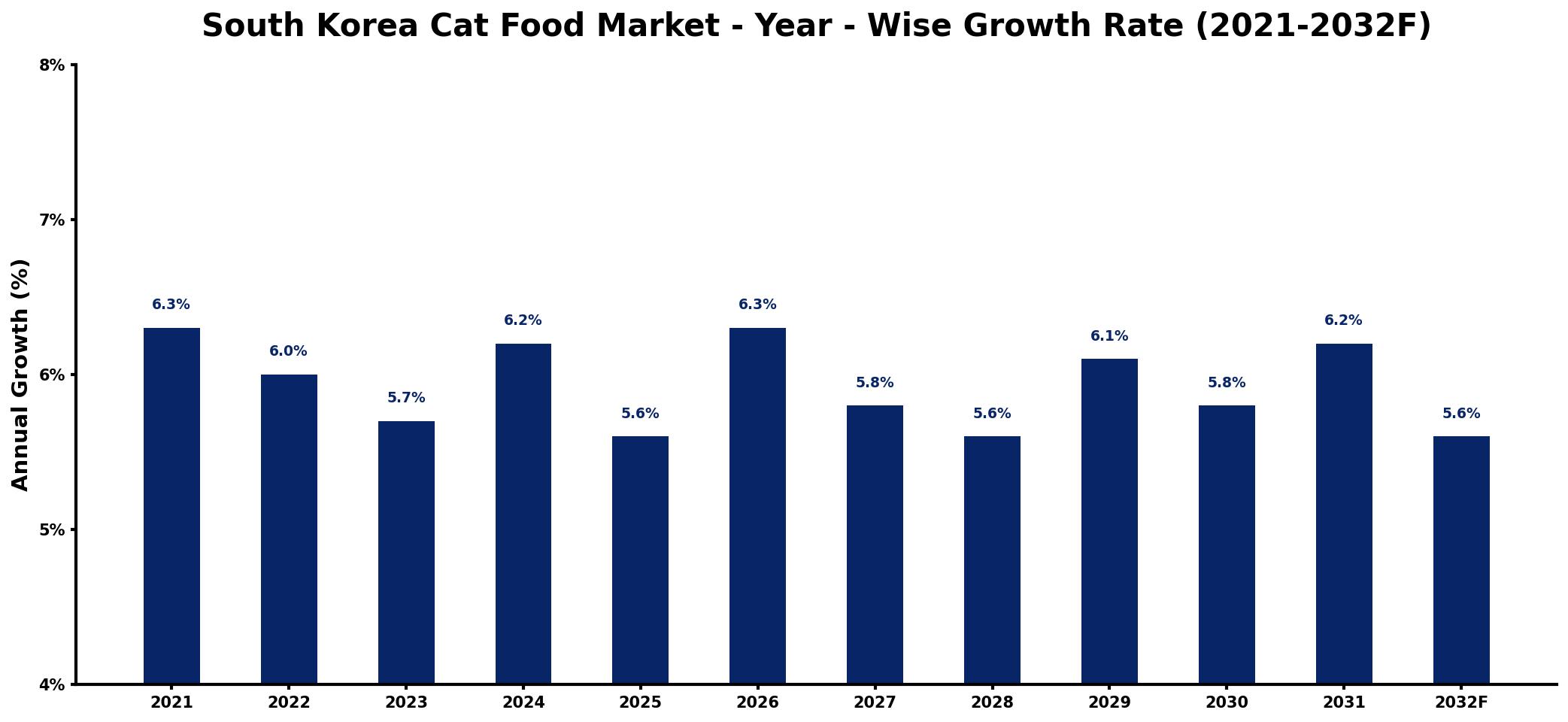
The table below presents the year‑wise growth rates along with the key drivers influencing the market
| Year | Growth Rate | Major Drivers |
| 2021 | 6.3% | Rising pet ownership trends |
| 2022 | 6.0% | Increased disposable income levels |
| 2023 | 5.7% | Growing awareness of nutrition |
| 2024 | 6.2% | Expansion of premium offerings |
| 2025 | 5.6% | growing automotive sector requirements |
| 2026 | 6.3% | Innovations in product formulations |
| 2027 | 5.8% | rising export shipment volumes |
| 2028 | 5.6% | Higher demand for sustainability |
| 2029 | 6.1% | Focus on health and wellness |
| 2030 | 5.8% | Greater investment in marketing |
| 2031 | 6.2% | Emerging trends in pet care |
| 2032 | 5.6% | growing commercial sector adoption |
Note: Market size estimations and growth projections presented in this report are based on 6Wresearch's proprietary forecasting methodology, utilizing the latest available industry data, government publications, and primary research inputs.
South Korea Cat Food Market Synopsis
In South Korea, the cat food market has rapidly evolved, mirroring a significant increase in pet ownership rates across the nation. As consumers seek to provide their feline companions with balanced nutrition, there is a noticeable shift towards premium products that cater to health-specific needs.
Current trends indicate that pet owners are more discerning than ever regarding ingredient quality, fueling demand for transparency in sourcing. This, coupled with government regulations that emphasize nutritional standards and safety, further drives the market's growth and evolution.
South Korea Cat Food Market Key Takeaways
- The market is on a robust growth path, driven by increasing pet ownership and health consciousness among cat owners.
- Premiumization trends indicate a strong consumer preference for high-quality and specialized cat food options.
- Regulatory frameworks are evolving to ensure safety and transparency, influencing product formulation and marketing.
- As pet health awareness grows, so does the demand for innovative and nutritionally rich cat food offerings.
- Emerging trends highlight a shift towards plant-based and organic products within the cat food sector.
Evaluation of Restraints in South Korea Cat Food Market
Despite the positive outlook for the South Korea cat food market, several constraints impede its full potential. One key issue is the challenge of educating pet owners about the benefits of premium cat food versus lower-quality alternatives. Many consumers remain unaware of the nutritional differences, which can limit their willingness to invest in higher-end products. Additionally, concerns over ingredient sourcing and quality control create hesitation among buyers, particularly in a market increasingly dominated by discerning consumers who prioritize transparency and health implications for their pets.
South Korea Cat Food Market Trends
The South Korea cat food market is currently experiencing a paradigm shift driven by several trends. Firstly, the emphasis on premium products is leading to a rise in innovative formulations that cater to specific dietary needs, such as grain-free or high-protein options. Furthermore, the trend towards sustainability and environmental consciousness is prompting brands to develop eco-friendly packaging and sourcing practices.
In addition, digital channels are increasingly playing a critical role in how consumers access information about cat food, creating opportunities for brands to engage directly with pet owners. The rise of subscription services for cat food also highlights a changing purchasing landscape, offering convenience and tailored solutions to busy pet owners.
South Korea Cat Food Market Opportunities
The South Korea cat food market presents numerous growth and investment opportunities. The increasing awareness of pet health allows for the introduction of specialized cat food products that cater to age-specific or health-specific conditions, such as obesity or allergies. Additionally, leveraging e-commerce platforms can enhance reach, particularly among tech-savvy millennials who seek convenience and variety in their purchasing choices.
Moreover, developing organic and natural product lines can capture the attention of health-conscious consumers looking for clean and holistic options. Collaborations with veterinary professionals and nutritionists could further enhance product credibility and consumer trust.
Government Initiatives in the South Korea Cat Food Market
The South Korean government actively supports the cat food market through policies that emphasize animal welfare and consumer protection. Regulations dictate the formulation and labeling of cat food to ensure compliance with nutritional standards, bolstering consumer confidence. Furthermore, government initiatives aim to improve veterinary oversight, enhance public awareness about proper pet nutrition, and implement regulatory updates that reflect the evolving dynamics of the pet care industry.
Future Insights of the South Korea Cat Food Market
Looking ahead to the period from 2026 to 2032, the South Korea cat food market is poised for significant transformation. With consumer preferences leaning towards premiumization and transparency, manufacturers will need to adapt to the expectations of informed pet owners. Enhanced focus on health benefits, ethical sourcing, and sustainability will likely shape product offerings, ensuring that brands remain competitive in a fast-evolving marketplace.
South Korea Cat Food Market Latest Developments (2025 - 2026)
Recent developments in the South Korea cat food market indicate a shift towards greater innovation and sustainability. Numerous brands are launching new product lines that emphasize organic ingredients and health benefits, responding to the demand for transparency in sourcing. Additionally, the introduction of advanced e-commerce platforms is enhancing accessibility for consumers, making it easier for pet owners to find high-quality options tailored to their cats needs.
South Korea Cat Food Market - Key Attractiveness of the Report
- 10 Years of Market Numbers
- Historical Data Starting from 2022 to 2025
- Base Year: 2025
- Forecast Data until 2032
- Key Performance Indicators Impacting the Market
- Major Upcoming Developments and Projects
Key Highlights of the Report:
- South Korea Cat Food Market Outlook
- Market Size of South Korea Cat Food Market, 2025
- Forecast of South Korea Cat Food Market, 2032
- Historical Data and Forecast of South Korea Cat Food Revenues & Volume for the Period 2022-2032F
- South Korea Cat Food Market Trend Evolution
- South Korea Cat Food Market Drivers and Challenges
- South Korea Cat Food Price Trends
- South Korea Cat Food Porter's Five Forces
- South Korea Cat Food Industry Life Cycle
- Historical Data and Forecast of South Korea Cat Food Market Revenues & Volume By Nature for the Period 2022-2032F
- Historical Data and Forecast of South Korea Cat Food Market Revenues & Volume By Organic for the Period 2022-2032F
- Historical Data and Forecast of South Korea Cat Food Market Revenues & Volume By Monoprotein for the Period 2022-2032F
- Historical Data and Forecast of South Korea Cat Food Market Revenues & Volume By Conventional for the Period 2022-2032F
- Historical Data and Forecast of South Korea Cat Food Market Revenues & Volume By Source for the Period 2022-2032F
- Historical Data and Forecast of South Korea Cat Food Market Revenues & Volume By Animal Derived for the Period 2022-2032F
- Historical Data and Forecast of South Korea Cat Food Market Revenues & Volume By Plant-derived for the Period 2022-2032F
- Historical Data and Forecast of South Korea Cat Food Market Revenues & Volume By Insect- Derived for the Period 2022-2032F
- Historical Data and Forecast of South Korea Cat Food Market Revenues & Volume By Product Type for the Period 2022-2032F
- Historical Data and Forecast of South Korea Cat Food Market Revenues & Volume By Kibble/dry for the Period 2022-2032F
- Historical Data and Forecast of South Korea Cat Food Market Revenues & Volume By Treats And Chews for the Period 2022-2032F
- Historical Data and Forecast of South Korea Cat Food Market Revenues & Volume By Dehydrated Food for the Period 2022-2032F
- Historical Data and Forecast of South Korea Cat Food Market Revenues & Volume By Freeze Dried Food for the Period 2022-2032F
- Historical Data and Forecast of South Korea Cat Food Market Revenues & Volume By Freeze-dried Raw for the Period 2022-2032F
- Historical Data and Forecast of South Korea Cat Food Market Revenues & Volume By Wet Food for the Period 2022-2032F
- Historical Data and Forecast of South Korea Cat Food Market Revenues & Volume By Frozen for the Period 2022-2032F
- Historical Data and Forecast of South Korea Cat Food Market Revenues & Volume By Powder for the Period 2022-2032F
- Historical Data and Forecast of South Korea Cat Food Market Revenues & Volume By Pet Type for the Period 2022-2032F
- Historical Data and Forecast of South Korea Cat Food Market Revenues & Volume By Kitten for the Period 2022-2032F
- Historical Data and Forecast of South Korea Cat Food Market Revenues & Volume By Senior for the Period 2022-2032F
- Historical Data and Forecast of South Korea Cat Food Market Revenues & Volume By Packaging Type for the Period 2022-2032F
- Historical Data and Forecast of South Korea Cat Food Market Revenues & Volume By Pouches for the Period 2022-2032F
- Historical Data and Forecast of South Korea Cat Food Market Revenues & Volume By Bags for the Period 2022-2032F
- Historical Data and Forecast of South Korea Cat Food Market Revenues & Volume By Folding Cartons for the Period 2022-2032F
- Historical Data and Forecast of South Korea Cat Food Market Revenues & Volume By Tubs & Cups for the Period 2022-2032F
- Historical Data and Forecast of South Korea Cat Food Market Revenues & Volume By Can for the Period 2022-2032F
- Historical Data and Forecast of South Korea Cat Food Market Revenues & Volume By Bottles & Jars for the Period 2022-2032F
- Historical Data and Forecast of South Korea Cat Food Market Revenues & Volume By Distribution Channel for the Period 2022-2032F
- Historical Data and Forecast of South Korea Cat Food Market Revenues & Volume By Store-based Retailing for the Period 2022-2032F
- Historical Data and Forecast of South Korea Cat Food Market Revenues & Volume By Online Retailers for the Period 2022-2032F
- South Korea Cat Food Import Export Trade Statistics
- Market Opportunity Assessment By Nature
- Market Opportunity Assessment By Source
- Market Opportunity Assessment By Product Type
- Market Opportunity Assessment By Pet Type
- Market Opportunity Assessment By Packaging Type
- Market Opportunity Assessment By Distribution Channel
- South Korea Cat Food Top Companies Market Share
- South Korea Cat Food Competitive Benchmarking By Technical and Operational Parameters
- South Korea Cat Food Company Profiles
- South Korea Cat Food Key Strategic Recommendations






































