South Korea Crystal Lighting Market Summary
The south korea crystal lighting market was estimated at USD 244 Million in 2025 and is projected to reach USD 333 Million by 2032, growing at a CAGR of 5.3% from 2026 to 2032.
South Korea Crystal Lighting Market Year-wise Growth Rate and Key Drivers
This graph highlights how the South Korea Crystal Lighting Market has steadily grown over the past five years, supported by major growth factors.
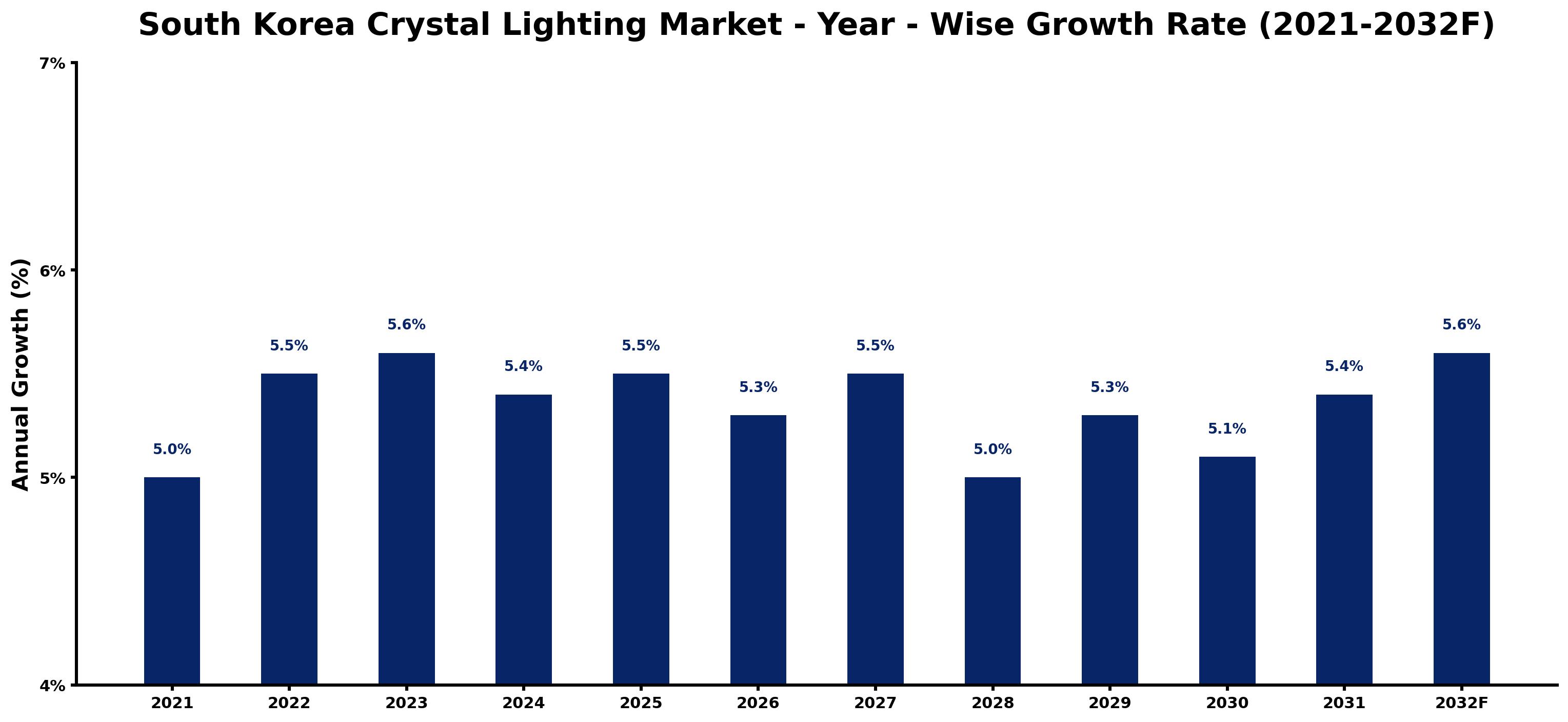
The table below presents the year wise growth rates along with the key drivers influencing the market
| Year | Growth Rate | Major Drivers |
| 2021 | 5.0% | Post-lockdown retail projects prompted renewed interest in innovative lighting solutions. |
| 2022 | 5.5% | Technological advancements in LED efficiency captivated consumers seeking stylish lighting options. |
| 2023 | 5.6% | Local manufacturers prioritized smart home integration to appeal to tech-savvy buyers. |
| 2024 | 5.4% | Architectural trends emphasized energy-efficient designs, boosting demand for crystal lighting features. |
| 2025 | 5.5% | Rising disposable incomes allowed consumers to invest in premium decorative lighting fixtures. |
| 2026 | 5.3% | Cross-border collaborations introduced unique designs, enriching the local lighting market diversity. |
| 2027 | 5.5% | Sustainability trends encouraged eco-friendly crystal lighting, aligning with broader environmental goals. |
| 2028 | 5.0% | Aging urban infrastructures necessitated modern lighting solutions for public spaces and safety. |
| 2029 | 5.3% | Home renovation projects surged, creating opportunities for upscale crystal lighting installations. |
| 2030 | 5.1% | Digital marketing strategies targeted millennial homeowners, focusing on aesthetics and ambiance. |
| 2031 | 5.4% | Global design exhibitions showcased South Korean crystal lighting, enhancing international market presence. |
| 2032 | 5.6% | Industry players embraced augmented reality tools, revolutionizing customer engagement and shopping experiences. |
Note - Market size estimations and growth projections presented in this report are based on 6Wresearch's advanced forecasting approach, validated with industry datasets as of June 2026.
South Korea Crystal Lighting Market Synopsis
The South Korea Crystal Lighting Market is projected to reach 5.3% and witness significant growth during the forecast period (2026-2032). This market is anticipated to expand at a compound annual growth rate (CAGR) of 6.6%, driven primarily by increased demand from the residential and commercial sectors. Technological advancements are playing a pivotal role in this sector's evolution, enhancing the appeal and functionality of crystal lighting solutions. Additionally, the introduction of innovative designs and energy-efficient models is expected to bolster market expansion. As disposable incomes rise and consumer preferences shift towards modern lighting solutions, the South Korea Crystal Lighting Market is poised for a dynamic transformation in the coming years.
South Korea Crystal Lighting Market Growth Drivers
Several key factors are fueling the growth of the South Korea Crystal Lighting Market, contributing to its robust trajectory:
- The rise in disposable incomes among consumers has led to increased spending on luxury home decor items, including crystal lighting fixtures, which are perceived as status symbols.
- Technological innovations in manufacturing processes have enabled the production of more intricate and aesthetically appealing crystal lighting designs, attracting a wider audience.
- The growing trend of interior design focusing on sophisticated and modern aesthetics has heightened the demand for elegant lighting solutions, particularly in both residential and commercial environments.
- Energy efficiency has become a significant concern, and the introduction of LED technology in crystal lighting has made these products more attractive due to lower energy costs and longer lifespans.
- Urbanization and an increasing number of commercial establishments are contributing to the demand for decorative lighting solutions, as businesses seek to create inviting atmospheres for customers.
South Korea Crystal Lighting Market Trends and Opportunities
The South Korea Crystal Lighting Market is witnessing notable trends that are shaping its future landscape. Key trends include:
- There is a growing consumer preference for customizable crystal lighting options, allowing purchasers to select specific designs, colors, and features that align with their personal style and home decor.
- Online retailing is gaining traction, with many consumers turning to e-commerce platforms for purchasing crystal lighting fixtures, prompting manufacturers to enhance their online presence.
- Partnerships between interior designers and lighting manufacturers are becoming more common, facilitating the creation of bespoke lighting solutions that cater to unique client needs.
- There is an increasing focus on sustainability, with manufacturers exploring eco-friendly materials and production methods to appeal to environmentally-conscious consumers.
- The influence of social media and online influencers in home decor trends is significant, leading to greater exposure and popularity of crystal lighting as part of stylish interior designs.
South Korea Crystal Lighting Market Challenges and Restraints
While there are numerous growth opportunities, several challenges also exist that could hinder the market's progress:
- The high cost of crystal lighting fixtures compared to standard lighting options may deter price-sensitive consumers from making purchases.
- Counterfeit products and inferior quality imitations can pose a threat to brand reputation and consumer trust in the market.
- Fluctuations in raw material prices can impact manufacturing costs and profitability for companies operating within the South Korea Crystal Lighting Market.
- Rising competition from alternative lighting solutions, such as smart lighting systems, could divert consumer interest away from traditional crystal fixtures.
- The ongoing challenges of supply chain disruptions, exacerbated by global events, may affect the availability of products in the market.
South Korea Crystal Lighting Market Government Investment and Initiatives
The South Korean government has shown commitment to enhancing the infrastructure and market viability for crystal lighting through various initiatives. These include:
- Investment in energy efficiency programs encourages manufacturers to adopt greener production techniques, aligning with national policies aimed at reducing carbon footprints.
- The government is promoting smart city initiatives that often integrate advanced lighting solutions, creating opportunities for crystal lighting to be featured in urban development projects.
- Public spending on infrastructure and renovation projects can boost demand for decorative lighting solutions in public spaces and commercial establishments.
- Incentives for research and development in lighting technologies allow manufacturers to innovate and enhance product offerings, driving competitiveness in the market.
- Collaboration with educational institutions for skill development in design and engineering aims to improve the quality and craftsmanship of crystal lighting products.
South Korea Crystal Lighting Market Latest Developments (May 2025 - June 2026)
In the period extending from May 2025 to June 2026, the South Korea Crystal Lighting Market has experienced several important developments:
- Many manufacturers have unveiled new collections featuring intricate designs and innovative materials, aiming to appeal to a broader range of consumers.
- Efforts to enhance online marketing strategies have gained emphasis as companies seek to leverage digital platforms to reach potential customers more effectively.
- Collaborations between lighting brands and interior design firms have resulted in the creation of tailored lighting solutions, showcasing the versatility of crystal lighting in various settings.
- With sustainability becoming a focal point, manufacturers have begun to incorporate recyclable materials into their product lines, promoting eco-friendly options in the market.
- Participation in international trade expos has increased, allowing South Korean lighting companies to showcase their products on a global stage and expand their market reach.
South Korea Crystal Lighting Market - Key Attractiveness of the Report
- 10 Years of Market Numbers
- Historical Data Starting from 2022 to 2025
- Base Year: 2025
- Forecast Data until 2032
- Key Performance Indicators Impacting the Market
- Major Upcoming Developments and Projects
Key Highlights of the Report:
- South Korea Crystal Lighting Market Outlook
- Market Size of South Korea Crystal Lighting Market, 2025
- Forecast of South Korea Crystal Lighting Market, 2032F
- Historical Data and Forecast of South Korea Crystal Lighting Revenues & Volume for the Period 2022-2032F
- South Korea Crystal Lighting Market Trend Evolution
- South Korea Crystal Lighting Market Drivers and Challenges
- South Korea Crystal Lighting Price Trends
- South Korea Crystal Lighting Porter's Five Forces
- South Korea Crystal Lighting Industry Life Cycle
- Historical Data and Forecast of South Korea Crystal Lighting Market Revenues & Volume By Product Type for the Period 2022-2032F
- Historical Data and Forecast of South Korea Crystal Lighting Market Revenues & Volume By Ceiling Crystal Lights for the Period 2022-2032F
- Historical Data and Forecast of South Korea Crystal Lighting Market Revenues & Volume By Crystal Chandeliers for the Period 2022-2032F
- Historical Data and Forecast of South Korea Crystal Lighting Market Revenues & Volume By Others for the Period 2022-2032F
- Historical Data and Forecast of South Korea Crystal Lighting Market Revenues & Volume By Applications for the Period 2022-2032F
- Historical Data and Forecast of South Korea Crystal Lighting Market Revenues & Volume By Commercial for the Period 2022-2032F
- Historical Data and Forecast of South Korea Crystal Lighting Market Revenues & Volume By Designer for the Period 2022-2032F
- Historical Data and Forecast of South Korea Crystal Lighting Market Revenues & Volume By Superior Residential for the Period 2022-2032F
- South Korea Crystal Lighting Import Export Trade Statistics
- Market Opportunity Assessment By Product Type
- Market Opportunity Assessment By Applications
- South Korea Crystal Lighting Top Companies Market Share
- South Korea Crystal Lighting Competitive Benchmarking By Technical and Operational Parameters
- South Korea Crystal Lighting Company Profiles
- South Korea Crystal Lighting Key Strategic Recommendations






































