South Korea Dermatology Drugs Market Size, Share & Growth Rate
The South Korea Dermatology Drugs Market was estimated at USD 492 Million in 2025 and is projected to reach USD 682 Million by 2032, growing at a CAGR of 4.8% from 2026 to 2032. This upward trajectory is primarily driven by the increasing prevalence of skin disorders among the population, coupled with a rising demand for innovative treatment options. Enhanced patient awareness regarding skin health and significant advancements in drug formulations are further contributing to this growth, ensuring that effective therapies are more accessible than ever.
South Korea Dermatology Drugs Market Year-wise Growth Rate and Key Drivers
This graph highlights how the South Korea Dermatology Drugs Market has steadily grown over the years, supported by major growth factors.
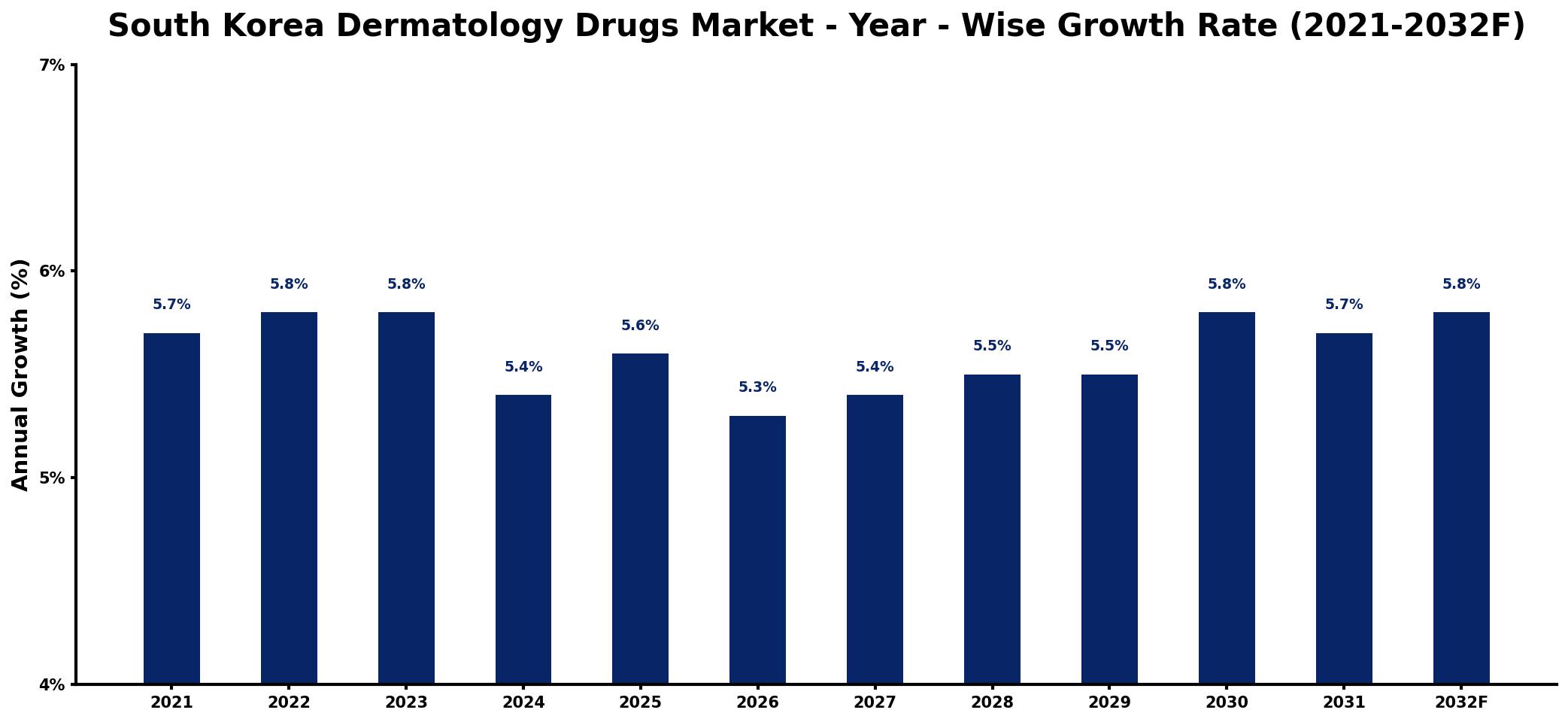
The table below presents the year‑wise growth rates along with the key drivers influencing the market
| Year | Growth Rate | Major Drivers |
| 2021 | 5.7% | Rising demand for skincare solutions |
| 2022 | 5.8% | Increased investment in healthcare technology |
| 2023 | 5.8% | Growing awareness of skin conditions |
| 2024 | 5.4% | Expansion of telehealth services |
| 2025 | 5.6% | Surge in cosmetic treatment interest |
| 2026 | 5.3% | Development of innovative treatment methods |
| 2027 | 5.4% | Increased focus on preventive care |
| 2028 | 5.5% | Growth in clinical trial participation |
| 2029 | 5.5% | Rising prevalence of chronic conditions |
| 2030 | 5.8% | Boost in public health campaigns |
| 2031 | 5.7% | Widening distribution channels for treatments |
| 2032 | 5.8% | Enhanced research funding initiatives |
Note: Market size estimations and growth projections presented in this report are based on 6Wresearch's proprietary forecasting methodology, utilizing the latest available industry data, government publications, and primary research inputs.
South Korea Dermatology Drugs Market Synopsis
The South Korea Dermatology Drugs Market is currently witnessing a robust expansion, bolstered by a growing emphasis on both therapeutic and aesthetic dermatology solutions. As skin disorders such as acne and eczema become more prevalent, the market is responding with innovative drug formulations that aim to improve patient outcomes.
Moreover, the rising disposable income among consumers has fostered a culture that prioritizes skin health and aesthetic treatments. Pharmaceutical companies are actively engaged in developing novel therapeutics, ensuring that the South Korean market remains at the forefront of dermatological advancements.
South Korea Dermatology Drugs Market Key Takeaways
- The market is expected to grow significantly due to the rising incidence of skin disorders.
- Innovative therapeutic developments are enhancing patient compliance and treatment efficacy.
- Increased investment in healthcare and dermatology is driving growth opportunities.
- The demand for cosmetic dermatology treatments is influencing market dynamics.
- Collaborations among stakeholders are crucial for improving market access and affordability.
Evaluation of Restraints in South Korea Dermatology Drugs Market
Despite the promising growth, the South Korea Dermatology Drugs Market faces several restraints that could hinder its full potential. Regulatory hurdles, particularly the lengthy approval processes set by the Ministry of Food and Drug Safety (MFDS), pose significant barriers for new products seeking market entry. Additionally, reimbursement policies can restrict access to essential treatments, limiting their availability to a broader patient base. These challenges necessitate a strategic approach from both pharmaceutical companies and healthcare stakeholders, emphasizing the need for collaborative efforts to navigate the regulatory landscape effectively and enhance affordability.
South Korea Dermatology Drugs Market Trends
The South Korea Dermatology Drugs Market is currently shaped by several prominent trends. One significant trend is the shift towards biologic therapies, which are increasingly favored for their targeted action and improved patient outcomes. Furthermore, there is a notable uptick in the demand for cosmetic dermatology products, as consumers become more invested in maintaining their skin health. The integration of digital health tools, including teledermatology, is also gaining traction, providing patients with convenient access to dermatological care and enhancing treatment adherence.
South Korea Dermatology Drugs Market Opportunities
Several opportunities exist within the South Korea Dermatology Drugs Market that investors and companies should consider. The ongoing shift towards personalized medicine presents a unique avenue for innovation, as treatments can be tailored to meet individual patient needs. Additionally, the expansion of healthcare infrastructure and increased public spending on health services are expected to create a more conducive environment for dermatological product launches. The rise of e-commerce platforms also offers new channels for reaching patients directly, further driving growth in the market.
Government Initiatives in the South Korea Dermatology Drugs Market
The South Korean government plays a vital role in shaping the dermatology drugs market through its regulatory policies and public health initiatives. The Ministry of Food and Drug Safety (MFDS) outlines stringent requirements for clinical trials and marketing authorization, ensuring that products meet high safety and efficacy standards. Additionally, public health campaigns aimed at increasing awareness of skin disorders and treatment options further support market growth. Investments in healthcare innovation, including incentives for research and development, are also part of the governments commitment to improving patient health outcomes.
Future Insights of the South Korea Dermatology Drugs Market
Looking ahead to 2026-2032, the South Korea Dermatology Drugs Market is poised for continued growth driven by technological advancements and shifts in consumer behavior. As the population ages and skin conditions become more prevalent, the demand for dermatological treatments will likely intensify. Additionally, ongoing research into new drug formulations and the potential introduction of novel therapies will fuel market dynamics. Emphasis on personalized care and the integration of technology into treatment approaches will further shape the future landscape, enabling more effective management of dermatological disorders.
South Korea Dermatology Drugs Market Latest Developments (2025 - 2026)
Recent developments in the South Korea Dermatology Drugs Market include a surge in research focused on combination therapies that enhance the efficacy of existing treatments. Additionally, pharmaceutical companies are exploring partnerships with tech firms to develop digital solutions that facilitate better patient engagement and monitoring. As regulatory frameworks continue to evolve, there is a growing focus on expedited approval pathways for innovative therapies. This dynamic environment suggests a strong potential for new product introductions that align with emerging consumer needs.
South Korea Dermatology Drugs Market - Key Attractiveness of the Report
- 10 Years of Market Numbers
- Historical Data Starting from 2022 to 2025
- Base Year: 2025
- Forecast Data until 2032
- Key Performance Indicators Impacting the Market
- Major Upcoming Developments and Projects
Key Highlights of the Report:
- South Korea Dermatology Drugs Market Outlook
- Market Size of South Korea Dermatology Drugs Market, 2025
- Forecast of South Korea Dermatology Drugs Market, 2032
- Historical Data and Forecast of South Korea Dermatology Drugs Revenues & Volume for the Period 2022-2032F
- South Korea Dermatology Drugs Market Trend Evolution
- South Korea Dermatology Drugs Market Drivers and Challenges
- South Korea Dermatology Drugs Price Trends
- South Korea Dermatology Drugs Porter's Five Forces
- South Korea Dermatology Drugs Industry Life Cycle
- Historical Data and Forecast of South Korea Dermatology Drugs Market Revenues & Volume By Application for the Period 2022-2032F
- Historical Data and Forecast of South Korea Dermatology Drugs Market Revenues & Volume By Acne for the Period 2022-2032F
- Historical Data and Forecast of South Korea Dermatology Drugs Market Revenues & Volume By Atopic Dermatitis for the Period 2022-2032F
- Historical Data and Forecast of South Korea Dermatology Drugs Market Revenues & Volume By Psoriasis for the Period 2022-2032F
- Historical Data and Forecast of South Korea Dermatology Drugs Market Revenues & Volume By Others for the Period 2022-2032F
- Historical Data and Forecast of South Korea Dermatology Drugs Market Revenues & Volume By Route of Administration for the Period 2022-2032F
- Historical Data and Forecast of South Korea Dermatology Drugs Market Revenues & Volume By Oral for the Period 2022-2032F
- Historical Data and Forecast of South Korea Dermatology Drugs Market Revenues & Volume By Parenteral for the Period 2022-2032F
- Historical Data and Forecast of South Korea Dermatology Drugs Market Revenues & Volume By Topical for the Period 2022-2032F
- Historical Data and Forecast of South Korea Dermatology Drugs Market Revenues & Volume By Distribution Channel for the Period 2022-2032F
- Historical Data and Forecast of South Korea Dermatology Drugs Market Revenues & Volume By Hospital Pharmacy for the Period 2022-2032F
- Historical Data and Forecast of South Korea Dermatology Drugs Market Revenues & Volume By Retail Pharmacy for the Period 2022-2032F
- Historical Data and Forecast of South Korea Dermatology Drugs Market Revenues & Volume By Online Pharmacy for the Period 2022-2032F
- South Korea Dermatology Drugs Import Export Trade Statistics
- Market Opportunity Assessment By Application
- Market Opportunity Assessment By Route of Administration
- Market Opportunity Assessment By Distribution Channel
- South Korea Dermatology Drugs Top Companies Market Share
- South Korea Dermatology Drugs Competitive Benchmarking By Technical and Operational Parameters
- South Korea Dermatology Drugs Company Profiles
- South Korea Dermatology Drugs Key Strategic Recommendations






































