South Korea Estradiol Market Size, Share & Growth Rate
The South Korea Estradiol Market was estimated at USD 162 Million in 2025 and is projected to reach USD 226 Million by 2032, growing at a CAGR of 4.9% from 2026 to 2032. This growth trajectory can be attributed to the increasing focus on womens health, particularly the rise in awareness surrounding menopausal symptoms. Furthermore, the expansion of hormone replacement therapy options is significantly influencing the market, reflecting a shift in public perception towards seeking medical solutions for hormonal health.
South Korea Estradiol Market Year-wise Growth Rate and Key Drivers
This graph highlights how the South Korea Estradiol Market has steadily grown over the years, supported by major growth factors.
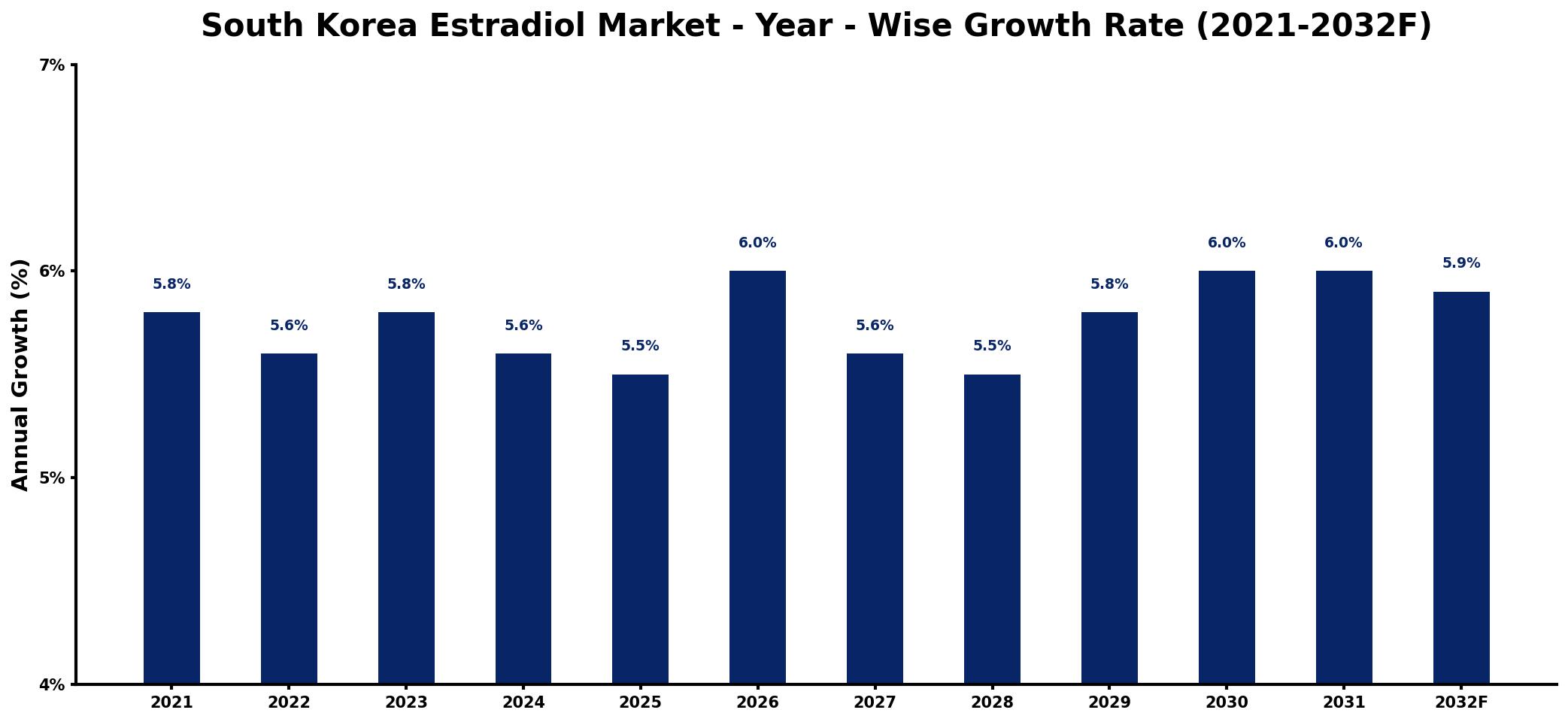
The table below presents the year‑wise growth rates along with the key drivers influencing the market
| Year | Growth Rate | Major Drivers |
| 2021 | 5.8% | Rising demand for hormone therapy |
| 2022 | 5.6% | Increased investment in biotechnology |
| 2023 | 5.8% | Growing awareness of menopause health |
| 2024 | 5.6% | Expansion of healthcare infrastructure |
| 2025 | 5.5% | Advancements in pharmaceutical research |
| 2026 | 6.0% | Surge in preventive health measures |
| 2027 | 5.6% | Increase in aging population demographics |
| 2028 | 5.5% | Growth in women's health initiatives |
| 2029 | 5.8% | Rising prevalence of chronic conditions |
| 2030 | 6.0% | strengthening underlying market demand |
| 2031 | 6.0% | Increased focus on personalized medicine |
| 2032 | 5.9% | Growing interest in holistic treatments |
Note: Market size estimations and growth projections presented in this report are based on 6Wresearch's proprietary forecasting methodology, utilizing the latest available industry data, government publications, and primary research inputs.
South Korea Estradiol Market Synopsis
The South Korea Estradiol market is characterized by a notable demand for diverse estradiol formulations, including pills, patches, gels, and creams. The increasing prevalence of menopausal symptoms among women is driving healthcare professionals to recommend hormone replacement therapy more frequently.
This market is bolstered by advancements in medical research leading to innovative product offerings that improve the efficacy and safety profiles of estradiol therapies. As the aging population grows, the demand for effective solutions to manage menopausal symptoms is expected to rise correspondingly.
South Korea Estradiol Market Key Takeaways
- The South Korean market for estradiol is gaining momentum, driven by a growing aging population.
- Awareness campaigns regarding women's health issues are increasing the demand for hormone replacement therapies.
- Innovative product developments are creating new opportunities for market expansion.
- Cultural sensitivities surrounding menopause present both challenges and opportunities for market players.
- Government regulations are shaping the competitive landscape for estradiol products in South Korea.
Evaluation of Restraints in South Korea Estradiol Market
Despite the optimistic growth prospects, the South Korea Estradiol market is not without its challenges. Regulatory hurdles pose significant barriers, with stringent approval processes impacting the timely introduction of new products. Furthermore, the emergence of generic alternatives is leading to heightened competition, resulting in pricing pressures that may impact profitability. A lack of widespread understanding among healthcare professionals and patients regarding the benefits of estradiol therapy also limits market growth. Cultural factors surrounding menopause can create further challenges, making it imperative for market participants to navigate these sensitivities thoughtfully.
South Korea Estradiol Market Trends
A notable trend in the South Korea Estradiol market is the increasing focus on personalized medicine, with tailored therapeutic approaches aimed at individual patient needs becoming more commonplace. The rise of telemedicine and digital health platforms is also reshaping how estradiol therapies are administered and monitored. Furthermore, ongoing research into the long-term effects of hormone replacement therapy is driving innovation, leading to the development of formulations that promise enhanced safety and reduced side effects. As more women become proactive about their health, the demand for diverse estradiol delivery systems is set to grow.
South Korea Estradiol Market Opportunities
Investment opportunities in the South Korea Estradiol market are particularly promising. The increasing prevalence of hormonal imbalances and menopausal symptoms presents a fertile ground for growth. Companies focusing on the development of innovative estradiol products can capitalize on the rising awareness of womens health issues. Additionally, there is a burgeoning market for cosmetic applications of estradiol, particularly in anti-aging skincare, offering lucrative avenues for pharmaceutical firms. Strategic collaborations and partnerships can further enhance product visibility and reach within this expanding market.
Government Initiatives in the South Korea Estradiol Market
The South Korea Estradiol market is significantly influenced by government policies and regulations that govern the pharmaceutical industry. The Korean Ministry of Food and Drug Safety (MFDS) plays a crucial role in the oversight of estradiol product approval, manufacturing standards, and distribution practices. These regulations ensure the safety and efficacy of estradiol therapies while fostering competition. Additionally, the National Health Insurance system impacts pricing and patient access to these medications, driving market dynamics and shaping manufacturer strategies.
Future Insights of the South Korea Estradiol Market
Looking ahead to 2026-2032, the South Korea Estradiol market is poised for continued growth, driven by rising awareness of women's health issues and a growing need for effective menopausal symptom management. The ongoing advancements in healthcare infrastructure are likely to further support this expansion. As research into personalized treatment options progresses, the market will likely see enhanced product offerings that cater specifically to diverse patient needs. Overall, the South Korea Estradiol market is well-positioned for long-term growth, presenting substantial opportunities for strategic investment and innovation.
South Korea Estradiol Market Latest Developments (2025 - 2026)
In recent months, the South Korea Estradiol market has witnessed a surge in product launches aimed at addressing specific menopausal symptoms more effectively. Advances in digital health technologies have prompted pharmaceutical companies to explore innovative ways of engaging with patients, facilitating better access to estradiol therapies. Additionally, growing partnerships between healthcare providers and estradiol manufacturers are strengthening education initiatives to increase awareness about the benefits of hormone replacement therapy. Overall, these developments reflect a dynamic market landscape adapting to evolving consumer needs.
South Korea Estradiol Market - Key Attractiveness of the Report
- 10 Years of Market Numbers
- Historical Data Starting from 2022 to 2025
- Base Year: 2025
- Forecast Data until 2032
- Key Performance Indicators Impacting the Market
- Major Upcoming Developments and Projects
Key Highlights of the Report:
- South Korea Estradiol Market Outlook
- Market Size of South Korea Estradiol Market, 2025
- Forecast of South Korea Estradiol Market, 2032
- Historical Data and Forecast of South Korea Estradiol Revenues & Volume for the Period 2022-2032F
- South Korea Estradiol Market Trend Evolution
- South Korea Estradiol Market Drivers and Challenges
- South Korea Estradiol Price Trends
- South Korea Estradiol Porter's Five Forces
- South Korea Estradiol Industry Life Cycle
- Historical Data and Forecast of South Korea Estradiol Market Revenues & Volume By Product Type for the Period 2022-2032F
- Historical Data and Forecast of South Korea Estradiol Market Revenues & Volume By a-Estradiol for the Period 2022-2032F
- Historical Data and Forecast of South Korea Estradiol Market Revenues & Volume By End-User for the Period 2022-2032F
- Historical Data and Forecast of South Korea Estradiol Market Revenues & Volume By Pharmaceutical for the Period 2022-2032F
- Historical Data and Forecast of South Korea Estradiol Market Revenues & Volume By Biological Research for the Period 2022-2032F
- Historical Data and Forecast of South Korea Estradiol Market Revenues & Volume By Others for the Period 2022-2032F
- South Korea Estradiol Import Export Trade Statistics
- Market Opportunity Assessment By Product Type
- Market Opportunity Assessment By End-User
- South Korea Estradiol Top Companies Market Share
- South Korea Estradiol Competitive Benchmarking By Technical and Operational Parameters
- South Korea Estradiol Company Profiles
- South Korea Estradiol Key Strategic Recommendations






































