South Korea Golf Clubs Market Size, Share & Growth Rate
The South Korea Golf Clubs Market was estimated at USD 436 Million in 2025 and is projected to reach USD 582 Million by 2032, growing at a CAGR of 4.2% from 2026 to 2032. This growth trajectory is underpinned by the increasing interest in golf as a mainstream recreational activity among South Koreans and a burgeoning golf tourism sector. Furthermore, the rise of premium and high-quality golf equipment reflects changing consumer preferences toward performance-oriented gear.
South Korea Golf Clubs Market Year-wise Growth Rate and Key Drivers
This graph highlights how the South Korea Golf Clubs Market has steadily grown over the years, supported by major growth factors.
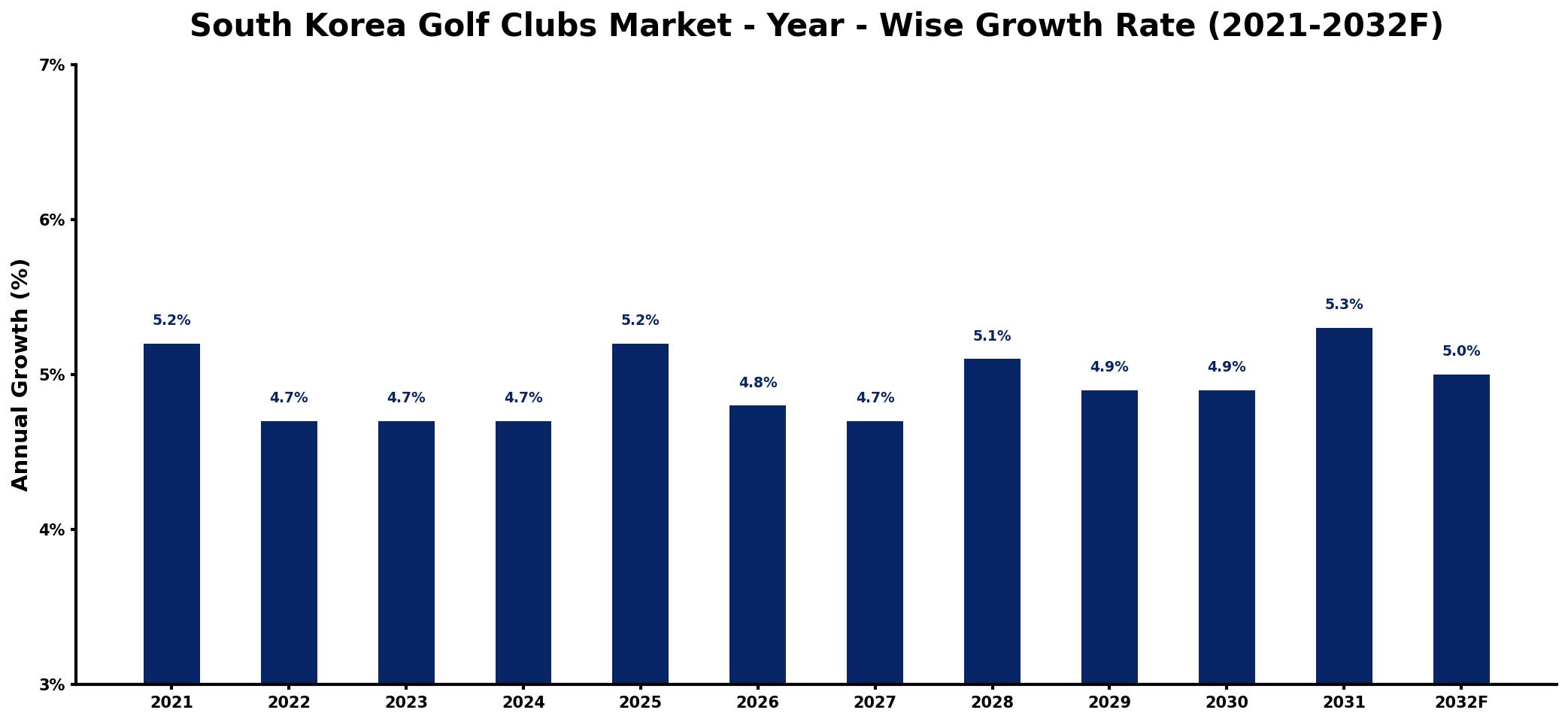
The table below presents the year‑wise growth rates along with the key drivers influencing the market
| Year | Growth Rate | Major Drivers |
| 2021 | 5.2% | Increased interest in outdoor activities |
| 2022 | 4.7% | Rising disposable income levels |
| 2023 | 4.7% | Growth in domestic tourism sector |
| 2024 | 4.7% | Expansion of leisure facilities |
| 2025 | 5.2% | Emergence of new lifestyle trends |
| 2026 | 4.8% | Investment in recreational infrastructure |
| 2027 | 4.7% | Popularity of fitness and wellness |
| 2028 | 5.1% | Increased participation in sports events |
| 2029 | 4.9% | Development of luxury experiences |
| 2030 | 4.9% | Rising influence of social media |
| 2031 | 5.3% | rising infrastructure development spending |
| 2032 | 5.0% | Increased environmental sustainability focus |
Note: Market size estimations and growth projections presented in this report are based on 6Wresearch's proprietary forecasting methodology, utilizing the latest available industry data, government publications, and primary research inputs.
South Korea Golf Clubs Market Synopsis
The strongest force shaping the South Korea Golf Clubs Market is the escalating demand for high-quality golf clubs, driven by a robust golfing culture and a notable increase in both domestic participation and tourism. As more individuals view golf as a leisure pursuit, the appetite for technologically advanced and customized golfing equipment continues to surge.
In addition, the market is being influenced by a shift towards eco-consciousness, as consumers increasingly seek sustainable golf products. The rise of e-commerce platforms further enhances accessibility, allowing a wider audience to engage with golf, thus expanding the markets potential.
South Korea Golf Clubs Market Key Takeaways
- The market is characterized by a rising demand for premium, technologically advanced golf clubs.
- Customization and personalized club fitting services are becoming key differentiators in consumer choice.
- Growing interest in eco-friendly golf products is reshaping manufacturer offerings and marketing strategies.
- Online retail channels are increasingly favored by consumers, providing convenience and a wider product selection.
- Investment opportunities abound in manufacturing, distribution, and golf-related services as participation rates grow.
Evaluation of Restraints in South Korea Golf Clubs Market
Despite the promising growth prospects, the South Korea Golf Clubs Market faces challenges stemming from demographic shifts. A declining interest in golf among younger generations poses a significant concern, threatening the market's long-term sustainability. Additionally, the high costs associated with maintaining golf courses, combined with strict regulations surrounding land use and environmental sustainability, present operational hurdles for club owners. The competition from alternative leisure activities further intensifies pressure on the market to innovate and retain consumer interest.
South Korea Golf Clubs Market Trends
Several key trends are currently shaping the South Korea Golf Clubs Market. Firstly, there is a pronounced shift towards premium golf clubs as players invest in quality equipment that promises enhanced performance. Manufacturers are responding to this trend by focusing on cutting-edge technology and innovative designs. Furthermore, the interest in sustainable practices is leading to the development of eco-friendly products made from recycled materials, which cater to environmentally conscious consumers. Lastly, the adoption of online retail channels continues to rise, making it easier for golfers to find and purchase their desired equipment.
South Korea Golf Clubs Market Opportunities
The South Korea Golf Clubs market is rife with investment opportunities as golf continues to rise in popularity. Investors can explore avenues in manufacturing high-end golf clubs, distributing innovative golfing gear, and investing in golf course development and management. The tech-savvy nature of South Korean consumers also opens doors for smart golf club innovations and technology-driven golfing solutions, appealing to both novice and seasoned players.
Government Initiatives in the South Korea Golf Clubs Market
The South Korean government has implemented various policies to foster the growth of the golf industry while promoting transparency and consumer protection. Regulations are in place to ensure fair competition and proper advertising practices for golf products. Furthermore, initiatives aimed at encouraging environmental sustainability in golf course management are being prioritized. The government also provides support for golf-related businesses, enhancing tourism opportunities and contributing to the overall health of the golf clubs market.
Future Insights of the South Korea Golf Clubs Market
Looking ahead, the South Korea golf clubs market is expected to maintain a steady growth trajectory through 2026 to 2032. Increasing disposable income levels and a growing interest in leisure activities among younger demographics will likely bolster participation rates in golf. As the trend towards premium and technologically sophisticated golf clubs continues, manufacturers are set to innovate further. With South Korea hosting more international golf tournaments and developing world-class facilities, the market is poised for sustained expansion.
South Korea Golf Clubs Market Latest Developments (2025 - 2026)
In recent months, the South Korea Golf Clubs Market has seen a notable uptick in product launches focused on advanced technology and customization. Retailers are increasingly adopting online platforms to meet the growing demand for convenience, while initiatives aimed at promoting sustainability within manufacturing processes are gaining traction. Additionally, there is a concerted effort to attract younger golfers through innovative marketing strategies, reflecting the need to rejuvenate the customer base.
South Korea Golf Clubs Market - Key Attractiveness of the Report
- 10 Years of Market Numbers
- Historical Data Starting from 2022 to 2025
- Base Year: 2025
- Forecast Data until 2032
- Key Performance Indicators Impacting the Market
- Major Upcoming Developments and Projects
Key Highlights of the Report:
- South Korea Golf Clubs Market Outlook
- Market Size of South Korea Golf Clubs Market, 2025
- Forecast of South Korea Golf Clubs Market, 2032
- Historical Data and Forecast of South Korea Golf Clubs Revenues & Volume for the Period 2022-2032F
- South Korea Golf Clubs Market Trend Evolution
- South Korea Golf Clubs Market Drivers and Challenges
- South Korea Golf Clubs Price Trends
- South Korea Golf Clubs Porter's Five Forces
- South Korea Golf Clubs Industry Life Cycle
- Historical Data and Forecast of South Korea Golf Clubs Market Revenues & Volume By Product Type for the Period 2022-2032F
- Historical Data and Forecast of South Korea Golf Clubs Market Revenues & Volume By Woods for the Period 2022-2032F
- Historical Data and Forecast of South Korea Golf Clubs Market Revenues & Volume By Iron for the Period 2022-2032F
- Historical Data and Forecast of South Korea Golf Clubs Market Revenues & Volume By Wedges for the Period 2022-2032F
- Historical Data and Forecast of South Korea Golf Clubs Market Revenues & Volume By Putters for the Period 2022-2032F
- South Korea Golf Clubs Import Export Trade Statistics
- Market Opportunity Assessment By Product Type
- South Korea Golf Clubs Top Companies Market Share
- South Korea Golf Clubs Competitive Benchmarking By Technical and Operational Parameters
- South Korea Golf Clubs Company Profiles
- South Korea Golf Clubs Key Strategic Recommendations






































