South Korea Inflatable Pools Market Size, Share & Growth Rate
The South Korea Inflatable Pools Market was estimated at USD 286 Million in 2025 and is projected to reach USD 385 Million by 2032, growing at a CAGR of 4.3% from 2026 to 2032. This growth trajectory is largely driven by the increasing consumer shift toward staycations and home-based leisure, as urban dwellers seek out affordable and convenient outdoor recreational options. Additionally, the continuous innovation in design and functionality of inflatable pools is captivating a wider audience, thereby bolstering market expansion.
South Korea Inflatable Pools Market Year-wise Growth Rate and Key Drivers
This graph highlights how the South Korea Inflatable Pools Market has steadily grown over the years, supported by major growth factors.
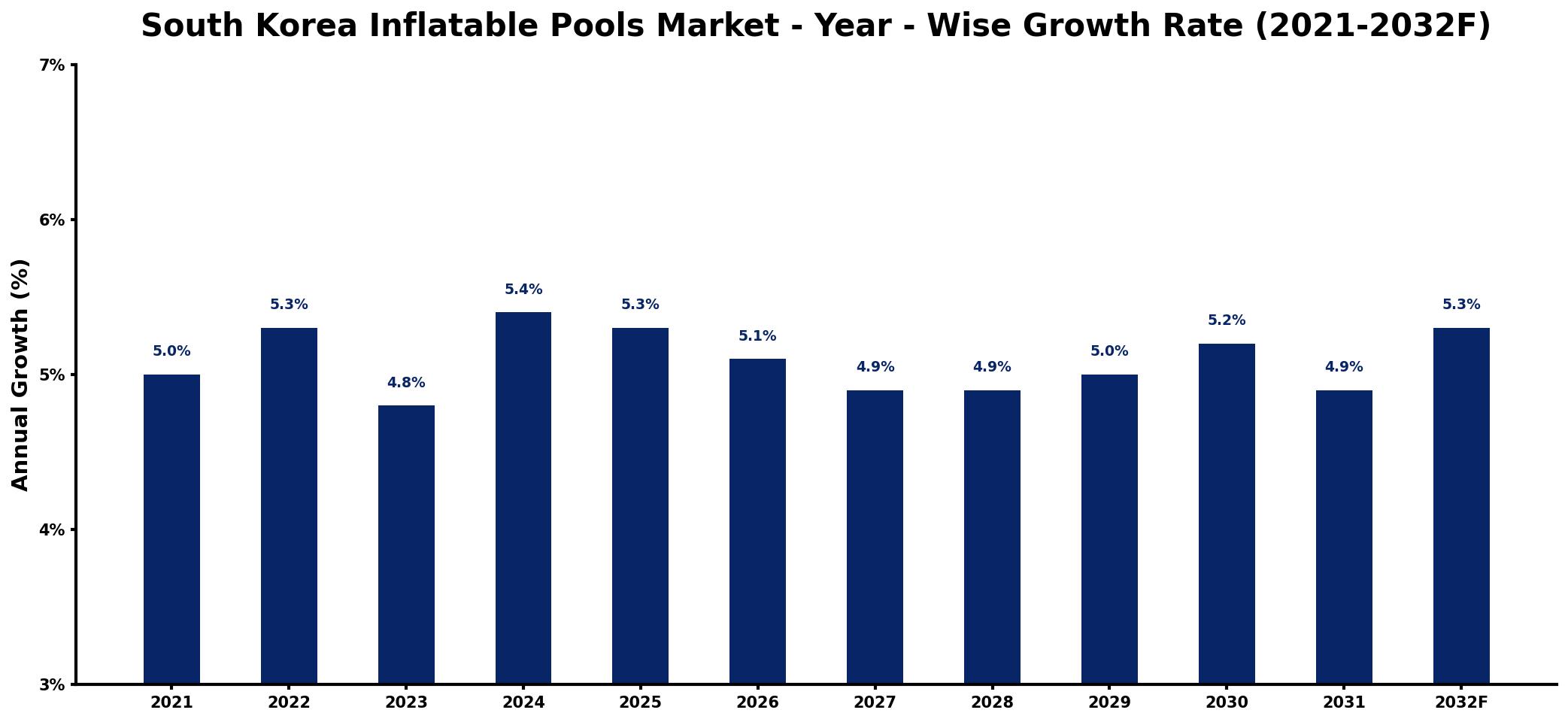
The table below presents the year‑wise growth rates along with the key drivers influencing the market
| Year | Growth Rate | Major Drivers |
| 2021 | 5.0% | Increased consumer spending on leisure |
| 2022 | 5.3% | Expansion of outdoor recreational activities |
| 2023 | 4.8% | Growing popularity of backyard entertainment |
| 2024 | 5.4% | Rise in family-oriented vacation trends |
| 2025 | 5.3% | Increased availability of affordable options |
| 2026 | 5.1% | Surge in home improvement investments |
| 2027 | 4.9% | Growing interest in summer activities |
| 2028 | 4.9% | growing regional consumption patterns |
| 2029 | 5.0% | rising demand from electronics |
| 2030 | 5.2% | expanding healthcare application demand |
| 2031 | 4.9% | Increased awareness of outdoor fun |
| 2032 | 5.3% | Growth in multifunctional outdoor spaces |
Note: Market size estimations and growth projections presented in this report are based on 6Wresearch's proprietary forecasting methodology, utilizing the latest available industry data, government publications, and primary research inputs.
South Korea Inflatable Pools Market Synopsis
The strongest force shaping the South Korea inflatable pools market is the growing trend of staycations, where consumers are increasingly seeking home-based leisure activities due to space constraints and lifestyle changes. Urban households, in particular, are finding inflatable pools to be an attractive alternative to traditional swimming pools, primarily due to their affordability and ease of setup.
Moreover, the ongoing interest in outdoor recreational activities, coupled with the impact of the COVID-19 pandemic, has led to an increased demand for safe, enjoyable, and versatile leisure options. As people continue to prioritize safety and comfort during summer months, inflatable pools are being embraced as the perfect solution for families looking to enhance their outdoor spaces.
South Korea Inflatable Pools Market Key Takeaways
- The market is witnessing robust growth driven by the rise in staycations and home entertainment.
- Innovation in pool designs and features is significantly influencing consumer preferences.
- Urban households are increasingly opting for inflatable pools due to limited outdoor space.
- Regulatory standards are helping ensure product safety and quality, fostering consumer trust.
- Investment opportunities abound, especially in partnerships with local retailers and innovative marketing strategies.
Evaluation of Restraints in South Korea Inflatable Pools Market
Despite its growth, the South Korea inflatable pools market faces several restraints that may limit its potential. The competition is intensifying, with both local and international manufacturers vying for market share, which can lead to pricing pressures and reduced margins. Furthermore, fluctuating raw material prices impact production costs, necessitating effective supply chain management. Additionally, the seasonal nature of demand, predominantly peaking in summer, forces manufacturers to strategize marketing efforts to drive sales throughout the year. Urban market saturation also poses challenges, making it essential for brands to explore untapped rural regions for growth.
South Korea Inflatable Pools Market Trends
Current trends in the South Korea inflatable pools market include an increasing emphasis on product innovation, such as the introduction of larger pools with unique shapes and features like built-in seating areas and water sprayers. Eco-friendly materials are also gaining traction as consumers become more environmentally conscious. Additionally, there is a growing trend towards customizable options, allowing consumers to personalize their inflatable pools to fit their preferences and outdoor aesthetics. Furthermore, online retailing is becoming a preferred shopping channel, enhancing accessibility and convenience for consumers.
South Korea Inflatable Pools Market Opportunities
The South Korea inflatable pools market offers significant investment opportunities as the demand for home-based leisure activities continues to grow. Brands can benefit by forging partnerships with local retailers to distribute a diverse range of products, appealing to both residential and commercial segments. Moreover, investing in robust marketing strategies to boost brand visibility is crucial for capturing market share. There is also a need for ongoing research and development to innovate and adapt products to meet evolving consumer preferences, which can lead to sustained growth in this sector.
Government Initiatives in the South Korea Inflatable Pools Market
The South Korean government is proactive in regulating the inflatable pools market by implementing stringent safety standards to ensure product quality and consumer protection. Regulations governing the use of materials in production and chemical monitoring are established to prioritize consumer health. Furthermore, safety guidelines for the usage of inflatable pools, including supervision requirements and age restrictions, are enforced to minimize risks associated with accidents. These initiatives aim to build consumer trust and facilitate healthy market growth.
Future Insights of the South Korea Inflatable Pools Market
Looking ahead to 2026-2032, the South Korea inflatable pools market is poised for continuous growth. Factors driving this trajectory include rising disposable incomes, shifting consumer preferences towards home recreation, and an increasing appetite for portable and budget-friendly pool options. Urbanization is likely to further fuel the demand for inflatable pools as traditional swimming options remain constrained by space. Additionally, advancements in manufacturing technologies promise enhanced durability and product appeal, thereby expanding the target demographic and solidifying market position.
South Korea Inflatable Pools Market Latest Developments (2025 - 2026)
In the recent months, the South Korea inflatable pools market has seen a notable uptick in innovative product releases, characterized by multifunctional designs that appeal to families looking for enhanced summer experiences. Additionally, several manufacturers have invested in digital marketing campaigns aimed at improving online sales channels, adapting to the evolving shopping behavior of consumers. Furthermore, collaborations with local influencers to promote safety and enjoyment of inflatable pools have started to gain traction, effectively tapping into the social media-savvy demographics.
South Korea Inflatable Pools Market - Key Attractiveness of the Report
- 10 Years of Market Numbers
- Historical Data Starting from 2022 to 2025
- Base Year: 2025
- Forecast Data until 2032
- Key Performance Indicators Impacting the Market
- Major Upcoming Developments and Projects
Key Highlights of the Report:
- South Korea Inflatable Pools Market Outlook
- Market Size of South Korea Inflatable Pools Market, 2025
- Forecast of South Korea Inflatable Pools Market, 2032
- Historical Data and Forecast of South Korea Inflatable Pools Revenues & Volume for the Period 2022-2032F
- South Korea Inflatable Pools Market Trend Evolution
- South Korea Inflatable Pools Market Drivers and Challenges
- South Korea Inflatable Pools Price Trends
- South Korea Inflatable Pools Porter's Five Forces
- South Korea Inflatable Pools Industry Life Cycle
- Historical Data and Forecast of South Korea Inflatable Pools Market Revenues & Volume By Capacity for the Period 2022-2032F
- Historical Data and Forecast of South Korea Inflatable Pools Market Revenues & Volume By Maximum 3 Individuals for the Period 2022-2032F
- Historical Data and Forecast of South Korea Inflatable Pools Market Revenues & Volume By Maximum 6 Individuals for the Period 2022-2032F
- Historical Data and Forecast of South Korea Inflatable Pools Market Revenues & Volume By Maximum 12 Individuals for the Period 2022-2032F
- Historical Data and Forecast of South Korea Inflatable Pools Market Revenues & Volume By Age for the Period 2022-2032F
- Historical Data and Forecast of South Korea Inflatable Pools Market Revenues & Volume By Up To 4 Years for the Period 2022-2032F
- Historical Data and Forecast of South Korea Inflatable Pools Market Revenues & Volume By 5 To 10 Years for the Period 2022-2032F
- Historical Data and Forecast of South Korea Inflatable Pools Market Revenues & Volume By 11 Years & Above for the Period 2022-2032F
- Historical Data and Forecast of South Korea Inflatable Pools Market Revenues & Volume By Shape for the Period 2022-2032F
- Historical Data and Forecast of South Korea Inflatable Pools Market Revenues & Volume By Round for the Period 2022-2032F
- Historical Data and Forecast of South Korea Inflatable Pools Market Revenues & Volume By Rectangle for the Period 2022-2032F
- Historical Data and Forecast of South Korea Inflatable Pools Market Revenues & Volume By Square for the Period 2022-2032F
- Historical Data and Forecast of South Korea Inflatable Pools Market Revenues & Volume By Oval for the Period 2022-2032F
- Historical Data and Forecast of South Korea Inflatable Pools Market Revenues & Volume By Others for the Period 2022-2032F
- Historical Data and Forecast of South Korea Inflatable Pools Market Revenues & Volume By Distribution Channel for the Period 2022-2032F
- Historical Data and Forecast of South Korea Inflatable Pools Market Revenues & Volume By Store Based for the Period 2022-2032F
- Historical Data and Forecast of South Korea Inflatable Pools Market Revenues & Volume By Non Store Based for the Period 2022-2032F
- South Korea Inflatable Pools Import Export Trade Statistics
- Market Opportunity Assessment By Capacity
- Market Opportunity Assessment By Age
- Market Opportunity Assessment By Shape
- Market Opportunity Assessment By Distribution Channel
- South Korea Inflatable Pools Top Companies Market Share
- South Korea Inflatable Pools Competitive Benchmarking By Technical and Operational Parameters
- South Korea Inflatable Pools Company Profiles
- South Korea Inflatable Pools Key Strategic Recommendations






































