South Korea Kids Footwear Market Summary
The south korea kids footwear market was estimated at USD 1359 Million in 2025 and is projected to reach USD 1939 Million by 2032, growing at a CAGR of 6.0% from 2026 to 2032.
South Korea Kids Footwear Market Year-wise Growth Rate and Key Drivers
This graph highlights how the South Korea Kids Footwear Market has steadily grown over the past five years, supported by major growth factors.
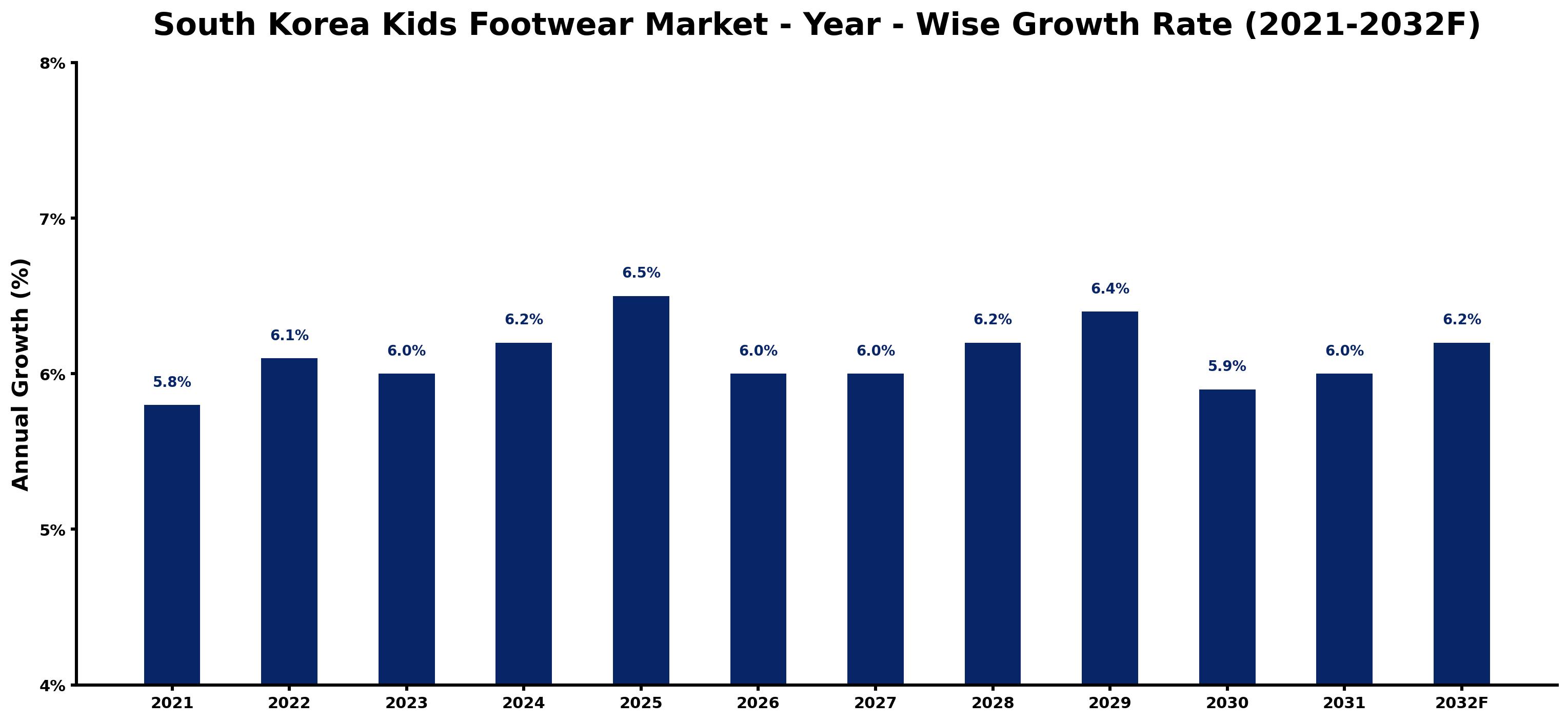
The table below presents the year wise growth rates along with the key drivers influencing the market
| Year | Growth Rate | Major Drivers |
| 2021 | 5.8% | Post-lockdown retail projects shifted focus to children's footwear in 2021. |
| 2022 | 6.1% | Increased parental awareness about foot health influences footwear purchasing decisions. |
| 2023 | 6.0% | Popular global brands localizing their designs attracts South Korean young consumers significantly. |
| 2024 | 6.2% | Sustainability concerns drive brands to adopt eco-friendly materials for kids' shoes. |
| 2025 | 6.5% | Online shopping growth prompts brands to enhance digital presence and marketing strategies. |
| 2026 | 6.0% | Emerging trends in athleisure inspire innovative designs tailored for active children. |
| 2027 | 6.0% | Collaborations between fashion brands and influencers resonate well with younger audiences. |
| 2028 | 6.2% | Technological advancements in material science improve durability and comfort for kids' footwear. |
| 2029 | 6.4% | Urbanization trends accelerate demand for stylish yet functional footwear in metropolitan areas. |
| 2030 | 5.9% | Health-conscious parents increasingly seek ergonomic shoe options for growing children. |
| 2031 | 6.0% | Cultural shifts emphasize personal expression, impacting children's footwear styles and preferences. |
| 2032 | 6.2% | Investment in retail experiences enhances consumer engagement in the children's footwear sector. |
Note - Market size estimations and growth projections presented in this report are based on 6Wresearch's advanced forecasting approach, validated with industry datasets as of June 2026.
South Korea Kids Footwear Market Synopsis
The South Korea Kids Footwear Market is projected to reach 6.0% and witness significant growth during the forecast period (2026-2032). This growth trajectory is primarily driven by a strong inclination towards stylish and branded sports shoes among children. The increasing prevalence of dual-income households in South Korea is further amplifying per capita disposable income, consequently elevating expenditure on branded apparel, including footwear. In recent years, this has had a positive impact on the demand for kids footwear. Additionally, a shift in lifestyles towards outdoor activities such as fitness and sports has cultivated a favorable environment for manufacturers in the industry, creating lucrative opportunities for business expansion during the forecast period.
South Korea Kids Footwear Market Growth Drivers
Several factors are propelling the growth of the South Korea Kids Footwear Market. Chief among these is the burgeoning demand for stylish footwear that appeals to younger consumers.
- The rise in dual-income households provides greater financial flexibility, enabling families to spend more on high-quality, branded kids footwear.
- The shifting lifestyle trends towards outdoor recreational activities promote the need for specialized footwear that is both comfortable and functional.
- Children's involvement in sports and fitness programs is increasing, driving demand for athletic shoes that offer better support and performance.
- The availability of eco-friendly materials, such as natural rubber and recycled plastics, is becoming a significant purchasing consideration for environmentally conscious consumers.
- The growing online retail channels provide convenient access to a broader range of products, thereby stimulating market growth.
South Korea Kids Footwear Market Trends and Opportunities
Emerging trends within the South Korea Kids Footwear Market highlight the evolving preferences of parents and children alike, underpinned by both health and style considerations. One notable trend is the increasing demand for footwear incorporating safety features.
- Manufacturers are introducing products with anti-slip outsoles, significantly enhancing safety for children during physical activities.
- The rising popularity of customizable footwear allows children to express their individuality, creating a new niche within the market.
- Sustainable footwear options are increasingly sought after, with parents prioritizing eco-friendly materials in their purchasing decisions.
- Social media and influencer marketing play pivotal roles in shaping consumer preferences, driving the awareness and sales of trendy footwear.
- A growing focus on child health has led to a demand for ergonomically designed shoes that cater to the developmental needs of children's feet.
South Korea Kids Footwear Market Challenges and Restraints
Despite promising growth prospects, the South Korea Kids Footwear Market faces several challenges that could hinder progress. One primary concern is the intense competition among manufacturers.
- The presence of numerous local players often results in price wars, which can dilute brand value and profit margins.
- Fluctuations in raw material prices, especially for sustainable materials, may pose a challenge for manufacturers aiming to maintain competitive pricing.
- Consumer preferences can shift rapidly, necessitating agile production processes to keep pace with new trends and designs.
- Counterfeit products may undermine the credibility of established brands, leading to a loss of consumer trust.
- A lack of awareness about some local brands may limit their market penetration in comparison to more established international brands.
South Korea Kids Footwear Market Government Investment and Initiatives
The South Korean government is increasingly recognizing the importance of the footwear sector, particularly in promoting local manufacturing and sustainability practices. Investment initiatives focused on enhancing production capabilities and encouraging eco-friendly practices are evident, supporting both economic growth and environmental stewardship.
- Policies aimed at promoting innovation in textile development are fostering the creation of advanced materials for kids footwear, enhancing performance and durability.
- Government-funded programs are encouraging the adoption of sustainable practices within the industry, promoting the use of eco-friendly materials.
- Public spending on education that promotes active lifestyles for children is indirectly boosting the footwear market by fostering increased participation in sports.
- Collaboration between public and private sectors is incentivizing research and development in ergonomically designed footwear solutions.
- Government initiatives to support exports of locally manufactured footwear products aim to establish South Korea as a competitive player in the global market.
South Korea Kids Footwear Market Latest Developments (May 2025 - June 2026)
During the period from May 2025 to June 2026, the South Korea Kids Footwear Market has experienced several notable developments aimed at addressing changing consumer demands. There has been an increased focus on integrating technology into footwear design, such as the incorporation of smart features that promote health monitoring.
- An uptick in collaborations with designers specializing in children's products has led to innovative designs that resonate with younger consumers.
- Emerging brands have begun to capture market interest by focusing on niche segments, such as shoes designed for specific sports.
- Consumer awareness campaigns promoting the benefits of good footwear for children have become more pronounced, driving informed purchasing decisions.
- Sustainability initiatives have gained momentum, prompting manufacturers to implement eco-friendly practices in their production processes.
- Retailers have expanded their e-commerce platforms, making it easier for consumers to access a wider variety of products and styles.
South Korea Kids Footwear Market - Key Attractiveness of the Report
- 10 Years of Market Numbers
- Historical Data Starting from 2022 to 2025
- Base Year: 2025
- Forecast Data until 2032
- Key Performance Indicators Impacting the Market
- Major Upcoming Developments and Projects
Key Highlights of the Report:
- South Korea Kids Footwear Market Outlook
- Market Size of South Korea Kids Footwear Market, 2025
- Forecast of South Korea Kids Footwear Market, 2032F
- Historical Data and Forecast of South Korea Kids Footwear Revenues & Volume for the Period 2022-2032F
- South Korea Kids Footwear Market Trend Evolution
- South Korea Kids Footwear Market Drivers and Challenges
- South Korea Kids Footwear Price Trends
- South Korea Kids Footwear Porter's Five Forces
- South Korea Kids Footwear Industry Life Cycle
- Historical Data and Forecast of South Korea Kids Footwear Market Revenues & Volume By Product Type for the Period 2022-2032F
- Historical Data and Forecast of South Korea Kids Footwear Market Revenues & Volume By Casual for the Period 2022-2032F
- Historical Data and Forecast of South Korea Kids Footwear Market Revenues & Volume By Sports for the Period 2022-2032F
- Historical Data and Forecast of South Korea Kids Footwear Market Revenues & Volume By Formal for the Period 2022-2032F
- Historical Data and Forecast of South Korea Kids Footwear Market Revenues & Volume By Others for the Period 2022-2032F
- Historical Data and Forecast of South Korea Kids Footwear Market Revenues & Volume By End-users for the Period 2022-2032F
- Historical Data and Forecast of South Korea Kids Footwear Market Revenues & Volume By Boys for the Period 2022-2032F
- Historical Data and Forecast of South Korea Kids Footwear Market Revenues & Volume By Girls for the Period 2022-2032F
- Historical Data and Forecast of South Korea Kids Footwear Market Revenues & Volume By Unisex for the Period 2022-2032F
- South Korea Kids Footwear Import Export Trade Statistics
- Market Opportunity Assessment By Product Type
- Market Opportunity Assessment By End-users
- South Korea Kids Footwear Top Companies Market Share
- South Korea Kids Footwear Competitive Benchmarking By Technical and Operational Parameters
- South Korea Kids Footwear Company Profiles
- South Korea Kids Footwear Key Strategic Recommendations






































