South Korea Knife Market Size Growth Rate
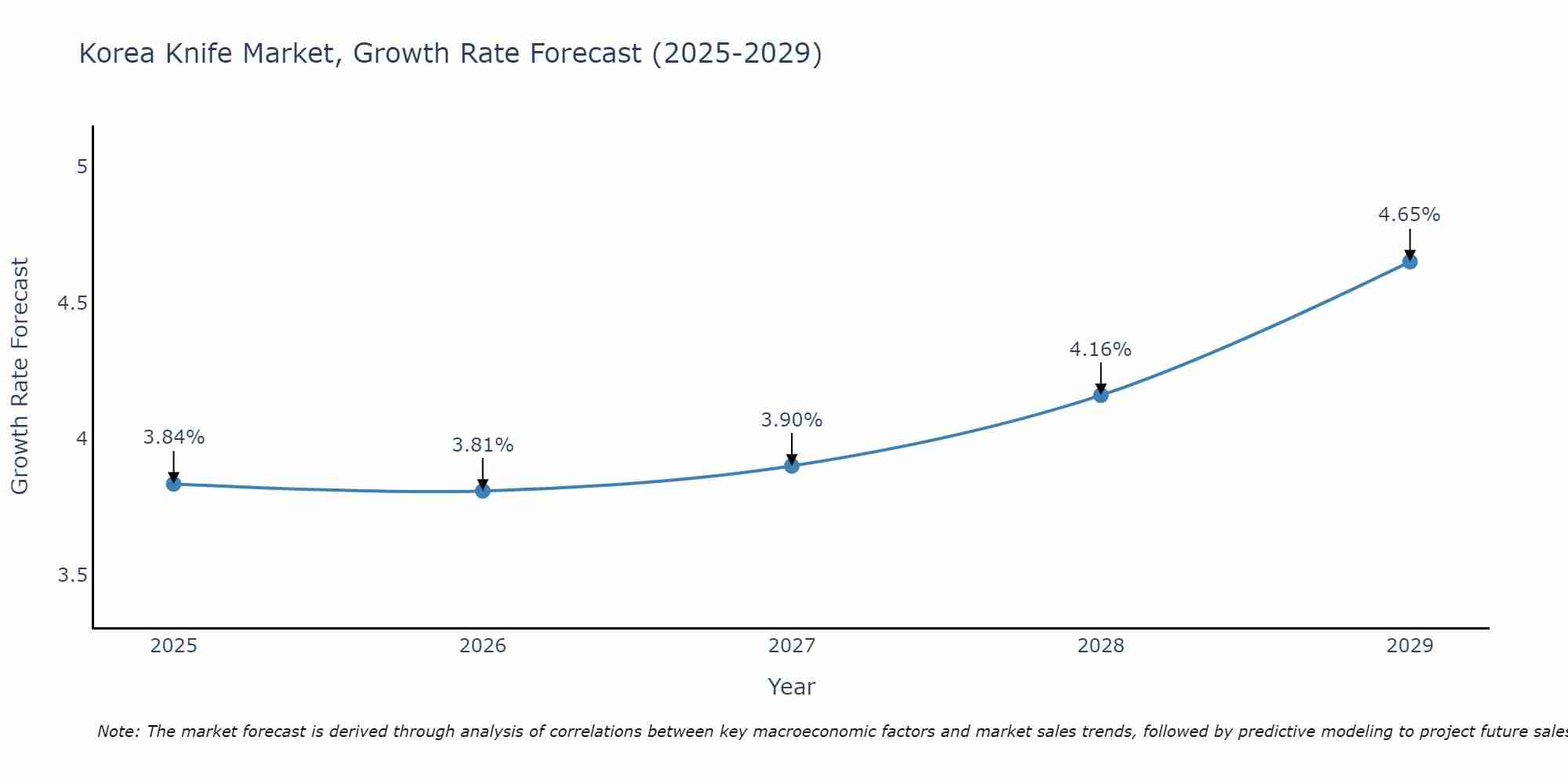
The South Korea Knife Market is projected to witness mixed growth rate patterns during 2025 to 2029. From 3.84% in 2025, the growth rate steadily ascends to 4.65% in 2029.
South Korea Knife Market Overview
The South Korea knife market is characterized by a growing demand for high-quality kitchen knives and culinary tools. Consumers in South Korea are increasingly interested in cooking at home, leading to a surge in the popularity of premium knives for various culinary purposes. Traditional Korean knives, such as the "Gyuto" and "Santoku," are widely used alongside Western-style knives like chef`s knives. The market also encompasses a variety of specialized knives for different cutting tasks, including vegetable knives, bread knives, and boning knives. With a focus on innovation, design, and functionality, South Korean knife manufacturers are continuously introducing new products to cater to the evolving needs of consumers, thereby driving competition and growth within the market.
South Korea Knife Market Trends
The South Korea knife market is witnessing a shift towards premium and high-quality knives, driven by the growing interest in gourmet cooking and culinary experiences among consumers. There is a rising demand for professional-grade knives made from high-quality materials such as stainless steel and Damascus steel, known for their durability and sharpness. Consumers are also increasingly looking for ergonomic designs and stylish aesthetics in their knives, reflecting a blend of functionality and design in kitchenware products. Additionally, there is a trend towards eco-friendly and sustainable knives made from recycled materials, catering to the environmentally conscious consumer base. Overall, the South Korea knife market is evolving to meet the preferences of discerning consumers who value performance, aesthetics, and sustainability in their kitchen tools.
South Korea Knife Market Challenges
In the South Korea knife market, one of the primary challenges is the strict regulations and laws governing the purchase and ownership of knives. The government has imposed stringent restrictions on the types of knives that can be sold, carried, and used, which can limit the variety of products available to consumers. Additionally, the market faces competition from traditional Korean knife manufacturers as well as international brands, leading to price competition and pressure on profit margins. Counterfeiting and the presence of low-quality, cheaply made knives in the market also pose challenges for legitimate manufacturers and retailers, as they struggle to maintain a reputation for quality and safety. Overall, navigating the regulatory landscape, managing competition, and ensuring product authenticity are key challenges faced by stakeholders in the South Korea knife market.
South Korea Knife Market Investment Opportunities
In the South Korea knife market, there are several promising investment opportunities. The market for premium and high-quality knives is growing due to increasing interest in cooking and culinary activities. Investing in innovative knife designs, materials, and technologies could be lucrative as consumers look for durable, efficient, and aesthetically pleasing kitchen tools. Additionally, there is a rising demand for specialized knives such as sushi knives, chef knives, and utility knives, presenting opportunities for niche product development. Collaborating with renowned chefs or influencers to endorse and promote knives could also be a successful investment strategy to target the food-savvy Korean consumer base. Overall, the South Korea knife market offers potential for investors to capitalize on the evolving preferences and trends in the culinary industry.
South Korea Knife Market Government Policy
The South Korean government has strict regulations in place regarding the possession and sale of knives. Individuals must obtain a license to purchase and carry certain types of knives, such as switchblades and butterfly knives. Additionally, the government enforces age restrictions on the sale of knives, with minors prohibited from purchasing knives considered dangerous or harmful. South Korea also prohibits the importation of certain types of knives, particularly those classified as weapons. These policies are aimed at reducing the risk of knife-related crimes and ensuring public safety. Manufacturers and retailers in the South Korea knife market must adhere to these regulations to operate legally and responsibly.
South Korea Knife Market Future Outlook
The South Korea knife market is expected to witness steady growth in the coming years due to the rising demand for high-quality kitchen knives among consumers. Factors such as increasing disposable income, changing lifestyles, and a growing interest in cooking and culinary activities are driving the demand for premium knives in the market. Additionally, the popularity of Korean cuisine globally is also contributing to the growth of the market. Manufacturers are focusing on innovation, product differentiation, and marketing strategies to cater to the evolving consumer preferences. With an emphasis on quality, design, and functionality, the South Korea knife market is poised for expansion, particularly in the premium and specialized knife segments.
Key Highlights of the Report:
- South Korea Knife Market Outlook
- Market Size of South Korea Knife Market, 2021
- Forecast of South Korea Knife Market, 2027
- Historical Data and Forecast of South Korea Knife Revenues & Volume for the Period 2018 - 2027
- South Korea Knife Market Trend Evolution
- South Korea Knife Market Drivers and Challenges
- South Korea Knife Price Trends
- South Korea Knife Porter's Five Forces
- South Korea Knife Industry Life Cycle
- Historical Data and Forecast of South Korea Knife Market Revenues & Volume By Product Type for the Period 2018 - 2027
- Historical Data and Forecast of South Korea Knife Market Revenues & Volume By Stainless Steel for the Period 2018 - 2027
- Historical Data and Forecast of South Korea Knife Market Revenues & Volume By Carbon Steel for the Period 2018 - 2027
- Historical Data and Forecast of South Korea Knife Market Revenues & Volume By Alloy Steel for the Period 2018 - 2027
- Historical Data and Forecast of South Korea Knife Market Revenues & Volume By Other Materials for the Period 2018 - 2027
- Historical Data and Forecast of South Korea Knife Market Revenues & Volume By End-Users for the Period 2018 - 2027
- Historical Data and Forecast of South Korea Knife Market Revenues & Volume By Utensils& Kitchen Tools for the Period 2018 - 2027
- Historical Data and Forecast of South Korea Knife Market Revenues & Volume By Weapons& Defence for the Period 2018 - 2027
- Historical Data and Forecast of South Korea Knife Market Revenues & Volume By Others for the Period 2018 - 2027
- South Korea Knife Import Export Trade Statistics
- Market Opportunity Assessment By Product Type
- Market Opportunity Assessment By End-Users
- South Korea Knife Top Companies Market Share
- South Korea Knife Competitive Benchmarking By Technical and Operational Parameters
- South Korea Knife Company Profiles
- South Korea Knife Key Strategic Recommendations






































