South Korea Natural Fragrance Market Size, Share & Growth Rate
The South Korea Natural Fragrance Market was estimated at USD 384 Million in 2025 and is projected to reach USD 511 Million by 2032, growing at a CAGR of 4.2% from 2026 to 2032. This remarkable growth trajectory is fueled by a significant consumer shift towards clean and sustainable products, reflecting a growing awareness of the health impacts associated with synthetic fragrances. Additionally, the ongoing expansion of the personal care and cosmetics sectors in South Korea plays a pivotal role in driving demand for natural fragrance solutions.
South Korea Natural Fragrance Market Year-wise Growth Rate and Key Drivers
This graph highlights how the South Korea Natural Fragrance Market has steadily grown over the years, supported by major growth factors.
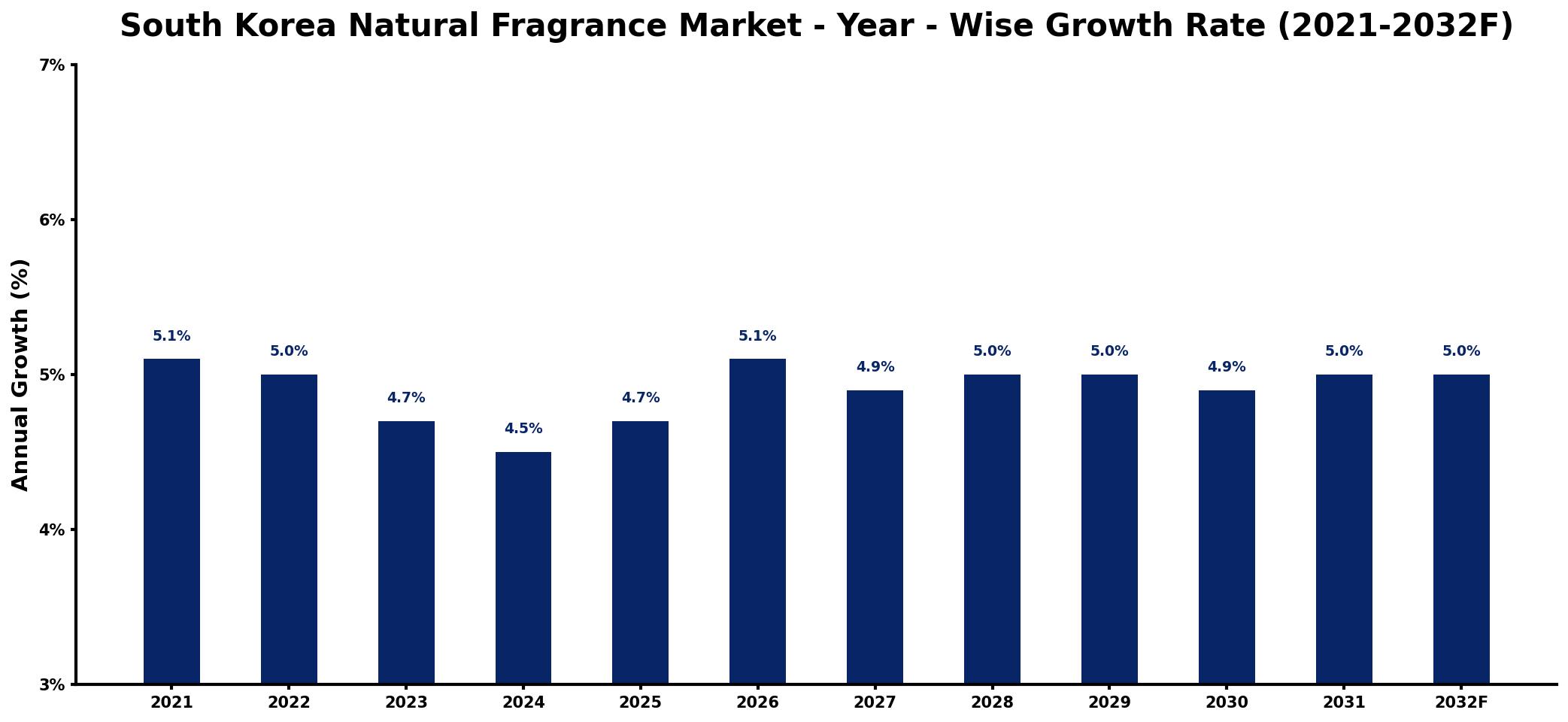
The table below presents the year‑wise growth rates along with the key drivers influencing the market
| Year | Growth Rate | Major Drivers |
| 2021 | 5.1% | Rising consumer wellness trends |
| 2022 | 5.0% | expanding industrial usage applications |
| 2023 | 4.7% | Growing online retail presence |
| 2024 | 4.5% | Expansion of luxury markets |
| 2025 | 4.7% | Surge in artisanal production |
| 2026 | 5.1% | Investments in sustainable sourcing |
| 2027 | 4.9% | Rising demand for customization |
| 2028 | 5.0% | Growth in organic certifications |
| 2029 | 5.0% | Emerging wellness lifestyle influence |
| 2030 | 4.9% | Boost in regional collaborations |
| 2031 | 5.0% | Increased brand transparency focus |
| 2032 | 5.0% | rising procurement volume requirements |
Note: Market size estimations and growth projections presented in this report are based on 6Wresearch's proprietary forecasting methodology, utilizing the latest available industry data, government publications, and primary research inputs.
South Korea Natural Fragrance Market Synopsis
The South Korean market for natural fragrances is experiencing a vibrant surge, influenced by an increasing consumer preference for environmentally-friendly and health-conscious options. As individuals become more educated about the benefits of natural ingredients, they are embracing products that align with their values, particularly in personal and home care sectors.
This shift is not merely a passing trend; it reflects deeper societal changes where sustainability and well-being are prioritized. Companies are recognizing the importance of transparency and ethical sourcing, which adds another layer of appeal to natural fragrances in a competitive marketplace.
South Korea Natural Fragrance Market Key Takeaways
- The demand for natural fragrances is driven by consumer health consciousness and eco-friendly preferences.
- Growing awareness of the adverse effects of synthetic fragrances is reshaping purchasing decisions.
- Government support and regulation help enhance the safety and quality of natural fragrance products.
- Challenges in sourcing natural raw materials may impact market pricing and availability.
- Innovative product development and marketing strategies are crucial for capturing emerging consumer segments.
Evaluation of Restraints in South Korea Natural Fragrance Market
Despite the promising growth of the natural fragrance market in South Korea, several constraints are hindering its full potential. One of the primary limitations is the high cost associated with sourcing natural raw materials. The volatility of these materials can lead to supply chain disruptions, making it challenging for companies to maintain consistent product offerings. Additionally, consumer preferences are sometimes swayed towards synthetic fragrances due to their more affordable pricing, representing a competitive challenge that natural fragrance brands must navigate carefully.
South Korea Natural Fragrance Market Trends
Several trends are shaping the South Korean natural fragrance market. The rise of holistic wellness approaches among consumers is leading to increased interest in aromatherapy and the therapeutic benefits of natural scents. Furthermore, brands are leveraging digital platforms for storytelling and consumer engagement, emphasizing their commitment to sustainability and ingredient transparency. These efforts not only resonate with health-conscious consumers but also enhance brand loyalty in a crowded market.
South Korea Natural Fragrance Market Opportunities
The potential for growth in the natural fragrance market in South Korea is substantial. Opportunities exist in developing innovative product lines that cater to niche demographics, such as vegan and cruelty-free consumers. Additionally, as consumers seek multifunctional products, there is room for fragrances that combine personal care with wellness benefits. Investments in research and development, particularly focusing on unique botanical sources, could lead to the creation of exclusive and high-demand products.
Government Initiatives in the South Korea Natural Fragrance Market
The South Korean government is taking proactive steps to bolster the natural fragrance market. Through regulations that ensure product safety and quality, they foster a supportive environment for brands utilizing natural ingredients. Moreover, there are various incentives for companies adopting sustainable practices, as well as programs aimed at promoting the export of natural fragrance products, enhancing South Koreas position in the global market.
Future Insights of the South Korea Natural Fragrance Market
Looking forward to the period from 2026 to 2032, the South Korea Natural Fragrance Market is set to evolve significantly. The combination of increasing consumer awareness regarding health and sustainability will likely continue to drive demand for natural products. As brands innovate and adapt to changing consumer preferences, the market will see the emergence of more complex fragrances derived from diverse botanical sources, enhancing their appeal and market presence.
South Korea Natural Fragrance Market Latest Developments (2025 - 2026)
In recent months, the South Korean natural fragrance market has witnessed a noticeable shift in industry direction. Brands are increasingly launching new collections that emphasize unique scent profiles and sustainable sourcing. Collaborations with local botanical farms have become more prevalent, allowing companies to showcase regional ingredients. Additionally, digital marketing strategies are evolving, with an emphasis on storytelling that resonates with the environmentally-conscious consumer.
South Korea Natural Fragrance Market - Key Attractiveness of the Report
- 10 Years of Market Numbers
- Historical Data Starting from 2022 to 2025
- Base Year: 2025
- Forecast Data until 2032
- Key Performance Indicators Impacting the Market
- Major Upcoming Developments and Projects
Key Highlights of the Report:
- South Korea Natural Fragrance Market Outlook
- Market Size of South Korea Natural Fragrance Market, 2025
- Forecast of South Korea Natural Fragrance Market, 2032
- Historical Data and Forecast of South Korea Natural Fragrance Revenues & Volume for the Period 2022-2032F
- South Korea Natural Fragrance Market Trend Evolution
- South Korea Natural Fragrance Market Drivers and Challenges
- South Korea Natural Fragrance Price Trends
- South Korea Natural Fragrance Porter's Five Forces
- South Korea Natural Fragrance Industry Life Cycle
- Historical Data and Forecast of South Korea Natural Fragrance Market Revenues & Volume By Ingredient for the Period 2022-2032F
- Historical Data and Forecast of South Korea Natural Fragrance Market Revenues & Volume By Essential Oils for the Period 2022-2032F
- Historical Data and Forecast of South Korea Natural Fragrance Market Revenues & Volume By Natural Extracts for the Period 2022-2032F
- Historical Data and Forecast of South Korea Natural Fragrance Market Revenues & Volume By Type for the Period 2022-2032F
- Historical Data and Forecast of South Korea Natural Fragrance Market Revenues & Volume By Top note for the Period 2022-2032F
- Historical Data and Forecast of South Korea Natural Fragrance Market Revenues & Volume By Middle Note for the Period 2022-2032F
- Historical Data and Forecast of South Korea Natural Fragrance Market Revenues & Volume By Base Note for the Period 2022-2032F
- Historical Data and Forecast of South Korea Natural Fragrance Market Revenues & Volume By Application for the Period 2022-2032F
- Historical Data and Forecast of South Korea Natural Fragrance Market Revenues & Volume By Fine Fragrances for the Period 2022-2032F
- Historical Data and Forecast of South Korea Natural Fragrance Market Revenues & Volume By Personal Care & Cosmetics for the Period 2022-2032F
- Historical Data and Forecast of South Korea Natural Fragrance Market Revenues & Volume By Household Care for the Period 2022-2032F
- South Korea Natural Fragrance Import Export Trade Statistics
- Market Opportunity Assessment By Ingredient
- Market Opportunity Assessment By Type
- Market Opportunity Assessment By Application
- South Korea Natural Fragrance Top Companies Market Share
- South Korea Natural Fragrance Competitive Benchmarking By Technical and Operational Parameters
- South Korea Natural Fragrance Company Profiles
- South Korea Natural Fragrance Key Strategic Recommendations






































