South Korea Pearl Jewelry Market Size, Share & Growth Rate
The South Korea Pearl Jewelry Market was estimated at USD 355 Million in 2025 and is projected to reach USD 499 Million by 2032, growing at a CAGR of 5.0% from 2026 to 2032. This growth is largely driven by a cultural appreciation for pearl jewelry and rising consumer interest in sustainable and ethically sourced options. Additionally, the increasing disposable income levels among South Korean consumers are creating a favorable environment for luxury spending, particularly in jewelry.
South Korea Pearl Jewelry Market Year-wise Growth Rate and Key Drivers
This graph highlights how the South Korea Pearl Jewelry Market has steadily grown over the years, supported by major growth factors.
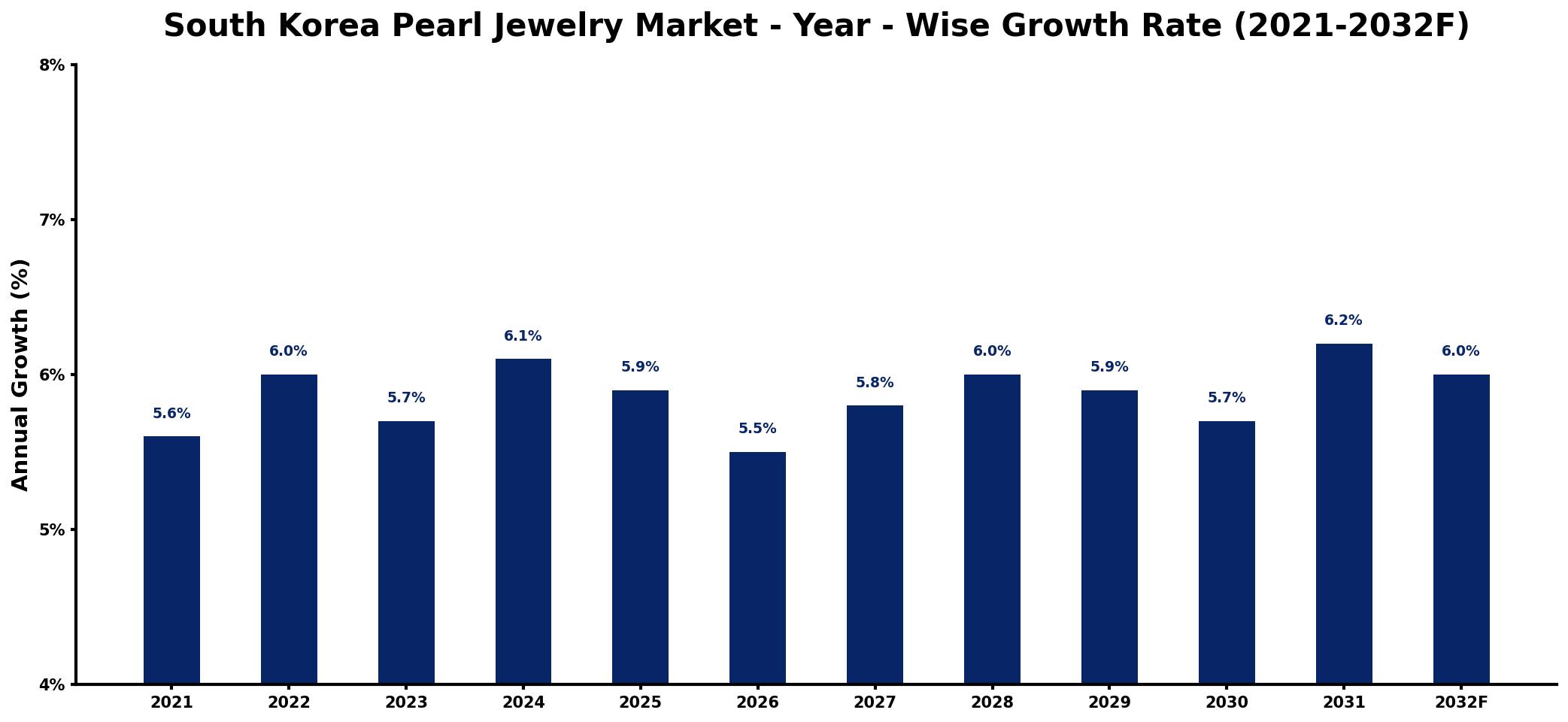
The table below presents the year‑wise growth rates along with the key drivers influencing the market
| Year | Growth Rate | Major Drivers |
| 2021 | 5.6% | Rising interest in luxury accessories |
| 2022 | 6.0% | Increased consumer spending on gifts |
| 2023 | 5.7% | Growing demand for premium items |
| 2024 | 6.1% | Expansion of online retail platforms |
| 2025 | 5.9% | Surge in bridal market investments |
| 2026 | 5.5% | Strengthening cultural appreciation initiatives |
| 2027 | 5.8% | Emergence of sustainable sourcing practices |
| 2028 | 6.0% | Enhanced promotional activities in retail |
| 2029 | 5.9% | Development of innovative marketing strategies |
| 2030 | 5.7% | Collaboration with fashion influencers |
| 2031 | 6.2% | Increase in celebrity endorsements |
| 2032 | 6.0% | Rising popularity of bespoke offerings |
Note: Market size estimations and growth projections presented in this report are based on 6Wresearch's proprietary forecasting methodology, utilizing the latest available industry data, government publications, and primary research inputs.
South Korea Pearl Jewelry Market Synopsis
The dominant force shaping the South Korea Pearl Jewelry Market today is the shift towards modern and minimalist designs, particularly among younger consumers. This evolution reflects a broader trend in jewelry preferences, with a growing desire for pieces that blend tradition with contemporary styles, making pearls more appealing to a diverse audience.
Moreover, the increasing focus on sustainability is transforming consumer attitudes. South Koreans are becoming more conscious of environmental impacts, leading to a higher demand for pearls that are ethically sourced. This change is not only influencing purchasing behaviors but also prompting brands to innovate and adapt their offerings to meet these expectations.
South Korea Pearl Jewelry Market Key Takeaways
- The South Korea Pearl Jewelry Market is experiencing a notable shift toward modern and minimalist designs, appealing to younger consumers.
- Sustainability and ethical sourcing are becoming critical factors influencing consumer purchasing decisions.
- Personalization in pearl jewelry is on the rise, with consumers seeking unique pieces that reflect their individual styles.
- Investment opportunities exist in innovative designs and eco-friendly practices, promising growth in the coming years.
- The government's supportive policies aim to bolster the local pearl jewelry industry's growth and sustainability efforts.
Evaluation of Restraints in South Korea Pearl Jewelry Market
Despite the promising growth prospects, the South Korea Pearl Jewelry Market faces several restraints. Strong competition from alternative jewelry types, such as diamonds and precious gemstones, can overshadow pearls, particularly in formal occasions. Additionally, the perception of pearls as traditional items has limited their appeal among younger demographics who prefer modern aesthetics. Moreover, fluctuations in pearl supply and quality can impact pricing and consumer trust, making it imperative for brands to ensure consistent quality in their offerings.
South Korea Pearl Jewelry Market Trends
The current trends shaping the South Korea Pearl Jewelry Market include an increasing preference for customizable pieces that allow consumers to express their individuality. Additionally, the younger demographic is driving demand for versatile pearl jewelry that can seamlessly transition from day to night wear. Furthermore, brands are leaning towards sustainable practices, with an emphasis on transparency in sourcing, to attract environmentally conscious consumers. The influence of social media is also notable, as platforms continue to amplify trends and inspire new designs.
South Korea Pearl Jewelry Market Opportunities
Investment opportunities abound in the South Korea Pearl Jewelry Market, particularly in the realm of innovative and sustainable designs. Brands that embrace eco-friendly practices and create customizable options stand to capture the attention of a growing segment of conscientious consumers. Additionally, leveraging digital marketing strategies and e-commerce platforms can effectively engage younger audiences. Collaborations with local artisans and pearl farms can enhance product authenticity while ensuring high quality, making these partnerships vital for competitive advantage.
Government Initiatives in the South Korea Pearl Jewelry Market
The South Korean government plays a crucial role in the pearl jewelry market through initiatives designed to promote industry growth and sustainability. Policies include financial incentives for local manufacturers, support for exports, and stringent regulations that ensure the authenticity of pearl products. The government actively encourages sustainable sourcing practices, positioning the market to align with global trends toward eco-conscious consumerism while safeguarding consumer interests.
Future Insights of the South Korea Pearl Jewelry Market
Looking ahead to 2026-2032, the South Korea Pearl Jewelry Market is positioned for steady expansion. The forecasted growth is bolstered by increasing disposable incomes and a cultural inclination toward luxury goods. As fashion trends continue to evolve, a focus on timeless and elegant designs will further solidify pearls' relevance. Additionally, advancements in technology and digital engagement will likely enhance market accessibility, enabling brands to reach a wider, more diverse consumer base.
South Korea Pearl Jewelry Market Latest Developments (2025 - 2026)
Recent developments in the South Korea Pearl Jewelry Market indicate a growing emphasis on digital engagement and online shopping platforms. The industry is witnessing an influx of brands adopting innovative marketing strategies to connect with consumers via social media. There's also an increasing number of collaborative initiatives focusing on sustainable practices, with brands showcasing eco-friendly collections to appeal to the conscious consumer. These trends reflect the market's dynamic nature and its responsiveness to shifting consumer preferences.
South Korea Pearl Jewelry Market - Key Attractiveness of the Report
- 10 Years of Market Numbers
- Historical Data Starting from 2022 to 2025
- Base Year: 2025
- Forecast Data until 2032
- Key Performance Indicators Impacting the Market
- Major Upcoming Developments and Projects
Key Highlights of the Report:
- South Korea Pearl Jewelry Market Outlook
- Market Size of South Korea Pearl Jewelry Market, 2025
- Forecast of South Korea Pearl Jewelry Market, 2032
- Historical Data and Forecast of South Korea Pearl Jewelry Revenues & Volume for the Period 2022-2032F
- South Korea Pearl Jewelry Market Trend Evolution
- South Korea Pearl Jewelry Market Drivers and Challenges
- South Korea Pearl Jewelry Price Trends
- South Korea Pearl Jewelry Porter's Five Forces
- South Korea Pearl Jewelry Industry Life Cycle
- Historical Data and Forecast of South Korea Pearl Jewelry Market Revenues & Volume By Pearl Type for the Period 2022-2032F
- Historical Data and Forecast of South Korea Pearl Jewelry Market Revenues & Volume By Freshwater for the Period 2022-2032F
- Historical Data and Forecast of South Korea Pearl Jewelry Market Revenues & Volume By Saltwater for the Period 2022-2032F
- Historical Data and Forecast of South Korea Pearl Jewelry Market Revenues & Volume By Material Type for the Period 2022-2032F
- Historical Data and Forecast of South Korea Pearl Jewelry Market Revenues & Volume By Gold for the Period 2022-2032F
- Historical Data and Forecast of South Korea Pearl Jewelry Market Revenues & Volume By Silver for the Period 2022-2032F
- Historical Data and Forecast of South Korea Pearl Jewelry Market Revenues & Volume By Others for the Period 2022-2032F
- Historical Data and Forecast of South Korea Pearl Jewelry Market Revenues & Volume By Jewelry Type for the Period 2022-2032F
- Historical Data and Forecast of South Korea Pearl Jewelry Market Revenues & Volume By Necklace for the Period 2022-2032F
- Historical Data and Forecast of South Korea Pearl Jewelry Market Revenues & Volume By Earrings for the Period 2022-2032F
- Historical Data and Forecast of South Korea Pearl Jewelry Market Revenues & Volume By Rings for the Period 2022-2032F
- Historical Data and Forecast of South Korea Pearl Jewelry Market Revenues & Volume By Others for the Period 2022-2032F
- South Korea Pearl Jewelry Import Export Trade Statistics
- Market Opportunity Assessment By Pearl Type
- Market Opportunity Assessment By Material Type
- Market Opportunity Assessment By Jewelry Type
- South Korea Pearl Jewelry Top Companies Market Share
- South Korea Pearl Jewelry Competitive Benchmarking By Technical and Operational Parameters
- South Korea Pearl Jewelry Company Profiles
- South Korea Pearl Jewelry Key Strategic Recommendations






































