South Korea Peas Market Size, Share & Growth Rate
The South Korea Peas Market was estimated at USD 623 Million in 2025 and is projected to reach USD 906 Million by 2032, growing at a CAGR of 5.5% from 2026 to 2032. This growth trajectory is largely propelled by the increasing consumer focus on health and nutrition, with peas being recognized for their high protein and fiber content. Additionally, the rising popularity of plant-based diets aligns with a broader global trend towards sustainable food sources, further enhancing demand within the market.
South Korea Peas Market Year-wise Growth Rate and Key Drivers
This graph highlights how the South Korea Peas Market has steadily grown over the years, supported by major growth factors.
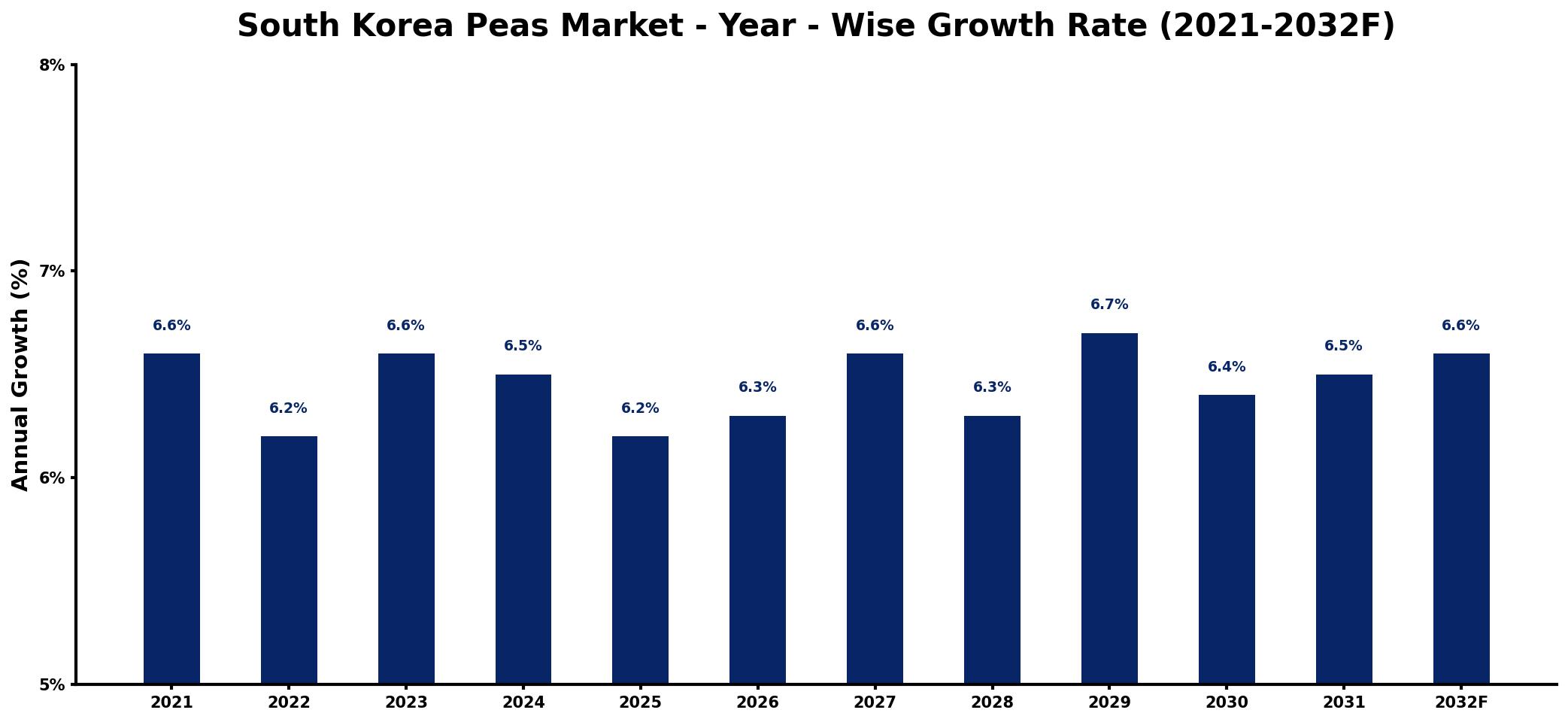
The table below presents the year‑wise growth rates along with the key drivers influencing the market
| Year | Growth Rate | Major Drivers |
| 2021 | 6.6% | Rising health consciousness among consumers |
| 2022 | 6.2% | Increased demand for plant-based proteins |
| 2023 | 6.6% | Expansion of sustainable farming practices |
| 2024 | 6.5% | Growing popularity of vegan diets |
| 2025 | 6.2% | Improved distribution channels emerging |
| 2026 | 6.3% | Higher investments in agricultural technology |
| 2027 | 6.6% | Surge in organic food preferences |
| 2028 | 6.3% | Innovations in food processing techniques |
| 2029 | 6.7% | Enhanced marketing strategies adopted |
| 2030 | 6.4% | Strengthening export opportunities identified |
| 2031 | 6.5% | Growing interest in functional foods |
| 2032 | 6.6% | Rising consumer awareness on nutrition |
Note: Market size estimations and growth projections presented in this report are based on 6Wresearch's proprietary forecasting methodology, utilizing the latest available industry data, government publications, and primary research inputs.
South Korea Peas Market Synopsis
The strongest force shaping the South Korea peas market currently is the surge in consumer awareness regarding the nutritional benefits of peas. As health-consciousness grows among consumers, the demand for nutrient-rich, plant-based foods continues to rise, making peas a favored choice. This shift is complemented by the increasing integration of peas into diverse culinary applications, from snacks to main dishes.
Moreover, innovative product developments focusing on convenience and health trends are capturing the attention of consumers. As the market adapts to these trends, the introduction of new pea-based products enhances variety and accessibility, driving further engagement among consumers seeking healthier alternatives.
South Korea Peas Market Key Takeaways
- The increasing demand for plant-based protein sources is a major driving force for market growth.
- Consumer preferences are shifting towards healthier eating habits, with peas being recognized for their nutritional advantages.
- Government support for sustainable agricultural practices bolsters domestic production capacity.
- Innovative product offerings and marketing strategies are being employed to meet changing consumer tastes.
- The competition from alternative protein sources presents both challenges and opportunities for growth.
Evaluation of Restraints in South Korea Peas Market
Despite the promising growth of the South Korea peas market, several factors pose challenges. One significant restraint is the strong competition from locally produced peas and other popular protein sources such as tofu and soy products, which may limit market penetration for pea varieties. Furthermore, traditional Korean culinary preferences may not prominently feature peas, which could restrict broader consumer acceptance. Import tariffs and restrictions also complicate market dynamics, potentially leading to higher costs for imported peas. Seasonal fluctuations in supply, influenced by climatic conditions, further contribute to the market's volatility, creating uncertainty for stakeholders involved.
South Korea Peas Market Trends
The South Korea peas market is currently witnessing several noteworthy trends. A growing preference for plant-based diets is driving demand for pea products, particularly in the form of protein supplements, snacks, and ready-to-eat meals. Additionally, the trend of convenience foods is significant; peas are being recognized for their versatility and ease of incorporation into various dishes. As more South Koreans embrace vegan and vegetarian lifestyles, the market for pea protein as a meat alternative is expected to flourish, fostering further innovation in product development.
South Korea Peas Market Opportunities
The South Korea peas market offers numerous investment opportunities, particularly in the production and distribution segments. With the global push towards sustainable protein sources, investing in the cultivation and processing of peas can be a lucrative avenue. Furthermore, there is significant potential in marketing pea-based products, such as protein powders and plant-based snacks, to cater to the health-conscious demographic. Collaborations with local farmers and the adoption of advanced agricultural technologies can optimize production efficiencies, ensuring sustained growth within this expanding market.
Government Initiatives in the South Korea Peas Market
The South Korean government has been proactive in implementing policies aimed at bolstering the peas market. Initiatives include providing financial incentives and subsidies to farmers growing peas, which fosters increased production capacity. Research and development efforts are encouraged to enhance yield quality, while regulations ensure food safety standards are maintained throughout the supply chain. Additionally, the government promotes sustainable farming practices that align with national goals for food security and self-sufficiency, further supporting the growth of the peas sector.
Future Insights of the South Korea Peas Market
Looking ahead to the period from 2026 to 2032, the South Korea peas market is expected to continue its upward trajectory. The increasing awareness around health benefits and the environmental impact of food choices will likely sustain the demand for peas and pea-based products. The ongoing trends towards vegetarian and vegan diets are poised to enhance the versatility of peas as a key ingredient, thereby expanding market opportunities. Additionally, continuous innovations in product offerings will play a pivotal role in attracting a diverse consumer base, ensuring robust growth prospects for the foreseeable future.
South Korea Peas Market Latest Developments (2025 - 2026)
Recent developments in the South Korea peas market reflect a dynamic landscape characterized by increased product innovation and marketing strategies tailored to health-conscious consumers. Various food manufacturers are launching new pea-based offerings, targeting the rising trend of plant-based diets. Moreover, ongoing government support for sustainable agricultural practices aims to enhance local production capabilities, ensuring stability in supply chains amid shifting market demands.
South Korea Peas Market - Key Attractiveness of the Report
- 10 Years of Market Numbers
- Historical Data Starting from 2022 to 2025
- Base Year: 2025
- Forecast Data until 2032
- Key Performance Indicators Impacting the Market
- Major Upcoming Developments and Projects
Key Highlights of the Report:
- South Korea Peas Market Outlook
- Market Size of South Korea Peas Market, 2025
- Forecast of South Korea Peas Market, 2032
- Historical Data and Forecast of South Korea Peas Revenues & Volume for the Period 2022-2032F
- South Korea Peas Market Trend Evolution
- South Korea Peas Market Drivers and Challenges
- South Korea Peas Price Trends
- South Korea Peas Porter's Five Forces
- South Korea Peas Industry Life Cycle
- Historical Data and Forecast of South Korea Peas Market Revenues & Volume By Type for the Period 2022-2032F
- Historical Data and Forecast of South Korea Peas Market Revenues & Volume By Field Peas for the Period 2022-2032F
- Historical Data and Forecast of South Korea Peas Market Revenues & Volume By Garden Peas for the Period 2022-2032F
- Historical Data and Forecast of South Korea Peas Market Revenues & Volume By Others for the Period 2022-2032F
- Historical Data and Forecast of South Korea Peas Market Revenues & Volume By Application for the Period 2022-2032F
- Historical Data and Forecast of South Korea Peas Market Revenues & Volume By Food for the Period 2022-2032F
- Historical Data and Forecast of South Korea Peas Market Revenues & Volume By Others for the Period 2022-2032F
- Historical Data and Forecast of South Korea Peas Market Revenues & Volume By Distribution Channel for the Period 2022-2032F
- Historical Data and Forecast of South Korea Peas Market Revenues & Volume By Online for the Period 2022-2032F
- Historical Data and Forecast of South Korea Peas Market Revenues & Volume By Offline for the Period 2022-2032F
- Historical Data and Forecast of South Korea Peas Market Revenues & Volume By Others for the Period 2022-2032F
- South Korea Peas Import Export Trade Statistics
- Market Opportunity Assessment By Type
- Market Opportunity Assessment By Application
- Market Opportunity Assessment By Distribution Channel
- South Korea Peas Top Companies Market Share
- South Korea Peas Competitive Benchmarking By Technical and Operational Parameters
- South Korea Peas Company Profiles
- South Korea Peas Key Strategic Recommendations






































