South Korea Silk Market Size Growth Rate
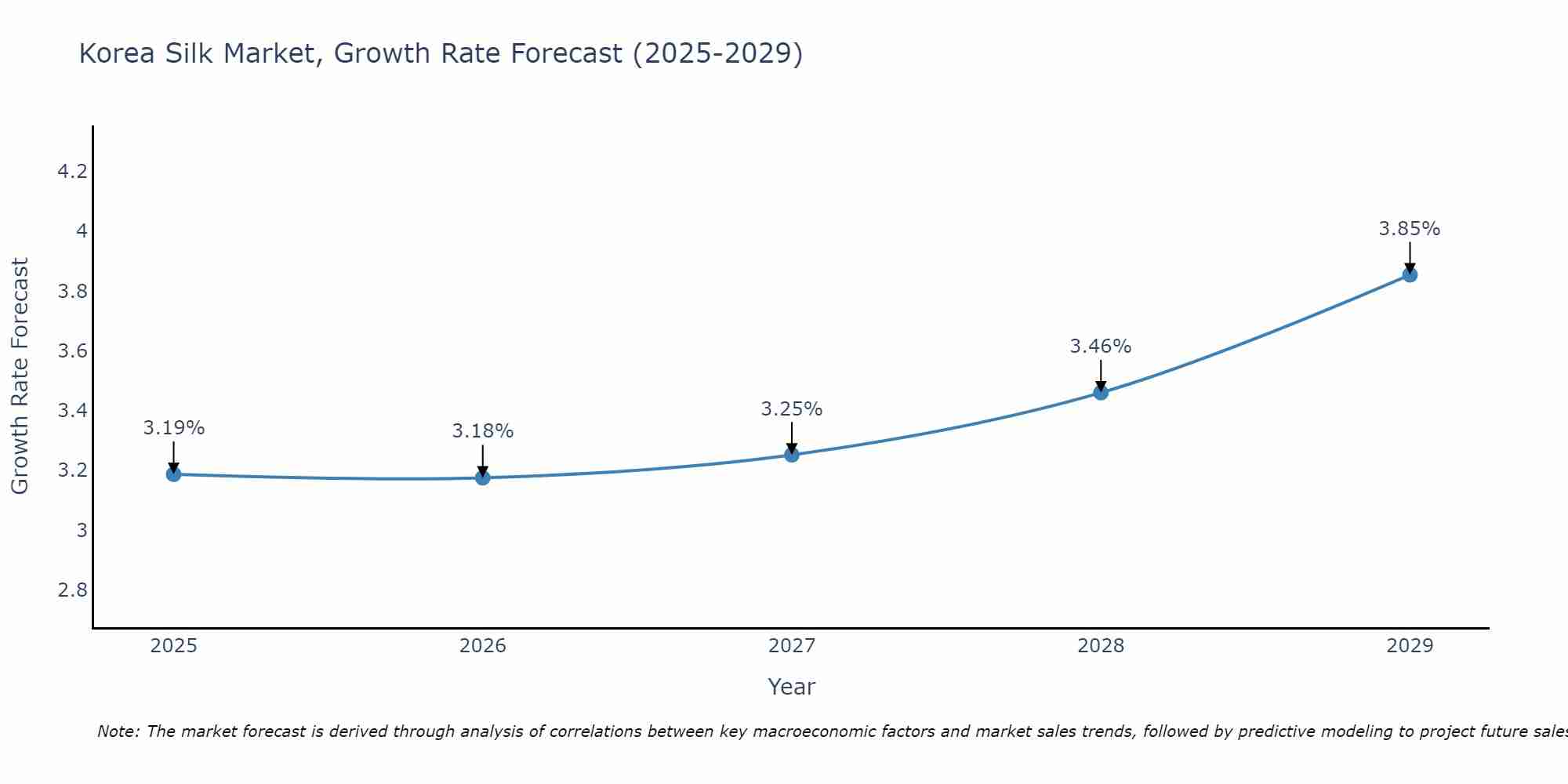
The South Korea Silk Market is projected to witness mixed growth rate patterns during 2025 to 2029. Commencing at 3.19% in 2025, growth builds up to 3.85% by 2029.
South Korea Silk Market Overview
The South Korea silk market is thriving, driven by a growing demand for high-quality silk products in various industries such as fashion, cosmetics, and home furnishings. South Korea is known for its advanced technology in silk production, resulting in premium silk fabrics that are highly sought after both domestically and internationally. The market is characterized by a wide range of silk products including clothing, accessories, bedding, and skincare products. With a strong focus on quality and innovation, South Korean silk manufacturers are continuously developing new techniques and designs to cater to the evolving preferences of consumers. The market is expected to continue growing as silk remains a popular choice for its luxurious feel, durability, and sustainability.
South Korea Silk Market Trends
The South Korea Silk Market is currently experiencing a trend towards sustainable and eco-friendly silk production practices. Consumers are increasingly seeking products that are ethically produced and environmentally friendly. This has led to a rise in demand for silk products that are made using organic silk farming methods and natural dyes. Additionally, there is a growing interest in innovative silk blends that offer enhanced performance characteristics such as moisture-wicking properties and durability. South Korean silk manufacturers are also focusing on incorporating traditional Korean design elements into their products to appeal to both domestic and international markets. Overall, the market is evolving towards a more sustainable and culturally distinctive direction to meet the changing preferences of consumers.
South Korea Silk Market Challenges
In the South Korea Silk Market, some challenges that are faced include competition from synthetic fabrics that are often cheaper and easier to produce, leading to price pressures for silk producers. Additionally, fluctuations in raw material prices, such as silk thread, can impact the overall cost of production and profitability. Another challenge is the limited domestic silk production in South Korea, which results in a reliance on imports, making the market susceptible to supply chain disruptions and international trade fluctuations. Furthermore, changing consumer preferences and fashion trends can also affect the demand for silk products, requiring market players to stay innovative and adapt to evolving tastes. Overall, navigating these challenges requires strategic planning, product differentiation, and a keen understanding of market dynamics.
South Korea Silk Market Investment Opportunities
The South Korea Silk Market presents several investment opportunities for savvy investors. With a strong tradition of silk production and craftsmanship, there is potential for growth in the silk industry, particularly in the areas of fashion, home textiles, and luxury goods. Investing in silk production facilities, technology upgrades, and sustainable practices could lead to increased efficiency and profitability. Additionally, targeting the growing demand for high-quality silk products in South Korea and abroad through e-commerce platforms and international partnerships could result in significant returns. Overall, the South Korea Silk Market offers a promising landscape for investment with the potential for innovation, expansion, and market positioning in the global silk industry.
South Korea Silk Market Government Policy
The South Korean government has implemented various policies to support the silk market in the country. This includes providing subsidies and financial assistance to silk producers, promoting research and development in silk production techniques, and offering training programs to improve the skills of silk farmers and workers. Additionally, the government has introduced regulations to ensure the quality and authenticity of silk products, as well as to promote sustainability and environmental protection in silk farming practices. These policies aim to strengthen the competitiveness of the South Korean silk industry both domestically and internationally, while also preserving the traditional art of silk production in the country.
South Korea Silk Market Future Outlook
The future outlook for the South Korea Silk Market appears positive, driven by increasing demand for high-quality textiles in the fashion and home decor sectors. The growing popularity of silk products due to their luxurious feel, durability, and eco-friendly properties is expected to fuel market growth. Additionally, advancements in silk production techniques and an emphasis on sustainable practices are likely to attract environmentally-conscious consumers. The South Korea Silk Market is also benefiting from rising disposable incomes and a growing preference for premium, natural fabrics. However, the market may face challenges such as fluctuating raw material prices and competition from synthetic alternatives. Overall, the South Korea Silk Market is poised for expansion in the coming years, with opportunities for innovation and market differentiation.
Key Highlights of the Report:
- South Korea Silk Market Outlook
- Market Size of South Korea Silk Market, 2021
- Forecast of South Korea Silk Market, 2027
- Historical Data and Forecast of South Korea Silk Revenues & Volume for the Period 2018 - 2027
- South Korea Silk Market Trend Evolution
- South Korea Silk Market Drivers and Challenges
- South Korea Silk Price Trends
- South Korea Silk Porter's Five Forces
- South Korea Silk Industry Life Cycle
- Historical Data and Forecast of South Korea Silk Market Revenues & Volume By Production process for the Period 2018 - 2027
- Historical Data and Forecast of South Korea Silk Market Revenues & Volume By Cocoon Production for the Period 2018 - 2027
- Historical Data and Forecast of South Korea Silk Market Revenues & Volume By Reeling for the Period 2018 - 2027
- Historical Data and Forecast of South Korea Silk Market Revenues & Volume By Throwing for the Period 2018 - 2027
- Historical Data and Forecast of South Korea Silk Market Revenues & Volume By Weaving for the Period 2018 - 2027
- Historical Data and Forecast of South Korea Silk Market Revenues & Volume By Dyeing for the Period 2018 - 2027
- Historical Data and Forecast of South Korea Silk Market Revenues & Volume By Type for the Period 2018 - 2027
- Historical Data and Forecast of South Korea Silk Market Revenues & Volume By Mulberry Silk for the Period 2018 - 2027
- Historical Data and Forecast of South Korea Silk Market Revenues & Volume By Tussar Silk for the Period 2018 - 2027
- Historical Data and Forecast of South Korea Silk Market Revenues & Volume By Eri Silk for the Period 2018 - 2027
- Historical Data and Forecast of South Korea Silk Market Revenues & Volume By Spider Silk for the Period 2018 - 2027
- Historical Data and Forecast of South Korea Silk Market Revenues & Volume By Application for the Period 2018 - 2027
- Historical Data and Forecast of South Korea Silk Market Revenues & Volume By Textile for the Period 2018 - 2027
- Historical Data and Forecast of South Korea Silk Market Revenues & Volume By Cosmetics for the Period 2018 - 2027
- Historical Data and Forecast of South Korea Silk Market Revenues & Volume By Medicine for the Period 2018 - 2027
- South Korea Silk Import Export Trade Statistics
- Market Opportunity Assessment By Production process
- Market Opportunity Assessment By Type
- Market Opportunity Assessment By Application
- South Korea Silk Top Companies Market Share
- South Korea Silk Competitive Benchmarking By Technical and Operational Parameters
- South Korea Silk Company Profiles
- South Korea Silk Key Strategic Recommendations






































