South Korea Small Mammal and Reptile Food Market Size, Share & Growth Rate
The South Korea Small Mammal and Reptile Food Market was estimated at USD 237 Million in 2025 and is projected to reach USD 319 Million by 2032, growing at a CAGR of 4.3% from 2026 to 2032. This growth is primarily driven by the rising trend of exotic pet ownership in South Korea, as more consumers embrace small mammals and reptiles as beloved companions. Additionally, a greater emphasis on pet health and well-being is propelling demand for specialized, high-quality nutrition products tailored to these unique pets.
South Korea Small Mammal and Reptile Food Market Year-wise Growth Rate and Key Drivers
This graph highlights how the South Korea Small Mammal and Reptile Food Market has steadily grown over the years, supported by major growth factors.
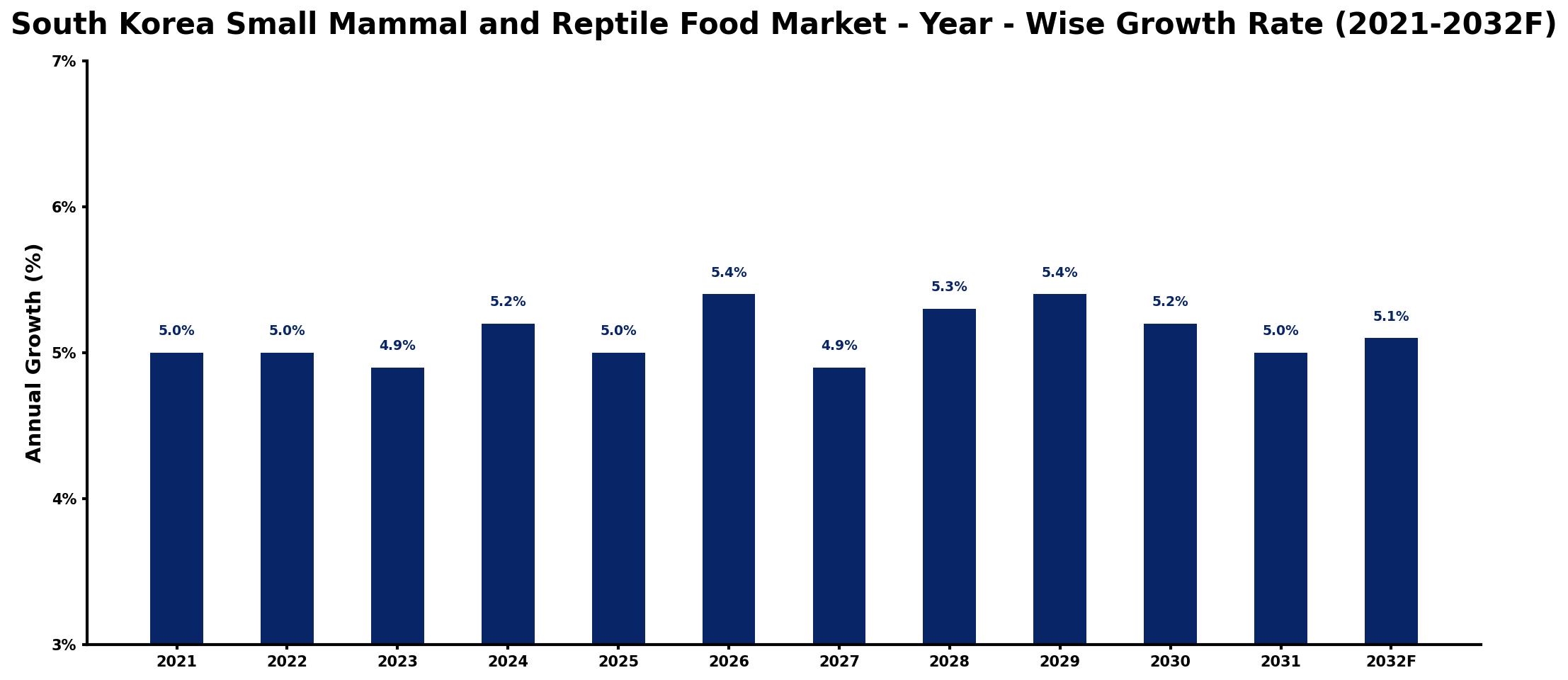
The table below presents the year‑wise growth rates along with the key drivers influencing the market
| Year | Growth Rate | Major Drivers |
| 2021 | 5.0% | Increased pet ownership trends |
| 2022 | 5.0% | Rising disposable income levels |
| 2023 | 4.9% | Expansion of specialty retailers |
| 2024 | 5.2% | Growing awareness of nutrition |
| 2025 | 5.0% | Innovations in product formulations |
| 2026 | 5.4% | Surge in online shopping platforms |
| 2027 | 4.9% | Demand for premium offerings |
| 2028 | 5.3% | Increase in eco-friendly options |
| 2029 | 5.4% | strengthening international trade flows |
| 2030 | 5.2% | Focus on health and wellness |
| 2031 | 5.0% | Enhanced marketing strategies employed |
| 2032 | 5.1% | Diversification of product lines |
Note: Market size estimations and growth projections presented in this report are based on 6Wresearch's proprietary forecasting methodology, utilizing the latest available industry data, government publications, and primary research inputs.
South Korea Small Mammal and Reptile Food Market Synopsis
The strongest force shaping the South Korea Small Mammal and Reptile Food Market is the increasing consumer awareness regarding the dietary needs of exotic pets. This awareness is fostering a demand for niche products that cater specifically to the nutritional requirements of small mammals and reptiles, resulting in a more robust product landscape.
Moreover, the shift towards natural and organic food options underscores a broader trend in pet care where health-conscious owners seek premium products. This trend is coupled with the growing preference for online shopping channels, which are enhancing accessibility and convenience for pet owners across the country.
South Korea Small Mammal and Reptile Food Market Key Takeaways
- The market is currently benefiting from an increasing trend towards exotic pet ownership.
- Consumers are showing a marked preference for natural and organic food options.
- Online retail channels are becoming an increasingly popular method for purchasing pet food.
- Product innovation is a key focus among manufacturers to meet specific dietary needs.
- Education regarding proper nutrition is essential to mitigate potential feeding mistakes among pet owners.
Evaluation of Restraints in South Korea Small Mammal and Reptile Food Market
Despite its growth, the South Korea Small Mammal and Reptile Food Market faces significant challenges. One primary restraint is the limited understanding of the nutritional needs specific to these pets among a substantial segment of consumers. This knowledge gap can lead to suboptimal feeding practices, adversely affecting the health of small mammals and reptiles. Additionally, smaller brands specializing in this niche market often contend with the overwhelming competition from larger companies focusing on more mainstream pets, such as dogs and cats, which can stifle their market presence. Expanding the diversity and availability of specialized food products will be critical to overcoming these barriers.
South Korea Small Mammal and Reptile Food Market Trends
The South Korea Small Mammal and Reptile Food Market is witnessing several key trends. The consumer shift towards premium, high-quality, and specialty diets reflects a growing concern for pet health and wellness. Additionally, there's an increasing trend toward sustainable and eco-friendly packaging solutions, aligning with the broader societal push for environmental consciousness. Convenience is also a vital factor, with many pet owners seeking products that are easy to serve and store, leading manufacturers to innovate in packaging design. As the market evolves, these trends will play pivotal roles in shaping future product offerings.
South Korea Small Mammal and Reptile Food Market Opportunities
Investment opportunities within the South Korea Small Mammal and Reptile Food Market are robust, particularly as pet ownership continues to rise. There is significant potential for developing specialized products tailored to the unique dietary requirements of small mammals and reptiles. Furthermore, enhancing distribution channels and focusing on innovative packaging can open new avenues for reaching consumers. By investing in organic ingredients and leveraging digital marketing strategies, brands can strengthen their positions and enhance customer loyalty, tapping into the lucrative growth potential of this market segment.
Government Initiatives in the South Korea Small Mammal and Reptile Food Market
The South Korean government has actively engaged in initiatives aimed at regulating the small mammal and reptile food market, focusing on product safety and quality standards. This regulatory framework ensures that pet food products are safe for consumption and adhere to established health guidelines. Furthermore, the government encourages research and development in the field, promoting innovative and nutritious food options for exotic pets. Efforts to enhance transparency in labeling and advertising also support informed consumer choices in this growing market.
Future Insights of the South Korea Small Mammal and Reptile Food Market
Looking ahead to 2026-2032, the South Korea Small Mammal and Reptile Food Market is well-positioned for continued growth. The trend of pet humanization, where pets are viewed as family members, will drive the demand for premium and specialized food options. Increasing awareness regarding the nutritional needs of small mammals and reptiles will also contribute to market expansion. As manufacturers innovate and introduce new products that cater to diverse dietary requirements, we anticipate significant opportunities for growth and diversification within this sector.
South Korea Small Mammal and Reptile Food Market Latest Developments (2025 - 2026)
Recent developments in the South Korea Small Mammal and Reptile Food Market indicate a strong focus on enhancing product variety and nutritional quality. Companies are increasingly investing in research to formulate food that meets the specific needs of different small mammal and reptile species. Additionally, there has been a noticeable rise in digital marketing strategies targeting niche pet owner communities, fostering a deeper connection with consumers and driving engagement in this vibrant market.
South Korea Small Mammal and Reptile Food Market - Key Attractiveness of the Report
- 10 Years of Market Numbers
- Historical Data Starting from 2022 to 2025
- Base Year: 2025
- Forecast Data until 2032
- Key Performance Indicators Impacting the Market
- Major Upcoming Developments and Projects
Key Highlights of the Report:
- South Korea Small Mammal and Reptile Food Market Outlook
- Market Size of South Korea Small Mammal and Reptile Food Market, 2025
- Forecast of South Korea Small Mammal and Reptile Food Market, 2032
- Historical Data and Forecast of South Korea Small Mammal and Reptile Food Revenues & Volume for the Period 2022-2032F
- South Korea Small Mammal and Reptile Food Market Trend Evolution
- South Korea Small Mammal and Reptile Food Market Drivers and Challenges
- South Korea Small Mammal and Reptile Food Price Trends
- South Korea Small Mammal and Reptile Food Porter's Five Forces
- South Korea Small Mammal and Reptile Food Industry Life Cycle
- Historical Data and Forecast of South Korea Small Mammal and Reptile Food Market Revenues & Volume By Type for the Period 2022-2032F
- Historical Data and Forecast of South Korea Small Mammal and Reptile Food Market Revenues & Volume By Rabbits Food for the Period 2022-2032F
- Historical Data and Forecast of South Korea Small Mammal and Reptile Food Market Revenues & Volume By Rodents Food for the Period 2022-2032F
- Historical Data and Forecast of South Korea Small Mammal and Reptile Food Market Revenues & Volume By Small Reptiles Food for the Period 2022-2032F
- Historical Data and Forecast of South Korea Small Mammal and Reptile Food Market Revenues & Volume By Other for the Period 2022-2032F
- Historical Data and Forecast of South Korea Small Mammal and Reptile Food Market Revenues & Volume By Application for the Period 2022-2032F
- Historical Data and Forecast of South Korea Small Mammal and Reptile Food Market Revenues & Volume By Pet-Speciality Stores for the Period 2022-2032F
- Historical Data and Forecast of South Korea Small Mammal and Reptile Food Market Revenues & Volume By Supermarkets and Hypermarkets for the Period 2022-2032F
- Historical Data and Forecast of South Korea Small Mammal and Reptile Food Market Revenues & Volume By Convenience Stores for the Period 2022-2032F
- Historical Data and Forecast of South Korea Small Mammal and Reptile Food Market Revenues & Volume By Other for the Period 2022-2032F
- South Korea Small Mammal and Reptile Food Import Export Trade Statistics
- Market Opportunity Assessment By Type
- Market Opportunity Assessment By Application
- South Korea Small Mammal and Reptile Food Top Companies Market Share
- South Korea Small Mammal and Reptile Food Competitive Benchmarking By Technical and Operational Parameters
- South Korea Small Mammal and Reptile Food Company Profiles
- South Korea Small Mammal and Reptile Food Key Strategic Recommendations






































