South Korea Wooden Furniture Market Size Growth Rate
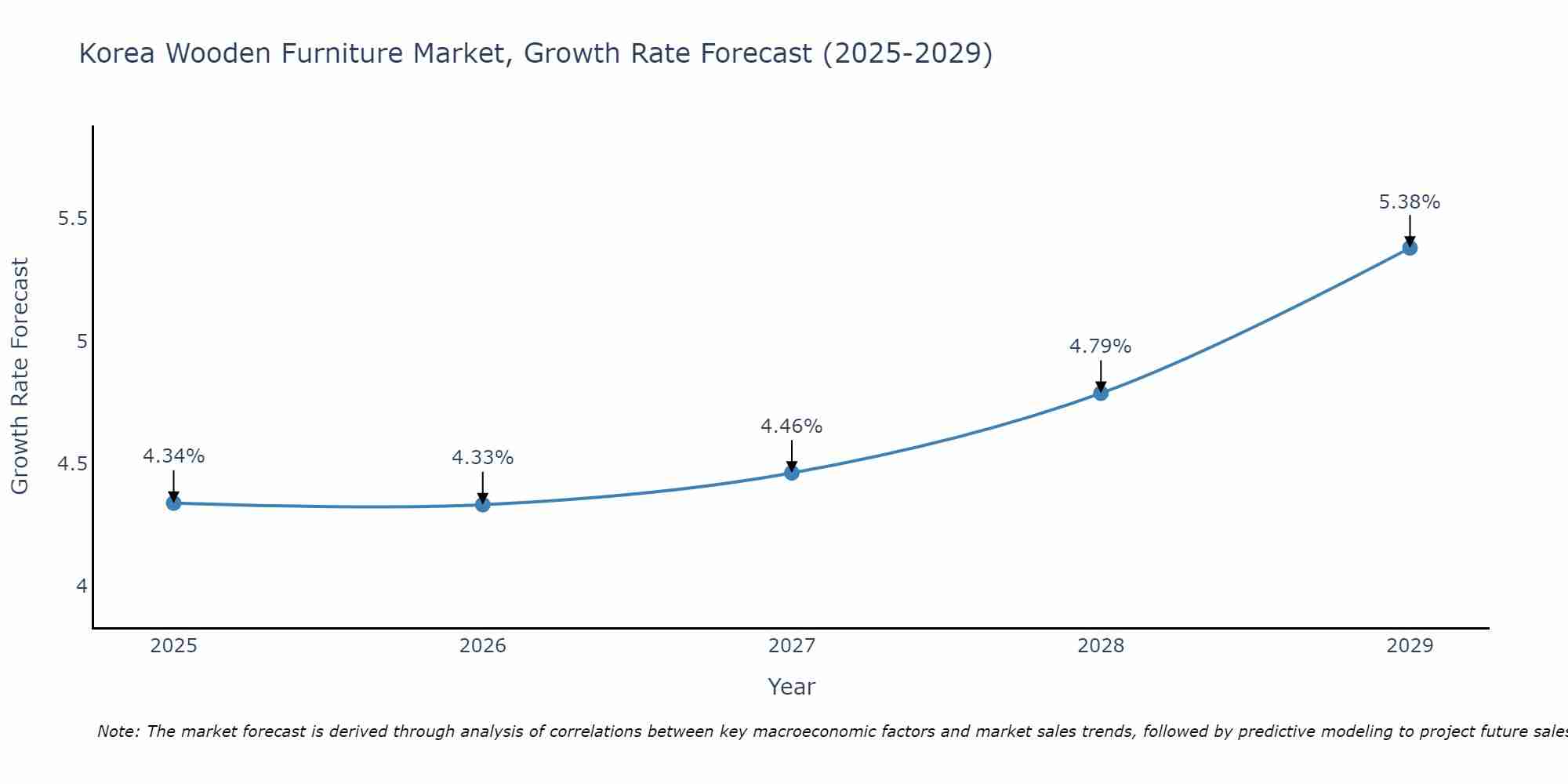
The South Korea Wooden Furniture Market is projected to witness mixed growth rate patterns during 2025 to 2029. From 4.34% in 2025, the growth rate steadily ascends to 5.38% in 2029.
South Korea Wooden Furniture Market Overview
The wooden furniture market in South Korea is robust, driven by consumer demand for high-quality, aesthetically pleasing, and durable furniture. This market includes a wide range of products, from traditional designs to modern and minimalist styles. The market benefits from the increasing trend of home decoration and renovation. Sustainable sourcing of wood and the incorporation of eco-friendly finishes and manufacturing processes are significant trends influencing this market.
Drivers of the market
In South Korea, the wooden furniture market is witnessing growth fueled by factors such as the increasing consumer demand for stylish and functional furniture, rising disposable incomes, and changing lifestyle preferences favoring natural and sustainable home décor solutions. Wooden furniture, known for its durability, versatility, and aesthetic appeal, remains a popular choice among consumers for residential, commercial, and hospitality interiors. Moreover, advancements in woodworking techniques, design innovations, and sustainable forestry practices are driving the availability of a wide range of wooden furniture products catering to diverse tastes and preferences, further propelling market growth.
Challenges of the market
Challenges in South Korea`s wooden furniture market include competition from imported furniture, changing consumer preferences, and supply chain disruptions. Moreover, providers must innovate to offer customized designs, sustainable materials, and functional solutions to meet diverse customer needs and preferences.
Government Policy of the market
To promote the development of the wooden furniture industry and ensure product quality and safety, the South Korean government has implemented policies to support the market. These policies include regulations on furniture manufacturing standards and materials usage, incentives for furniture makers to invest in sustainable wood sourcing and production practices, and initiatives to promote domestic and international marketing of South Korean wooden furniture products. Additionally, the government collaborates with industry associations to provide technical assistance and training for furniture manufacturers and artisans.
Key Highlights of the Report:
- South Korea Wooden Furniture Market Outlook
- Market Size of South Korea Wooden Furniture Market, 2021
- Forecast of South Korea Wooden Furniture Market, 2028
- Historical Data and Forecast of South Korea Wooden Furniture Revenues & Volume for the Period 2018 - 2028
- South Korea Wooden Furniture Market Trend Evolution
- South Korea Wooden Furniture Market Drivers and Challenges
- South Korea Wooden Furniture Price Trends
- South Korea Wooden Furniture Porter's Five Forces
- South Korea Wooden Furniture Industry Life Cycle
- Historical Data and Forecast of South Korea Wooden Furniture Market Revenues & Volume By Type for the Period 2018 - 2028
- Historical Data and Forecast of South Korea Wooden Furniture Market Revenues & Volume By Hardwood for the Period 2018 - 2028
- Historical Data and Forecast of South Korea Wooden Furniture Market Revenues & Volume By Softwood for the Period 2018 - 2028
- Historical Data and Forecast of South Korea Wooden Furniture Market Revenues & Volume By Material for the Period 2018 - 2028
- Historical Data and Forecast of South Korea Wooden Furniture Market Revenues & Volume By Plywood for the Period 2018 - 2028
- Historical Data and Forecast of South Korea Wooden Furniture Market Revenues & Volume By Laminates for the Period 2018 - 2028
- Historical Data and Forecast of South Korea Wooden Furniture Market Revenues & Volume By MDF for the Period 2018 - 2028
- Historical Data and Forecast of South Korea Wooden Furniture Market Revenues & Volume By Other Materials for the Period 2018 - 2028
- Historical Data and Forecast of South Korea Wooden Furniture Market Revenues & Volume By Product for the Period 2018 - 2028
- Historical Data and Forecast of South Korea Wooden Furniture Market Revenues & Volume By Bedroom for the Period 2018 - 2028
- Historical Data and Forecast of South Korea Wooden Furniture Market Revenues & Volume By Seating for the Period 2018 - 2028
- Historical Data and Forecast of South Korea Wooden Furniture Market Revenues & Volume By Kitchen for the Period 2018 - 2028
- Historical Data and Forecast of South Korea Wooden Furniture Market Revenues & Volume By Other Products for the Period 2018 - 2028
- Historical Data and Forecast of South Korea Wooden Furniture Market Revenues & Volume By Application for the Period 2018 - 2028
- Historical Data and Forecast of South Korea Wooden Furniture Market Revenues & Volume By Residential for the Period 2018 - 2028
- Historical Data and Forecast of South Korea Wooden Furniture Market Revenues & Volume By Commercial for the Period 2018 - 2028
- Historical Data and Forecast of South Korea Wooden Furniture Market Revenues & Volume By Distribution Channel for the Period 2018 - 2028
- Historical Data and Forecast of South Korea Wooden Furniture Market Revenues & Volume By Offline for the Period 2018 - 2028
- Historical Data and Forecast of South Korea Wooden Furniture Market Revenues & Volume By Online for the Period 2018 - 2028
- South Korea Wooden Furniture Import Export Trade Statistics
- Market Opportunity Assessment By Type
- Market Opportunity Assessment By Material
- Market Opportunity Assessment By Product
- Market Opportunity Assessment By Application
- Market Opportunity Assessment By Distribution Channel
- South Korea Wooden Furniture Top Companies Market Share
- South Korea Wooden Furniture Competitive Benchmarking By Technical and Operational Parameters
- South Korea Wooden Furniture Company Profiles
- South Korea Wooden Furniture Key Strategic Recommendations






































