Spain Ethylene Glycol Market Size (2020-2030)
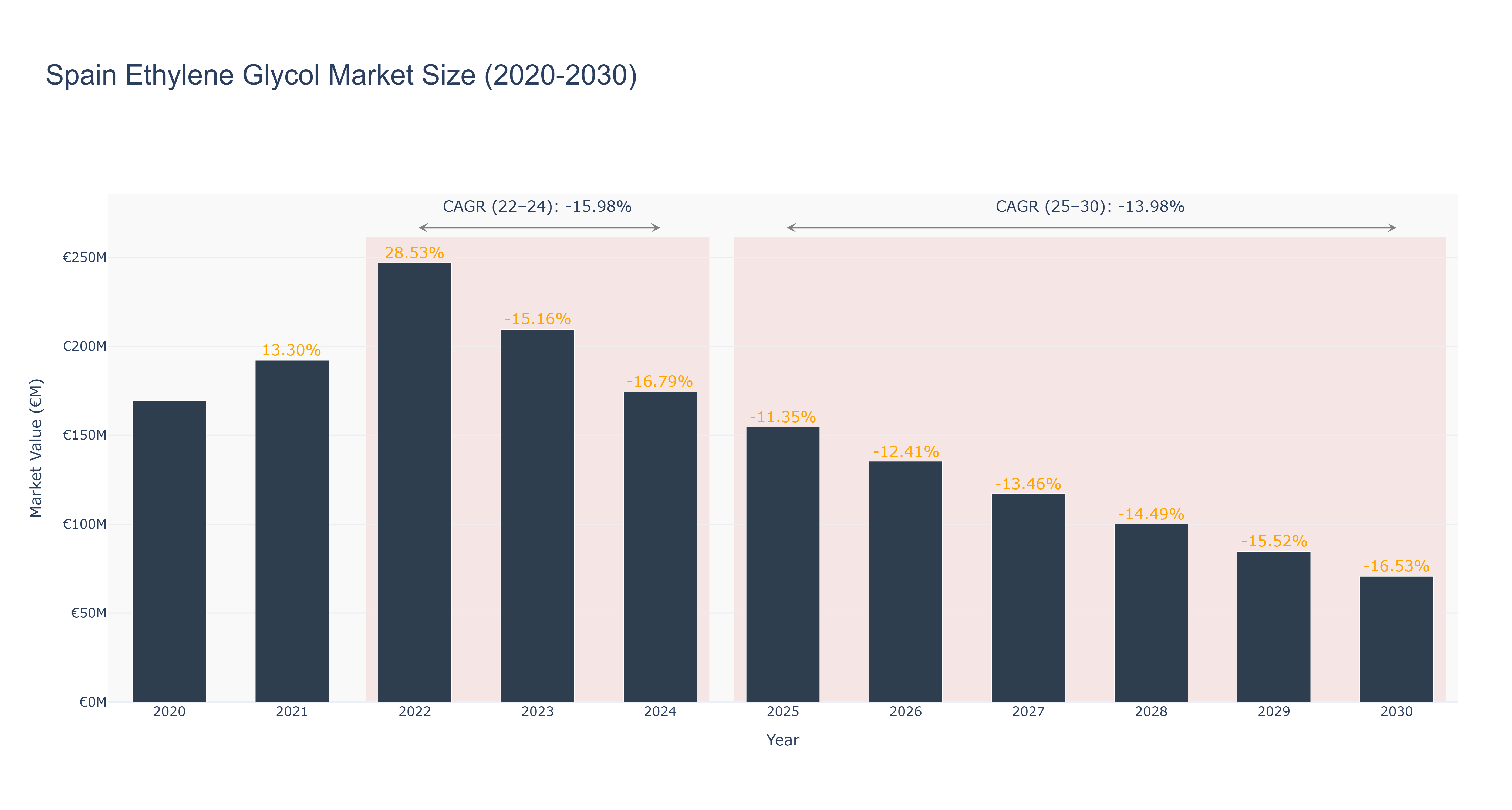
Spain's Ethylene Glycol Market witnessed a peak market size of €246.85 million in 2022, followed by a decline to €70.61 million in 2030. The market experienced a steady decrease in size from 2020 to 2024, attributed to negative growth rates ranging from -11.35% to -16.79%. The forecasted trend from 2025 to 2030 shows a continuing decline with CAGR values of -13.98%. The downward trajectory can be linked to various factors such as economic slowdown, market saturation, and evolving consumer preferences towards alternative products. Looking ahead, Spain's Ethylene Glycol Market is expected to focus on sustainability initiatives and technological advancements to drive growth, with upcoming projects in green manufacturing processes and eco-friendly packaging solutions set to reshape the market landscape. Industry drivers include environmental regulations, shifting consumer demands, and technological innovations driving product development and market competitiveness.
Spain Ethylene Glycol Market: Production & Trade Performance (2019-2025)
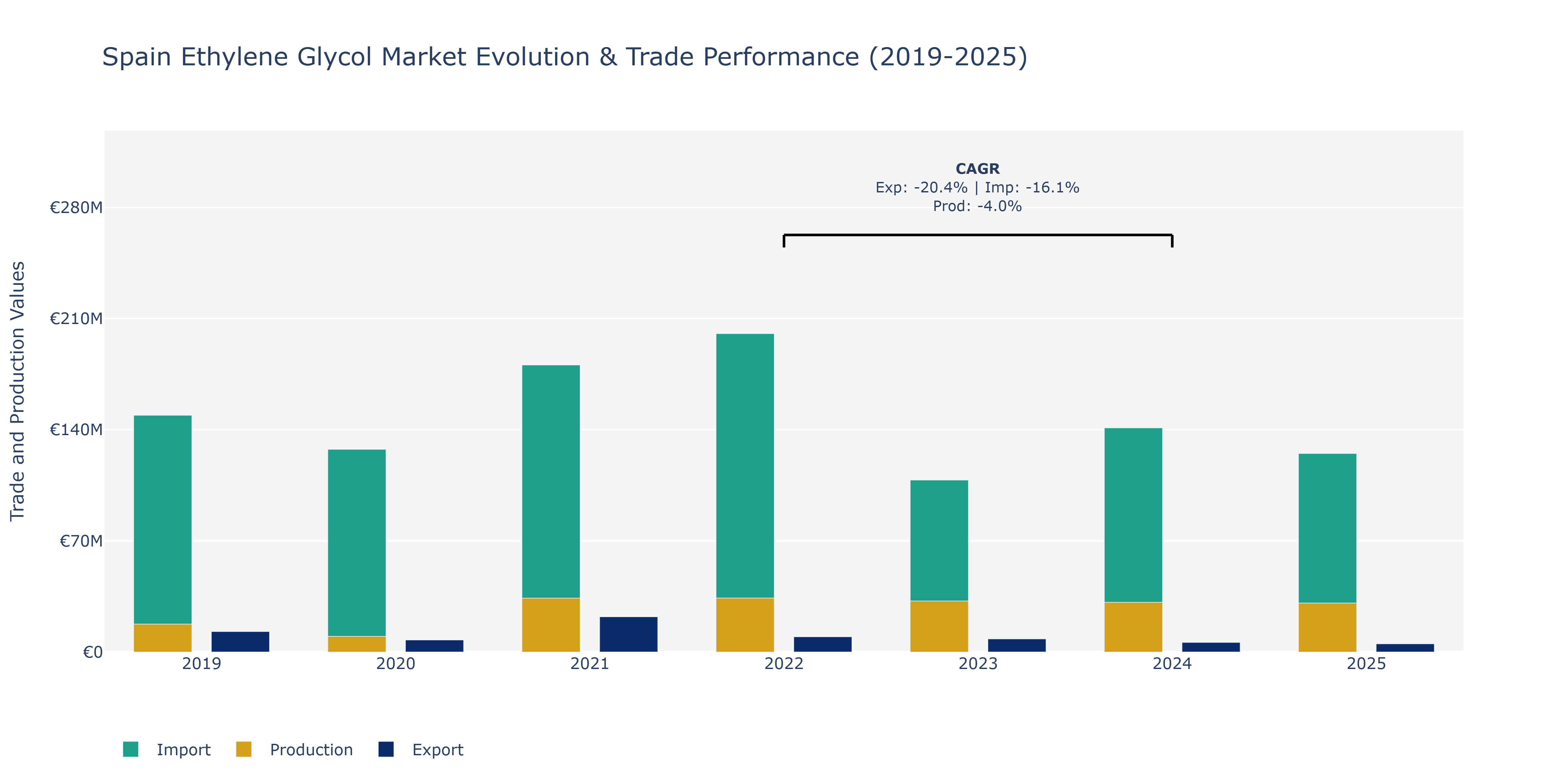
Between 2019 and 2025, Spain's Ethylene Glycol market witnessed varying trends in exports, imports, and production. Exports showed a general downward trajectory over the period, with a notable decrease from €12.89 million in 2019 to €5.17 million in 2025. This decline could be attributed to fluctuating global demands and possibly increased competition in the market. Imports, on the other hand, peaked in 2022 at €200.53 million before declining to €125.04 million in 2025. This fluctuation may have been influenced by shifts in international trade agreements and changes in supplier relationships. Production levels remained relatively stable, with a slight decrease from €17.57 million in 2019 to €30.85 million in 2025. Factors such as technological advancements in production processes and environmental regulations could have impacted these figures. To sustain market competitiveness, companies in the Spanish Ethylene Glycol sector may need to focus on enhancing operational efficiencies and exploring new export markets amidst evolving global trade dynamics.
Spain Ethylene Glycol Market Synopsis
The Spain Ethylene Glycol market is experiencing steady growth driven by increasing demand from various end-use industries such as automotive, textiles, and packaging. The country`s strategic location in Europe, coupled with a well-established petrochemical industry, contributes to the market`s expansion. Additionally, the growing adoption of ethylene glycol as a key ingredient in the production of antifreeze, polyester fibers, and other industrial applications further boosts market demand. Key players operating in the Spain Ethylene Glycol market include Repsol, Petroquimica Espanola, and CEPSA, among others. However, fluctuations in raw material prices and environmental concerns regarding ethylene glycol production could pose challenges to market growth in the future. Overall, the Spain Ethylene Glycol market is poised for continued development, driven by diverse industrial applications and expanding end-user industries.
Spain Ethylene Glycol Market Trends
The Spain Ethylene Glycol Market is experiencing steady growth driven by the increasing demand from end-use industries such as automotive, textiles, and packaging. The market is witnessing a shift towards bio-based ethylene glycol as companies are focusing on sustainability and reducing carbon footprint. The growing awareness about the harmful environmental impact of traditional ethylene glycol production methods has led to a rise in the adoption of bio-based alternatives. Additionally, the stringent regulations regarding emissions and waste disposal are influencing market players to invest in eco-friendly production processes. With the automotive industry being a major consumer of ethylene glycol for antifreeze applications, the market is poised for further growth as the automotive sector continues to expand in Spain.
Spain Ethylene Glycol Market Challenges
In the Spain Ethylene Glycol market, challenges include fluctuating raw material prices, increasing environmental regulations, and competition from alternative products. The volatility of crude oil prices directly impacts the production cost of ethylene glycol, making it challenging for manufacturers to maintain stable pricing and profit margins. Additionally, stringent environmental regulations regarding emissions and disposal of ethylene glycol waste pose compliance challenges for companies operating in the market. Moreover, the growing popularity of bio-based or eco-friendly alternatives to ethylene glycol, such as bioethylene glycol, presents a competitive threat to traditional ethylene glycol products. Navigating these challenges requires market players to innovate in sustainability practices, optimize production processes, and stay abreast of regulatory developments to remain competitive in the Spain Ethylene Glycol market.
Spain Ethylene Glycol Market Investment Opportunities
The Spain Ethylene Glycol market presents several investment opportunities due to the increasing demand for ethylene glycol in various industries such as automotive, textiles, and packaging. With a growing focus on sustainability and environmental regulations, there is a rising demand for bio-based ethylene glycol as a greener alternative. Investing in research and development for bio-based ethylene glycol production or partnering with companies that specialize in sustainable ethylene glycol production could be lucrative opportunities in the market. Additionally, with the automotive industry in Spain showing signs of recovery post-pandemic, there is potential for increased demand for ethylene glycol as a key component in antifreeze and coolant products, presenting opportunities for investors to capitalize on this growing market segment.
Jordan Agar Market Government Policies
Government policies related to the Spain Ethylene Glycol Market include regulations on environmental protection and safety measures for handling and transportation of the chemical. The Spanish government has implemented strict guidelines to ensure the responsible production and use of ethylene glycol to minimize environmental impact and protect public health. Additionally, there are regulations in place to monitor and control the import and export of ethylene glycol to maintain market stability and prevent any potential risks associated with its trade. Compliance with these policies is mandatory for companies operating in the Spain Ethylene Glycol Market to ensure sustainable practices and maintain a safe and competitive market environment.
Spain Ethylene Glycol Market Future Outlook
The future outlook for the Spain Ethylene Glycol Market appears positive due to several factors. The increasing demand for ethylene glycol in various industries such as automotive, textiles, and packaging is expected to drive market growth. Additionally, the growing focus on sustainable and bio-based ethylene glycol production methods is likely to create new opportunities in the market. The Spanish government`s initiatives to promote the use of ethylene glycol in eco-friendly applications and the presence of key market players investing in research and development further contribute to the optimistic outlook. Overall, favorable market dynamics, technological advancements, and shifting consumer preferences towards eco-friendly products are expected to propel the growth of the Spain Ethylene Glycol Market in the coming years.
Key Highlights of the Report:
- Spain Ethylene Glycol Market Outlook
- Market Size of Spain Ethylene Glycol Market, 2021
- Forecast of Spain Ethylene Glycol Market, 2031
- Historical Data and Forecast of Spain Ethylene Glycol Revenues & Volume for the Period 2018 - 2031
- Spain Ethylene Glycol Market Trend Evolution
- Spain Ethylene Glycol Market Drivers and Challenges
- Spain Ethylene Glycol Price Trends
- Spain Ethylene Glycol Porter's Five Forces
- Spain Ethylene Glycol Industry Life Cycle
- Historical Data and Forecast of Spain Ethylene Glycol Market Revenues & Volume By Product for the Period 2018 - 2031
- Historical Data and Forecast of Spain Ethylene Glycol Market Revenues & Volume By MEG for the Period 2018 - 2031
- Historical Data and Forecast of Spain Ethylene Glycol Market Revenues & Volume By DEG for the Period 2018 - 2031
- Historical Data and Forecast of Spain Ethylene Glycol Market Revenues & Volume By TEG for the Period 2018 - 2031
- Historical Data and Forecast of Spain Ethylene Glycol Market Revenues & Volume By Application for the Period 2018 - 2031
- Historical Data and Forecast of Spain Ethylene Glycol Market Revenues & Volume By PET for the Period 2018 - 2031
- Historical Data and Forecast of Spain Ethylene Glycol Market Revenues & Volume By Polyester Fiber for the Period 2018 - 2031
- Historical Data and Forecast of Spain Ethylene Glycol Market Revenues & Volume By Antifreeze for the Period 2018 - 2031
- Historical Data and Forecast of Spain Ethylene Glycol Market Revenues & Volume By Films for the Period 2018 - 2031
- Spain Ethylene Glycol Import Export Trade Statistics
- Market Opportunity Assessment By Product
- Market Opportunity Assessment By Application
- Spain Ethylene Glycol Top Companies Market Share
- Spain Ethylene Glycol Competitive Benchmarking By Technical and Operational Parameters
- Spain Ethylene Glycol Company Profiles
- Spain Ethylene Glycol Key Strategic Recommendations






































