Spain Heavy Fuel Oil Market: Import Trend Analysis
In 2024, Spain`s heavy fuel oil market experienced a declining trend in imports. This decrease was driven by factors such as a shift towards cleaner energy sources and reduced demand for heavy fuel oil in the region.
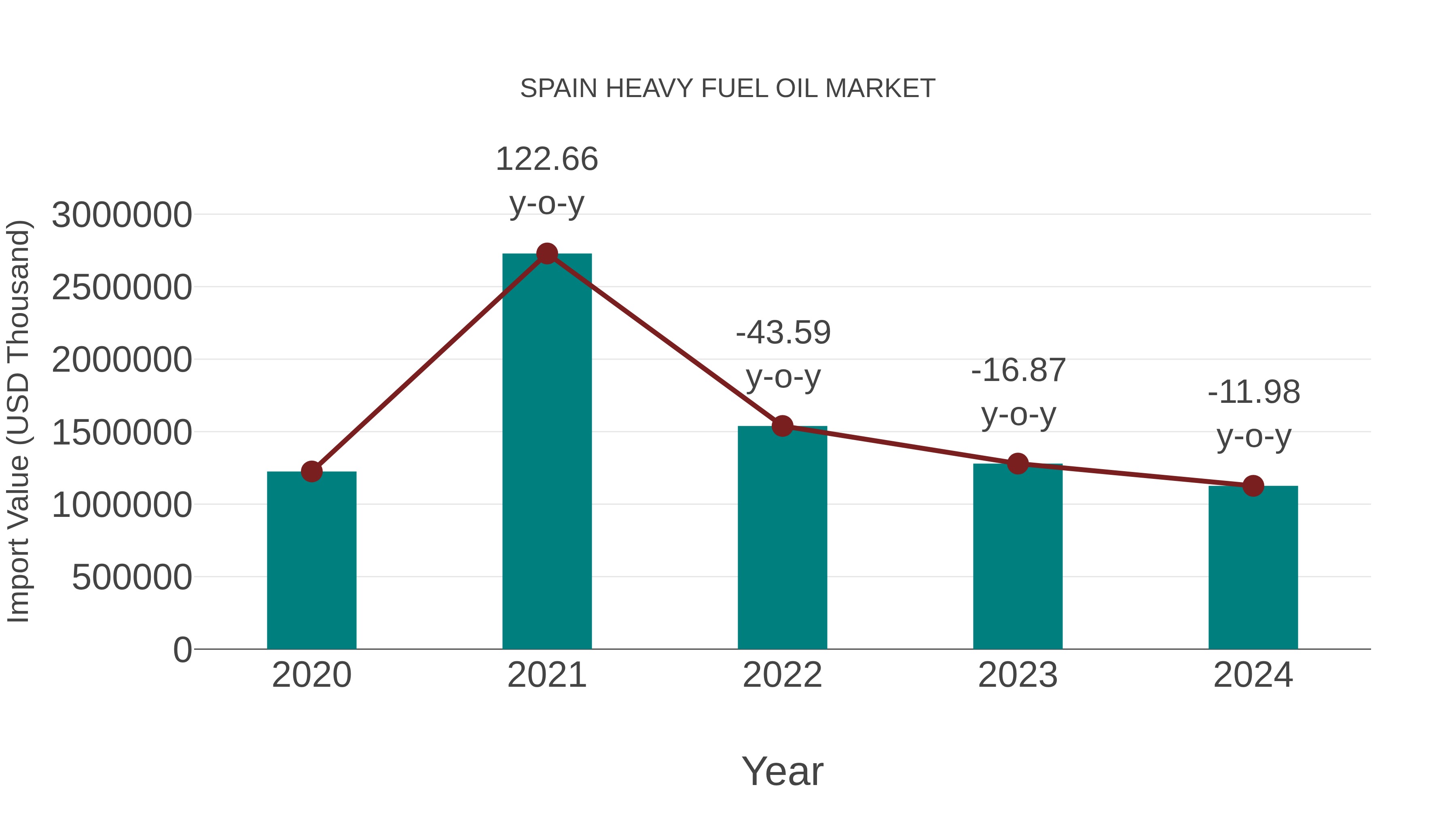
Spain Heavy Fuel Oil Market Overview
The heavy fuel oil market in Spain is influenced by various factors such as government regulations, global oil prices, and environmental concerns. Spain has been gradually transitioning towards cleaner energy sources, resulting in a decline in the demand for heavy fuel oil. However, heavy fuel oil still plays a significant role in the country`s energy mix, especially in industries such as shipping and power generation. The market is characterized by a few key suppliers who dominate the industry, while the availability of alternative fuels like natural gas poses a challenge to the growth of heavy fuel oil usage. As Spain continues to focus on reducing emissions and increasing energy efficiency, the heavy fuel oil market is expected to face further scrutiny and potential decline in demand.
Spain Heavy Fuel Oil Market Trends
One of the current trends in the Spain heavy fuel oil market is a gradual shift towards cleaner and more sustainable energy sources. With increasing environmental concerns and regulatory pressure to reduce emissions, there is a growing emphasis on transitioning away from heavy fuel oil towards cleaner alternatives such as natural gas, renewables, and biofuels. Companies operating in the sector are investing in technology and infrastructure to support this transition, while also exploring opportunities in energy efficiency and emissions reduction strategies. Additionally, there is a trend towards diversification in the energy mix, with a focus on increasing flexibility and resilience in the face of changing market dynamics and regulatory requirements. Overall, the Spain heavy fuel oil market is undergoing a transformation towards a more sustainable and environmentally friendly future.
Spain Heavy Fuel Oil Market Challenges
In the Spain heavy fuel oil market, one of the main challenges faced is the increasing pressure to shift towards cleaner and more sustainable energy sources in line with environmental regulations and global efforts to combat climate change. This transition poses challenges for heavy fuel oil producers and users in terms of adapting to stricter emissions standards, investing in cleaner technologies, and potentially facing higher costs. Additionally, fluctuations in global oil prices and geopolitical factors can impact the overall competitiveness and stability of the heavy fuel oil market in Spain. Companies operating in this sector are also likely to encounter challenges related to market volatility, regulatory uncertainty, and the need to innovate and diversify their offerings to remain relevant in a rapidly changing energy landscape.
Spain Heavy Fuel Oil Market Investment Opportunities
Investment opportunities in the Spain heavy fuel oil market include potential growth in demand due to the country`s reliance on this energy source for power generation and industrial processes. As Spain transitions towards cleaner energy sources, there is an opportunity for investors to capitalize on the shift by investing in technologies and infrastructure for cleaner fuel alternatives, such as natural gas or renewable energy. Additionally, with the global push for decarbonization, there is potential for investments in technologies that reduce the environmental impact of heavy fuel oil, such as emissions control systems. Investors should also monitor regulatory developments in Spain and the European Union related to emissions standards and energy transition policies to make informed investment decisions in this evolving market.
Spain Heavy Fuel Oil Market Government Policy
In Spain, government policies related to the heavy fuel oil market primarily focus on environmental regulations and transitioning towards cleaner energy sources. The Spanish government has implemented measures to reduce the use of heavy fuel oil in the maritime sector, including imposing sulfur emissions limits in ports and promoting the use of liquefied natural gas (LNG) as a cleaner alternative. Additionally, Spain has committed to phasing out the use of heavy fuel oil for electricity generation by 2025, in line with the European Union`s efforts to decarbonize the energy sector. These policies aim to improve air quality, reduce greenhouse gas emissions, and align with Spain`s broader transition towards sustainable energy sources.
Spain Heavy Fuel Oil Market Future Outlook
The future outlook for the Spain heavy fuel oil market is expected to face challenges due to increasing regulatory pressure to reduce carbon emissions and transition towards cleaner energy sources. As Spain aims to meet its renewable energy targets and align with the European Union`s climate goals, the demand for heavy fuel oil is likely to decline. Additionally, the growing availability and competitiveness of alternative energy sources, such as natural gas and renewables, will further dampen the demand for heavy fuel oil. Market players in the Spain heavy fuel oil sector will need to adapt by diversifying their product offerings, investing in cleaner technologies, and exploring opportunities in emerging markets to mitigate the impact of the declining demand in the domestic market.
Key Highlights of the Report:
- Spain Heavy Fuel Oil Market Outlook
- Market Size of Spain Heavy Fuel Oil Market,2025
- Forecast of Spain Heavy Fuel Oil Market, 2032
- Historical Data and Forecast of Spain Heavy Fuel Oil Revenues & Volume for the Period 2022-2032F
- Spain Heavy Fuel Oil Market Trend Evolution
- Spain Heavy Fuel Oil Market Drivers and Challenges
- Spain Heavy Fuel Oil Price Trends
- Spain Heavy Fuel Oil Porter's Five Forces
- Spain Heavy Fuel Oil Industry Life Cycle
- Historical Data and Forecast of Spain Heavy Fuel Oil Market Revenues & Volume By Application for the Period 2022-2032F
- Historical Data and Forecast of Spain Heavy Fuel Oil Market Revenues & Volume By Marine for the Period 2022-2032F
- Historical Data and Forecast of Spain Heavy Fuel Oil Market Revenues & Volume By Power Generation for the Period 2022-2032F
- Historical Data and Forecast of Spain Heavy Fuel Oil Market Revenues & Volume By Industrial Heating for the Period 2022-2032F
- Historical Data and Forecast of Spain Heavy Fuel Oil Market Revenues & Volume By Manufacturing for the Period 2022-2032F
- Historical Data and Forecast of Spain Heavy Fuel Oil Market Revenues & Volume By Residential Heating for the Period 2022-2032F
- Historical Data and Forecast of Spain Heavy Fuel Oil Market Revenues & Volume By End use for the Period 2022-2032F
- Historical Data and Forecast of Spain Heavy Fuel Oil Market Revenues & Volume By Shipping Industry for the Period 2022-2032F
- Historical Data and Forecast of Spain Heavy Fuel Oil Market Revenues & Volume By Electricity Generation for the Period 2022-2032F
- Historical Data and Forecast of Spain Heavy Fuel Oil Market Revenues & Volume By Manufacturing Industry for the Period 2022-2032F
- Historical Data and Forecast of Spain Heavy Fuel Oil Market Revenues & Volume By Cement Industry for the Period 2022-2032F
- Historical Data and Forecast of Spain Heavy Fuel Oil Market Revenues & Volume By Type for the Period 2022-2032F
- Historical Data and Forecast of Spain Heavy Fuel Oil Market Revenues & Volume By Straight Run Fuel Oil for the Period 2022-2032F
- Historical Data and Forecast of Spain Heavy Fuel Oil Market Revenues & Volume By Residuums for the Period 2022-2032F
- Historical Data and Forecast of Spain Heavy Fuel Oil Market Revenues & Volume By Blend Fuels for the Period 2022-2032F
- Historical Data and Forecast of Spain Heavy Fuel Oil Market Revenues & Volume By Geographic Supply Chain for the Period 2022-2032F
- Historical Data and Forecast of Spain Heavy Fuel Oil Market Revenues & Volume By Production for the Period 2022-2032F
- Historical Data and Forecast of Spain Heavy Fuel Oil Market Revenues & Volume By Refining for the Period 2022-2032F
- Historical Data and Forecast of Spain Heavy Fuel Oil Market Revenues & Volume By Trading for the Period 2022-2032F
- Spain Heavy Fuel Oil Import Export Trade Statistics
- Market Opportunity Assessment By Application
- Market Opportunity Assessment By End use
- Market Opportunity Assessment By Type
- Market Opportunity Assessment By Geographic Supply Chain
- Spain Heavy Fuel Oil Top Companies Market Share
- Spain Heavy Fuel Oil Competitive Benchmarking By Technical and Operational Parameters
- Spain Heavy Fuel Oil Company Profiles
- Spain Heavy Fuel Oil Key Strategic Recommendations






































