Spain Hospitality Furniture Market: Import Trend Analysis
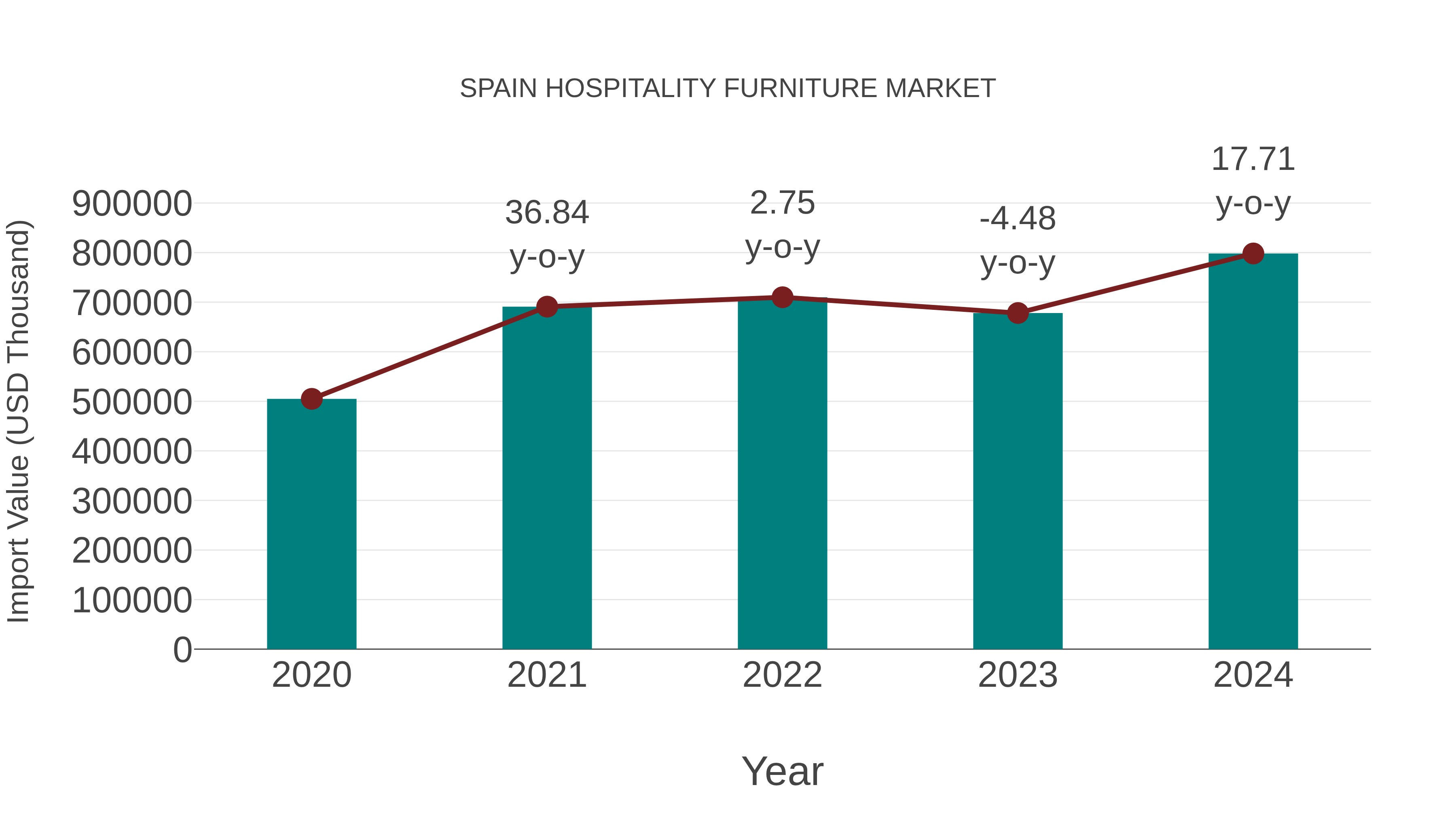
In 2024, Spain`s hospitality furniture market witnessed a notable increase in imports, driven by demand for high-quality and trendy furniture pieces. The surge in imports reflected a growing preference for imported furniture among businesses in the Spanish hospitality sector.
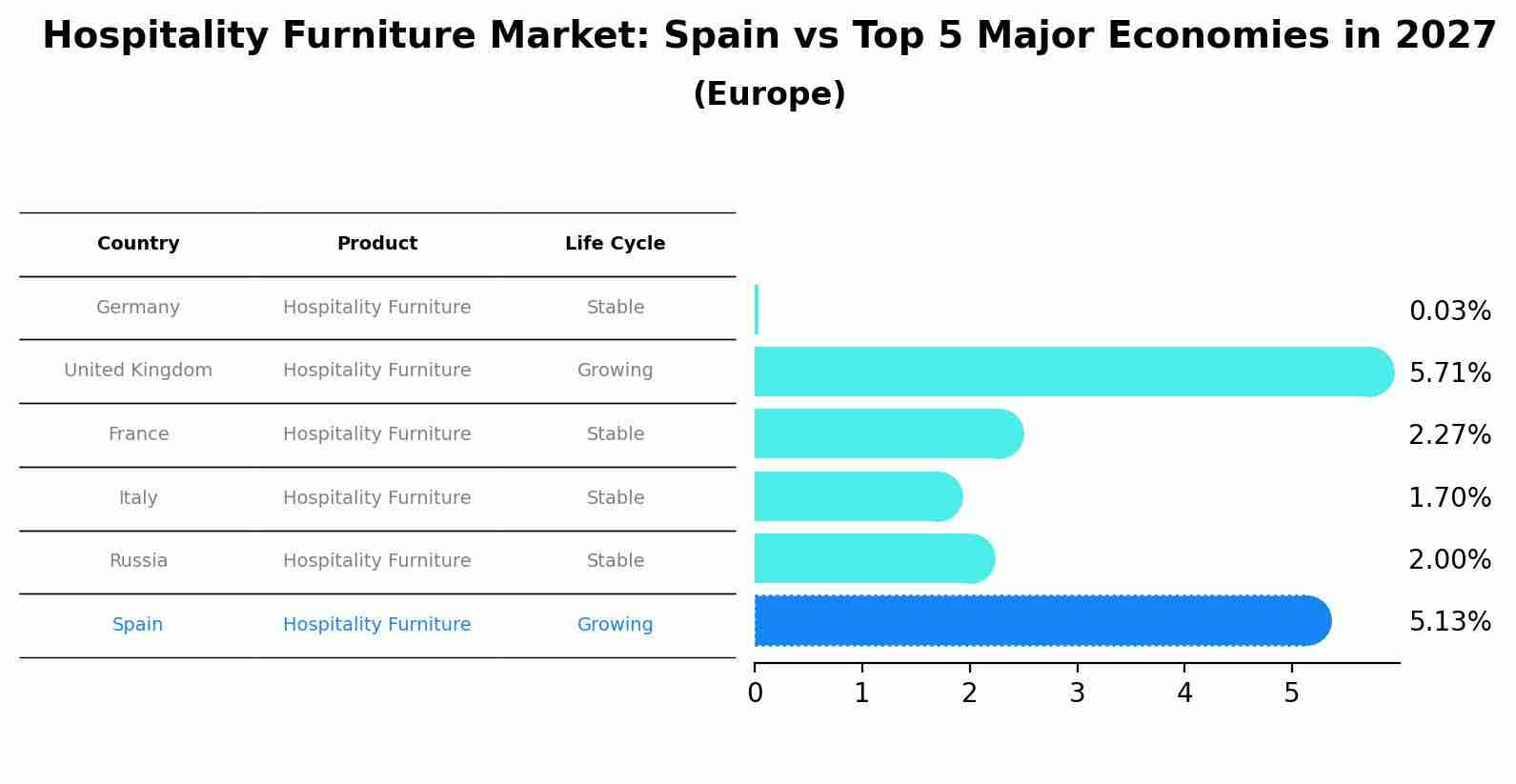
Hospitality Furniture Market: Spain vs Top 5 Major Economies in 2027 (Europe)
By 2027, the Hospitality Furniture market in Spain is anticipated to reach a growth rate of 5.13%, as part of an increasingly competitive Europe region, where Germany remains at the forefront, supported by United Kingdom, France, Italy and Russia, driving innovations and market adoption across sectors.
Spain Hospitality Furniture Market Synopsis
The Spain Hospitality Furniture Market is a dynamic and growing sector within the country`s furniture industry. With Spain being a popular tourist destination, there is a high demand for high-quality, stylish furniture in hotels, restaurants, and other hospitality establishments. The market offers a wide range of products, including beds, sofas, tables, chairs, and other furnishings tailored to meet the needs of the hospitality sector. Key trends in the market include a focus on sustainable and eco-friendly materials, modern and innovative designs, and customization options to suit the unique requirements of different establishments. Major players in the Spain Hospitality Furniture Market include both domestic manufacturers and international brands, competing to offer innovative solutions and cater to the evolving tastes and preferences of the hospitality industry.
Spain Hospitality Furniture Market Trends
In the Spain Hospitality Furniture Market, there is a growing trend towards sustainable and eco-friendly furniture solutions. Hoteliers and restaurant owners are increasingly prioritizing furniture made from recycled materials, natural fibers, and renewable resources to align with their sustainability goals and appeal to environmentally conscious consumers. Additionally, there is a rising demand for multifunctional and space-saving furniture designs to optimize limited spaces in urban hospitality establishments. With the increasing popularity of boutique hotels and themed restaurants, there is also a preference for unique and customizable furniture pieces that enhance the overall guest experience. Overall, the Spain Hospitality Furniture Market is witnessing a shift towards sustainability, functionality, and aesthetics to meet the evolving needs of the industry and cater to the preferences of modern consumers.
Spain Hospitality Furniture Market Challenges
In the Spain Hospitality Furniture Market, some of the key challenges faced include intense competition among furniture manufacturers and suppliers, price sensitivity among buyers, and changing design trends. Manufacturers often struggle to differentiate their products in a crowded market, leading to pricing pressures that can affect profit margins. Additionally, the hospitality industry`s demand for trendy and innovative furniture designs means that companies need to constantly stay ahead of design trends to remain competitive. Furthermore, fluctuations in raw material prices and supply chain disruptions can also pose challenges for players in the market. Overall, navigating these challenges requires companies to focus on product innovation, cost-efficiency, and strong relationships with clients to thrive in the Spain Hospitality Furniture Market.
Spain Hospitality Furniture Market Investment Opportunities
Investment opportunities in the Spain Hospitality Furniture Market include targeting sustainable and eco-friendly furniture solutions to align with the growing trend of environmental consciousness in the industry. Investing in innovative and customizable furniture designs that cater to the unique needs of hotels, restaurants, and other hospitality establishments can also be lucrative. Additionally, there is a rising demand for technology-integrated furniture pieces that enhance the guest experience, such as smart furniture with built-in charging stations or connectivity features. Collaborating with local manufacturers and designers to create exclusive and locally-inspired furniture collections can differentiate your offerings in the market. Overall, focusing on quality, design versatility, and sustainability can position investors well in the Spain Hospitality Furniture Market.
Spain Hospitality Furniture Market Future Outlook
The future outlook for the Spain Hospitality Furniture Market appears promising, driven by a growing tourism industry and increasing demand for modern, comfortable, and aesthetically pleasing furniture in hotels, restaurants, and other hospitality establishments. With a focus on enhancing the overall guest experience and creating unique, stylish spaces, there is a rising trend towards sustainable and innovative furniture designs. The market is also expected to benefit from the incorporation of technology in furniture solutions, such as smart furniture options and customizable designs. However, evolving consumer preferences, economic fluctuations, and competition from international players could pose challenges. Overall, the Spain Hospitality Furniture Market is projected to experience steady growth, offering opportunities for market players to innovate and cater to the evolving needs of the hospitality sector.
Key Highlights of the Report:
- Spain Hospitality Furniture Market Outlook
- Market Size of Spain Hospitality Furniture Market, 2021
- Forecast of Spain Hospitality Furniture Market, 2031
- Historical Data and Forecast of Spain Hospitality Furniture Revenues & Volume for the Period 2018 - 2031
- Spain Hospitality Furniture Market Trend Evolution
- Spain Hospitality Furniture Market Drivers and Challenges
- Spain Hospitality Furniture Price Trends
- Spain Hospitality Furniture Porter's Five Forces
- Spain Hospitality Furniture Industry Life Cycle
- Historical Data and Forecast of Spain Hospitality Furniture Market Revenues & Volume By Type for the Period 2018 - 2031
- Historical Data and Forecast of Spain Hospitality Furniture Market Revenues & Volume By Wooden Furniture for the Period 2018 - 2031
- Historical Data and Forecast of Spain Hospitality Furniture Market Revenues & Volume By Leather & Fabric Furniture for the Period 2018 - 2031
- Historical Data and Forecast of Spain Hospitality Furniture Market Revenues & Volume By Metal Furniture for the Period 2018 - 2031
- Historical Data and Forecast of Spain Hospitality Furniture Market Revenues & Volume By Others for the Period 2018 - 2031
- Historical Data and Forecast of Spain Hospitality Furniture Market Revenues & Volume By Applications for the Period 2018 - 2031
- Historical Data and Forecast of Spain Hospitality Furniture Market Revenues & Volume By Economy Hotel for the Period 2018 - 2031
- Historical Data and Forecast of Spain Hospitality Furniture Market Revenues & Volume By Extended-stay Hotel for the Period 2018 - 2031
- Historical Data and Forecast of Spain Hospitality Furniture Market Revenues & Volume By Full-service Hotel for the Period 2018 - 2031
- Historical Data and Forecast of Spain Hospitality Furniture Market Revenues & Volume By Luxury Hotel for the Period 2018 - 2031
- Historical Data and Forecast of Spain Hospitality Furniture Market Revenues & Volume By Others for the Period 2018 - 2031
- Historical Data and Forecast of Spain Hospitality Furniture Market Revenues & Volume By Industry Vertical for the Period 2018 - 2031
- Historical Data and Forecast of Spain Hospitality Furniture Market Revenues & Volume By Hotels & Restaurants for the Period 2018 - 2031
- Historical Data and Forecast of Spain Hospitality Furniture Market Revenues & Volume By Public Places for the Period 2018 - 2031
- Historical Data and Forecast of Spain Hospitality Furniture Market Revenues & Volume By Corporate Offices for the Period 2018 - 2031
- Historical Data and Forecast of Spain Hospitality Furniture Market Revenues & Volume By Others for the Period 2018 - 2031
- Spain Hospitality Furniture Import Export Trade Statistics
- Market Opportunity Assessment By Type
- Market Opportunity Assessment By Applications
- Market Opportunity Assessment By Industry Vertical
- Spain Hospitality Furniture Top Companies Market Share
- Spain Hospitality Furniture Competitive Benchmarking By Technical and Operational Parameters
- Spain Hospitality Furniture Company Profiles
- Spain Hospitality Furniture Key Strategic Recommendations






































