Spain Phenol Market Size Growth Rate
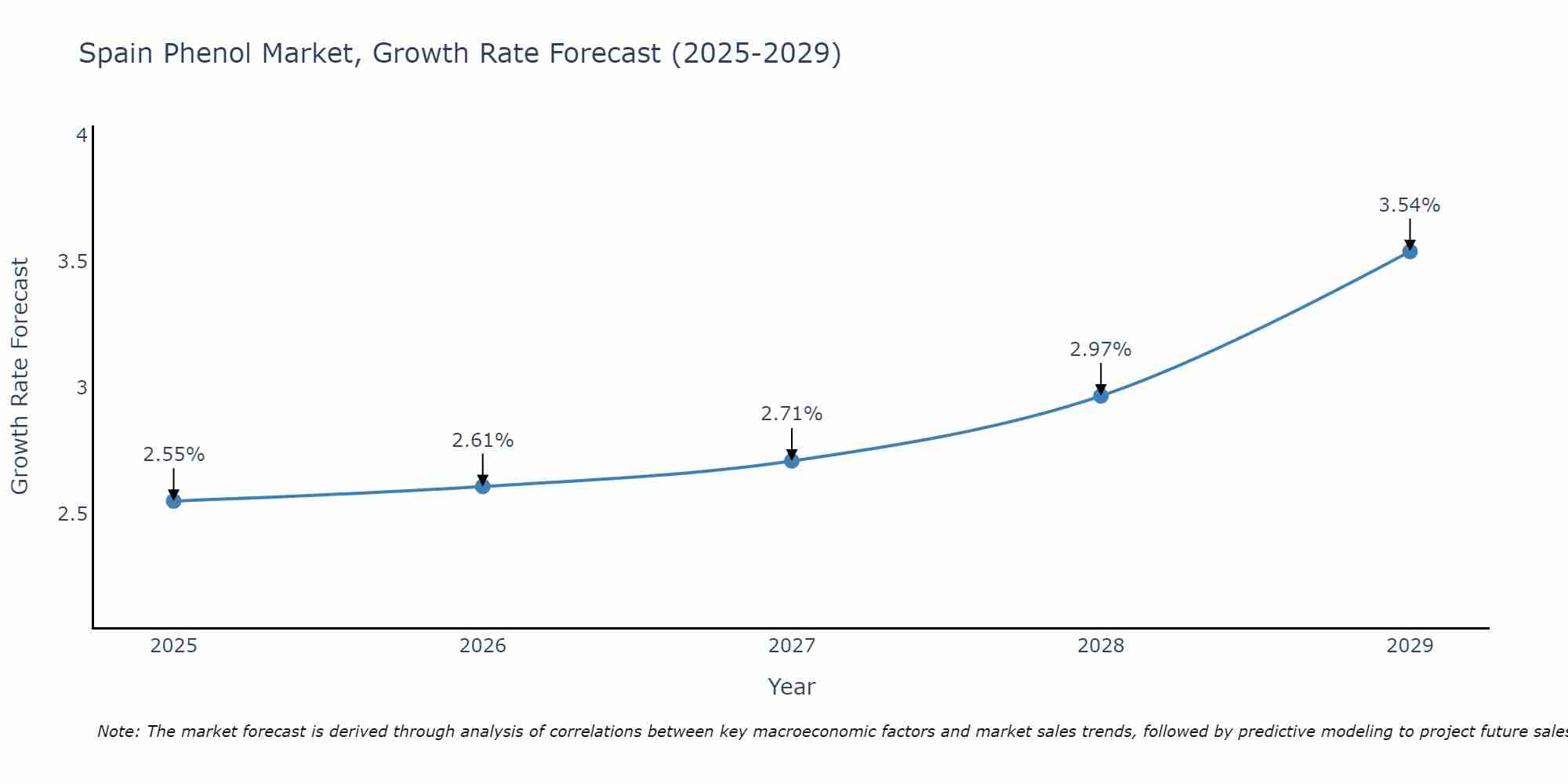
The Spain Phenol Market is likely to experience consistent growth rate gains over the period 2025 to 2029. The growth rate starts at 2.55% in 2025 and reaches 3.54% by 2029.
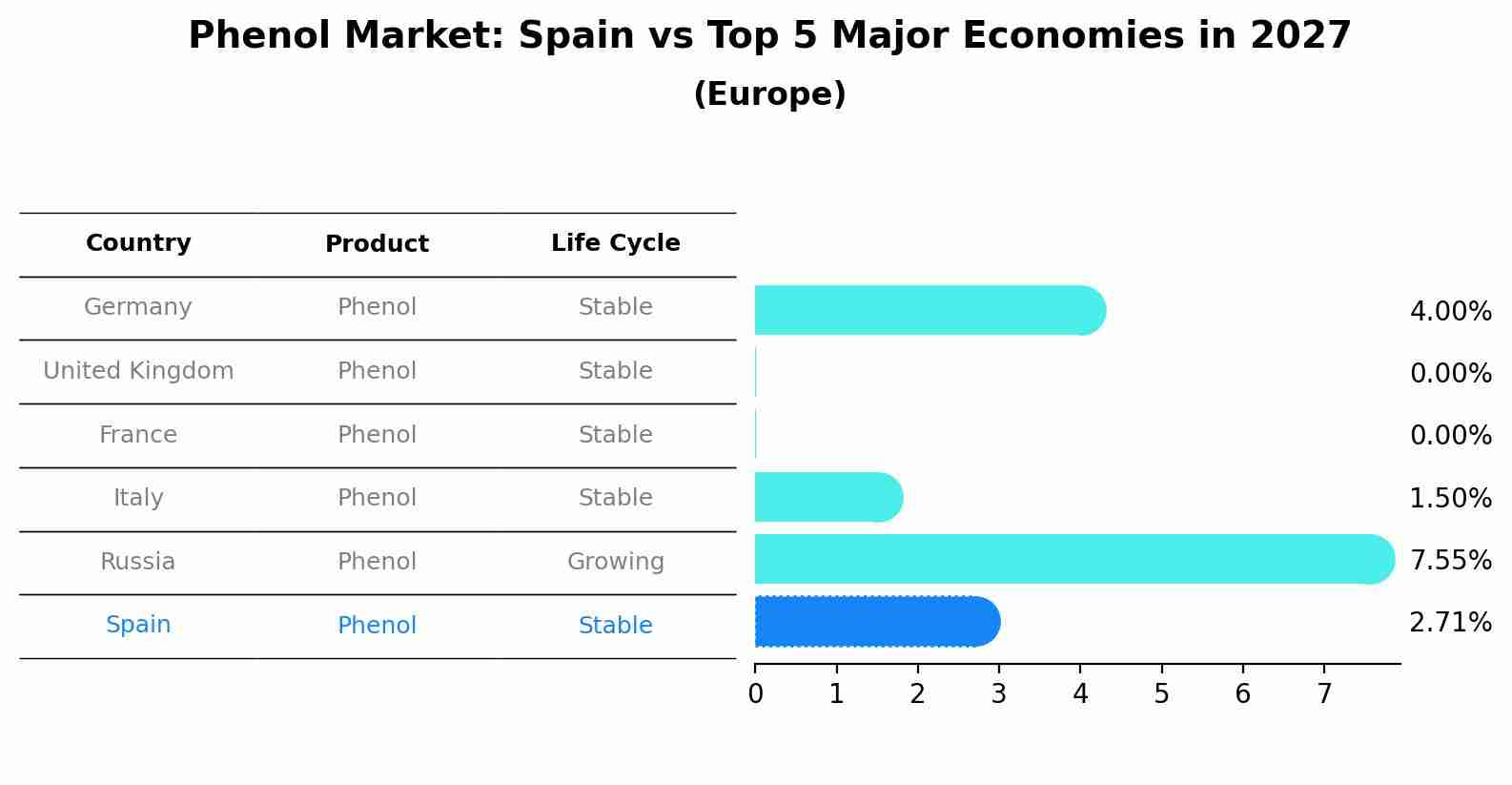
Phenol Market: Spain vs Top 5 Major Economies in 2027 (Europe)
By 2027, Spain's Phenol market is forecasted to achieve a stable growth rate of 2.71%, with Germany leading the Europe region, followed by United Kingdom, France, Italy and Russia.
Spain Phenol Market Overview
The Spain Phenol market is experiencing steady growth driven by the country`s expanding chemical industry and increasing demand for phenol-based products in various sectors such as automotive, construction, and electronics. Phenol, a key chemical compound used in the production of plastics, resins, and pharmaceuticals, is witnessing rising demand due to its versatile applications. The market is also influenced by factors like technological advancements, government regulations promoting sustainable practices, and shifting consumer preferences towards eco-friendly products. Key players in the Spain Phenol market include Repsol, CEPSA, and INEOS Phenol, among others. As the industry continues to evolve, players are focusing on innovation, strategic collaborations, and sustainability initiatives to maintain a competitive edge in the market.
Spain Phenol Market Trends
The Spain Phenol Market is currently experiencing growth driven by increasing demand from various end-use industries such as automotive, construction, and electronics. The market is seeing a trend towards the production of eco-friendly phenol derivatives to meet the growing sustainability concerns among consumers. Additionally, there is a focus on research and development activities to improve the efficiency of phenol production processes and reduce environmental impact. The market is also witnessing collaborations and partnerships between key players to expand their product portfolios and reach a wider customer base. Overall, the Spain Phenol Market is expected to continue growing in the coming years, driven by innovation, sustainability efforts, and increasing demand from key industries.
Spain Phenol Market Challenges
In the Spain Phenol market, challenges can include fluctuating raw material prices, environmental regulations impacting production processes, and competition from other phenol producers globally. The market may also face challenges related to the economic conditions of Spain and the broader European market, affecting demand for phenol-based products. Additionally, the industry must navigate the evolving preferences of consumers towards sustainable and eco-friendly products, which may require investments in research and development to innovate and meet changing market demands. Overall, staying competitive in the Spain Phenol market requires companies to adapt to regulatory changes, market trends, and technological advancements while ensuring cost-efficiency and sustainability in their operations.
Spain Phenol Market Investment Opportunities
The Spain Phenol Market presents promising investment opportunities due to increasing demand from various industries such as automotive, construction, and electronics. With the growing emphasis on sustainability and environmental regulations, there is a shift towards eco-friendly and bio-based phenol production methods, offering potential for innovation and market differentiation. Additionally, the country`s strategic location in Europe and well-established infrastructure make it an attractive hub for phenol production and distribution. Investors can explore opportunities in expanding production capacities, investing in research and development for sustainable phenol production processes, or partnering with local manufacturers to tap into the growing market demand. Overall, the Spain Phenol Market offers a favorable landscape for investors looking to capitalize on the evolving trends and demand in the industry.
Spain Phenol Market Government Policy
The Spain Phenol Market is influenced by various government policies aimed at regulating environmental impact and promoting sustainable practices. The Spanish government has implemented measures to monitor and control emissions from phenol production facilities, ensuring compliance with environmental standards. Additionally, there are initiatives to promote research and development in eco-friendly production methods for phenol, aiming to reduce carbon footprint and enhance overall sustainability. Regulatory bodies also focus on ensuring the safety and health of workers in phenol manufacturing plants through strict adherence to occupational health and safety guidelines. Overall, government policies in Spain related to the Phenol Market emphasize environmental protection, sustainability, and worker welfare in line with global trends towards responsible business practices.
Spain Phenol Market Future Outlook
The Spain Phenol Market is expected to witness moderate growth in the coming years, driven by factors such as increasing demand from end-use industries like automotive, construction, and electronics. The growing emphasis on sustainable practices and environmental regulations may also influence market dynamics, leading to a shift towards eco-friendly phenol production methods. Additionally, the rising adoption of phenol derivatives in applications such as resins, adhesives, and pharmaceuticals is projected to further propel market growth. However, challenges like fluctuating raw material prices and competition from substitute products could hinder the market`s expansion. Overall, with strategic investments in innovation and sustainability, the Spain Phenol Market is likely to experience steady growth opportunities in the forecast period.
Key Highlights of the Report:
- Spain Phenol Market Outlook
- Market Size of Spain Phenol Market, 2021
- Forecast of Spain Phenol Market, 2031
- Historical Data and Forecast of Spain Phenol Revenues & Volume for the Period 2021 - 2031
- Spain Phenol Market Trend Evolution
- Spain Phenol Market Drivers and Challenges
- Spain Phenol Price Trends
- Spain Phenol Porter's Five Forces
- Spain Phenol Industry Life Cycle
- Historical Data and Forecast of Spain Phenol Market Revenues & Volume By End-users for the Period 2021 - 2031
- Historical Data and Forecast of Spain Phenol Market Revenues & Volume By Bisphenol A for the Period 2021 - 2031
- Historical Data and Forecast of Spain Phenol Market Revenues & Volume By Phenolic Resins for the Period 2021 - 2031
- Historical Data and Forecast of Spain Phenol Market Revenues & Volume By Caprolactam for the Period 2021 - 2031
- Historical Data and Forecast of Spain Phenol Market Revenues & Volume By Alkyl Phenyls for the Period 2021 - 2031
- Historical Data and Forecast of Spain Phenol Market Revenues & Volume By Others for the Period 2021 - 2031
- Spain Phenol Import Export Trade Statistics
- Market Opportunity Assessment By End-users
- Spain Phenol Top Companies Market Share
- Spain Phenol Competitive Benchmarking By Technical and Operational Parameters
- Spain Phenol Company Profiles
- Spain Phenol Key Strategic Recommendations






































