Spain Small Mammal and Reptile Food Market Size, Share & Growth Rate
The Spain Small Mammal and Reptile Food Market was estimated at USD 235 Million in 2025 and is projected to reach USD 280 Million by 2032, growing at a CAGR of 2.5% from 2026 to 2032. This growth trajectory is primarily fueled by a rising awareness among pet owners regarding the nutritional needs of small mammals and reptiles. Additionally, the increasing trend towards natural and organic food products tailored to the specific dietary requirements of these pets is driving significant momentum in the market.
Spain Small Mammal and Reptile Food Market Year-wise Growth Rate and Key Drivers
This graph highlights how the Spain Small Mammal and Reptile Food Market has steadily grown over the years, supported by major growth factors.
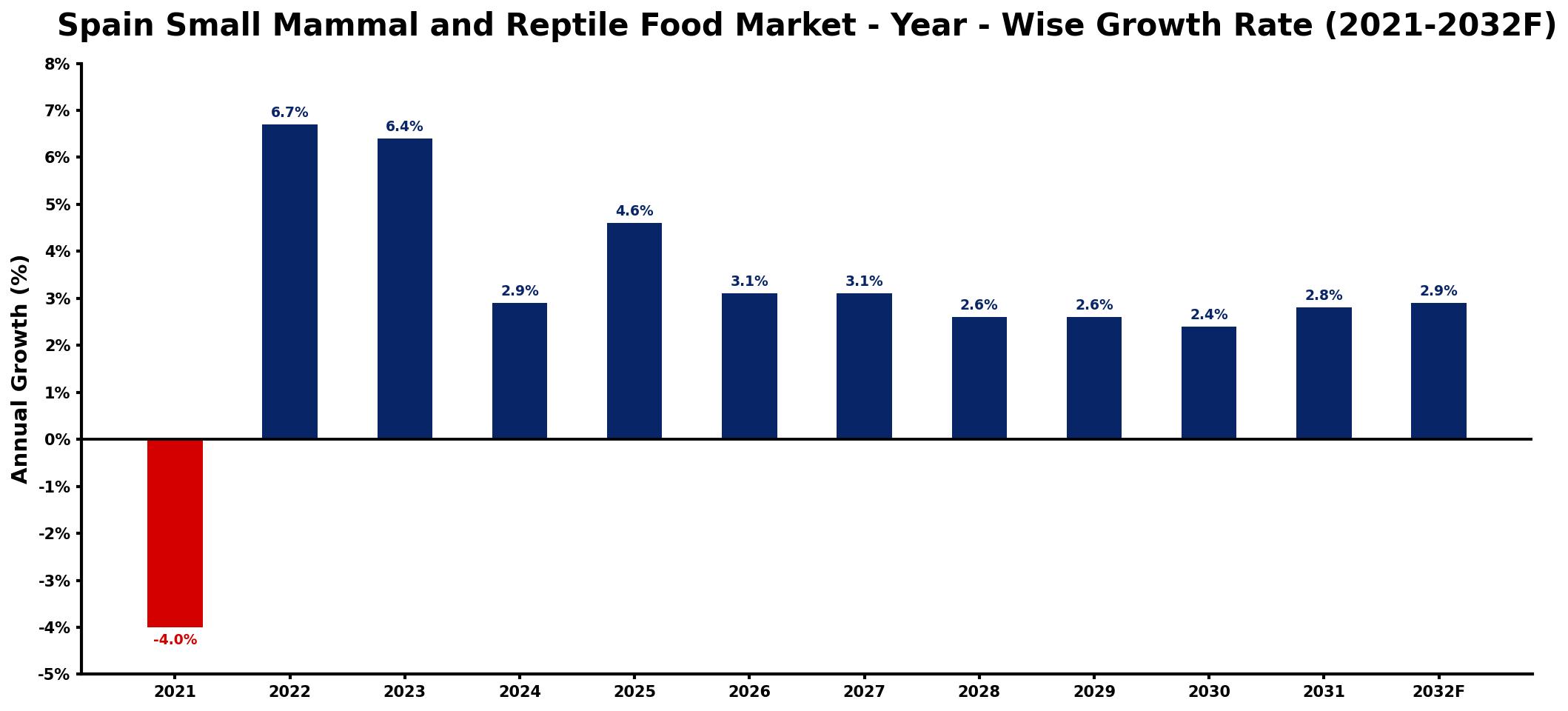
The table below presents the year‑wise growth rates along with the key drivers influencing the market
| Year | Growth Rate | Major Drivers |
| 2021 | -4.0% | decrease in consumer spending |
| 2022 | 6.7% | increased pet ownership trends |
| 2023 | 6.4% | rising interest in exotic pets |
| 2024 | 2.9% | growing awareness of nutrition |
| 2025 | 4.6% | expansion of specialty retailers |
| 2026 | 3.1% | increased online shopping convenience |
| 2027 | 3.1% | development of premium products |
| 2028 | 2.6% | enhanced marketing strategies employed |
| 2029 | 2.6% | strengthening distribution networks available |
| 2030 | 2.4% | growing focus on sustainability practices |
| 2031 | 2.8% | rising disposable income levels |
| 2032 | 2.9% | increased consumer education initiatives |
Note: Market size estimations and growth projections presented in this report are based on 6Wresearch's proprietary forecasting methodology, utilizing the latest available industry data, government publications, and primary research inputs.
Spain Small Mammal and Reptile Food Market Synopsis
The Spain Small Mammal and Reptile Food Market has witnessed an upward surge, driven by pet owners' growing desire to provide optimal nutrition for their animals. As this segment of pet care evolves, there is a strong shift towards specialized food products that prioritize natural ingredients and health benefits.
Looking ahead, the market is expected to maintain its positive momentum as more consumers gravitate toward eco-friendly options and innovative formulations. As the demand for premium, nutritionally balanced diets for small mammals and reptiles increases, companies will be prompted to innovate continuously, ensuring a dynamic marketplace that caters to these needs.
Spain Small Mammal and Reptile Food Market Key Takeaways
- The market is expected to grow steadily, reaching USD 280 Million by 2032.
- Consumers are increasingly focused on natural and organic food options for their pets.
- Online sales channels are becoming a key avenue for distribution, enhancing convenience for consumers.
- Product innovation with added health benefits is a significant trend in this market.
- There is a notable rise in demand for sustainable and eco-friendly packaging solutions.
Evaluation of Restraints in Spain Small Mammal and Reptile Food Market
Despite the positive growth trajectory, the Spain Small Mammal and Reptile Food Market faces several constraints that may hinder progress. Intense competition from both local and international brands complicates market entry for new companies, particularly smaller players who may struggle with branding and market recognition. Additionally, fluctuating raw material prices can impact production costs, making it challenging to maintain competitive pricing. Strict regulations around product safety and labeling further add complexity, requiring companies to navigate compliance while innovating. These factors necessitate a strategic approach for businesses to differentiate themselves and adapt to consumer preferences effectively.
Spain Small Mammal and Reptile Food Market Trends
Current trends in the Spain Small Mammal and Reptile Food Market reflect a significant shift toward high-quality, nutrient-dense food options that mirror natural diets. Consumers are increasingly favoring products that utilize organic ingredients, with an uptick in interest towards insect-based diets for reptiles and small mammals. Furthermore, eco-friendly packaging is gaining traction, aligning with broader environmental concerns. As consumer demands evolve, the market continues to embrace innovation, focusing on formulations that enhance pet health and well-being.
Spain Small Mammal and Reptile Food Market Opportunities
As urban living encourages the adoption of small pets, the Spain Small Mammal and Reptile Food Market offers promising investment opportunities. The increased awareness regarding the importance of specialized diets positions companies well to capitalize on the growing segment of pet owners dedicated to pet health. There exists a unique chance to develop innovative product lines focusing on organic and natural ingredients. Additionally, expanding online distribution channels can enhance market reach, providing potential avenues for significant growth.
Government Initiatives in the Spain Small Mammal and Reptile Food Market
In Spain, government policies play a pivotal role in shaping the Small Mammal and Reptile Food Market. Regulations mandated by the European Union focus on labeling, ingredient standards, and food safety guidelines to ensure consumer health and animal welfare. These policies not only promote transparency in the market but also foster responsible pet ownership. Compliance with national standards further enhances the overall quality and safety of pet food products, thereby instilling consumer confidence.
Future Insights of the Spain Small Mammal and Reptile Food Market
The Spain Small Mammal and Reptile Food Market is poised for a robust future from 2026 to 2032, propelled by an increasing affinity for small pets among Spanish households. This trend is expected to escalate as the importance of providing a nutritionally balanced diet becomes more recognized. Manufacturers will likely focus on innovative solutions that cater to evolving consumer preferences, emphasizing health benefits and natural ingredients. The ongoing demand for specialized food options signals a vibrant landscape ripe for growth.
Spain Small Mammal and Reptile Food Market Latest Developments (2025 - 2026)
In the recent months, the market has seen a shift towards the introduction of new product lines focusing on organic and natural formulations. Companies are increasingly investing in research and development to explore innovative ingredients that cater to the specific nutritional needs of small mammals and reptiles. Furthermore, the rise in online shopping continues to reshape consumer purchasing habits, leading businesses to enhance their digital presence and streamline logistics. Overall, the market is becoming more dynamic, reflecting the changing preferences of pet owners.
Spain Small Mammal and Reptile Food Market - Key Attractiveness of the Report
- 10 Years of Market Numbers
- Historical Data Starting from 2022 to 2025
- Base Year: 2025
- Forecast Data until 2032
- Key Performance Indicators Impacting the Market
- Major Upcoming Developments and Projects
Key Highlights of the Report:
- Spain Small Mammal and Reptile Food Market Outlook
- Market Size of Spain Small Mammal and Reptile Food Market, 2025
- Forecast of Spain Small Mammal and Reptile Food Market, 2032
- Historical Data and Forecast of Spain Small Mammal and Reptile Food Revenues & Volume for the Period 2022-2032F
- Spain Small Mammal and Reptile Food Market Trend Evolution
- Spain Small Mammal and Reptile Food Market Drivers and Challenges
- Spain Small Mammal and Reptile Food Price Trends
- Spain Small Mammal and Reptile Food Porter's Five Forces
- Spain Small Mammal and Reptile Food Industry Life Cycle
- Historical Data and Forecast of Spain Small Mammal and Reptile Food Market Revenues & Volume By Type for the Period 2022-2032F
- Historical Data and Forecast of Spain Small Mammal and Reptile Food Market Revenues & Volume By Rabbits Food for the Period 2022-2032F
- Historical Data and Forecast of Spain Small Mammal and Reptile Food Market Revenues & Volume By Rodents Food for the Period 2022-2032F
- Historical Data and Forecast of Spain Small Mammal and Reptile Food Market Revenues & Volume By Small Reptiles Food for the Period 2022-2032F
- Historical Data and Forecast of Spain Small Mammal and Reptile Food Market Revenues & Volume By Other for the Period 2022-2032F
- Historical Data and Forecast of Spain Small Mammal and Reptile Food Market Revenues & Volume By Application for the Period 2022-2032F
- Historical Data and Forecast of Spain Small Mammal and Reptile Food Market Revenues & Volume By Pet-Speciality Stores for the Period 2022-2032F
- Historical Data and Forecast of Spain Small Mammal and Reptile Food Market Revenues & Volume By Supermarkets and Hypermarkets for the Period 2022-2032F
- Historical Data and Forecast of Spain Small Mammal and Reptile Food Market Revenues & Volume By Convenience Stores for the Period 2022-2032F
- Historical Data and Forecast of Spain Small Mammal and Reptile Food Market Revenues & Volume By Other for the Period 2022-2032F
- Spain Small Mammal and Reptile Food Import Export Trade Statistics
- Market Opportunity Assessment By Type
- Market Opportunity Assessment By Application
- Spain Small Mammal and Reptile Food Top Companies Market Share
- Spain Small Mammal and Reptile Food Competitive Benchmarking By Technical and Operational Parameters
- Spain Small Mammal and Reptile Food Company Profiles
- Spain Small Mammal and Reptile Food Key Strategic Recommendations






































