Sri Lanka Bathroom Linen Market Size, Share & Growth Rate
The Sri Lanka Bathroom Linen Market was estimated at USD 219 Million in 2025 and is projected to reach USD 301 Million by 2032, growing at a CAGR of 4.6% from 2026 to 2032. This robust growth trajectory is primarily driven by increasing disposable incomes and urbanization trends, as consumers prioritize quality and stylish bathroom essentials. Furthermore, the rising interest in home aesthetics and wellness is spurring demand for premium bathroom linen across various demographics.
Sri Lanka Bathroom Linen Market Year-wise Growth Rate and Key Drivers
This graph highlights how the Sri Lanka Bathroom Linen Market has steadily grown over the years, supported by major growth factors.
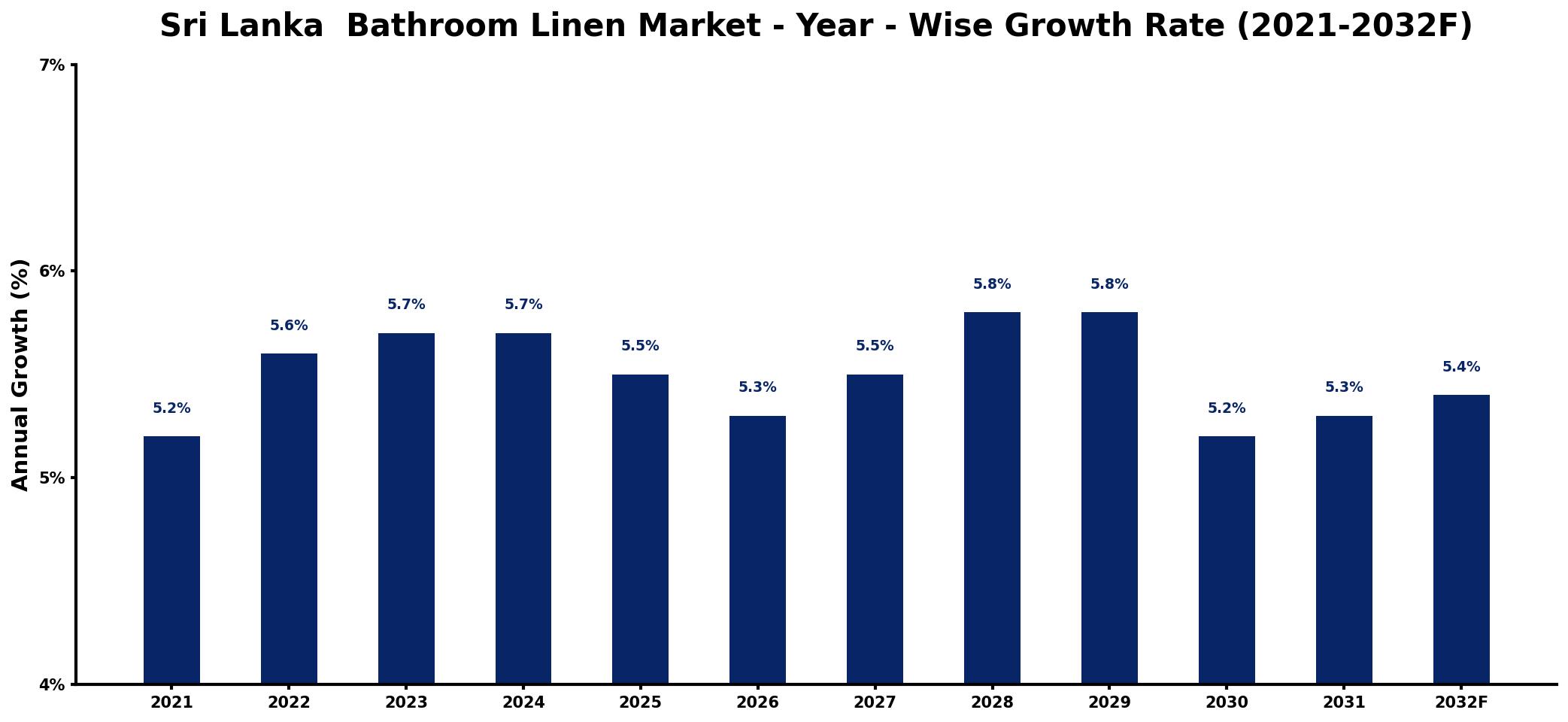
The table below presents the year‑wise growth rates along with the key drivers influencing the market
| Year | Growth Rate | Major Drivers |
| 2021 | 5.2% | Rising consumer spending habits |
| 2022 | 5.6% | Growth in hospitality sector |
| 2023 | 5.7% | Increased urban residential projects |
| 2024 | 5.7% | Expansion of e-commerce platforms |
| 2025 | 5.5% | Surge in home renovation activities |
| 2026 | 5.3% | Growing focus on sustainability |
| 2027 | 5.5% | Increase in tourism activities |
| 2028 | 5.8% | Higher disposable income levels |
| 2029 | 5.8% | Emergence of luxury brands |
| 2030 | 5.2% | Strengthening of local manufacturing |
| 2031 | 5.3% | Boost in online shopping trends |
| 2032 | 5.4% | Enhanced awareness of hygiene |
Note: Market size estimations and growth projections presented in this report are based on 6Wresearch's proprietary forecasting methodology, utilizing the latest available industry data, government publications, and primary research inputs.
Sri Lanka Bathroom Linen Market Synopsis
The Sri Lanka Bathroom Linen Market is at a dynamic intersection of style, functionality, and sustainability. As urban lifestyles evolve, so too does the demand for high-quality bathroom textiles such as towels, bath mats, and shower curtains, appealing to both aesthetic preferences and functional needs.
Consumer inclination toward eco-friendly options is notably on the rise, with many seeking products made from organic and sustainable materials. Additionally, the influence of the hospitality sector, particularly with high-end hotels and resorts, significantly shapes product standards and trends, further driving market growth.
Sri Lanka Bathroom Linen Market Key Takeaways
- Growing consumer preference for eco-friendly materials drives product innovation.
- Online retail channels are becoming increasingly vital for market expansion.
- The demand for premium quality products is closely linked to rising disposable incomes.
- Luxury and personalized bathroom linens are gaining popularity among discerning consumers.
- Tourism continues to influence the demand for high-quality bathroom textiles in the hospitality sector.
Evaluation of Restraints in Sri Lanka Bathroom Linen Market
Despite the promising growth prospects, the Sri Lanka Bathroom Linen Market faces certain restraints. The market is characterized by intense competition from both domestic and international manufacturers, making differentiation crucial. Additionally, fluctuations in raw material costs can hinder pricing strategies, affecting overall profitability. There's also a growing need for continuous innovation to keep pace with shifting consumer preferences. Coupled with the presence of counterfeit products and inadequate regulatory measures, these factors can pose significant challenges to sustained market growth.
Sri Lanka Bathroom Linen Market Trends
Current trends in the Sri Lanka Bathroom Linen Market highlight a significant shift towards sustainability. Increasingly, consumers are opting for bathroom linen made from organic cotton, bamboo, and other eco-friendly materials. Moreover, the introduction of quick-dry and anti-microbial technologies is appealing to health-conscious buyers who prioritize hygiene and functionality. The convenience of e-commerce platforms is also shaping consumer purchasing behavior, offering them a broader selection of products than ever before.
Sri Lanka Bathroom Linen Market Opportunities
The potential for growth in the Sri Lanka Bathroom Linen Market is noteworthy, particularly as consumers seek more luxurious and functional options for their homes. Investors can tap into this demand by supporting innovative brands that focus on sustainable practices and unique designs. Expanding product offerings to include not only traditional items but also modern accessories can also provide a competitive edge. Furthermore, forming strategic alliances with hotels and home decor stores can enhance market penetration and brand visibility.
Government Initiatives in the Sri Lanka Bathroom Linen Market
The Sri Lankan government is actively promoting local manufacturing within the Bathroom Linen Market through various supportive policies. Incentives such as tax breaks and subsidies are available to encourage manufacturers to enhance production and maintain high-quality standards. Moreover, initiatives aimed at sustainability—such as promoting eco-friendly materials—are being prioritized to elevate the industry's overall environmental profile. These government measures aim to bolster the market's competitiveness, both locally and internationally.
Future Insights of the Sri Lanka Bathroom Linen Market
Looking ahead to 2026-2032, the Sri Lanka Bathroom Linen Market is poised for considerable growth. Factors such as urbanization, a heightened focus on home decor, and an increasing awareness of quality and sustainability are expected to drive demand. The market is likely to witness a continued shift towards premium and luxurious bathroom textiles, reflecting consumers' desire for enhanced personal experiences. Additionally, the expansion of e-commerce platforms will provide consumers with greater access to innovative products, shaping the market landscape significantly in the coming years.
Sri Lanka Bathroom Linen Market Latest Developments (2025 - 2026)
Recent developments in the Sri Lanka Bathroom Linen Market indicate a strong movement towards eco-conscious production techniques and materials. Manufacturers are increasingly introducing collections that emphasize sustainable sourcing and innovative designs, catering to a more environmentally aware consumer base. Additionally, the continued rise of e-commerce has prompted many brands to enhance their online presence, reflecting changing consumer shopping habits. Collaboration within the hospitality sector remains a key focus, with hotels seeking to elevate their guest experiences through high-quality linen products.
Sri Lanka Bathroom Linen Market - Key Attractiveness of the Report
- 10 Years of Market Numbers
- Historical Data Starting from 2022 to 2025
- Base Year: 2025
- Forecast Data until 2032
- Key Performance Indicators Impacting the Market
- Major Upcoming Developments and Projects
Key Highlights of the Report:
- Sri Lanka Bathroom Linen Market Outlook
- Market Size of Sri Lanka Bathroom Linen Market, 2025
- Forecast of Sri Lanka Bathroom Linen Market, 2032
- Historical Data and Forecast of Sri Lanka Bathroom Linen Revenues & Volume for the Period 2022-2032F
- Sri Lanka Bathroom Linen Market Trend Evolution
- Sri Lanka Bathroom Linen Market Drivers and Challenges
- Sri Lanka Bathroom Linen Price Trends
- Sri Lanka Bathroom Linen Porter's Five Forces
- Sri Lanka Bathroom Linen Industry Life Cycle
- Historical Data and Forecast of Sri Lanka Bathroom Linen Market Revenues & Volume By Product for the Period 2022-2032F
- Historical Data and Forecast of Sri Lanka Bathroom Linen Market Revenues & Volume By Bath Towels for the Period 2022-2032F
- Historical Data and Forecast of Sri Lanka Bathroom Linen Market Revenues & Volume By Bathrobes for the Period 2022-2032F
- Historical Data and Forecast of Sri Lanka Bathroom Linen Market Revenues & Volume By Others for the Period 2022-2032F
- Sri Lanka Bathroom Linen Import Export Trade Statistics
- Market Opportunity Assessment By Product
- Sri Lanka Bathroom Linen Top Companies Market Share
- Sri Lanka Bathroom Linen Competitive Benchmarking By Technical and Operational Parameters
- Sri Lanka Bathroom Linen Company Profiles
- Sri Lanka Bathroom Linen Key Strategic Recommendations






































