Sri Lanka Biosimilars Market Size, Share & Growth Rate
The Sri Lanka Biosimilars Market was estimated at USD 213 Million in 2025 and is projected to reach USD 286 Million by 2032, growing at a CAGR of 4.3% from 2026 to 2032. This growth trajectory is largely fueled by the increasing prevalence of chronic diseases, including diabetes and cancer, alongside the government's commitment to enhancing healthcare access through cost-effective biologic therapies. The collaboration between local and multinational pharmaceutical companies is further bolstering the market, creating a robust landscape for innovation and patient care.
Sri Lanka Biosimilars Market Year-wise Growth Rate and Key Drivers
This graph highlights how the Sri Lanka Biosimilars Market has steadily grown over the years, supported by major growth factors.
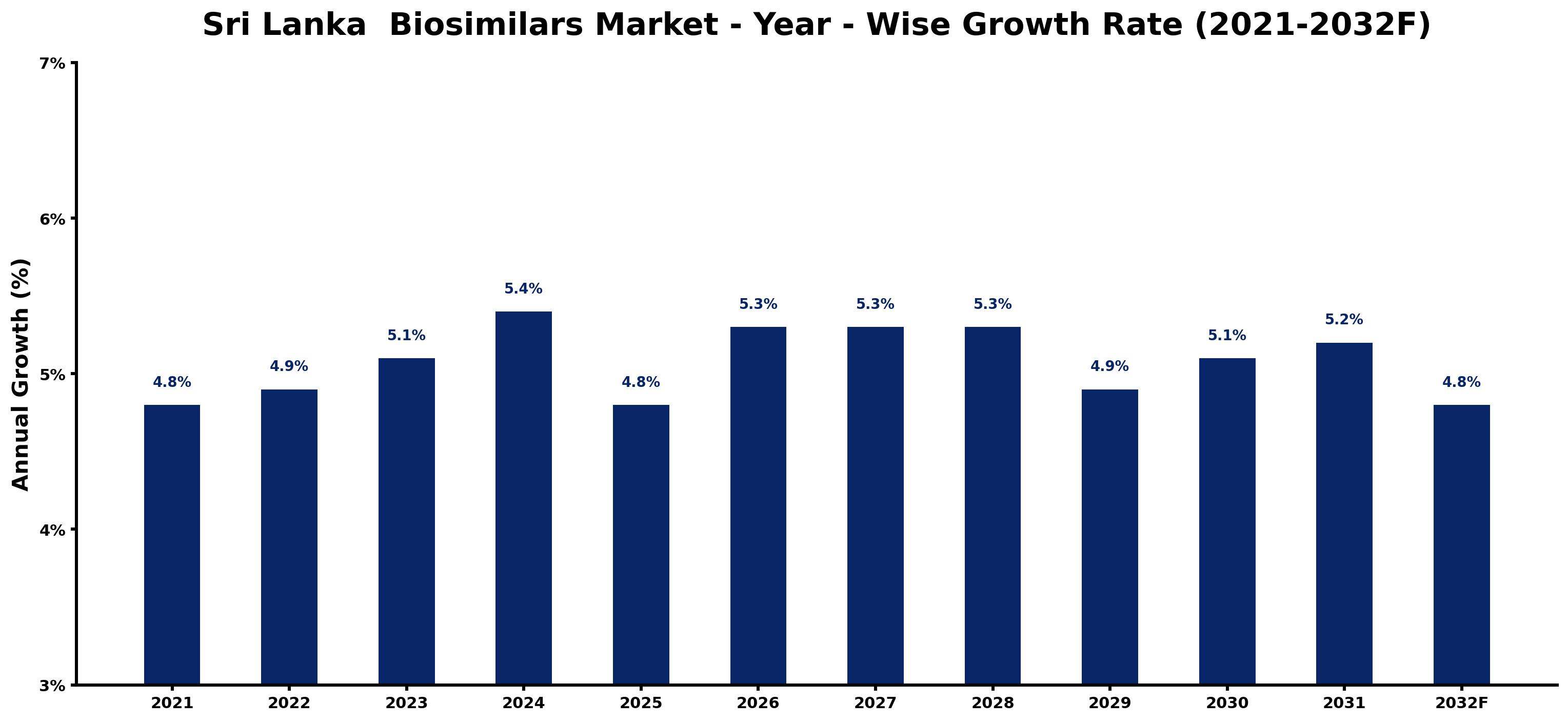
The table below presents the year‑wise growth rates along with the key drivers influencing the market
| Year | Growth Rate | Major Drivers |
| 2021 | 4.8% | Increasing adoption of advanced technologies |
| 2022 | 4.9% | Expansion of commercial construction activities |
| 2023 | 5.1% | Increasing industrial automation investments |
| 2024 | 5.4% | Expansion of commercial construction activities |
| 2025 | 4.8% | Increasing adoption of advanced technologies |
| 2026 | 5.3% | Government infrastructure modernization initiatives |
| 2027 | 5.3% | Government infrastructure modernization initiatives |
| 2028 | 5.3% | Expansion of commercial construction activities |
| 2029 | 4.9% | Rising electricity demand across industries |
| 2030 | 5.1% | Increasing adoption of advanced technologies |
| 2031 | 5.2% | Growing renewable energy integration projects |
| 2032 | 4.8% | Rising electricity demand across industries |
Note - Market size estimations and growth projections presented in this report are based on 6Wresearch's advanced forecasting approach, validated with industry datasets as of June 2026.
Sri Lanka Biosimilars Market Synopsis
The demand for biosimilars in Sri Lanka is intensifying as healthcare providers and patients alike seek more affordable treatment options. As the population grapples with a rising burden of chronic illnesses, the potential of biosimilars to offer therapeutic alternatives is becoming increasingly recognized.
The biosimilars market is primarily characterized by the presence of established multinational pharmaceutical firms. These companies are leveraging their extensive research capabilities and market experience to provide a diverse array of biosimilar products across various therapeutic areas, promoting wider access to essential medications.
Sri Lanka Biosimilars Market Key Takeaways
- The Sri Lanka biosimilars market is on a steady growth path, driven by increasing healthcare demand and favorable government policies.
- Cost-effectiveness and expanding access to advanced treatment are critical factors stimulating market acceptance of biosimilars.
- Collaborations between local and international companies are enhancing competition and product availability in the market.
- Regulatory advancements are being made to improve approval processes, which are crucial for market expansion.
- Investment opportunities in manufacturing and partnerships could lead to significant market benefits.
Evaluation of Restraints in Sri Lanka Biosimilars Market
Despite the promising growth potential, the Sri Lanka biosimilars market faces significant restraints. One primary issue is the regulatory complexity surrounding biosimilars, which can result in delays in product approvals. Additionally, there's a notable lack of awareness among both healthcare professionals and patients regarding the efficacy and safety of biosimilars. This perception, compounded by quality control concerns, can hinder the broader acceptance necessary for market proliferation. Enhancing education and establishing clear regulatory guidelines are essential steps to address these challenges and foster confidence in biosimilar products.
Sri Lanka Biosimilars Market Trends
Currently, the Sri Lanka biosimilars market is witnessing a marked increase in the adoption of biosimilar therapies, driven by their affordability compared to original biologics. The trend towards collaboration between domestic manufacturers and international firms is also emerging, leading to more innovative development and market entry strategies. Furthermore, the government's efforts to streamline the biosimilars approval process and enhance educational initiatives for healthcare providers are reshaping the market landscape.
Sri Lanka Biosimilars Market Opportunities
Investment opportunities abound within the Sri Lanka biosimilars market. The rising prevalence of chronic diseases significantly drives the need for affordable therapeutic options. Companies could benefit from establishing biosimilar manufacturing facilities, particularly given the favorable regulatory environment aimed at promoting cost-effective healthcare solutions. Additionally, forming strategic partnerships with local healthcare stakeholders can enhance product reach and patient accessibility, positioning firms favorably within this evolving sector.
Government Initiatives in the Sri Lanka Biosimilars Market
The Sri Lankan government is actively promoting the use of biosimilars to enhance healthcare affordability and access. The National Medicines Regulatory Authority (NMRA) has set forth clear guidelines for the registration and approval of biosimilars, focusing on safety, efficacy, and quality. In addition, price control measures and favorable procurement policies are being implemented to encourage healthcare providers to choose biosimilars over more expensive biologic options. Such initiatives are pivotal in creating a competitive marketplace that fosters the growth of biosimilar solutions.
Future Insights of the Sri Lanka Biosimilars Market
The outlook for the Sri Lanka biosimilars market is bright, with projected growth supported by escalating healthcare expenditures and a surge in chronic disease cases. As awareness regarding the benefits of biosimilars increases, so too will their adoption. Government initiatives geared toward integrating biosimilars into the healthcare framework will likely continue to enhance market conditions. However, ensuring regulatory clarity and reinforcing patient and provider trust in biosimilar products will be critical in overcoming potential obstacles and achieving sustainable growth.
Sri Lanka Biosimilars Market Latest Developments (May 2025 - June 2026)
In recent months, the Sri Lanka biosimilars market has seen a dynamic shift towards more collaborative approaches between local manufacturers and global pharma players. Notable efforts are being made to improve the educational landscape surrounding biosimilars, with initiatives aimed at healthcare professionals and patients alike. Moreover, regulatory authorities are engaging in ongoing dialogues to refine biosimilar approval processes, aiming to expedite market entry for new products. These developments indicate a forward momentum that may well define the market in the near future.
Sri Lanka Biosimilars Market - Key Attractiveness of the Report
- 10 Years of Market Numbers
- Historical Data Starting from 2022 to 2025
- Base Year: 2025
- Forecast Data until 2032
- Key Performance Indicators Impacting the Market
- Major Upcoming Developments and Projects
Key Highlights of the Report:
- Sri Lanka Biosimilars Market Outlook
- Market Size of Sri Lanka Biosimilars Market, 2025
- Forecast of Sri Lanka Biosimilars Market, 2032
- Historical Data and Forecast of Sri Lanka Biosimilars Revenues & Volume for the Period 2022-2032F
- Sri Lanka Biosimilars Market Trend Evolution
- Sri Lanka Biosimilars Market Drivers and Challenges
- Sri Lanka Biosimilars Price Trends
- Sri Lanka Biosimilars Porter's Five Forces
- Sri Lanka Biosimilars Industry Life Cycle
- Historical Data and Forecast of Sri Lanka Biosimilars Market Revenues & Volume By Product for the Period 2022-2032F
- Historical Data and Forecast of Sri Lanka Biosimilars Market Revenues & Volume By Insulin for the Period 2022-2032F
- Historical Data and Forecast of Sri Lanka Biosimilars Market Revenues & Volume By Follitropin for the Period 2022-2032F
- Historical Data and Forecast of Sri Lanka Biosimilars Market Revenues & Volume By Calcitonin for the Period 2022-2032F
- Historical Data and Forecast of Sri Lanka Biosimilars Market Revenues & Volume By Glucagon for the Period 2022-2032F
- Historical Data and Forecast of Sri Lanka Biosimilars Market Revenues & Volume By Teriparatide for the Period 2022-2032F
- Historical Data and Forecast of Sri Lanka Biosimilars Market Revenues & Volume By Others for the Period 2022-2032F
- Historical Data and Forecast of Sri Lanka Biosimilars Market Revenues & Volume By Indication for the Period 2022-2032F
- Historical Data and Forecast of Sri Lanka Biosimilars Market Revenues & Volume By Oncology for the Period 2022-2032F
- Historical Data and Forecast of Sri Lanka Biosimilars Market Revenues & Volume By Offsite Treatment for the Period 2022-2032F
- Historical Data and Forecast of Sri Lanka Biosimilars Market Revenues & Volume By Chronic Disorders for the Period 2022-2032F
- Historical Data and Forecast of Sri Lanka Biosimilars Market Revenues & Volume By Blood Disorders for the Period 2022-2032F
- Historical Data and Forecast of Sri Lanka Biosimilars Market Revenues & Volume By Infectious Diseases for the Period 2022-2032F
- Historical Data and Forecast of Sri Lanka Biosimilars Market Revenues & Volume By Others for the Period 2022-2032F
- Historical Data and Forecast of Sri Lanka Biosimilars Market Revenues & Volume By Manufacturing for the Period 2022-2032F
- Historical Data and Forecast of Sri Lanka Biosimilars Market Revenues & Volume By Outsourced for the Period 2022-2032F
- Historical Data and Forecast of Sri Lanka Biosimilars Market Revenues & Volume By In-house for the Period 2022-2032F
- Sri Lanka Biosimilars Import Export Trade Statistics
- Market Opportunity Assessment By Product
- Market Opportunity Assessment By Indication
- Market Opportunity Assessment By Manufacturing
- Sri Lanka Biosimilars Top Companies Market Share
- Sri Lanka Biosimilars Competitive Benchmarking By Technical and Operational Parameters
- Sri Lanka Biosimilars Company Profiles
- Sri Lanka Biosimilars Key Strategic Recommendations






































