Sri Lanka Bisphenol a Market: Import Trend Analysis
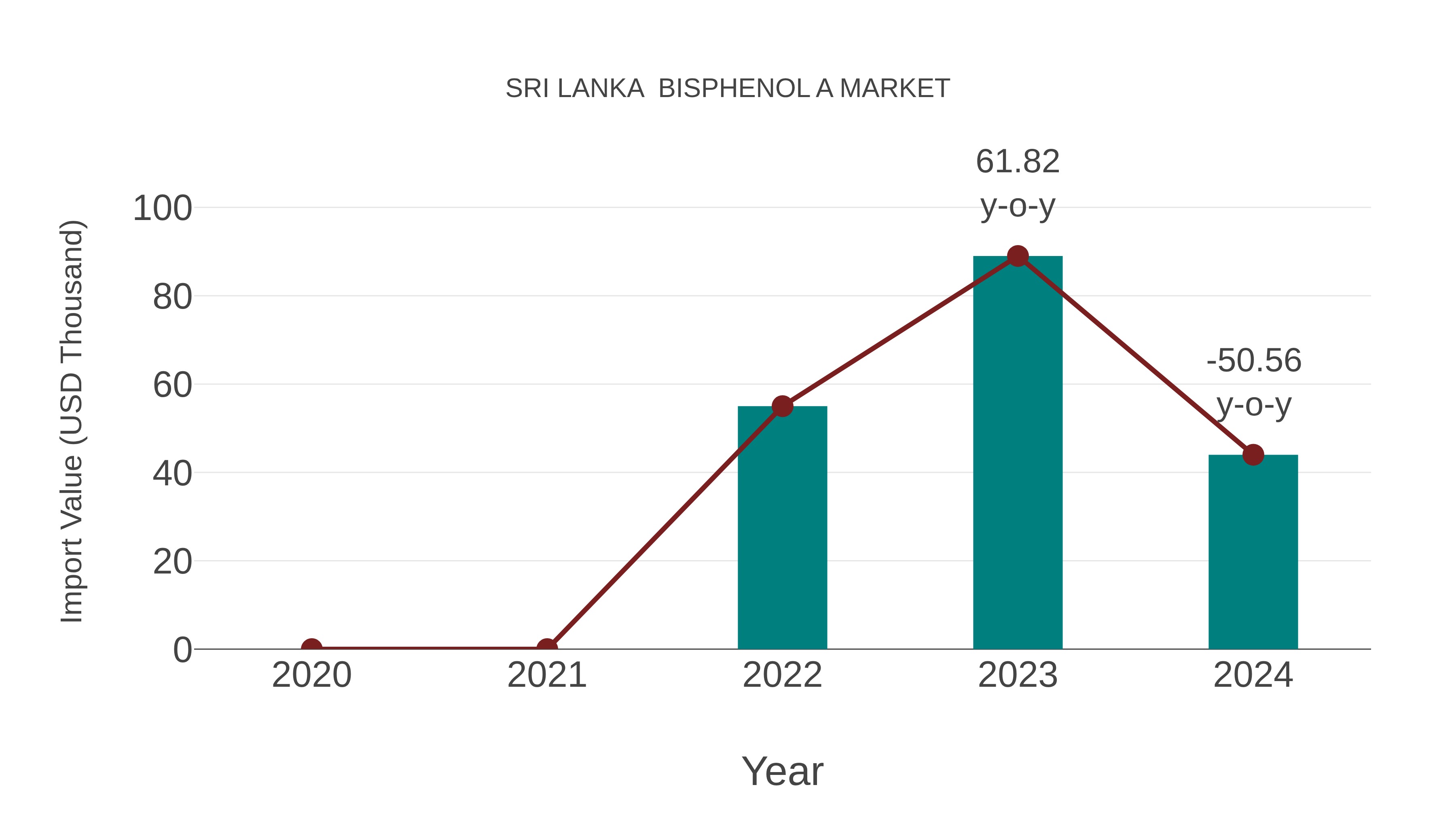
Sri Lanka import trend for the bisphenol A market saw a significant decline with a growth rate of -50.56% from 2023 to 2024. The compound annual growth rate (CAGR) for the period 2020-2024 was -10.56%. This decline may be attributed to shifts in demand or changes in trade policies impacting the market.
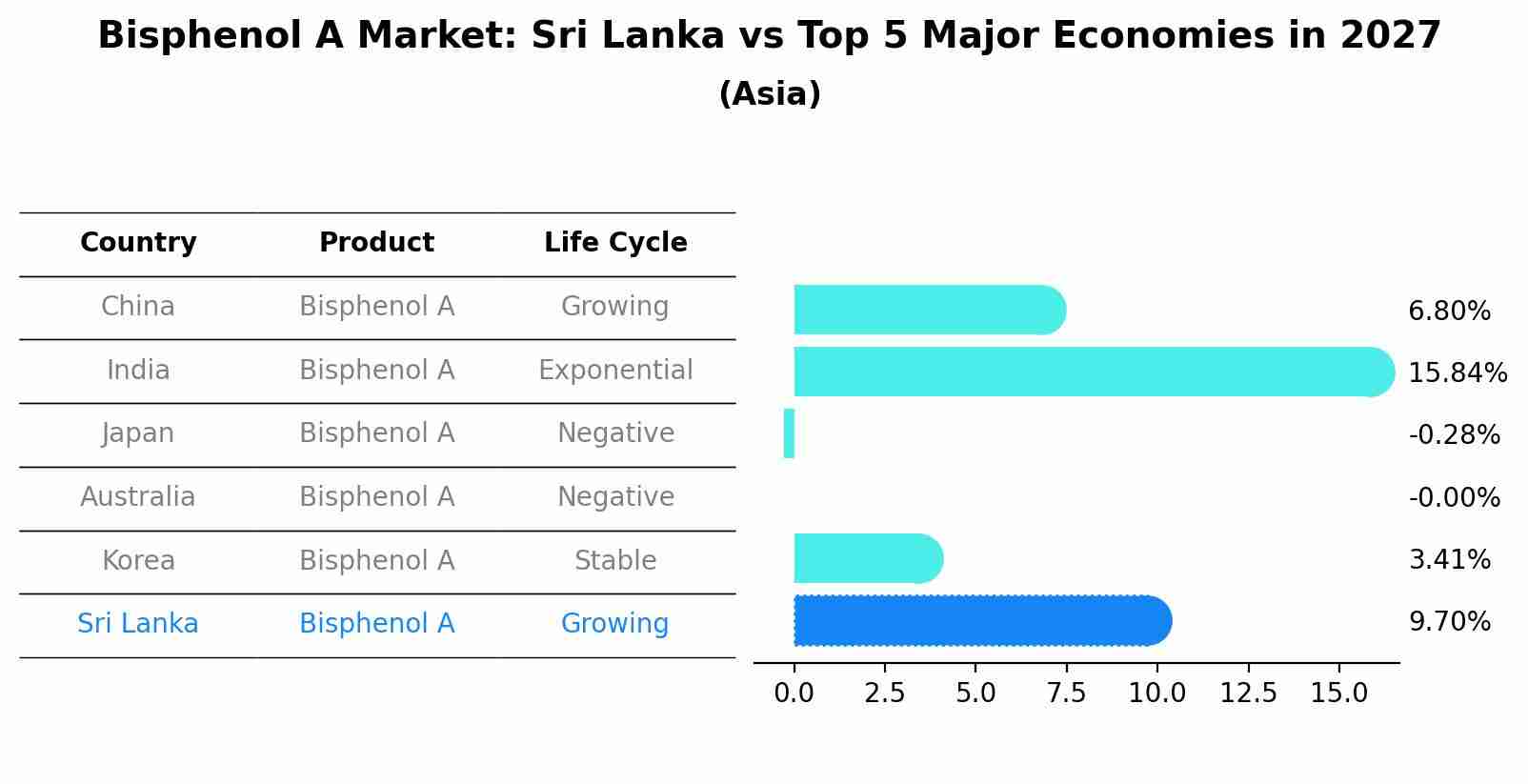
Bisphenol A Market: Sri Lanka vs Top 5 Major Economies in 2027 (Asia)
The Bisphenol A market in Sri Lanka is projected to grow at a growing growth rate of 9.70% by 2027, within the Asia region led by China, along with other countries like India, Japan, Australia and South Korea, collectively shaping a dynamic and evolving market environment driven by innovation and increasing adoption of emerging technologies.
Sri Lanka Bisphenol A Market Overview
The Sri Lanka Bisphenol A market is experiencing steady growth driven by increasing industrial applications in sectors such as automotive, electronics, and packaging. Bisphenol A is widely used in the production of polycarbonate plastics and epoxy resins, which are essential materials in various manufacturing processes. The market is also influenced by the growing awareness regarding the harmful effects of BPA on human health, leading to a shift towards BPA-free alternatives. Key players in the Sri Lanka Bisphenol A market include manufacturers such as Samsung Fine Chemicals, LG Chem, and Kumho P&B Chemicals. Government regulations and consumer preferences for eco-friendly products are expected to further shape the market dynamics in the coming years.
Sri Lanka Bisphenol A Market Trends
The Sri Lanka Bisphenol A market is experiencing steady growth due to the increasing demand from various end-use industries such as automotive, electronics, and packaging. The market is primarily driven by the growing awareness regarding the harmful effects of Bisphenol A on human health and the environment, leading to a shift towards BPA-free alternatives. Additionally, stringent regulations imposed by the government to limit the use of Bisphenol A in consumer products are further propelling the market growth. Manufacturers in the country are focusing on developing innovative and sustainable solutions to meet the changing consumer preferences and regulatory requirements. Overall, the Sri Lanka Bisphenol A market is expected to continue its growth trajectory in the coming years, driven by the increasing adoption of BPA-free products and the emphasis on sustainability.
Sri Lanka Bisphenol A Market Challenges
In the Sri Lanka Bisphenol A market, one of the key challenges faced is the lack of stringent regulations and enforcement surrounding the use of this chemical in various products. Due to the potential health risks associated with Bisphenol A, such as hormone disruption and other adverse effects, there is a growing concern among consumers regarding its presence in everyday items like food and beverage containers. Additionally, the limited awareness and information about Bisphenol A among the general public further complicates the market landscape. This lack of awareness can lead to misconceptions and misinformation, impacting consumer trust and product demand. As a result, companies operating in the Bisphenol A market in Sri Lanka may face challenges in addressing these regulatory and consumer perception issues to ensure sustainable growth and market success.
Sri Lanka Bisphenol A Market Investment Opportunities
In the Sri Lankan Bisphenol A market, there are several investment opportunities worth considering. With the increasing demand for Bisphenol A in various industries such as food packaging, electronics, and automotive, investing in local manufacturers or distributors of Bisphenol A could be lucrative. Additionally, as the Sri Lankan government focuses on promoting industrial growth and attracting foreign investments, there is a potential for partnerships or joint ventures in the Bisphenol A sector. Furthermore, exploring opportunities in research and development for sustainable and eco-friendly alternatives to Bisphenol A could also be a promising investment avenue, considering the global trend towards environmentally friendly products. Overall, the Sri Lankan Bisphenol A market presents diverse opportunities for investors looking to capitalize on the growing demand for this chemical compound.
Sri Lanka Bisphenol A Market Government Policy
The Sri Lankan government has taken steps to regulate the use of Bisphenol A (BPA) in the market. In 2019, the Ministry of Health imposed a ban on the sale of baby bottles containing BPA due to health concerns. Additionally, the country has adopted regulations aligned with international standards to control the import and use of BPA in food and beverage packaging. The government has also initiated awareness campaigns to educate the public about the potential risks associated with BPA exposure. Moving forward, policymakers are likely to continue monitoring and enforcing strict guidelines to minimize the presence of BPA in consumer products, safeguarding public health and promoting safer alternatives in the market.
Sri Lanka Bisphenol A Market Future Outlook
The Sri Lanka Bisphenol A market is expected to witness steady growth in the coming years. The increasing demand for Bisphenol A in various end-use industries such as automotive, electronics, and packaging is anticipated to drive market growth. Additionally, the growing awareness about the benefits of Bisphenol A in manufacturing high-performance plastics and resins is likely to further boost market demand. However, factors such as stringent regulations regarding Bisphenol A usage and the shift towards alternative eco-friendly materials may pose challenges to market growth. Overall, with the expanding industrial sector and increasing applications of Bisphenol A in different industries, the Sri Lanka Bisphenol A market is forecasted to show positive growth prospects in the foreseeable future.
Key Highlights of the Report:
- Sri Lanka Bisphenol A Market Outlook
- Market Size of Sri Lanka Bisphenol A Market, 2025
- Forecast of Sri Lanka Bisphenol A Market, 2032
- Historical Data and Forecast of Sri Lanka Bisphenol A Revenues & Volume for the Period 2022 - 2032F
- Sri Lanka Bisphenol A Market Trend Evolution
- Sri Lanka Bisphenol A Market Drivers and Challenges
- Sri Lanka Bisphenol A Price Trends
- Sri Lanka Bisphenol A Porter's Five Forces
- Sri Lanka Bisphenol A Industry Life Cycle
- Historical Data and Forecast of Sri Lanka Bisphenol A Market Revenues & Volume By Application for the Period 2022 - 2032F
- Historical Data and Forecast of Sri Lanka Bisphenol A Market Revenues & Volume By Polycarbonate Resin for the Period 2022 - 2032F
- Historical Data and Forecast of Sri Lanka Bisphenol A Market Revenues & Volume By Epoxy Resin for the Period 2022 - 2032F
- Historical Data and Forecast of Sri Lanka Bisphenol A Market Revenues & Volume By Unsaturated Polyester Resins for the Period 2022 - 2032F
- Historical Data and Forecast of Sri Lanka Bisphenol A Market Revenues & Volume By Flame Retardants for the Period 2022 - 2032F
- Historical Data and Forecast of Sri Lanka Bisphenol A Market Revenues & Volume By Others for the Period 2022 - 2032F
- Historical Data and Forecast of Sri Lanka Bisphenol A Market Revenues & Volume By End-use for the Period 2022 - 2032F
- Historical Data and Forecast of Sri Lanka Bisphenol A Market Revenues & Volume By Eye wear for the Period 2022 - 2032F
- Historical Data and Forecast of Sri Lanka Bisphenol A Market Revenues & Volume By Automotive component for the Period 2022 - 2032F
- Historical Data and Forecast of Sri Lanka Bisphenol A Market Revenues & Volume By Electronics for the Period 2022 - 2032F
- Historical Data and Forecast of Sri Lanka Bisphenol A Market Revenues & Volume By Wind Energy Composites for the Period 2022 - 2032F
- Historical Data and Forecast of Sri Lanka Bisphenol A Market Revenues & Volume By Paint and Coating for the Period 2022 - 2032F
- Historical Data and Forecast of Sri Lanka Bisphenol A Market Revenues & Volume By Green House for the Period 2022 - 2032F
- Historical Data and Forecast of Sri Lanka Bisphenol A Market Revenues & Volume By Others for the Period 2022 - 2032F
- Sri Lanka Bisphenol A Import Export Trade Statistics
- Market Opportunity Assessment By Application
- Market Opportunity Assessment By End-use
- Sri Lanka Bisphenol A Top Companies Market Share
- Sri Lanka Bisphenol A Competitive Benchmarking By Technical and Operational Parameters
- Sri Lanka Bisphenol A Company Profiles
- Sri Lanka Bisphenol A Key Strategic Recommendations






































