Sri Lanka Botanical Supplements Market: Import Trend Analysis
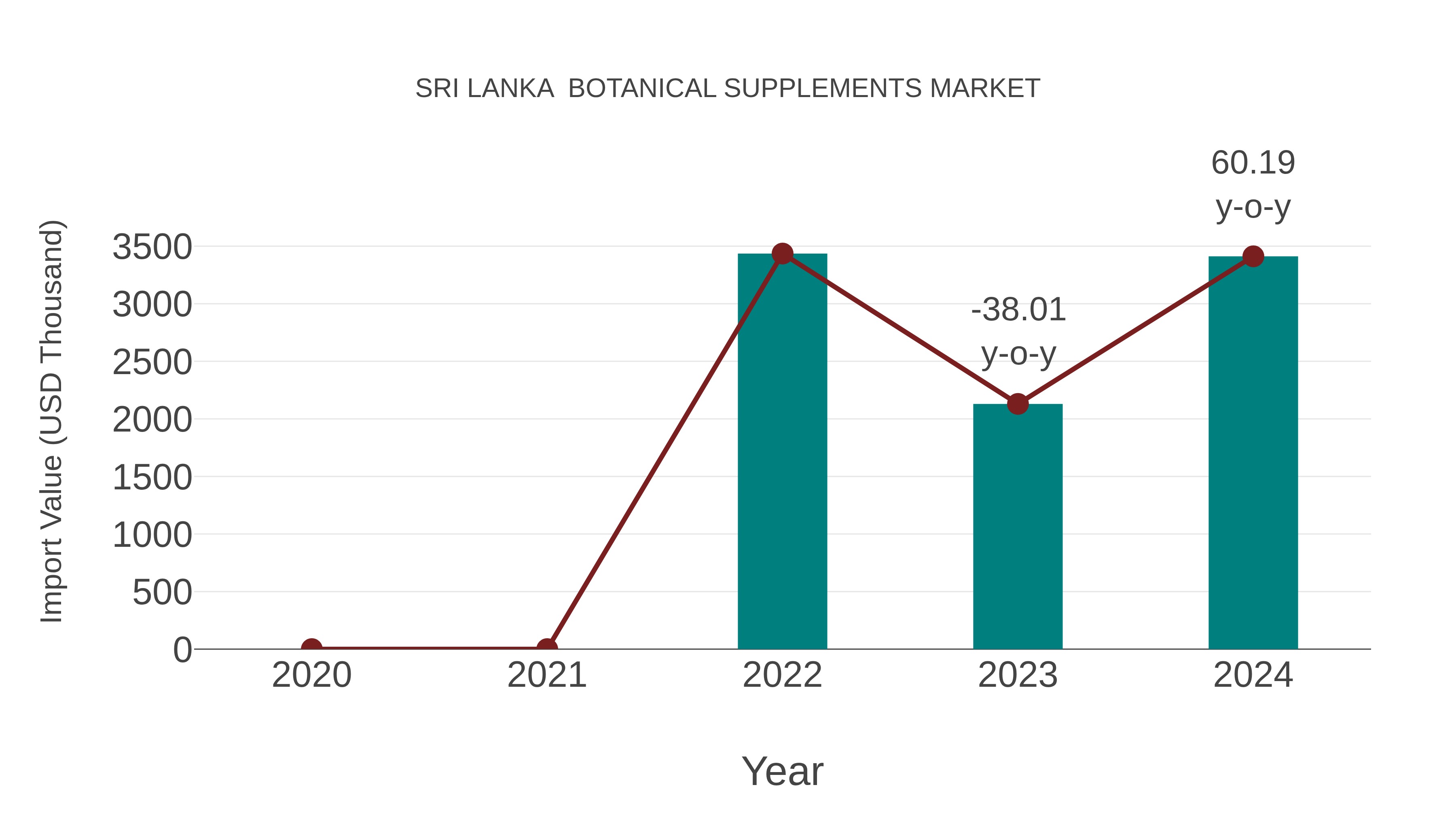
Sri Lanka import trend for botanical supplements saw a significant growth rate of 60.19% from 2023 to 2024, with a compound annual growth rate (CAGR) of -0.35% from 2020 to 2024. This fluctuation may be attributed to evolving consumer preferences or shifts in trade policies impacting the market.
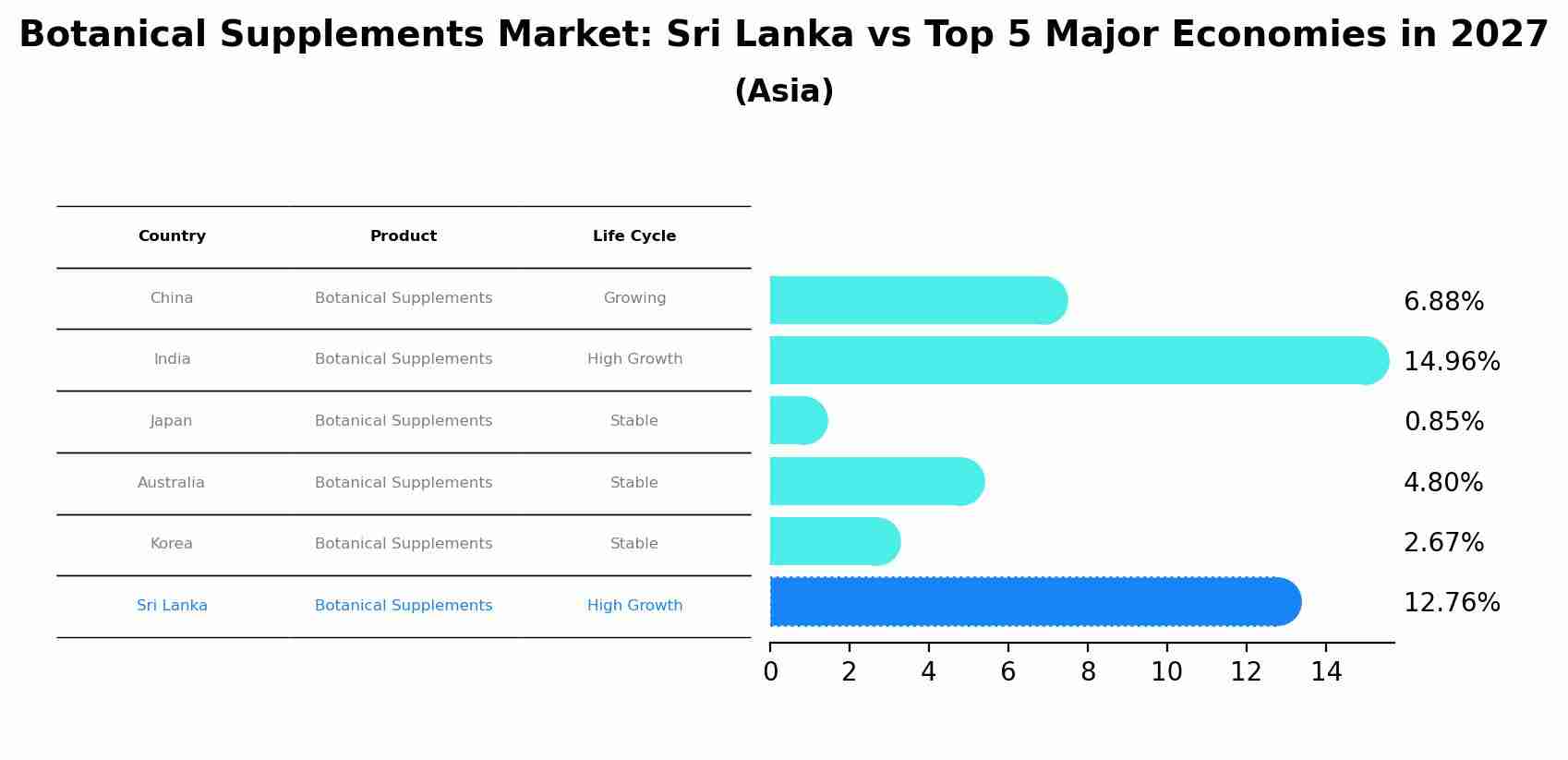
Botanical Supplements Market: Sri Lanka vs Top 5 Major Economies in 2027 (Asia)
By 2027, the Botanical Supplements market in Sri Lanka is anticipated to reach a growth rate of 12.76%, as part of an increasingly competitive Asia region, where China remains at the forefront, supported by India, Japan, Australia and South Korea, driving innovations and market adoption across sectors.
Sri Lanka Botanical Supplements Market Synopsis
The Sri Lanka Botanical Supplements Market is experiencing steady growth driven by increasing consumer awareness of the health benefits associated with botanical ingredients. Traditional Ayurvedic remedies and natural herbal supplements are gaining popularity among the population seeking holistic wellness solutions. The market is characterized by a wide range of products, including herbal extracts, vitamins, minerals, and dietary supplements sourced from indigenous plants such as turmeric, ginger, and moringa. Factors such as rising disposable income, a growing aging population, and a shift towards natural and organic products are fueling the demand for botanical supplements in Sri Lanka. Key players in the market are focusing on product innovation, quality assurance, and marketing strategies to cater to the evolving preferences of health-conscious consumers in the country.
Sri Lanka Botanical Supplements Market Trends
The Sri Lanka Botanical Supplements Market is currently experiencing a growing demand for traditional herbal remedies and natural health products. Consumers are increasingly seeking plant-based supplements for their perceived health benefits and minimal side effects compared to synthetic alternatives. Key trends in the market include the rising popularity of Ayurvedic supplements, which are deeply rooted in Sri Lankan traditional medicine practices. There is also a growing interest in organic and sustainably sourced botanical supplements, driven by consumer awareness of environmental and ethical considerations. Manufacturers are focusing on innovative product formulations and packaging to attract health-conscious consumers. Overall, the market is expected to continue expanding as consumers prioritize wellness and natural solutions for their health needs.
Sri Lanka Botanical Supplements Market Challenges
In the Sri Lanka Botanical Supplements Market, challenges include issues related to quality control and standardization of products, as there may be variations in the potency and effectiveness of botanical supplements due to lack of stringent regulations. Another challenge is the limited consumer awareness and education about the benefits and proper usage of botanical supplements, which may hinder market growth. Additionally, competition from traditional herbal remedies and pharmaceutical alternatives poses a challenge for companies operating in this market. Distribution and retail channels may also be limited, making it difficult for products to reach a wider consumer base. Overall, addressing these challenges through improved regulations, education campaigns, and distribution strategies will be crucial for the growth and success of the botanical supplements market in Sri Lanka.
Sri Lanka Botanical Supplements Market Investment Opportunities
The Sri Lanka Botanical Supplements Market presents promising investment opportunities due to the country`s rich biodiversity and traditional knowledge of herbal medicine. With a growing global trend towards natural and plant-based wellness products, there is increasing demand for botanical supplements derived from Sri Lankan herbs and plants known for their medicinal properties. Investing in research and development to scientifically validate the efficacy of these botanical ingredients, partnering with local suppliers to ensure sustainable sourcing practices, and marketing premium quality products to health-conscious consumers both domestically and internationally are key strategies for success in this market. Additionally, leveraging Sri Lanka`s reputation for Ayurveda and traditional medicine can provide a unique selling point and competitive advantage in the botanical supplements industry.
Jordan Agar Market Government Policies
The Sri Lankan government has implemented regulations and policies to ensure the quality and safety of botanical supplements in the market. The Ayurveda Act of 1961 regulates traditional Ayurvedic medicine, including herbal supplements, to maintain standards of production, labeling, and distribution. The Department of Ayurveda oversees the licensing of manufacturers and suppliers to ensure compliance with Good Manufacturing Practices (GMP) and quality control measures. Additionally, the Food Act and the Cosmetics Devices and Drugs Act provide further guidelines on the import, sale, and advertising of botanical supplements to protect consumer health and prevent misleading claims. Continuous monitoring and enforcement by regulatory authorities help to maintain the integrity and reputation of the Sri Lankan botanical supplements market.
Sri Lanka Botanical Supplements Market Future Outlook
The future outlook for the Sri Lanka Botanical Supplements Market appears promising with a growing trend towards natural and organic products among consumers. The market is expected to witness steady growth driven by increasing awareness about the health benefits of botanical supplements, rising disposable incomes, and a shift towards preventive healthcare practices. Additionally, the country`s rich biodiversity and traditional knowledge of herbal remedies provide a strong foundation for the development of innovative botanical supplements. With a focus on sustainability and quality, key players in the market are likely to invest in research and development to introduce new products that cater to evolving consumer preferences. Overall, the Sri Lanka Botanical Supplements Market is poised for expansion and is anticipated to offer significant opportunities for growth in the coming years.
Key Highlights of the Report:
- Sri Lanka Botanical Supplements Market Outlook
- Market Size of Sri Lanka Botanical Supplements Market, 2021
- Forecast of Sri Lanka Botanical Supplements Market, 2031
- Historical Data and Forecast of Sri Lanka Botanical Supplements Revenues & Volume for the Period 2018 - 2031
- Sri Lanka Botanical Supplements Market Trend Evolution
- Sri Lanka Botanical Supplements Market Drivers and Challenges
- Sri Lanka Botanical Supplements Price Trends
- Sri Lanka Botanical Supplements Porter's Five Forces
- Sri Lanka Botanical Supplements Industry Life Cycle
- Historical Data and Forecast of Sri Lanka Botanical Supplements Market Revenues & Volume By Source for the Period 2018 - 2031
- Historical Data and Forecast of Sri Lanka Botanical Supplements Market Revenues & Volume By Herbs for the Period 2018 - 2031
- Historical Data and Forecast of Sri Lanka Botanical Supplements Market Revenues & Volume By Leaves for the Period 2018 - 2031
- Historical Data and Forecast of Sri Lanka Botanical Supplements Market Revenues & Volume By Spices for the Period 2018 - 2031
- Historical Data and Forecast of Sri Lanka Botanical Supplements Market Revenues & Volume By Flowers for the Period 2018 - 2031
- Historical Data and Forecast of Sri Lanka Botanical Supplements Market Revenues & Volume By Others for the Period 2018 - 2031
- Historical Data and Forecast of Sri Lanka Botanical Supplements Market Revenues & Volume By Form for the Period 2018 - 2031
- Historical Data and Forecast of Sri Lanka Botanical Supplements Market Revenues & Volume By Powder for the Period 2018 - 2031
- Historical Data and Forecast of Sri Lanka Botanical Supplements Market Revenues & Volume By Liquid for the Period 2018 - 2031
- Historical Data and Forecast of Sri Lanka Botanical Supplements Market Revenues & Volume By Tablets for the Period 2018 - 2031
- Historical Data and Forecast of Sri Lanka Botanical Supplements Market Revenues & Volume By Capsules for the Period 2018 - 2031
- Historical Data and Forecast of Sri Lanka Botanical Supplements Market Revenues & Volume By Gummies for the Period 2018 - 2031
- Historical Data and Forecast of Sri Lanka Botanical Supplements Market Revenues & Volume By Others for the Period 2018 - 2031
- Historical Data and Forecast of Sri Lanka Botanical Supplements Market Revenues & Volume By Application for the Period 2018 - 2031
- Historical Data and Forecast of Sri Lanka Botanical Supplements Market Revenues & Volume By Energy & Weight Management for the Period 2018 - 2031
- Historical Data and Forecast of Sri Lanka Botanical Supplements Market Revenues & Volume By General Health for the Period 2018 - 2031
- Historical Data and Forecast of Sri Lanka Botanical Supplements Market Revenues & Volume By Bone & Joint Health for the Period 2018 - 2031
- Historical Data and Forecast of Sri Lanka Botanical Supplements Market Revenues & Volume By Gastrointestinal Health for the Period 2018 - 2031
- Historical Data and Forecast of Sri Lanka Botanical Supplements Market Revenues & Volume By Immunity for the Period 2018 - 2031
- Historical Data and Forecast of Sri Lanka Botanical Supplements Market Revenues & Volume By Cardiac Health for the Period 2018 - 2031
- Historical Data and Forecast of Sri Lanka Botanical Supplements Market Revenues & Volume By Diabetes for the Period 2018 - 2031
- Historical Data and Forecast of Sri Lanka Botanical Supplements Market Revenues & Volume By Anti-cancer for the Period 2018 - 2031
- Historical Data and Forecast of Sri Lanka Botanical Supplements Market Revenues & Volume By Distribution Channel for the Period 2018 - 2031
- Historical Data and Forecast of Sri Lanka Botanical Supplements Market Revenues & Volume By Offline for the Period 2018 - 2031
- Historical Data and Forecast of Sri Lanka Botanical Supplements Market Revenues & Volume By Online for the Period 2018 - 2031
- Sri Lanka Botanical Supplements Import Export Trade Statistics
- Market Opportunity Assessment By Source
- Market Opportunity Assessment By Form
- Market Opportunity Assessment By Application
- Market Opportunity Assessment By Distribution Channel
- Sri Lanka Botanical Supplements Top Companies Market Share
- Sri Lanka Botanical Supplements Competitive Benchmarking By Technical and Operational Parameters
- Sri Lanka Botanical Supplements Company Profiles
- Sri Lanka Botanical Supplements Key Strategic Recommendations






































