Sri Lanka Cake Mixes Market: Import Trend Analysis
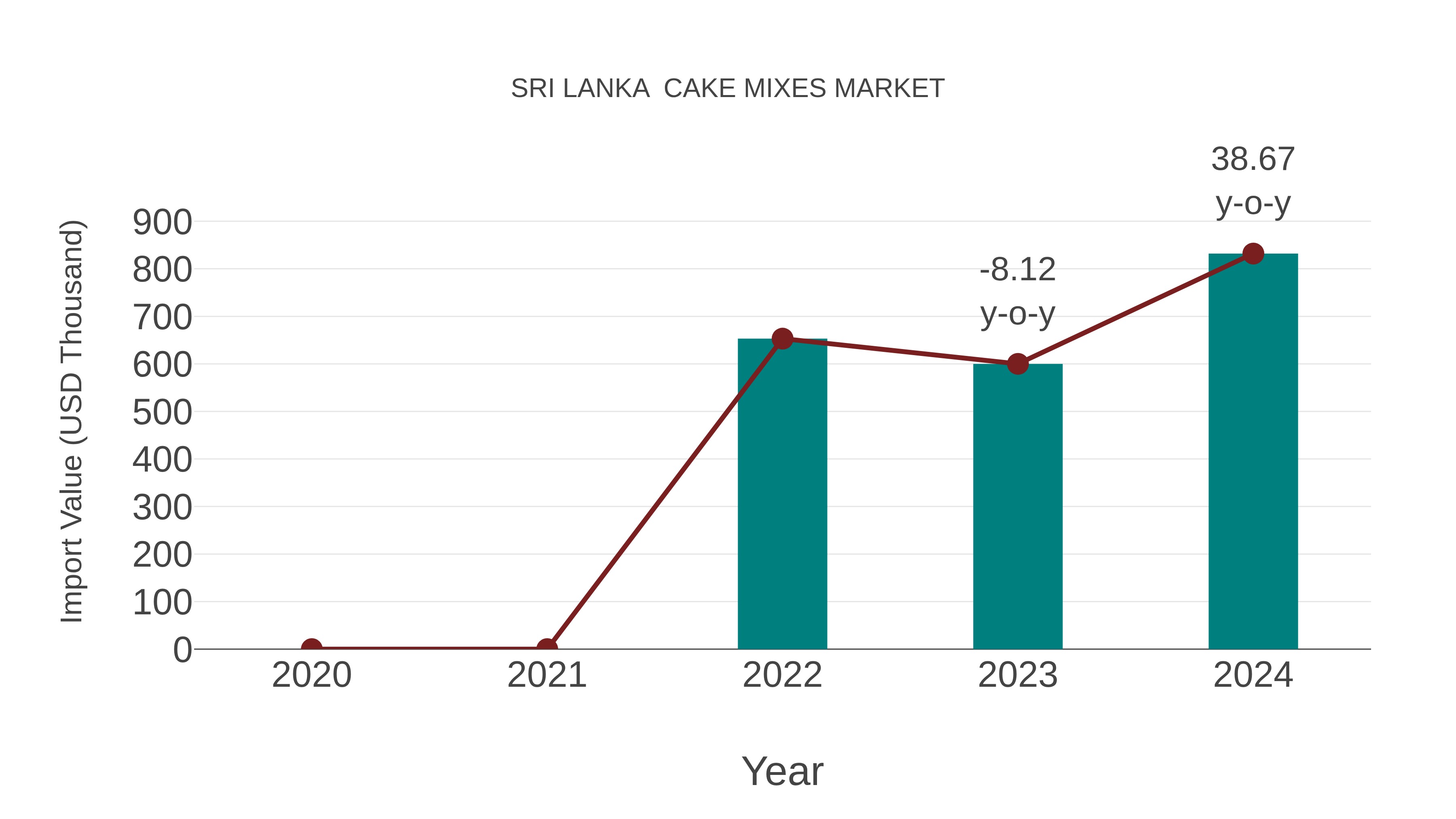
In the Sri Lankan cake mixes market, imports experienced a notable growth trend from 2023 to 2024, with a growth rate of 38.67%. The compound annual growth rate (CAGR) for the period 2020-2024 stood at 12.88%. This surge in imports could be attributed to increasing consumer demand for convenient baking solutions.
Sri Lanka Cake Mixes Market Overview
The Sri Lanka Cake Mixes Market is experiencing steady growth driven by increasing consumer interest in home baking and convenience products. The market offers a variety of cake mixes including chocolate, vanilla, and red velvet flavors, catering to diverse consumer preferences. Factors such as busy lifestyles, urbanization, and a growing middle-class population are contributing to the rising demand for cake mixes as they offer a quick and easy baking solution. Key players in the market are focusing on product innovation, packaging enhancements, and promotional activities to attract customers. Additionally, the availability of cake mixes in both traditional brick-and-mortar stores and online platforms is expanding the market reach, providing convenience to consumers looking to indulge in baking at home.
Sri Lanka Cake Mixes Market Trends
The Sri Lanka cake mixes market is experiencing a growing demand for premium and artisanal cake mixes, driven by the increasing trend of home baking and the desire for high-quality, convenient products. Consumers are seeking out cake mixes that offer unique flavors, organic and natural ingredients, and innovative packaging. The market is also witnessing a rise in demand for gluten-free, sugar-free, and vegan cake mixes to cater to the health-conscious and dietary-restricted consumer segment. Additionally, the expansion of online retail channels and the influence of social media platforms are shaping consumer preferences and driving the growth of e-commerce sales in the cake mixes market. Manufacturers are focusing on product innovation, sustainability, and effective marketing strategies to capitalize on these trends and stay competitive in the evolving Sri Lankan market.
Sri Lanka Cake Mixes Market Challenges
In the Sri Lanka Cake Mixes Market, some key challenges include limited awareness and adoption of cake mixes among consumers, who often prefer traditional homemade cakes. Additionally, the high cost of imported cake mixes due to tariffs and transportation expenses can deter price-sensitive consumers. Another challenge is the presence of counterfeit or low-quality products in the market, which can undermine consumer trust in branded cake mix products. Furthermore, the lack of consistent availability of a wide variety of cake mix flavors and options in retail stores can limit consumer choices and hinder market growth. Overall, overcoming these challenges will require targeted marketing strategies, competitive pricing, quality control measures, and expanding distribution channels to educate and attract consumers in Sri Lanka to the convenience and quality of cake mixes.
Sri Lanka Cake Mixes Market Investment Opportunities
The Sri Lanka cake mixes market presents promising investment opportunities driven by increasing consumer interest in convenient baking solutions and the growing trend of home baking. With rising disposable incomes and changing lifestyles, there is a growing demand for ready-to-use cake mixes that offer convenience and time-saving benefits. Investors can capitalize on this trend by exploring partnerships with local manufacturers to introduce innovative product offerings tailored to the Sri Lankan market preferences. Additionally, leveraging digital marketing strategies to target the tech-savvy younger demographic and expanding distribution channels to reach a wider audience can help drive growth in this market segment. Overall, investing in the Sri Lanka cake mixes market presents potential for growth and profitability as consumers seek convenient and high-quality baking solutions.
Sri Lanka Cake Mixes Market Government Policy
In Sri Lanka, the Cake Mixes Market is subject to various government policies aimed at regulating food safety and quality standards. The Food Act and the Food Regulations Act outline the requirements for labeling, packaging, and ingredients used in cake mixes to ensure consumer health and safety. Additionally, the Department of Import and Export Control monitors the importation of cake mixes to ensure they meet the required standards and do not pose a threat to public health. The Sri Lanka Standards Institution (SLSI) also plays a crucial role in setting quality standards for cake mixes to maintain product consistency and safety. Overall, the government`s policies in Sri Lanka aim to promote consumer confidence in the Cake Mixes Market by enforcing strict regulations and standards.
Sri Lanka Cake Mixes Market Future Outlook
The future outlook for the Sri Lanka Cake Mixes Market appears promising, driven by several key factors. Increasing disposable income levels, changing consumer preferences towards convenience products, and the growing popularity of home baking are expected to fuel the demand for cake mixes in the country. Additionally, the rise of online retail channels and social media platforms providing easy access to baking recipes and tutorials are likely to further boost market growth. Manufacturers are anticipated to focus on product innovation, introducing new flavors and healthier ingredient options to cater to evolving consumer trends. Overall, the Sri Lanka Cake Mixes Market is poised for expansion in the coming years, offering lucrative opportunities for industry players to capitalize on the growing demand for convenient baking solutions.
Key Highlights of the Report:
- Sri Lanka Cake Mixes Market Outlook
- Market Size of Sri Lanka Cake Mixes Market, 2025
- Forecast of Sri Lanka Cake Mixes Market, 2032
- Historical Data and Forecast of Sri Lanka Cake Mixes Revenues & Volume for the Period 2022 - 2032F
- Sri Lanka Cake Mixes Market Trend Evolution
- Sri Lanka Cake Mixes Market Drivers and Challenges
- Sri Lanka Cake Mixes Price Trends
- Sri Lanka Cake Mixes Porter's Five Forces
- Sri Lanka Cake Mixes Industry Life Cycle
- Historical Data and Forecast of Sri Lanka Cake Mixes Market Revenues & Volume By Flavor for the Period 2022 - 2032F
- Historical Data and Forecast of Sri Lanka Cake Mixes Market Revenues & Volume By Chocolate for the Period 2022 - 2032F
- Historical Data and Forecast of Sri Lanka Cake Mixes Market Revenues & Volume By Vanilla for the Period 2022 - 2032F
- Historical Data and Forecast of Sri Lanka Cake Mixes Market Revenues & Volume By Fruit for the Period 2022 - 2032F
- Historical Data and Forecast of Sri Lanka Cake Mixes Market Revenues & Volume By Others for the Period 2022 - 2032F
- Historical Data and Forecast of Sri Lanka Cake Mixes Market Revenues & Volume By Distribution Channel for the Period 2022 - 2032F
- Historical Data and Forecast of Sri Lanka Cake Mixes Market Revenues & Volume By Online for the Period 2022 - 2032F
- Historical Data and Forecast of Sri Lanka Cake Mixes Market Revenues & Volume By Offline for the Period 2022 - 2032F
- Sri Lanka Cake Mixes Import Export Trade Statistics
- Market Opportunity Assessment By Flavor
- Market Opportunity Assessment By Distribution Channel
- Sri Lanka Cake Mixes Top Companies Market Share
- Sri Lanka Cake Mixes Competitive Benchmarking By Technical and Operational Parameters
- Sri Lanka Cake Mixes Company Profiles
- Sri Lanka Cake Mixes Key Strategic Recommendations






































