Sri Lanka Cellulose Acetate Fiber Market: Import Trend Analysis
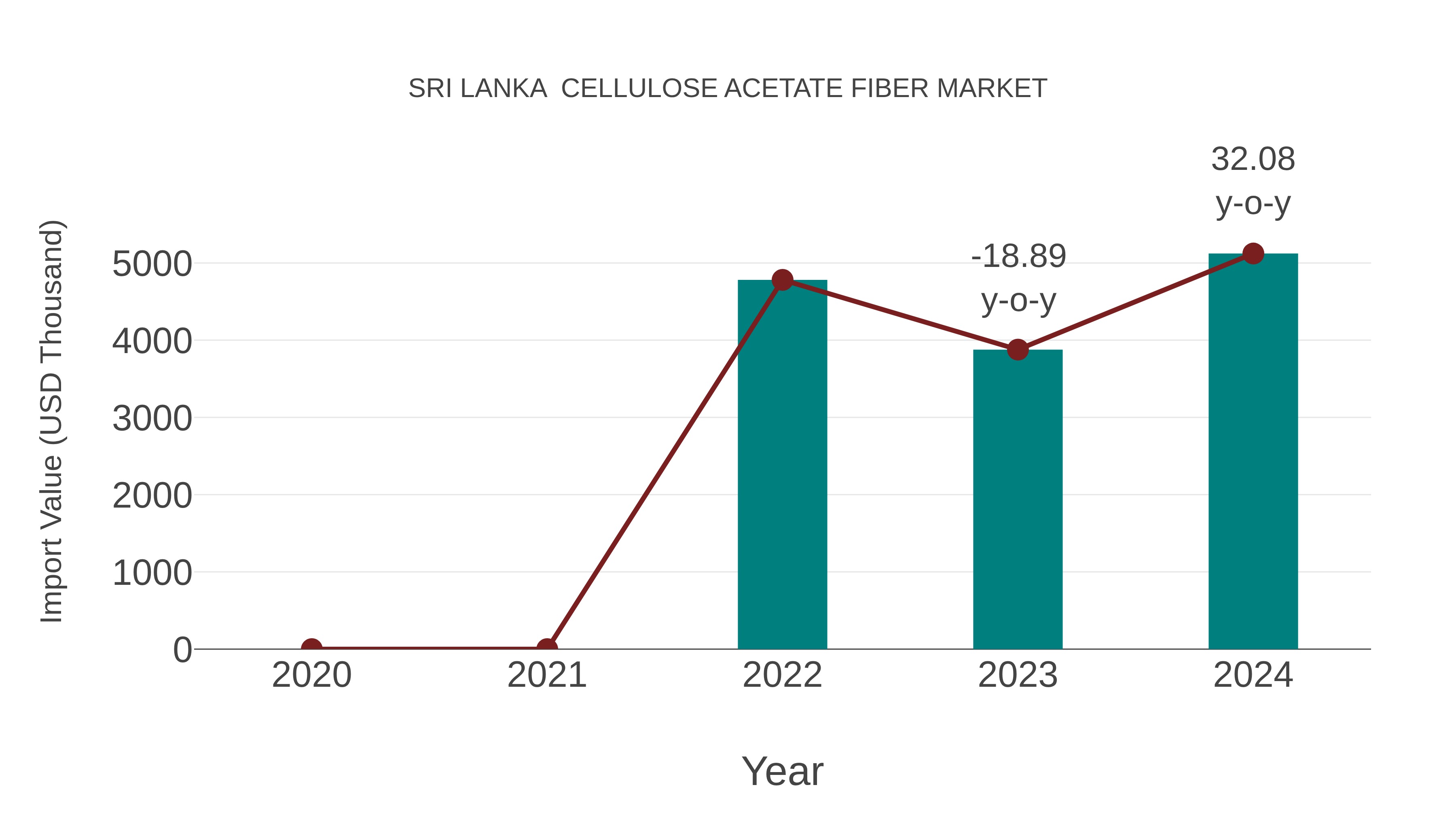
Sri Lanka import trend for cellulose acetate fiber saw a growth rate of 32.08% from 2023 to 2024, with a compound annual growth rate (CAGR) of 3.5% from 2020 to 2024. This significant increase can be attributed to a surge in demand for sustainable textile materials in the global market.
Sri Lanka Cellulose Acetate Fiber Market Overview
The Sri Lanka Cellulose Acetate Fiber Market is experiencing steady growth driven by increasing demand in textiles, cigarette filters, and industrial applications. The market is primarily dominated by a few key players offering a range of cellulose acetate fiber products with varying specifications to cater to different industry requirements. The textile sector accounts for a significant portion of the market, with the material being favored for its softness, silk-like texture, and dyeing capabilities. Additionally, the rising awareness regarding sustainable and eco-friendly materials is further driving the adoption of cellulose acetate fibers in various applications. The market is expected to witness continued growth as manufacturers focus on product innovation, sustainability, and expanding their distribution networks to meet the growing demand for cellulose acetate fibers in Sri Lanka.
Sri Lanka Cellulose Acetate Fiber Market Trends
The Sri Lanka Cellulose Acetate Fiber market is witnessing steady growth driven by increasing demand for sustainable and eco-friendly textiles. Consumers are increasingly opting for cellulose acetate fibers due to their biodegradability and soft, luxurious feel. The textile industry in Sri Lanka is also focusing on reducing its environmental footprint, further propelling the demand for cellulose acetate fibers. Additionally, the versatility of cellulose acetate fibers in various applications such as apparel, home textiles, and industrial products is contributing to their popularity in the market. Manufacturers are also investing in research and development to enhance the properties of cellulose acetate fibers, making them more competitive in the market. Overall, the trend towards sustainability and innovation is shaping the growth of the Cellulose Acetate Fiber market in Sri Lanka.
Sri Lanka Cellulose Acetate Fiber Market Challenges
In the Sri Lanka Cellulose Acetate Fiber Market, some challenges include limited awareness about the benefits of cellulose acetate fiber compared to other synthetic fibers, high production costs due to the need for specialized equipment and technology, and fluctuating raw material prices. Additionally, the market faces competition from established synthetic fiber alternatives and the slow adoption of sustainable and eco-friendly materials in the textile industry. Lack of government support and incentives for the production and promotion of cellulose acetate fiber further hinder its growth in Sri Lanka. Overcoming these challenges would require targeted marketing efforts to educate consumers, investments in research and development for cost-effective production methods, and collaborations within the industry to drive innovation and sustainability.
Sri Lanka Cellulose Acetate Fiber Market Investment Opportunities
In the Sri Lanka Cellulose Acetate Fiber market, there are several investment opportunities worth considering. The growing demand for eco-friendly and sustainable textile materials presents a promising outlook for investors looking to capitalize on the shift towards environmentally conscious products. Investing in companies involved in the production and distribution of cellulose acetate fibers can be lucrative, especially as consumers increasingly prioritize ethical and sustainable fashion choices. Additionally, with the textile industry in Sri Lanka experiencing steady growth and government initiatives to promote the country as a manufacturing hub, investing in this sector can provide long-term returns. Collaborating with local manufacturers or exploring partnerships with global brands looking to source sustainable fibers from Sri Lanka could also be a strategic investment move in the cellulose acetate fiber market.
Sri Lanka Cellulose Acetate Fiber Market Government Policy
The Sri Lankan government has implemented various policies to support the growth of the Cellulose Acetate Fiber Market in the country. These policies include providing incentives and subsidies to manufacturers to promote the production of cellulose acetate fiber domestically, as well as initiatives to enhance research and development in the industry. Additionally, the government has focused on improving infrastructure and logistics to facilitate the smooth functioning of the market. Environmental regulations and sustainability initiatives are also being enforced to ensure that the production and consumption of cellulose acetate fiber align with global standards. Overall, the government`s policies aim to boost the competitiveness of the Sri Lankan Cellulose Acetate Fiber Market and position the country as a key player in the global market.
Sri Lanka Cellulose Acetate Fiber Market Future Outlook
The Sri Lanka Cellulose Acetate Fiber Market is expected to witness steady growth in the coming years due to increasing demand for eco-friendly and sustainable textile materials. With a shift towards environmentally friendly products, cellulose acetate fibers, known for their biodegradability and renewable sourcing, are gaining popularity in the textile industry. Additionally, the growing awareness among consumers regarding the harmful effects of synthetic fibers is driving the demand for natural and biodegradable alternatives like cellulose acetate. The market is also anticipated to benefit from technological advancements in fiber production processes, leading to improved quality and performance of cellulose acetate fibers. Overall, the future outlook for the Sri Lanka Cellulose Acetate Fiber Market appears promising, with opportunities for growth and innovation in the sustainable textile sector.
Key Highlights of the Report:
- Sri Lanka Cellulose Acetate Fiber Market Outlook
- Market Size of Sri Lanka Cellulose Acetate Fiber Market, 2025
- Forecast of Sri Lanka Cellulose Acetate Fiber Market, 2032
- Historical Data and Forecast of Sri Lanka Cellulose Acetate Fiber Revenues & Volume for the Period 2022 - 2032F
- Sri Lanka Cellulose Acetate Fiber Market Trend Evolution
- Sri Lanka Cellulose Acetate Fiber Market Drivers and Challenges
- Sri Lanka Cellulose Acetate Fiber Price Trends
- Sri Lanka Cellulose Acetate Fiber Porter's Five Forces
- Sri Lanka Cellulose Acetate Fiber Industry Life Cycle
- Historical Data and Forecast of Sri Lanka Cellulose Acetate Fiber Market Revenues & Volume By Type for the Period 2022 - 2032F
- Historical Data and Forecast of Sri Lanka Cellulose Acetate Fiber Market Revenues & Volume By Plastic for the Period 2022 - 2032F
- Historical Data and Forecast of Sri Lanka Cellulose Acetate Fiber Market Revenues & Volume By Fiber for the Period 2022 - 2032F
- Historical Data and Forecast of Sri Lanka Cellulose Acetate Fiber Market Revenues & Volume By Application for the Period 2022 - 2032F
- Historical Data and Forecast of Sri Lanka Cellulose Acetate Fiber Market Revenues & Volume By Photographic Films for the Period 2022 - 2032F
- Historical Data and Forecast of Sri Lanka Cellulose Acetate Fiber Market Revenues & Volume By Cigarette Filters for the Period 2022 - 2032F
- Historical Data and Forecast of Sri Lanka Cellulose Acetate Fiber Market Revenues & Volume By Tapes & Labels for the Period 2022 - 2032F
- Historical Data and Forecast of Sri Lanka Cellulose Acetate Fiber Market Revenues & Volume By Textiles & Apparel for the Period 2022 - 2032F
- Sri Lanka Cellulose Acetate Fiber Import Export Trade Statistics
- Market Opportunity Assessment By Type
- Market Opportunity Assessment By Application
- Sri Lanka Cellulose Acetate Fiber Top Companies Market Share
- Sri Lanka Cellulose Acetate Fiber Competitive Benchmarking By Technical and Operational Parameters
- Sri Lanka Cellulose Acetate Fiber Company Profiles
- Sri Lanka Cellulose Acetate Fiber Key Strategic Recommendations






































