Sri Lanka Cloud Compliance Market Size & Growth Rate (2026-2032)
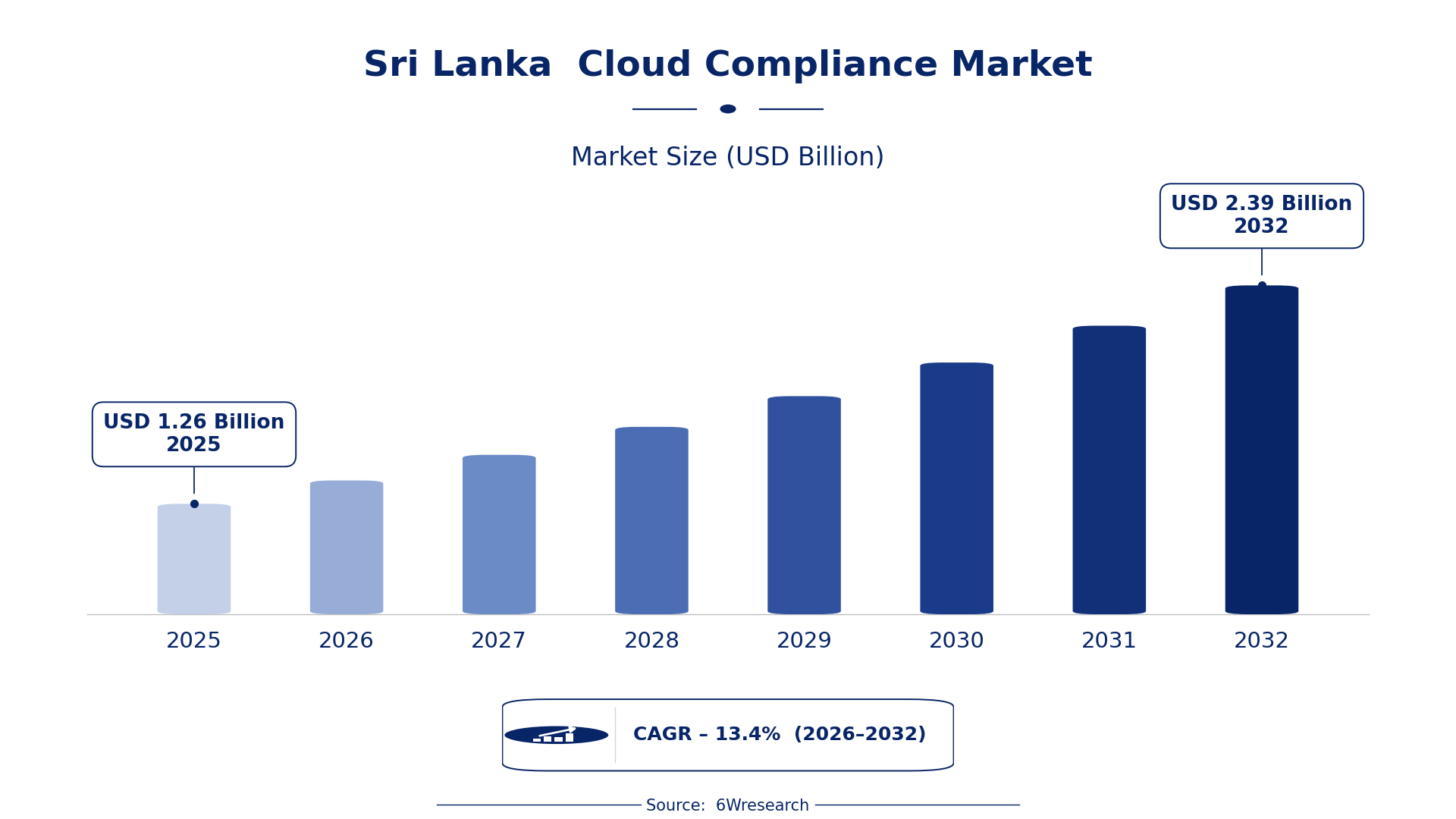
The Sri Lanka Cloud Compliance Market was estimated at USD 1263 Million in 2025 and is projected to reach USD 2387 Million by 2032, growing at a CAGR of 13.4% from 2026 to 2032.
Sri Lanka Cloud Compliance Market Synopsis
In recent years, the Sri Lanka Cloud Compliance Market has gained momentum as businesses increasingly adopt cloud services. This surge is driven by a rising awareness of the importance of data protection and compliance with both local and international regulations.
Looking ahead, the market is set to expand further as regulatory pressures intensify. Organizations are prioritizing compliance to protect sensitive data, which will shape the demand for cloud compliance solutions significantly.
Sri Lanka Cloud Compliance Market Year-wise Growth Rate and Key Drivers
This graph illustrates the annual growth rates of the Sri Lanka Cloud Compliance Market from 2021 to 2032, highlighting a steady upward trajectory and projected expansion over the forecast period.
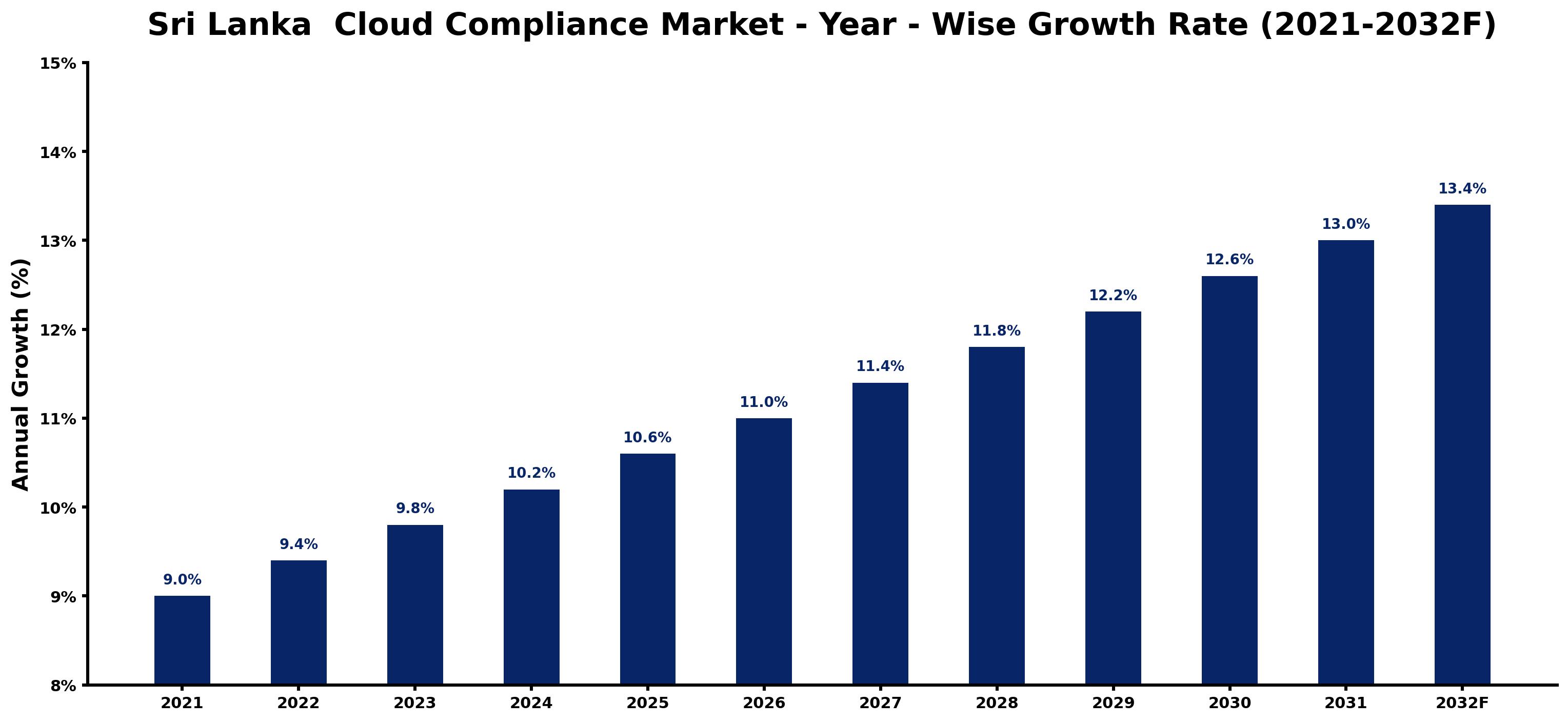
The table below presents the year‑wise growth rates along with the key drivers influencing the market
| Year | Growth Rate | Major Drivers |
| 2021 | 9.0% | Implementation of data protection regulations by Sri Lankan authorities. |
| 2022 | 9.4% | Increased foreign direct investment in tech compliance services. |
| 2023 | 9.8% | Local startups focusing on regulatory compliance automation tools. |
| 2024 | 10.2% | Expanding fintech sector requiring enhanced cloud compliance measures. |
| 2025 | 10.6% | Government promoting cloud compliance for SMEs' digitalization. |
| 2026 | 11.0% | National cybersecurity strategy driving cloud service adherence. |
| 2027 | 11.4% | Adoption of international compliance standards by Sri Lankan firms. |
| 2028 | 11.8% | Rising digital transaction volumes necessitating effective cloud governance. |
| 2029 | 12.2% | Local mandates for remote work solutions boosting cloud adoption. |
| 2030 | 12.6% | Growth of online education platforms needing robust compliance frameworks. |
| 2031 | 13.0% | Healthcare sector digitization pushing for stronger cloud compliance. |
| 2032 | 13.4% | Increased regulatory scrutiny enhancing demand for compliance tools. |
Note: Market size estimations and growth projections presented in this report are based on 6Wresearch's proprietary forecasting methodology, utilizing the latest available industry data, government publications, and primary research inputs.
Sri Lanka Cloud Compliance Market Key Takeaways
Below are some of the specific key takeaways from the market, including:
- Cloud compliance solutions are becoming essential for organizations to meet regulatory requirements.
- The demand for data encryption and access controls is on the rise as businesses prioritize security.
- Data sovereignty is influencing cloud service provider selection, with a preference for local data centers.
- Companies are investing in compliance management tools to streamline their processes.
- Government policies are increasingly shaping the compliance framework, creating a more secure environment.
Evaluation of Restraints in Sri Lanka Cloud Compliance Market
Despite growth prospects, the Sri Lanka Cloud Compliance Market faces significant challenges. A primary concern is the lack of clear regulatory frameworks specific to cloud services, which creates uncertainty for businesses. This ambiguity complicates compliance efforts, as firms grapple with varying interpretations of existing laws. on top of that, the rapid evolution of cloud technology often outpaces the development of relevant compliance guidelines, adding to the confusion. The result is a precarious environment where companies may face risks related to data breaches and potential legal repercussions.
Sri Lanka Cloud Compliance Market Trends
The market is currently witnessing a notable trend towards increased data protection and privacy measures. Organizations are becoming more vigilant about adhering to regulations like the General Data Protection Regulation (GDPR) and the Personal Data Protection Act. This heightened focus drives the adoption of cloud compliance solutions that include features such as audit trails and data encryption.
Another emerging trend is the growing awareness of data sovereignty. Companies are increasingly favoring cloud providers that maintain data centers within Sri Lanka, as this aligns with national compliance requirements. This shift underscores a broader commitment to enhancing data governance across sectors.
Sri Lanka Cloud Compliance Market Opportunities
Investment opportunities abound in the Sri Lanka Cloud Compliance Market. Businesses specializing in cloud security solutions and compliance management tools are ideally positioned to capitalize on the growing demand. Additionally, there’s a strong need for training programs focused on cloud compliance, aimed at equipping organizations with the necessary skills and knowledge.
Collaborations with local firms and government entities can create tailored compliance solutions, further enhancing growth prospects in this segment. As more businesses recognize the value of compliance, the market is likely to see increased investments and innovative solutions.
Government Initiatives in the Sri Lanka Cloud Compliance Market
Government policy is actively shaping the Sri Lanka Cloud Compliance Market, with a focus on enhancing regulatory frameworks and promoting compliance. The introduction of the Data Protection Act of 2019 reflects a commitment to align with international standards for data protection. These initiatives are crucial for fostering a secure cloud environment and instilling confidence among businesses and consumers.
- The Data Protection Act of 2019 was recently implemented to safeguard personal data and align with global standards.
- Ongoing guidelines from the Telecommunication Regulatory Commission are aimed at ensuring cloud service providers meet security and privacy standards.
- A national digital infrastructure upgrade program is underway to enhance the security of cloud services.
- Future initiatives are planned to develop a comprehensive regulatory framework specifically for cloud compliance by 2025.
Future Insights of the Sri Lanka Cloud Compliance Market
Looking ahead to 2026-2032, the Sri Lanka Cloud Compliance Market is expected to continue its upward trajectory. As more businesses embrace cloud technologies, the urgency for compliant practices will intensify. This will not only drive demand for advanced compliance solutions but also encourage innovation in data protection technologies. The combination of regulatory pressure and a growing understanding of the importance of data security will be key factors influencing market dynamics.
Sri Lanka Cloud Compliance Market Latest Developments
Recent developments in the Sri Lanka Cloud Compliance Market have highlighted the increased focus on compliance and security measures. Businesses are actively seeking solutions to enhance their compliance posture amidst evolving regulations. The trend indicates a proactive approach by organizations in navigating the complex compliance environment.
- A major technology vendor launched a new compliance management tool in Q1 2025, designed to streamline regulatory adherence.
- A collaborative initiative between local businesses and government agencies began in mid-2025 to develop a shared compliance framework.
- Ongoing enhancements to data encryption technologies have been rolled out by various cloud service providers since late 2024.
- An upcoming training program focused on cloud compliance is expected to start in early 2026, aimed at educating businesses on regulatory practices.
Sri Lanka Cloud Compliance Market - Key Attractiveness of the Report
- 10 Years of Market Numbers
- Historical Data Starting from 2022 to 2025
- Base Year: 2025
- Forecast Data until 2032
- Key Performance Indicators Impacting the Market
- Major Upcoming Developments and Projects
Key Highlights of the Report:
- Sri Lanka Cloud Compliance Market Outlook
- Market Size of Sri Lanka Cloud Compliance Market, 2025
- Forecast of Sri Lanka Cloud Compliance Market, 2032
- Historical Data and Forecast of Sri Lanka Cloud Compliance Revenues & Volume for the Period 2022-2032F
- Sri Lanka Cloud Compliance Market Trend Evolution
- Sri Lanka Cloud Compliance Market Drivers and Challenges
- Sri Lanka Cloud Compliance Price Trends
- Sri Lanka Cloud Compliance Porter's Five Forces
- Sri Lanka Cloud Compliance Industry Life Cycle
- Historical Data and Forecast of Sri Lanka Cloud Compliance Market Revenues & Volume By Component for the Period 2022-2032F
- Historical Data and Forecast of Sri Lanka Cloud Compliance Market Revenues & Volume By Software for the Period 2022-2032F
- Historical Data and Forecast of Sri Lanka Cloud Compliance Market Revenues & Volume By Services for the Period 2022-2032F
- Historical Data and Forecast of Sri Lanka Cloud Compliance Market Revenues & Volume By Cloud Model for the Period 2022-2032F
- Historical Data and Forecast of Sri Lanka Cloud Compliance Market Revenues & Volume By Infrastructure-as-a-Service (IaaS) for the Period 2022-2032F
- Historical Data and Forecast of Sri Lanka Cloud Compliance Market Revenues & Volume By Platform-as-a-Service (PaaS) for the Period 2022-2032F
- Historical Data and Forecast of Sri Lanka Cloud Compliance Market Revenues & Volume By Software-as-a-Service (SaaS) for the Period 2022-2032F
- Historical Data and Forecast of Sri Lanka Cloud Compliance Market Revenues & Volume By Application for the Period 2022-2032F
- Historical Data and Forecast of Sri Lanka Cloud Compliance Market Revenues & Volume By Audit and Compliance Management for the Period 2022-2032F
- Historical Data and Forecast of Sri Lanka Cloud Compliance Market Revenues & Volume By Threat Detection and Remediation for the Period 2022-2032F
- Historical Data and Forecast of Sri Lanka Cloud Compliance Market Revenues & Volume By Activity Monitoring and Analytics for the Period 2022-2032F
- Historical Data and Forecast of Sri Lanka Cloud Compliance Market Revenues & Volume By Visibility and Risk Assessment for the Period 2022-2032F
- Historical Data and Forecast of Sri Lanka Cloud Compliance Market Revenues & Volume By Other Applications for the Period 2022-2032F
- Historical Data and Forecast of Sri Lanka Cloud Compliance Market Revenues & Volume By Organization Size for the Period 2022-2032F
- Historical Data and Forecast of Sri Lanka Cloud Compliance Market Revenues & Volume By Large Enterprises for the Period 2022-2032F
- Historical Data and Forecast of Sri Lanka Cloud Compliance Market Revenues & Volume By Small and Medium-sized Enterprises (SMEs) for the Period 2022-2032F
- Historical Data and Forecast of Sri Lanka Cloud Compliance Market Revenues & Volume By Vertical for the Period 2022-2032F
- Historical Data and Forecast of Sri Lanka Cloud Compliance Market Revenues & Volume By Banking, Financial Services, and Insurance (BFSI) for the Period 2022-2032F
- Historical Data and Forecast of Sri Lanka Cloud Compliance Market Revenues & Volume By Government for the Period 2022-2032F
- Historical Data and Forecast of Sri Lanka Cloud Compliance Market Revenues & Volume By Healthcare for the Period 2022-2032F
- Historical Data and Forecast of Sri Lanka Cloud Compliance Market Revenues & Volume By IT and ITeS for the Period 2022-2032F
- Historical Data and Forecast of Sri Lanka Cloud Compliance Market Revenues & Volume By Retail and eCommerce for the Period 2022-2032F
- Historical Data and Forecast of Sri Lanka Cloud Compliance Market Revenues & Volume By Manufacturing for the Period 2022-2032F
- Sri Lanka Cloud Compliance Import Export Trade Statistics
- Market Opportunity Assessment By Component
- Market Opportunity Assessment By Cloud Model
- Market Opportunity Assessment By Application
- Market Opportunity Assessment By Organization Size
- Market Opportunity Assessment By Vertical
- Sri Lanka Cloud Compliance Top Companies Market Share
- Sri Lanka Cloud Compliance Competitive Benchmarking By Technical and Operational Parameters
- Sri Lanka Cloud Compliance Company Profiles
- Sri Lanka Cloud Compliance Key Strategic Recommendations






































