Sri Lanka Cloud VPN Market Size & Growth Rate (2026-2032)
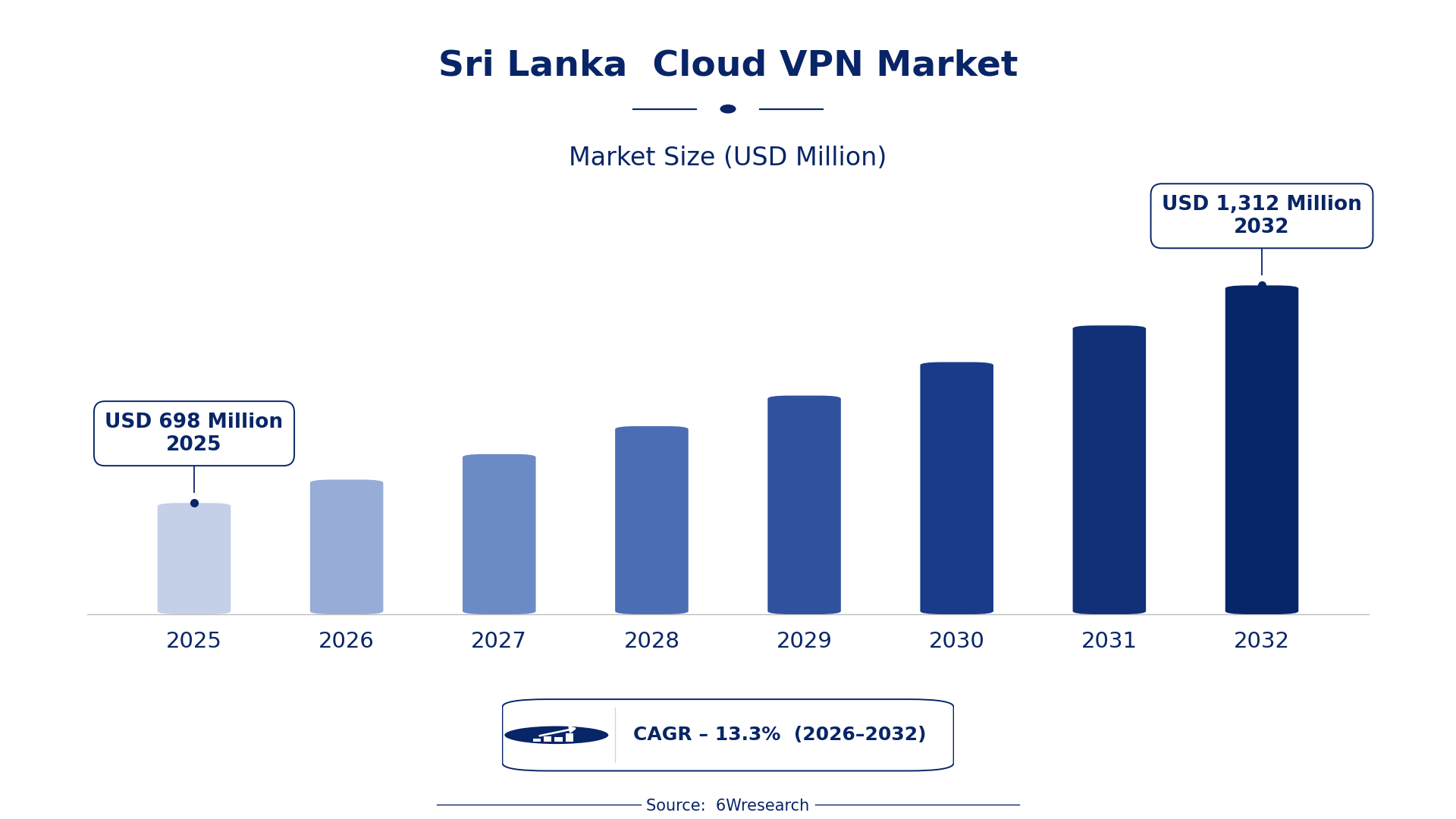
The Sri Lanka Cloud VPN Market was estimated at USD 698 Million in 2025 and is projected to reach USD 1312 Million by 2032, growing at a CAGR of 13.3% from 2026 to 2032.
Sri Lanka Cloud VPN Market Synopsis
The Sri Lanka Cloud VPN market is expanding as businesses increasingly turn to remote work solutions. Secure and flexible connectivity is essential in today’s environment, prompting many organizations to adopt cloud-based VPN services that prioritize data privacy and secure access for remote employees and branch offices.
Market players are focusing on enhancing performance and reliability to cater to the unique demands of enterprises. Integration with cloud platforms and the addition of advanced security features are emerging as crucial elements that shape the competitive arena in the region.
Sri Lanka Cloud VPN Market Year-wise Growth Rate and Key Drivers
This graph illustrates the annual growth rates of the Sri Lanka Cloud VPN Market from 2021 to 2032, highlighting a steady upward trajectory and projected expansion over the forecast period.
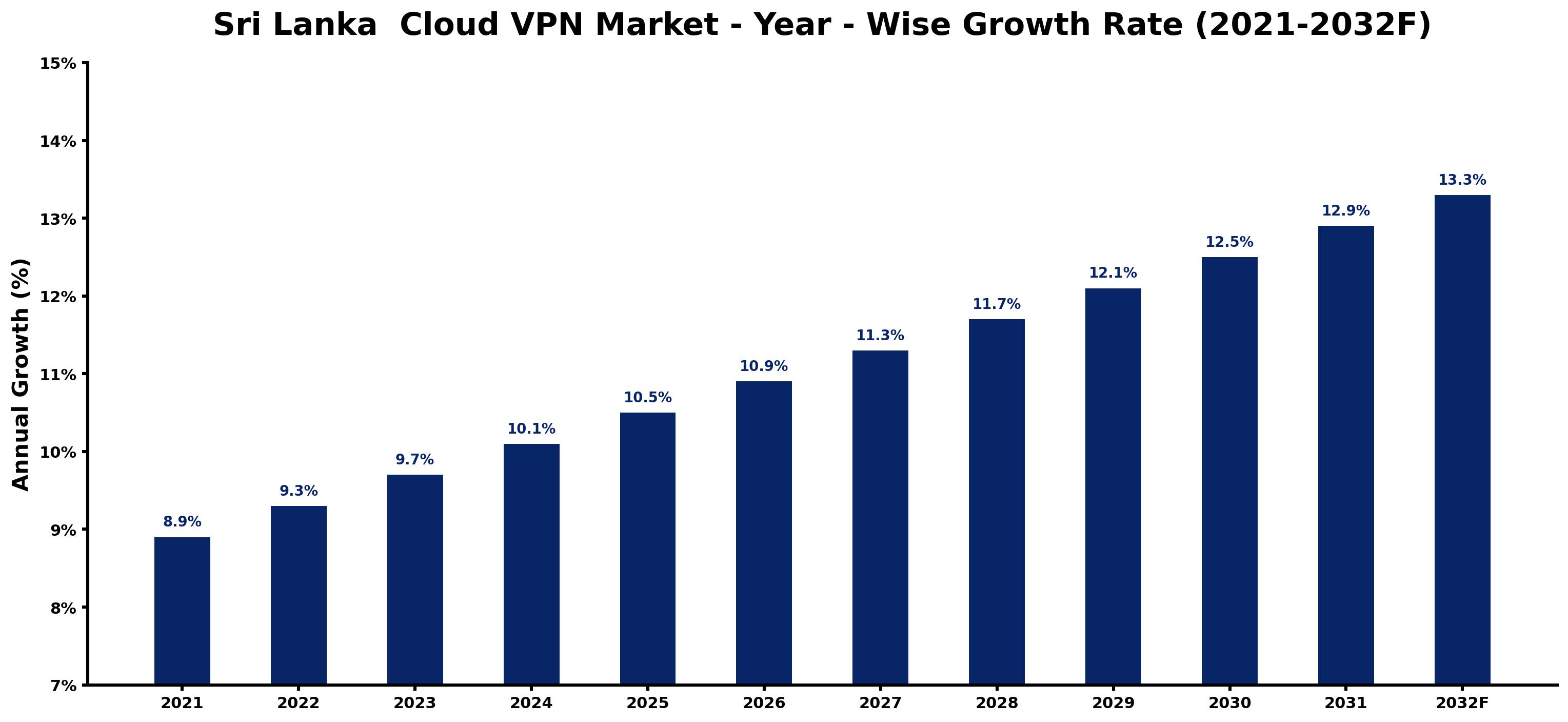
The table below presents the year‑wise growth rates along with the key drivers influencing the market
| Year | Growth Rate | Major Drivers |
| 2021 | 8.9% | Increased remote work due to COVID-19 pandemic. |
| 2022 | 9.3% | Government push for digital transformation in services. |
| 2023 | 9.7% | Rise in cyber threats prompting enhanced security measures. |
| 2024 | 10.1% | Regulatory compliance driving VPN adoption among businesses. |
| 2025 | 10.5% | Local startups expanding digital services requiring secure connections. |
| 2026 | 10.9% | Growing e-commerce sector necessitating secure data transmissions. |
| 2027 | 11.3% | Educational institutions adopting online learning platforms securely. |
| 2028 | 11.7% | Increased foreign investment in tech enhancing internet security. |
| 2029 | 12.1% | Local businesses digitizing operations demand reliable VPN solutions. |
| 2030 | 12.5% | Government incentives for cloud adoption boosting VPN market. |
| 2031 | 12.9% | Growing awareness of data privacy among consumers. |
| 2032 | 13.3% | Telecommunication upgrades improving cloud service accessibility. |
Note: Market size estimations and growth projections presented in this report are based on 6Wresearch's proprietary forecasting methodology, utilizing the latest available industry data, government publications, and primary research inputs.
Sri Lanka Cloud VPN Market Key Takeaways
Below are some of the specific key takeaways from the market, including:
- Heightened demand for secure remote access solutions is driving market growth.
- Providers are concentrating on improving service reliability and scalability.
- Integration with cloud platforms is becoming increasingly popular among businesses.
- Advanced security features are essential for addressing growing cybersecurity concerns.
- The government's regulatory framework supports the safe usage of cloud VPNs.
Evaluation of Restraints in Sri Lanka Cloud VPN Market
Despite the growth momentum, the Sri Lanka Cloud VPN market grapples with challenges that hinder its progress. Security concerns loom large as organizations worry about data privacy and compliance with regulatory standards. Businesses are particularly cautious about the reliability of cloud-based connections, which can impact their operations if not adequately addressed. These factors create a cautious atmosphere among potential adopters, necessitating ongoing improvements and assurances from service providers.
Sri Lanka Cloud VPN Market Trends
A noticeable shift towards hybrid work environments is significantly influencing demand for cloud VPN solutions. Businesses are looking for versatile tools that not only facilitate remote access but also enhance security. As such, the incorporation of artificial intelligence and machine learning for improved threat detection and response is gaining traction.
Additionally, the push for compliance with international cybersecurity standards is prompting providers to enhance their offerings. Organizations are increasingly looking for solutions that not only meet their immediate needs but also align with global best practices.
Sri Lanka Cloud VPN Market Opportunities
The drive towards digital transformation across various sectors presents significant opportunities for the Sri Lanka Cloud VPN market. Emerging industries, such as e-commerce and online education, are prime candidates for VPN solutions that cater to their unique security needs. Furthermore, as businesses expand their operations internationally, the demand for reliable and compliant VPN services will only grow.
Investment in infrastructure improvements and enhanced regulatory support also open avenues for market expansion. Companies that can adapt quickly to these changing demands will be well-positioned for success.
Government Initiatives in the Sri Lanka Cloud VPN Market
Government policy is actively shaping the Sri Lanka Cloud VPN market, focusing on cybersecurity and data privacy. Regulations are designed to create a secure digital environment, ensuring that businesses and individuals can rely on licensed VPN providers. This commitment to enhancing cybersecurity measures aligns with international standards, which is crucial for fostering trust among users.
- A national cybersecurity strategy launched in 2023, emphasizing the importance of secure internet connections.
- Current efforts to implement regulations that mandate encryption standards for cloud VPN services, enhancing user trust.
- A public-private partnership initiative underway to promote the development of cloud infrastructure, aimed at improving service delivery.
- Plans to conduct awareness programs about cybersecurity best practices, especially for small and medium enterprises.
Future Insights of the Sri Lanka Cloud VPN Market
Looking ahead to 2026-2032, the Sri Lanka Cloud VPN market is set for a period of dynamic growth. The increasing reliance on digital solutions across various sectors will drive further adoption of cloud VPN services. As cybersecurity threats evolve, the demand for more sophisticated security measures will push providers to innovate continuously. Regulatory support and government initiatives aimed at enhancing cybersecurity will further bolster market confidence, creating an environment conducive to sustainable growth.
Sri Lanka Cloud VPN Market Latest Developments
Over the last year, the Sri Lanka Cloud VPN market has experienced noteworthy activity, with providers enhancing their service offerings. Companies are responding to the rising demand for secure remote access with advancements in technology and infrastructure.
- A leading regional operator expanded its VPN services in early 2023, enhancing speed and reliability for business clients.
- A new initiative launched in Q3 2023 focuses on integrating AI-driven security features to better protect user data.
- A major technology vendor is developing an upgraded cloud VPN platform set to debut in early 2024, promising improved user experience.
- Partnerships between local ISPs and cybersecurity firms are currently underway to enhance the overall security landscape.
Sri Lanka Cloud VPN Market - Key Attractiveness of the Report
- 10 Years of Market Numbers
- Historical Data Starting from 2022 to 2025
- Base Year: 2025
- Forecast Data until 2032
- Key Performance Indicators Impacting the Market
- Major Upcoming Developments and Projects
Key Highlights of the Report:
- Sri Lanka Cloud VPN Market Outlook
- Market Size of Sri Lanka Cloud VPN Market, 2025
- Forecast of Sri Lanka Cloud VPN Market, 2032
- Historical Data and Forecast of Sri Lanka Cloud VPN Revenues & Volume for the Period 2022-2032F
- Sri Lanka Cloud VPN Market Trend Evolution
- Sri Lanka Cloud VPN Market Drivers and Challenges
- Sri Lanka Cloud VPN Price Trends
- Sri Lanka Cloud VPN Porter's Five Forces
- Sri Lanka Cloud VPN Industry Life Cycle
- Historical Data and Forecast of Sri Lanka Cloud VPN Market Revenues & Volume By Component for the Period 2022-2032F
- Historical Data and Forecast of Sri Lanka Cloud VPN Market Revenues & Volume By Software for the Period 2022-2032F
- Historical Data and Forecast of Sri Lanka Cloud VPN Market Revenues & Volume By Services for the Period 2022-2032F
- Historical Data and Forecast of Sri Lanka Cloud VPN Market Revenues & Volume By Connectivity Type for the Period 2022-2032F
- Historical Data and Forecast of Sri Lanka Cloud VPN Market Revenues & Volume By Site-to-Site for the Period 2022-2032F
- Historical Data and Forecast of Sri Lanka Cloud VPN Market Revenues & Volume By Remote Access for the Period 2022-2032F
- Historical Data and Forecast of Sri Lanka Cloud VPN Market Revenues & Volume By Organization Size for the Period 2022-2032F
- Historical Data and Forecast of Sri Lanka Cloud VPN Market Revenues & Volume By Large Enterprises for the Period 2022-2032F
- Historical Data and Forecast of Sri Lanka Cloud VPN Market Revenues & Volume By SMEs for the Period 2022-2032F
- Historical Data and Forecast of Sri Lanka Cloud VPN Market Revenues & Volume By End User for the Period 2022-2032F
- Historical Data and Forecast of Sri Lanka Cloud VPN Market Revenues & Volume By Service Providers for the Period 2022-2032F
- Historical Data and Forecast of Sri Lanka Cloud VPN Market Revenues & Volume By Verticals for the Period 2022-2032F
- Sri Lanka Cloud VPN Import Export Trade Statistics
- Market Opportunity Assessment By Component
- Market Opportunity Assessment By Connectivity Type
- Market Opportunity Assessment By Organization Size
- Market Opportunity Assessment By End User
- Sri Lanka Cloud VPN Top Companies Market Share
- Sri Lanka Cloud VPN Competitive Benchmarking By Technical and Operational Parameters
- Sri Lanka Cloud VPN Company Profiles
- Sri Lanka Cloud VPN Key Strategic Recommendations






































