Sri Lanka Coal Market: Import Trend Analysis
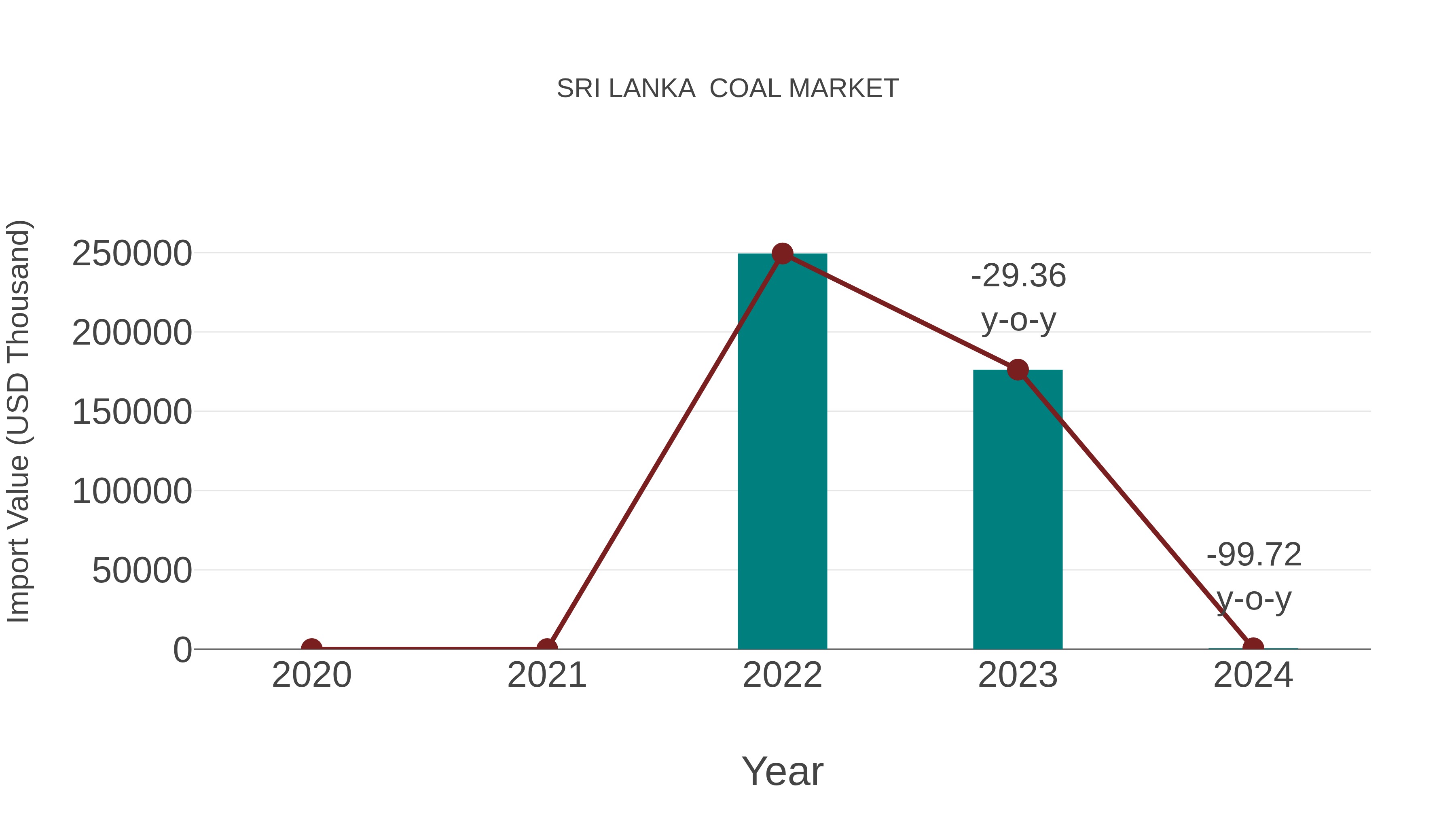
Sri Lanka coal market experienced a significant decline in imports from 2023 to 2024, with a growth rate of -99.72%. The compound annual growth rate (CAGR) for 2020-2024 stood at -95.52%. This sharp decrease may be attributed to a shift towards renewable energy sources or changes in government policies promoting cleaner energy alternatives.
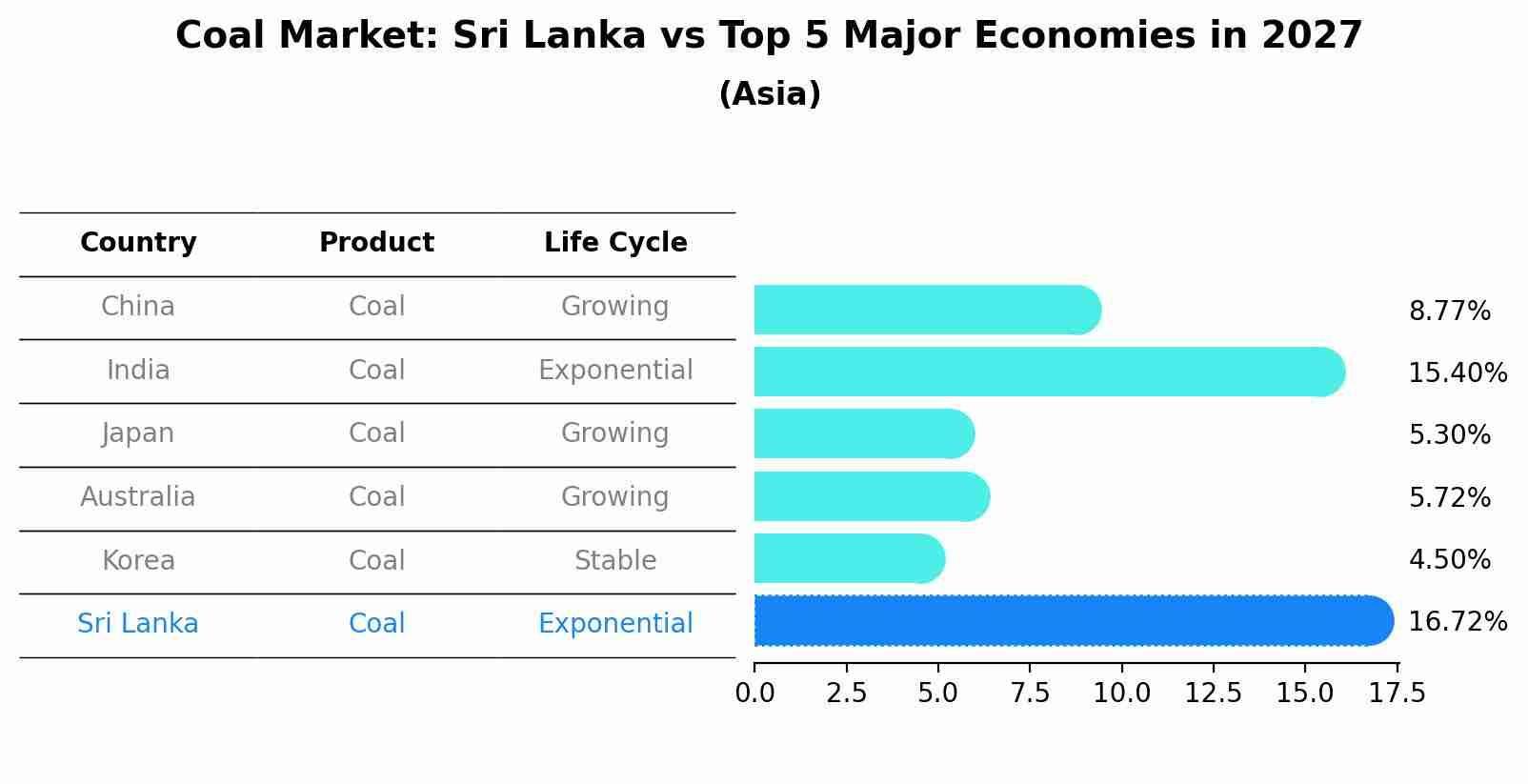
Coal Market: Sri Lanka vs Top 5 Major Economies in 2027 (Asia)
The Coal market in Sri Lanka is projected to grow at a exponential growth rate of 16.72% by 2027, highlighting the country's increasing focus on advanced technologies within the Asia region, where China holds the dominant position, followed closely by India, Japan, Australia and South Korea, shaping overall regional demand.
Sri Lanka Coal Market Overview
The coal market in Sri Lanka plays a significant role in the country`s energy sector, despite efforts towards diversification into renewable energy sources. Coal is primarily used in thermal power generation, industrial processes, and cement production. Sri Lanka imports coal to meet its energy requirements, balancing energy security with environmental concerns. Government policies, international market trends, and technological advancements in clean coal technologies influence the dynamics of the coal market in Sri Lanka. Sustainable energy transitions and regulatory frameworks shape the future outlook of coal usage in the country.
Drivers of the market
The Sri Lankan coal market is influenced by factors such as industrial demand, energy generation needs, and international coal prices. Despite global shifts towards renewable energy sources, coal remains a significant energy source in Sri Lanka, especially in power generation and industrial applications. Market dynamics are shaped by government policies, infrastructure development, and the evolving energy mix strategies aimed at balancing energy security and environmental sustainability.
Challenges of the market
Transitioning towards renewable energy sources and reducing dependence on coal presents a major challenge for the Sri Lankan Coal market. Economic factors, policy decisions, and environmental considerations shape the future of coal usage in Sri Lanka, influencing market dynamics and investment decisions.
Government Policy of the market
The Sri Lankan government regulates the coal market through policies that balance energy security with environmental sustainability. Regulations cover coal mining operations, transportation, and importation, ensuring compliance with environmental standards and safety protocols. Government initiatives prioritize diversification of the energy mix, promoting renewable energy sources while supporting efficient use of coal resources. Policies also address social impacts, focusing on community engagement and sustainable development in coal-dependent regions.
Key Highlights of the Report:
- Sri Lanka Coal Market Outlook
- Market Size of Sri Lanka Coal Market, 2025
- Forecast of Sri Lanka Coal Market, 2032
- Historical Data and Forecast of Sri Lanka Coal Revenues & Volume for the Period 2022-2032F
- Sri Lanka Coal Market Trend Evolution
- Sri Lanka Coal Market Drivers and Challenges
- Sri Lanka Coal Price Trends
- Sri Lanka Coal Porter's Five Forces
- Sri Lanka Coal Industry Life Cycle
- Historical Data and Forecast of Sri Lanka Coal Market Revenues & Volume By Types for the Period 2022-2032F
- Historical Data and Forecast of Sri Lanka Coal Market Revenues & Volume By Bituminous Coal for the Period 2022-2032F
- Historical Data and Forecast of Sri Lanka Coal Market Revenues & Volume By Sub-Bituminous Coal for the Period 2022-2032F
- Historical Data and Forecast of Sri Lanka Coal Market Revenues & Volume By Anthracite for the Period 2022-2032F
- Historical Data and Forecast of Sri Lanka Coal Market Revenues & Volume By Lignite for the Period 2022-2032F
- Historical Data and Forecast of Sri Lanka Coal Market Revenues & Volume By End-Users for the Period 2022-2032F
- Historical Data and Forecast of Sri Lanka Coal Market Revenues & Volume By Electricity for the Period 2022-2032F
- Historical Data and Forecast of Sri Lanka Coal Market Revenues & Volume By Steel for the Period 2022-2032F
- Historical Data and Forecast of Sri Lanka Coal Market Revenues & Volume By Cement for the Period 2022-2032F
- Historical Data and Forecast of Sri Lanka Coal Market Revenues & Volume By Others for the Period 2022-2032F
- Sri Lanka Coal Import Export Trade Statistics
- Market Opportunity Assessment By Types
- Market Opportunity Assessment By End-Users
- Sri Lanka Coal Top Companies Market Share
- Sri Lanka Coal Competitive Benchmarking By Technical and Operational Parameters
- Sri Lanka Coal Company Profiles
- Sri Lanka Coal Key Strategic Recommendations






































