Sri Lanka Corticosteroids Market: Import Trend Analysis
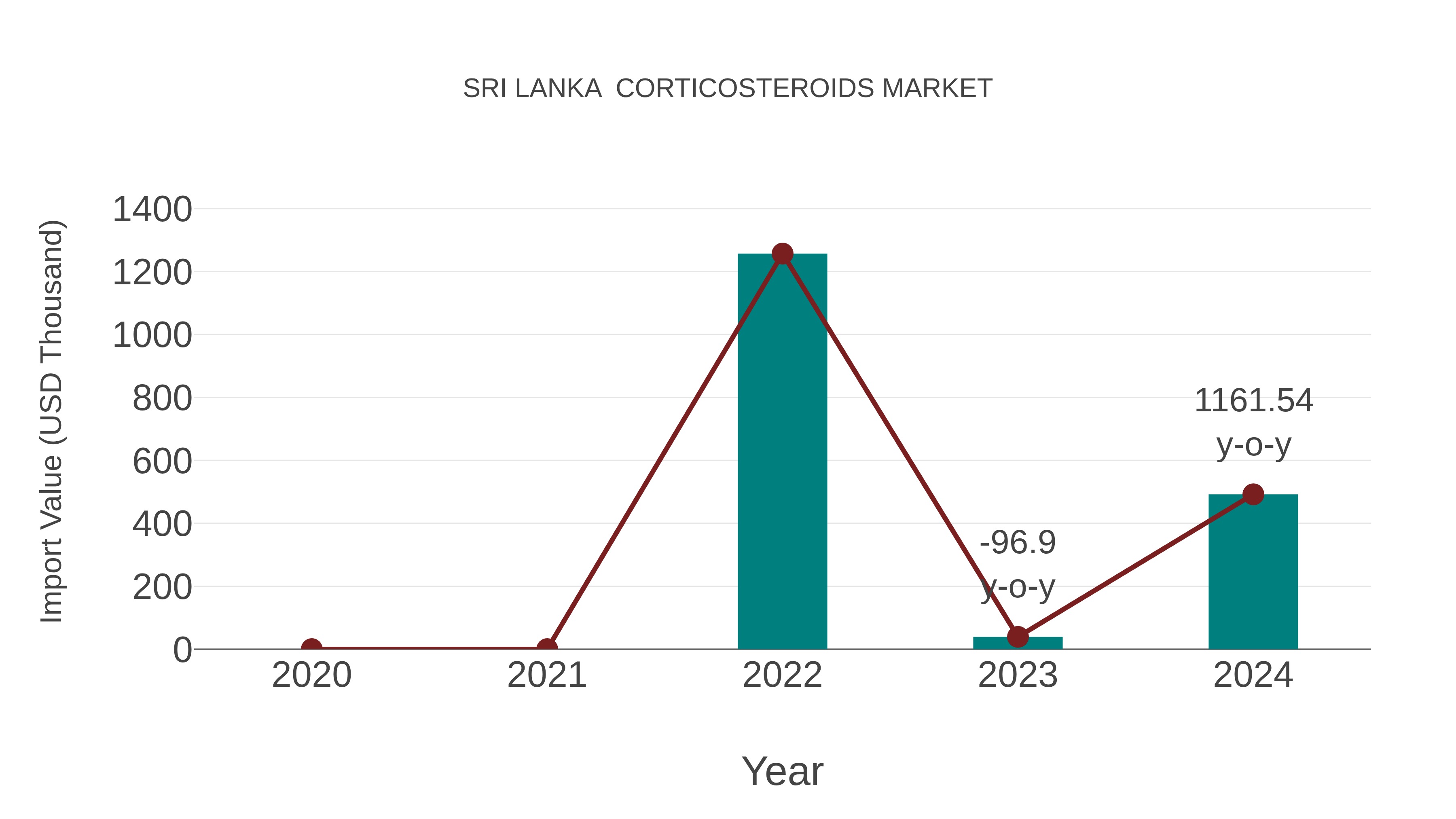
Sri Lanka import trend for the corticosteroids market saw significant growth from 2023 to 2024 at 1161.54%, with a CAGR of -37.44% from 2020 to 2024. This drastic increase in imports could be attributed to a surge in demand for healthcare products or shifts in trade policies impacting the market.
Sri Lanka Corticosteroids Market Overview
The corticosteroids market in Sri Lanka is growing due to the rising prevalence of inflammatory and autoimmune diseases. These medications are widely used in the treatment of conditions such as asthma, arthritis, and skin disorders. The market is influenced by advancements in pharmaceutical manufacturing and the availability of both generic and branded corticosteroid products.
Drivers of the market
The corticosteroids market in Sri Lanka is driven by the rising prevalence of chronic diseases and inflammatory conditions. The increasing awareness about the effectiveness of corticosteroids in managing conditions such as asthma, rheumatoid arthritis, and skin disorders significantly contributes to market growth. The expansion of the healthcare sector and the growing availability of advanced corticosteroid formulations further boost the market. Additionally, the demand for corticosteroids in veterinary medicine, where they are used to treat various animal health issues, acts as a key driver for the market.
Challenges of the market
The corticosteroids market in Sri Lanka encounters numerous challenges, primarily related to regulatory and safety concerns. Strict regulations governing the use and distribution of corticosteroids can limit market growth and accessibility. There is also a significant issue with the misuse and overuse of these drugs, leading to potential health risks and side effects. Additionally, the market faces competition from alternative treatments and therapies that may be perceived as safer or more effective. The high cost of corticosteroids can also be a barrier for many patients, further complicating market dynamics.
Government Policy of the market
The corticosteroids market in Sri Lanka is governed by healthcare policies and regulations on pharmaceuticals. Government policies ensuring the availability of essential medicines and regulating the import and distribution of pharmaceuticals directly affect the market. Additionally, policies on drug pricing and healthcare funding influence the accessibility and affordability of corticosteroids.
Key Highlights of the Report:
- Sri Lanka Corticosteroids Market Outlook
- Market Size of Sri Lanka Corticosteroids Market, 2025
- Forecast of Sri Lanka Corticosteroids Market, 2032
- Historical Data and Forecast of Sri Lanka Corticosteroids Revenues & Volume for the Period 2022-2032F
- Sri Lanka Corticosteroids Market Trend Evolution
- Sri Lanka Corticosteroids Market Drivers and Challenges
- Sri Lanka Corticosteroids Price Trends
- Sri Lanka Corticosteroids Porter's Five Forces
- Sri Lanka Corticosteroids Industry Life Cycle
- Historical Data and Forecast of Sri Lanka Corticosteroids Market Revenues & Volume By Application for the Period 2022-2032F
- Historical Data and Forecast of Sri Lanka Corticosteroids Market Revenues & Volume By Skin Allergies for the Period 2022-2032F
- Historical Data and Forecast of Sri Lanka Corticosteroids Market Revenues & Volume By Rhuematology Indications for the Period 2022-2032F
- Historical Data and Forecast of Sri Lanka Corticosteroids Market Revenues & Volume By Endocrinology for the Period 2022-2032F
- Historical Data and Forecast of Sri Lanka Corticosteroids Market Revenues & Volume By Acute Respiratory Diseases for the Period 2022-2032F
- Historical Data and Forecast of Sri Lanka Corticosteroids Market Revenues & Volume By Others for the Period 2022-2032F
- Historical Data and Forecast of Sri Lanka Corticosteroids Market Revenues & Volume By End User for the Period 2022-2032F
- Historical Data and Forecast of Sri Lanka Corticosteroids Market Revenues & Volume By Hospitals for the Period 2022-2032F
- Historical Data and Forecast of Sri Lanka Corticosteroids Market Revenues & Volume By Clinics for the Period 2022-2032F
- Historical Data and Forecast of Sri Lanka Corticosteroids Market Revenues & Volume By Research Institutes for the Period 2022-2032F
- Historical Data and Forecast of Sri Lanka Corticosteroids Market Revenues & Volume By Others for the Period 2022-2032F
- Sri Lanka Corticosteroids Import Export Trade Statistics
- Market Opportunity Assessment By Application
- Market Opportunity Assessment By End User
- Sri Lanka Corticosteroids Top Companies Market Share
- Sri Lanka Corticosteroids Competitive Benchmarking By Technical and Operational Parameters
- Sri Lanka Corticosteroids Company Profiles
- Sri Lanka Corticosteroids Key Strategic Recommendations






































