Sri Lanka Decentralized Identity Market Size & Growth Rate (2026-2032)
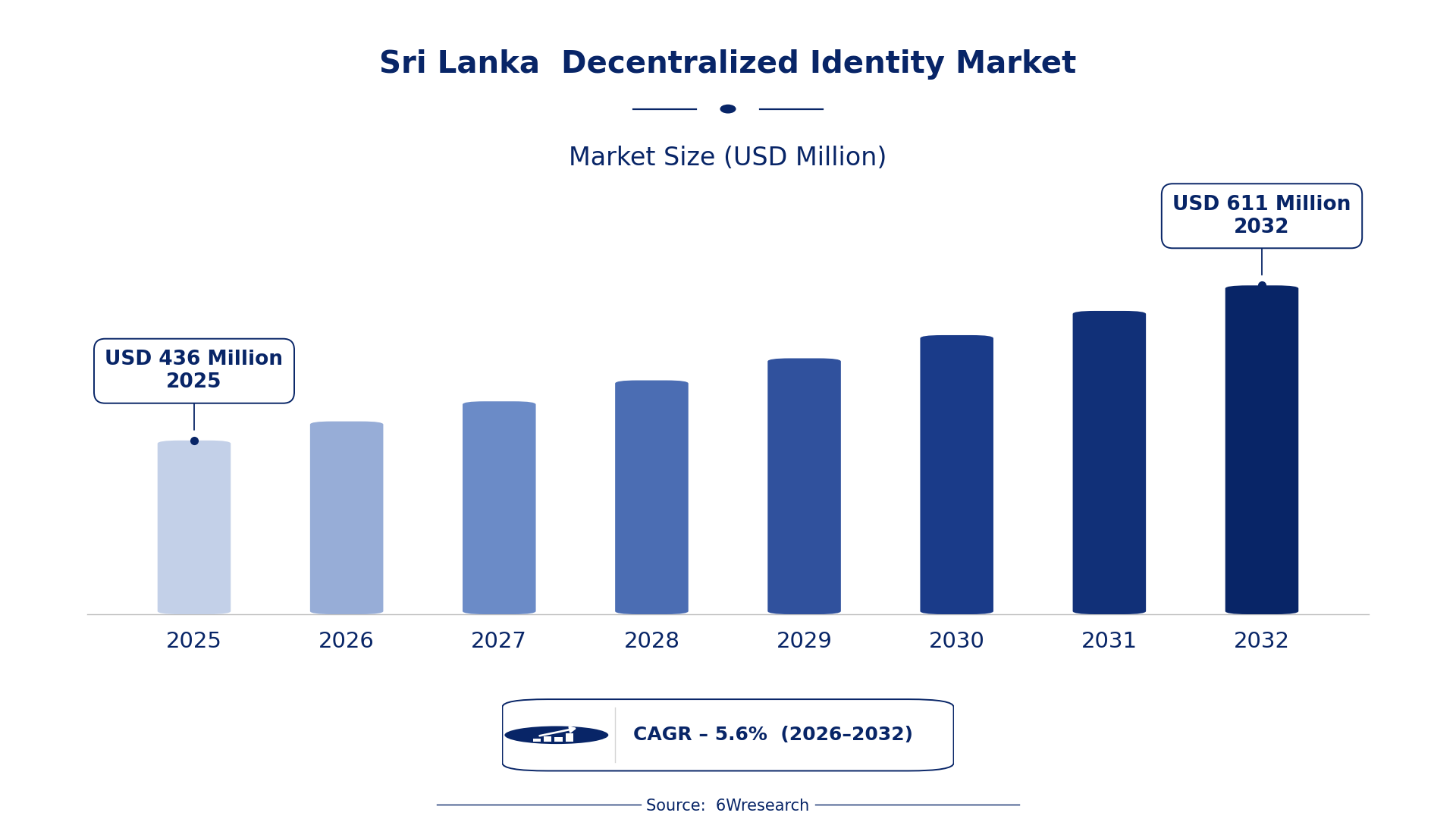
The Sri Lanka Decentralized Identity Market was estimated at USD 436 Million in 2025 and is projected to reach USD 611 Million by 2032, growing at a CAGR of 5.6% from 2026 to 2032.
Sri Lanka Decentralized Identity Market Synopsis
The decentralized identity market in Sri Lanka is currently witnessing a surge in interest, as both businesses and individuals prioritize privacy and security in their identity management solutions. Blockchain and distributed ledger technologies are at the forefront of this movement, giving users unprecedented control over their personal data.
As concerns surrounding data privacy intensify, organizations are increasingly adopting decentralized identity solutions. This shift not only enhances user control but also promotes compliance with emerging regulatory requirements, thereby fostering a more secure digital ecosystem within the country.
Sri Lanka Decentralized Identity Market Year-wise Growth Rate and Key Drivers
This graph illustrates the annual growth rates of the Sri Lanka Decentralized Identity Market from 2021 to 2032, highlighting a steady upward trajectory and projected expansion over the forecast period.
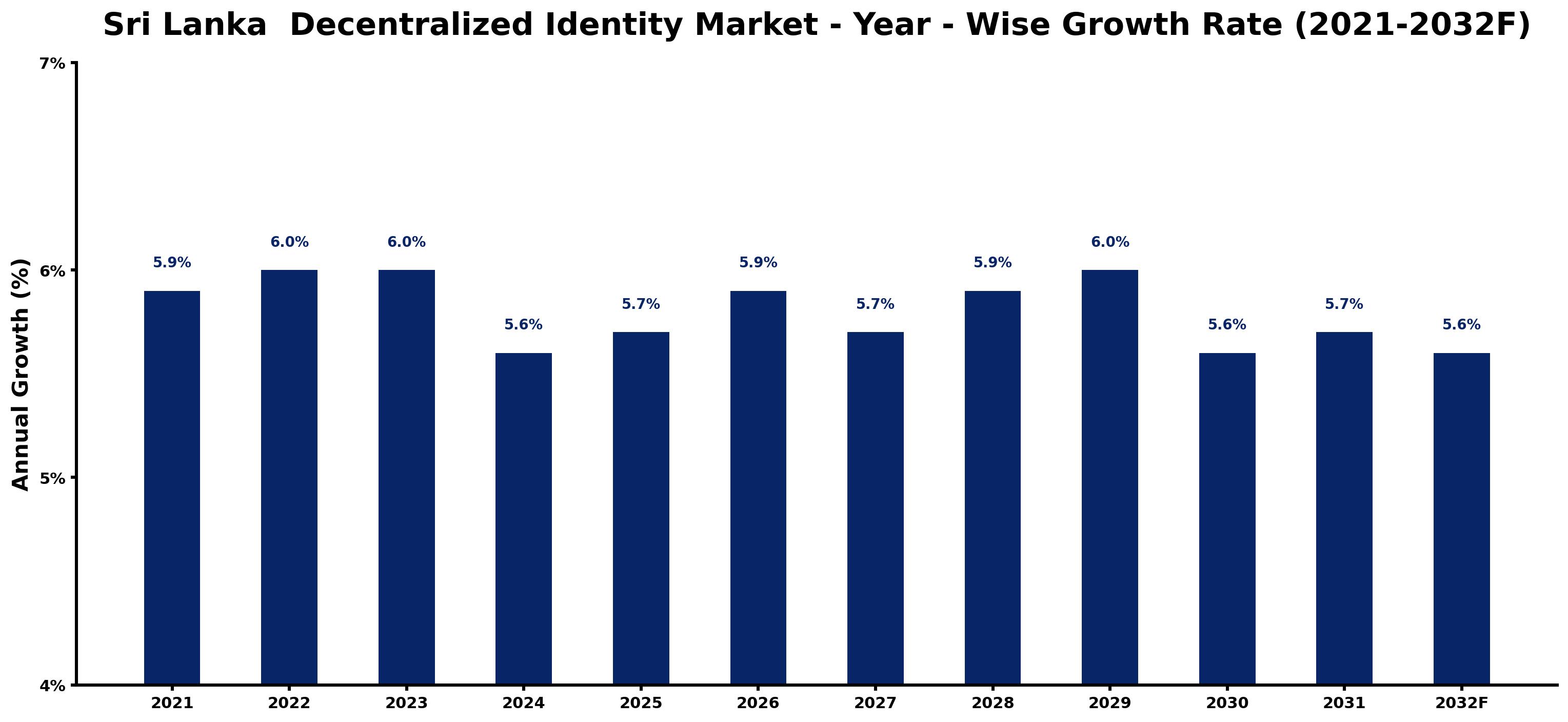
The table below presents the year‑wise growth rates along with the key drivers influencing the market
| Year | Growth Rate | Major Drivers |
| 2021 | 5.9% | National digital ID scheme enhances remote service access. |
| 2022 | 6.0% | Regulatory push for enhanced KYC compliance by banks. |
| 2023 | 6.0% | Increased mobile connectivity supports wider adoption of digital IDs. |
| 2024 | 5.6% | Government mandates for biometric identification in public services. |
| 2025 | 5.7% | Growth in telehealth drives need for secure patient identities. |
| 2026 | 5.9% | Collaboration with tech firms to advance identity solutions. |
| 2027 | 5.7% | Rising internet penetration boosts demand for decentralized IDs. |
| 2028 | 5.9% | Educational institutions adopting digital IDs for student verification. |
| 2029 | 6.0% | E-commerce growth necessitates robust user identity protection. |
| 2030 | 5.6% | Legislative framework supporting personal data protection regulations. |
| 2031 | 5.7% | Financial inclusion initiatives drive demand for digital identity solutions. |
| 2032 | 5.6% | Increased cybersecurity threats heighten need for identity verification. |
Note: Market size estimations and growth projections presented in this report are based on 6Wresearch's proprietary forecasting methodology, utilizing the latest available industry data, government publications, and primary research inputs.
Sri Lanka Decentralized Identity Market Key Takeaways
Below are some of the specific key takeaways from the market, including:
- The market is experiencing growth driven by heightened awareness of data privacy and security concerns.
- Blockchain technology is central to developing user-centric identity management solutions.
- Regulatory compliance is encouraging organizations to adopt decentralized identity systems.
- Ongoing technological innovations are enhancing the interoperability and user-friendliness of decentralized identity platforms.
- The increasing push for digital transformation in various sectors is significantly contributing to market expansion.
Evaluation of Restraints in Sri Lanka Decentralized Identity Market
Despite promising growth, the Sri Lanka decentralized identity market faces notable restraints. One of the primary limitations is the challenge of developing secure and user-friendly systems that can achieve widespread adoption. Interoperability among different decentralized identity frameworks remains a critical issue, hindering seamless user experiences. Additionally, balancing privacy concerns with regulatory compliance adds complexity to the development process, slowing down progress in this crucial area.
Sri Lanka Decentralized Identity Market Trends
Several trends are currently shaping the Sri Lanka decentralized identity market. The increasing integration of artificial intelligence with decentralized identity solutions is enhancing user verification processes and reducing instances of identity fraud. Alongside this, partnerships among tech companies to create standardized frameworks are fostering greater interoperability. Another significant trend is the growing emphasis on self-sovereign identity models, which empower users to manage their personal data independently.
Sri Lanka Decentralized Identity Market Opportunities
Opportunities for growth in the Sri Lanka decentralized identity market are abundant. The ongoing digital transformation across multiple sectors—healthcare, finance, and e-commerce—offers fertile ground for innovative identity solutions. Collaborations between government agencies and private enterprises to pilot decentralized systems can lead to significant advancements in technology adoption. Furthermore, as public awareness of data privacy increases, solutions that prioritize user control will likely see expanded market demand.
Government Initiatives in the Sri Lanka Decentralized Identity Market
The Sri Lankan government is actively shaping the decentralized identity market through strategic policy initiatives. By prioritizing security and privacy, these policies support the development of innovative identity management solutions. Collaboration between public and private sectors is essential in establishing standards and frameworks that enhance digital identity security, making these initiatives critical for market progression.
- A recently completed pilot project aimed at exploring blockchain-based identity solutions demonstrated the potential of decentralized systems in enhancing data security.
- A national committee is currently overseeing the establishment of regulations to ensure privacy and user control in decentralized identity applications.
- Ongoing funding initiatives aim to support startups focusing on developing user-centric decentralized identity platforms.
- A planned framework for integrating decentralized identity solutions into public services is set to be introduced by 2027, promoting user trust and engagement.
- A joint task force between government and tech stakeholders is working on developing interoperability standards to facilitate smoother interactions among different identity systems.
Future Insights of the Sri Lanka Decentralized Identity Market
Looking ahead to 2026-2032, the Sri Lanka decentralized identity market is poised for transformative developments. The convergence of advanced technologies, alongside increasing regulatory support, will shape the future landscape. As user demand for privacy-centric solutions grows, companies must innovate to meet these expectations. Ultimately, the sector's evolution will depend heavily on establishing trust and providing clear value through decentralized identity frameworks.
Sri Lanka Decentralized Identity Market Latest Developments
In the past year, activity within the Sri Lanka decentralized identity market has accelerated significantly. Companies are ramping up efforts to develop user-friendly and secure identity management solutions, responding to rising privacy concerns. Collaborations among stakeholders are also gaining momentum, as they aim to navigate the complexities of regulatory compliance and technological interoperability.
- A major technology vendor launched a decentralized identity verification service in late 2025, enhancing user experience while ensuring compliance with regulatory standards.
- An initiative that began in early 2025 is currently underway to create a national framework for decentralized identity systems, aimed at integrating them into public services.
- A pilot program launched in mid-2025 by a consortium of private firms is exploring user-controlled identity management solutions, with promising initial results.
- A strategic partnership formed in Q1 2026 between local universities and tech companies focuses on researching advanced decentralized identity applications.
- Upcoming regulatory guidelines are expected by the end of 2026, which will streamline the implementation of decentralized identity solutions across various sectors.
Sri Lanka Decentralized Identity Market - Key Attractiveness of the Report
- 10 Years of Market Numbers
- Historical Data Starting from 2022 to 2025
- Base Year: 2025
- Forecast Data until 2032
- Key Performance Indicators Impacting the Market
- Major Upcoming Developments and Projects
Key Highlights of the Report:
- Sri Lanka Decentralized Identity Market Outlook
- Market Size of Sri Lanka Decentralized Identity Market, 2025
- Forecast of Sri Lanka Decentralized Identity Market, 2032
- Historical Data and Forecast of Sri Lanka Decentralized Identity Revenues & Volume for the Period 2022-2032F
- Sri Lanka Decentralized Identity Market Trend Evolution
- Sri Lanka Decentralized Identity Market Drivers and Challenges
- Sri Lanka Decentralized Identity Price Trends
- Sri Lanka Decentralized Identity Porter's Five Forces
- Sri Lanka Decentralized Identity Industry Life Cycle
- Historical Data and Forecast of Sri Lanka Decentralized Identity Market Revenues & Volume By Vertical for the Period 2022-2032F
- Historical Data and Forecast of Sri Lanka Decentralized Identity Market Revenues & Volume By BFSI for the Period 2022-2032F
- Historical Data and Forecast of Sri Lanka Decentralized Identity Market Revenues & Volume By Government for the Period 2022-2032F
- Historical Data and Forecast of Sri Lanka Decentralized Identity Market Revenues & Volume By Healthcare and Life Sciences for the Period 2022-2032F
- Historical Data and Forecast of Sri Lanka Decentralized Identity Market Revenues & Volume By Retail and eCommerce for the Period 2022-2032F
- Historical Data and Forecast of Sri Lanka Decentralized Identity Market Revenues & Volume By Telecom and IT for the Period 2022-2032F
- Historical Data and Forecast of Sri Lanka Decentralized Identity Market Revenues & Volume By Transport and Logistics for the Period 2022-2032F
- Historical Data and Forecast of Sri Lanka Decentralized Identity Market Revenues & Volume By Real Estate for the Period 2022-2032F
- Historical Data and Forecast of Sri Lanka BFSI Decentralized Identity Market Revenues & Volume By Others for the Period 2022-2032F
- Historical Data and Forecast of Sri Lanka Decentralized Identity Market Revenues & Volume By Identity Type for the Period 2022-2032F
- Historical Data and Forecast of Sri Lanka Decentralized Identity Market Revenues & Volume By Non- biometrics for the Period 2022-2032F
- Historical Data and Forecast of Sri Lanka Decentralized Identity Market Revenues & Volume By Biometrics for the Period 2022-2032F
- Historical Data and Forecast of Sri Lanka Decentralized Identity Market Revenues & Volume By End User for the Period 2022-2032F
- Historical Data and Forecast of Sri Lanka Decentralized Identity Market Revenues & Volume By Enterprises for the Period 2022-2032F
- Historical Data and Forecast of Sri Lanka Decentralized Identity Market Revenues & Volume By Individual for the Period 2022-2032F
- Historical Data and Forecast of Sri Lanka Decentralized Identity Market Revenues & Volume By Organization Size for the Period 2022-2032F
- Historical Data and Forecast of Sri Lanka Decentralized Identity Market Revenues & Volume By Large Enterprises for the Period 2022-2032F
- Historical Data and Forecast of Sri Lanka Decentralized Identity Market Revenues & Volume By SMEs for the Period 2022-2032F
- Sri Lanka Decentralized Identity Import Export Trade Statistics
- Market Opportunity Assessment By Vertical
- Market Opportunity Assessment By Identity Type
- Market Opportunity Assessment By End User
- Market Opportunity Assessment By Organization Size
- Sri Lanka Decentralized Identity Top Companies Market Share
- Sri Lanka Decentralized Identity Competitive Benchmarking By Technical and Operational Parameters
- Sri Lanka Decentralized Identity Company Profiles
- Sri Lanka Decentralized Identity Key Strategic Recommendations






































