Sri Lanka Desiccated Coconut Market Size Growth Rate
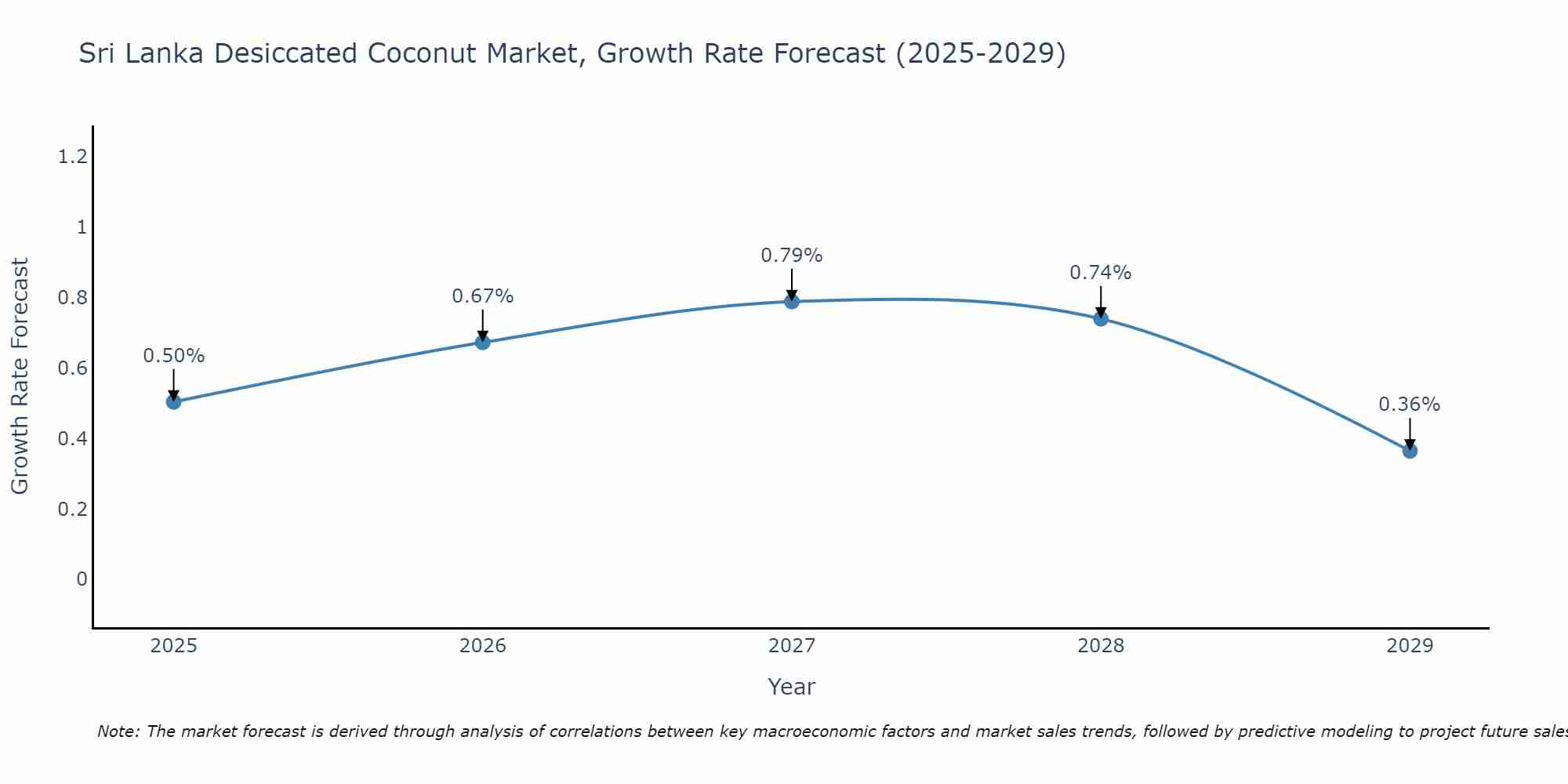
The Sri Lanka Desiccated Coconut Market is projected to witness mixed growth rate patterns during 2025 to 2029. Growth accelerates to 0.79% in 2027, following an initial rate of 0.50%, before easing to 0.36% at the end of the period.
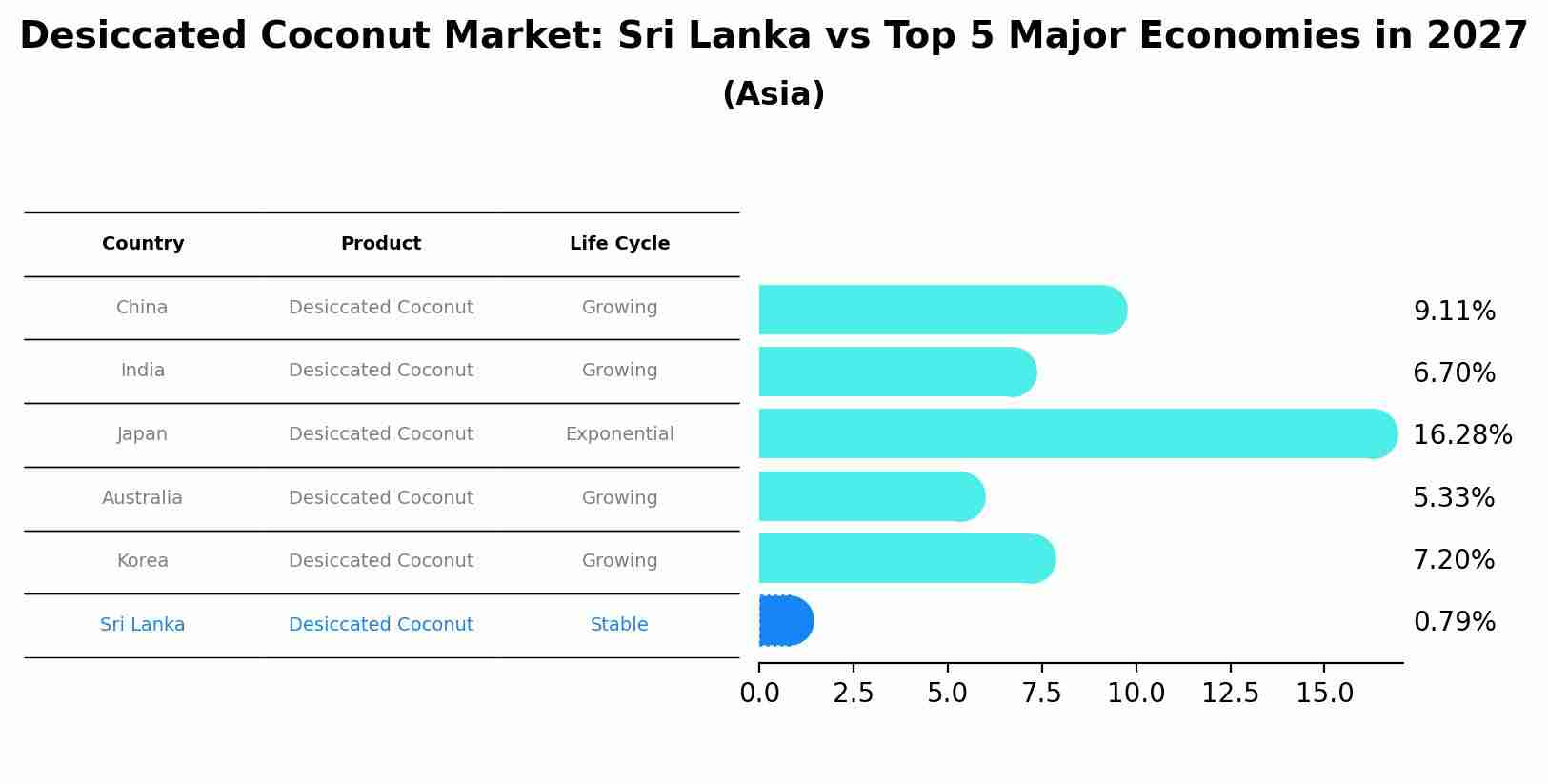
Desiccated Coconut Market: Sri Lanka vs Top 5 Major Economies in 2027 (Asia)
The Desiccated Coconut market in Sri Lanka is projected to grow at a stable growth rate of 0.79% by 2027, highlighting the country's increasing focus on advanced technologies within the Asia region, where China holds the dominant position, followed closely by India, Japan, Australia and South Korea, shaping overall regional demand.
Sri Lanka Desiccated Coconut Market Overview
The Sri Lanka Desiccated Coconut Market is experiencing steady growth driven by increasing demand for coconut-based products in the food industry. Desiccated coconut, made from the dried white flesh of the coconut, is widely used in baking, confectionery, and various culinary applications. Sri Lanka is a major producer and exporter of desiccated coconut, known for its high quality and natural flavor. The market is characterized by a competitive landscape with key players focusing on product innovation, quality assurance, and sustainable sourcing practices. Rising consumer awareness about the health benefits of coconut products, including desiccated coconut, is also contributing to market growth. As the market continues to expand, opportunities exist for market players to capitalize on the growing demand both domestically and globally.
Sri Lanka Desiccated Coconut Market Trends
In the Sri Lankan desiccated coconut market, there is a growing trend towards organic and sustainably sourced products. Consumers are increasingly seeking healthier and more environmentally friendly options, leading to a rise in demand for organic desiccated coconut. Additionally, there is a focus on quality and food safety standards, with companies investing in technology and processes to ensure the highest quality products. The market is also witnessing innovation in packaging and product diversification, with flavored and value-added desiccated coconut products gaining popularity. Overall, the Sri Lankan desiccated coconut market is evolving to meet the changing consumer preferences towards healthier, sustainable, and premium products.
Sri Lanka Desiccated Coconut Market Challenges
In the Sri Lanka Desiccated Coconut Market, several challenges are faced by industry players. One major challenge is the fluctuation in global coconut prices, which can impact the profitability of local producers. Additionally, increasing competition from other coconut-producing countries like Indonesia and the Philippines poses a threat to Sri Lanka`s market share. Quality control and food safety standards also present challenges, as maintaining consistent product quality is crucial for maintaining consumer trust and meeting export requirements. Furthermore, issues related to supply chain logistics and infrastructure can hinder the efficient production and distribution of desiccated coconut products. Overall, navigating these challenges requires strategic planning, investment in technology, and a strong focus on product quality and market differentiation.
Sri Lanka Desiccated Coconut Market Investment Opportunities
The Sri Lankan desiccated coconut market offers promising investment opportunities due to the country`s reputation for high-quality coconut products. With increasing global demand for healthy and organic food products, investing in Sri Lanka`s desiccated coconut industry can be lucrative. Key opportunities include expanding production capacity to meet growing international demand, investing in modern technology for efficient processing and packaging, and focusing on sustainable practices to appeal to eco-conscious consumers. Additionally, leveraging Sri Lanka`s geographical advantage as a leading coconut-producing country can provide a competitive edge in the market. Overall, investing in the Sri Lankan desiccated coconut market presents a potential for growth and profitability in the evolving food industry landscape.
Sri Lanka Desiccated Coconut Market Government Policy
The Sri Lankan government has implemented various policies to support and regulate the Desiccated Coconut Market. These policies include subsidies for coconut cultivation, quality standards for export-grade coconut products, and support for research and development in the industry. Additionally, the government has established export promotion programs to boost international trade of desiccated coconut products. Importantly, there are regulations in place to ensure sustainable practices in coconut cultivation and processing, aimed at protecting the environment and promoting the long-term viability of the industry. Overall, the government`s policies in Sri Lanka aim to enhance the competitiveness of the Desiccated Coconut Market, promote sustainable practices, and facilitate growth and expansion in both domestic and international markets.
Sri Lanka Desiccated Coconut Market Future Outlook
The future outlook for the Sri Lanka Desiccated Coconut Market appears promising, driven by increasing global demand for coconut-based products due to their health benefits and versatility. Factors such as the rising popularity of plant-based diets, the growing demand for natural and organic food ingredients, and the expanding use of coconut in various industries including food and cosmetics are expected to fuel market growth. Additionally, Sri Lanka`s reputation for producing high-quality desiccated coconut and the government`s initiatives to support the coconut industry through investments in technology and infrastructure are likely to further boost market expansion. However, challenges such as fluctuating coconut prices, climate change impacts on coconut production, and increasing competition from other coconut-producing countries could pose potential threats to the market`s growth trajectory.
Key Highlights of the Report:
- Sri Lanka Desiccated Coconut Market Outlook
- Market Size of Sri Lanka Desiccated Coconut Market, 2024
- Forecast of Sri Lanka Desiccated Coconut Market, 2031
- Historical Data and Forecast of Sri Lanka Desiccated Coconut Revenues & Volume for the Period 2021 - 2031
- Sri Lanka Desiccated Coconut Market Trend Evolution
- Sri Lanka Desiccated Coconut Market Drivers and Challenges
- Sri Lanka Desiccated Coconut Price Trends
- Sri Lanka Desiccated Coconut Porter's Five Forces
- Sri Lanka Desiccated Coconut Industry Life Cycle
- Historical Data and Forecast of Sri Lanka Desiccated Coconut Market Revenues & Volume By Cut Type for the Period 2021 - 2031
- Historical Data and Forecast of Sri Lanka Desiccated Coconut Market Revenues & Volume By Regular cut for the Period 2021 - 2031
- Historical Data and Forecast of Sri Lanka Desiccated Coconut Market Revenues & Volume By Fancy cut for the Period 2021 - 2031
- Historical Data and Forecast of Sri Lanka Desiccated Coconut Market Revenues & Volume By Fat Content for the Period 2021 - 2031
- Historical Data and Forecast of Sri Lanka Desiccated Coconut Market Revenues & Volume By High fat content for the Period 2021 - 2031
- Historical Data and Forecast of Sri Lanka Desiccated Coconut Market Revenues & Volume By Low fat content for the Period 2021 - 2031
- Historical Data and Forecast of Sri Lanka Desiccated Coconut Market Revenues & Volume By Distribution Channel for the Period 2021 - 2031
- Historical Data and Forecast of Sri Lanka Desiccated Coconut Market Revenues & Volume By Supermarket for the Period 2021 - 2031
- Historical Data and Forecast of Sri Lanka Desiccated Coconut Market Revenues & Volume By Specialty stores for the Period 2021 - 2031
- Historical Data and Forecast of Sri Lanka Desiccated Coconut Market Revenues & Volume By Online sales for the Period 2021 - 2031
- Historical Data and Forecast of Sri Lanka Desiccated Coconut Market Revenues & Volume By Retail stores for the Period 2021 - 2031
- Sri Lanka Desiccated Coconut Import Export Trade Statistics
- Market Opportunity Assessment By Cut Type
- Market Opportunity Assessment By Fat Content
- Market Opportunity Assessment By Distribution Channel
- Sri Lanka Desiccated Coconut Top Companies Market Share
- Sri Lanka Desiccated Coconut Competitive Benchmarking By Technical and Operational Parameters
- Sri Lanka Desiccated Coconut Company Profiles
- Sri Lanka Desiccated Coconut Key Strategic Recommendations






































